






Best Interior Materials for Kolkata’s Humidity
Kolkata's climate is genuinely hostile to interiors. With humidity sitting above 80% for six months of the year and monsoon rains that can dump 300mm in a single week, materials that work perfectly in Delhi or Bangalore will quietly fail here, and often fail expensively. At Studio Contour, we have been designing and building homes in New Town and across Kolkata since 2014, and humidity is the first conversation we have with every client before a single drawing is made.
Why Kolkata's Climate Demands a Different Approach
Most interior design catalogues are written for a generic "Indian home." Kolkata is not generic. Our city sits at the tail end of the Bay of Bengal moisture belt, and the combination of high ambient humidity, monsoon-driven wall seepage, and the thermal shock of air conditioning running against 38-degree outdoor heat creates condensation patterns that no standard laminate or MDF board was designed to handle.
We have walked into homes where cabinets installed just two monsoons ago are swollen, delaminating, and growing mildew along the base. In almost every case, the failure was not poor workmanship but the wrong material choice at the specification stage. Getting the specification right from day one is cheaper than one round of repairs.
The Carcass: Choosing the Right Core Board
The "carcass" is the internal skeleton of every cabinet, wardrobe, and kitchen unit you install. It is hidden behind shutters and laminates, so clients rarely see it, but it is the decision that controls how long the furniture lasts.
MDF and particle board are budget-friendly and look fine in showrooms. In Kolkata, they are a short-term solution at best. They swell with ambient humidity alone, without any direct water contact, and once the swelling starts the structure cannot recover.
Commercial plywood at MR (Moisture Resistant) grade is a reasonable step up for dry zones such as living room TV units and bedroom wardrobes that are away from exterior walls. It is not adequate for kitchens or bathrooms.
BWP 710-grade plywood is what we specify for every kitchen and bathroom installation we do at Studio Contour. BWP stands for Boiling Water Proof, and the 710 designation refers to the IS 710 Indian Standard for marine-grade, phenol-bonded plywood. It can sit in direct water exposure without delaminating. In a Kolkata kitchen where steam, cooking moisture, and occasional splashes are daily realities, this is the minimum you should accept.
HDHMR (High Density High Moisture Resistance) board is a newer engineered product that combines the workability of MDF with genuine moisture resistance and termite proofing. We use it regularly for bathroom vanity shutters and kitchen shutter panels where a smooth, paintable surface is needed without the grain variability of plywood.
Surface Finishes: What Actually Holds Up
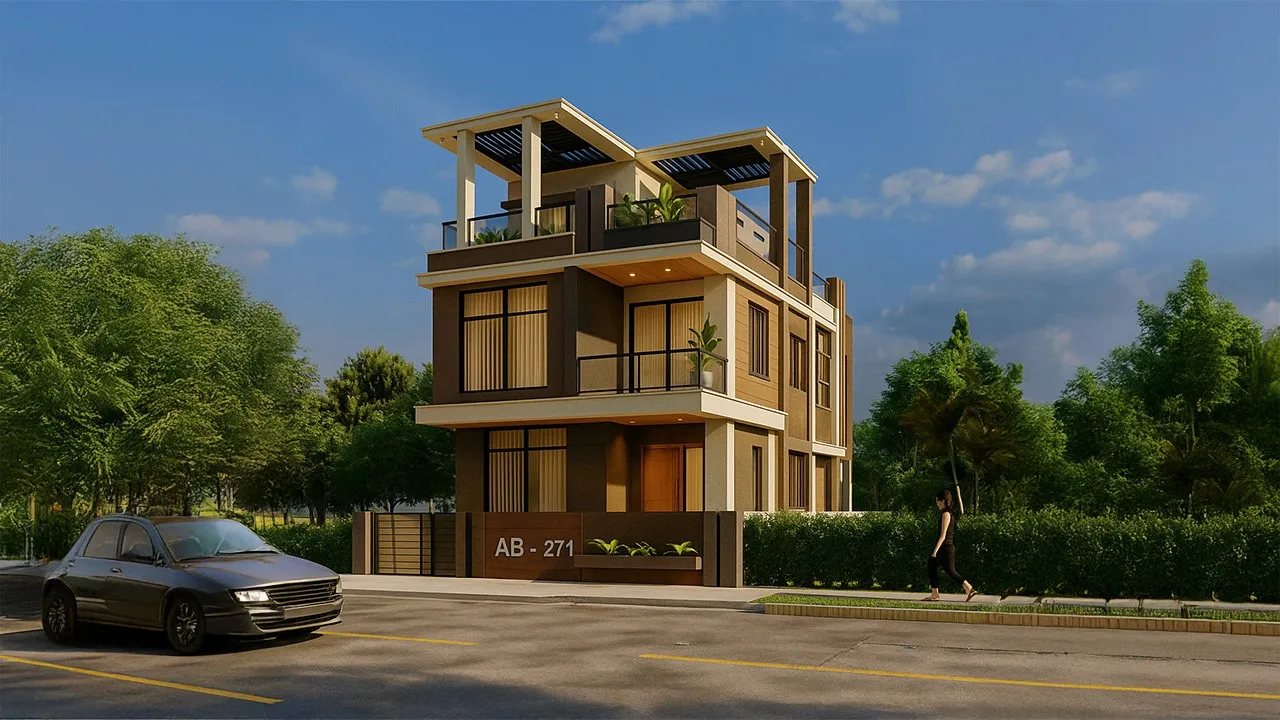
Once the carcass is right, the shutter or surface finish needs to seal moisture out and resist the mold spores that thrive in Kolkata air.
Acrylic and PVC laminates are the most humidity-resistant surface finishes available in this price range. They are non-porous, easy to wipe, and the bond does not react to humidity the way paper-based laminates do. We use acrylic shutters extensively in our kitchen projects.
Standard Mica laminates are perfectly fine for wardrobes and living room units when they are applied with a waterproof, solvent-based contact adhesive. The laminate itself is reasonably durable, but if a local contractor uses a cheap, water-based glue to stick it down, the bond will fail in the first monsoon.
PU (Polyurethane) paint finish creates a hard, semi-porous sealed surface directly over the shutter. It is more expensive than laminates and requires more skill to apply cleanly, but it gives a seamless, furniture-quality finish that holds up very well in humid conditions. We recommend it for premium kitchens and statement living room joinery.
Natural wood veneers are beautiful and we do use them, but they need heavy sealing with multiple coats of melamine or PU lacquer to perform in Kolkata. Unsealed or lightly sealed veneer will absorb moisture, darken unevenly, and eventually crack at the joins. Veneered surfaces should always be reserved for interior walls of bedrooms or study rooms with good cross-ventilation, never for kitchens.
Flooring: Getting It Right Below Your Feet
Flooring in Kolkata presents two separate challenges: ambient humidity that affects all floors, and rising damp that affects ground-floor units and older buildings where the DPC (damp proof course) has failed or was never installed.
Solid hardwood flooring is effectively not suitable for most Kolkata homes. It expands during the monsoon when humidity climbs and contracts in the cooler, drier months of December and January, which leads to warping, cupping, and gaps at the board joints. It is expensive to install and expensive to repair.
Large-format vitrified tiles remain the most practical everyday flooring for Kolkata. They are non-porous, unaffected by humidity, cool underfoot during summer, and available in textures that convincingly mimic wood, stone, or concrete. Sizes of 800x1600mm and above give a clean, contemporary look and reduce the number of grout lines that can trap dirt.
SPC (Stone Plastic Composite) flooring is the answer for clients who genuinely want the warmth of a wood-look floor. SPC is 100% waterproof, dimensionally stable in all humidity conditions, and clicks together without adhesive. We have installed it in several New Town apartments and the performance through two monsoon seasons has been excellent. It also installs over existing tile, which saves demolition costs in renovation projects.
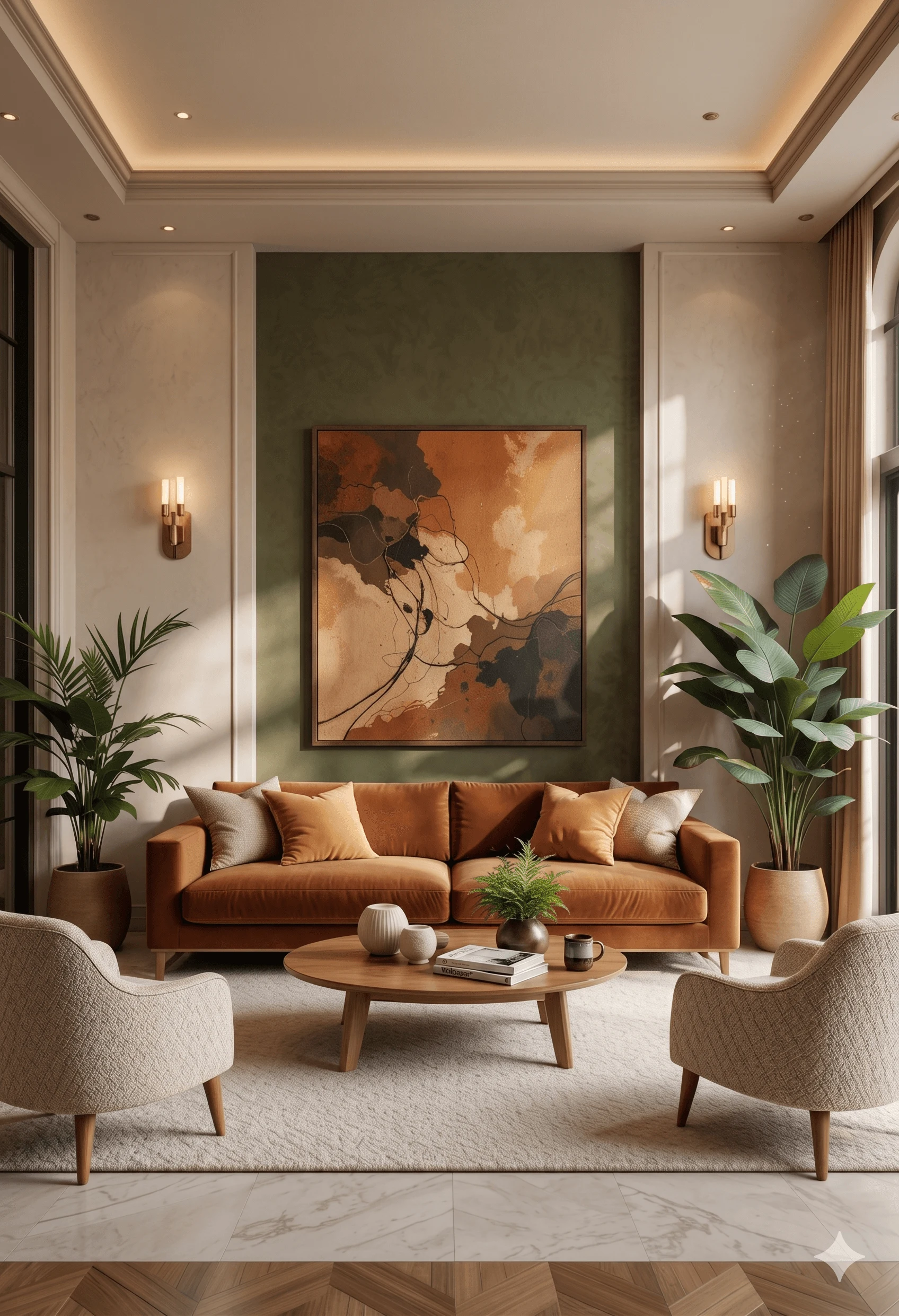
| Material | Humidity Resistance | Approx Cost per sqft | Our Recommendation |
|---|---|---|---|
| Large vitrified tile,Excellent | ₹80 to ₹220,Best all-round choice | ||
| SPC wood-look flooring,Excellent | ₹130 to ₹280,Best for warm wood aesthetic | ||
| Engineered wood (HDF core),Moderate | ₹180 to ₹350,Only with good ventilation | ||
| Solid hardwood,Poor | ₹400 to ₹900,Not recommended for Kolkata |
Wall Treatments: Fighting Seepage, Flaking, and Mould
Wall failures in Kolkata homes almost always trace back to one of two sources: monsoon-driven seepage through exterior masonry, or condensation forming on walls that separate AC-cooled interiors from the hot, humid outdoors. Standard emulsion paint on its own is not adequate protection for either.
Anti-fungal and waterproofing primer should be a non-negotiable first coat on every exterior-facing wall and every bathroom-adjacent wall before any finish paint goes on. Brands like Berger WeatherCoat or Asian Paints Apex Ultima Protect are formulated with fungicide additives and significantly outperform standard primer on Kolkata walls.
Exterior walls need exterior-grade paint even on the interior face, particularly for walls in rooms that air-condition heavily. The cold interior surface of a single-brick or even double-brick wall in monsoon conditions can collect condensation, and interior emulsions are not designed to handle that repeatedly.
Wallpaper is high risk on exterior walls and any wall with plumbing behind it. The humidity softens the paste bond, and the wallpaper begins to peel or bubble within one to two monsoon seasons. If you want texture and warmth on a wall, we recommend breathable lime-wash paint, fluted MDF panels sealed with PU, or fabric-wrapped acoustic panels that allow the wall to breathe behind them.
Hardware and Fittings: The Details That Corrode
Humidity does not only attack boards and paint. Mild steel hinges, cheap drawer channels, and low-grade hardware corrode surprisingly quickly in Kolkata's air. Over time, corroded hinges cause cabinet doors to sag and drawer channels to stick or squeak.
We specify stainless steel or zinc die-cast hardware in all our projects as standard. For high-moisture areas like kitchens, bathroom vanities, and utility rooms, we use 304-grade stainless steel hinges and handles which are marine-grade and resistant to salt-air corrosion as well as household humidity. Soft-close mechanisms on drawer channels and cabinet hinges should be from brands like Hettich, Grass, or Hafele, whose mechanisms are tested and rated for high-humidity environments.
The same principle applies to metal accessories such as towel rods, shower caddies, and kitchen rail systems. Buying cheaper chrome-plated mild steel fittings to save a few hundred rupees will cost you three to four times that amount in replacements within two or three years.
- Use IS 710 BWP plywood for all kitchen and bathroom carcasses
- Specify 304-grade SS hardware in wet zones
- Apply waterproofing primer before any wall paint in exterior-facing rooms
- Choose vitrified tile or SPC over solid wood flooring
- Seal all veneer surfaces with minimum two coats of PU lacquer
- Test wall moisture before wallpaper or specialty wall treatments
- Use solvent-based adhesive for all laminate application
Putting It Together: What a Climate-Resilient Interior Costs
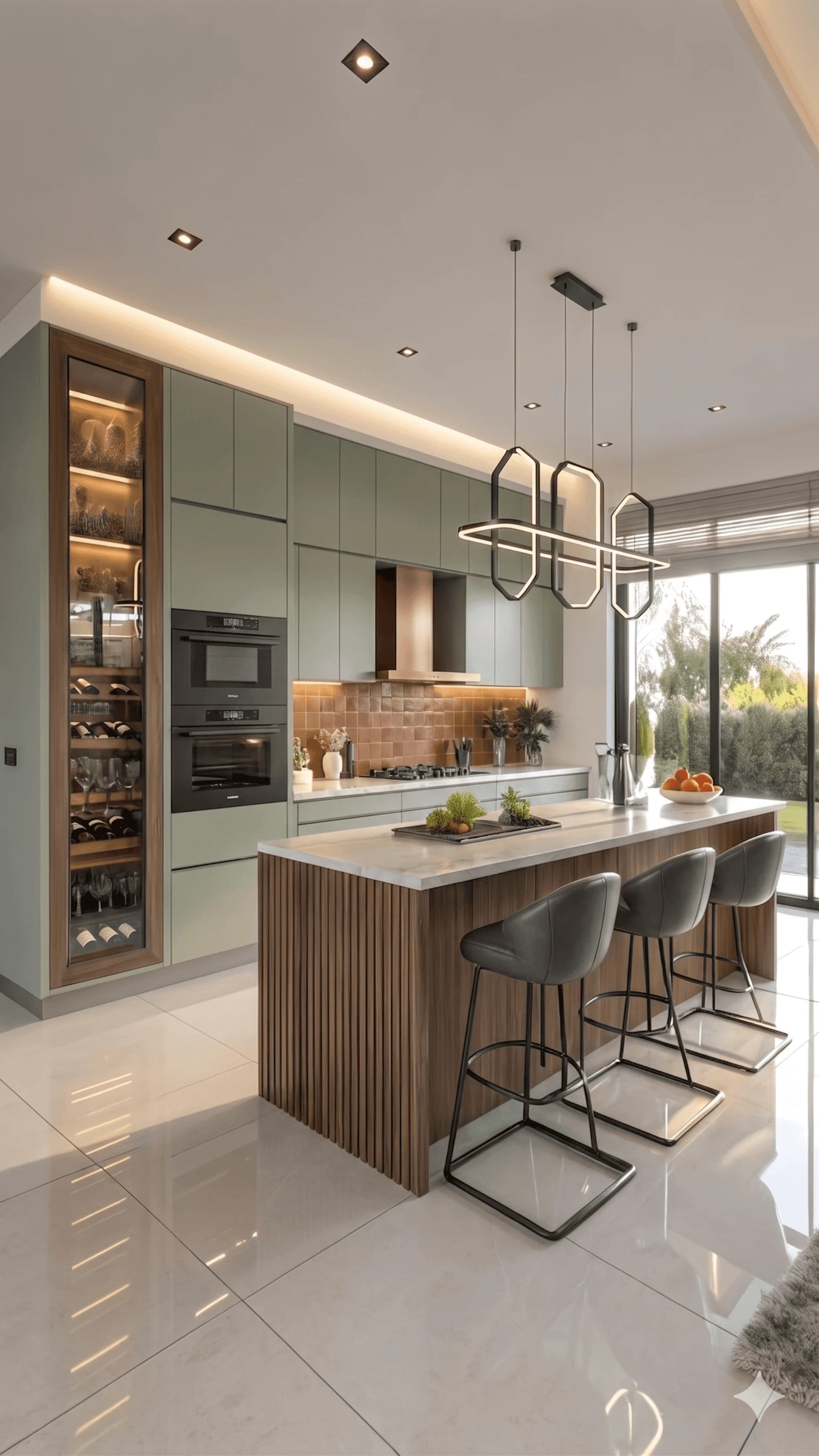
The materials we have described here are not exotic. They are available from any good supplier in Kolkata's Salt Lake or Ultadanga hardware markets. The difference in cost between a humidity-ignorant specification and a properly climate-adapted one is typically 12 to 18% of the total joinery budget, and that premium pays itself back in the first avoided repair cycle.
At Studio Contour, every project begins with a material specification sheet that we review with the client before drawings are finalised. We are transparent about what each choice costs and what it saves over time, and we do not recommend materials we would not use in our own homes.
If you are planning a new home interior or a renovation in Kolkata and would like an honest conversation about materials, timelines, and budgets, we would be happy to meet at our New Town studio or at your site. Reach out to us through our contact page and we will get back to you within one working day.