






Builder Floor vs Apartment in Kolkata: What Should You Buy?
Every week someone walks into our studio in New Town with the same question printed on their face: builder floor or apartment in a complex? Both options look similar on paper, but the day-to-day reality, the interior design possibilities, and the long-term ownership experience are genuinely different, and a wrong choice at the buying stage can be surprisingly hard to undo.
We have worked on both kinds of projects since 2014, across New Town, Salt Lake, Rajarhat, and older Kolkata neighbourhoods, so what follows is our honest read of each option, grounded in what we see on site and in our clients' lives after handover.
Understanding What Each Option Actually Is
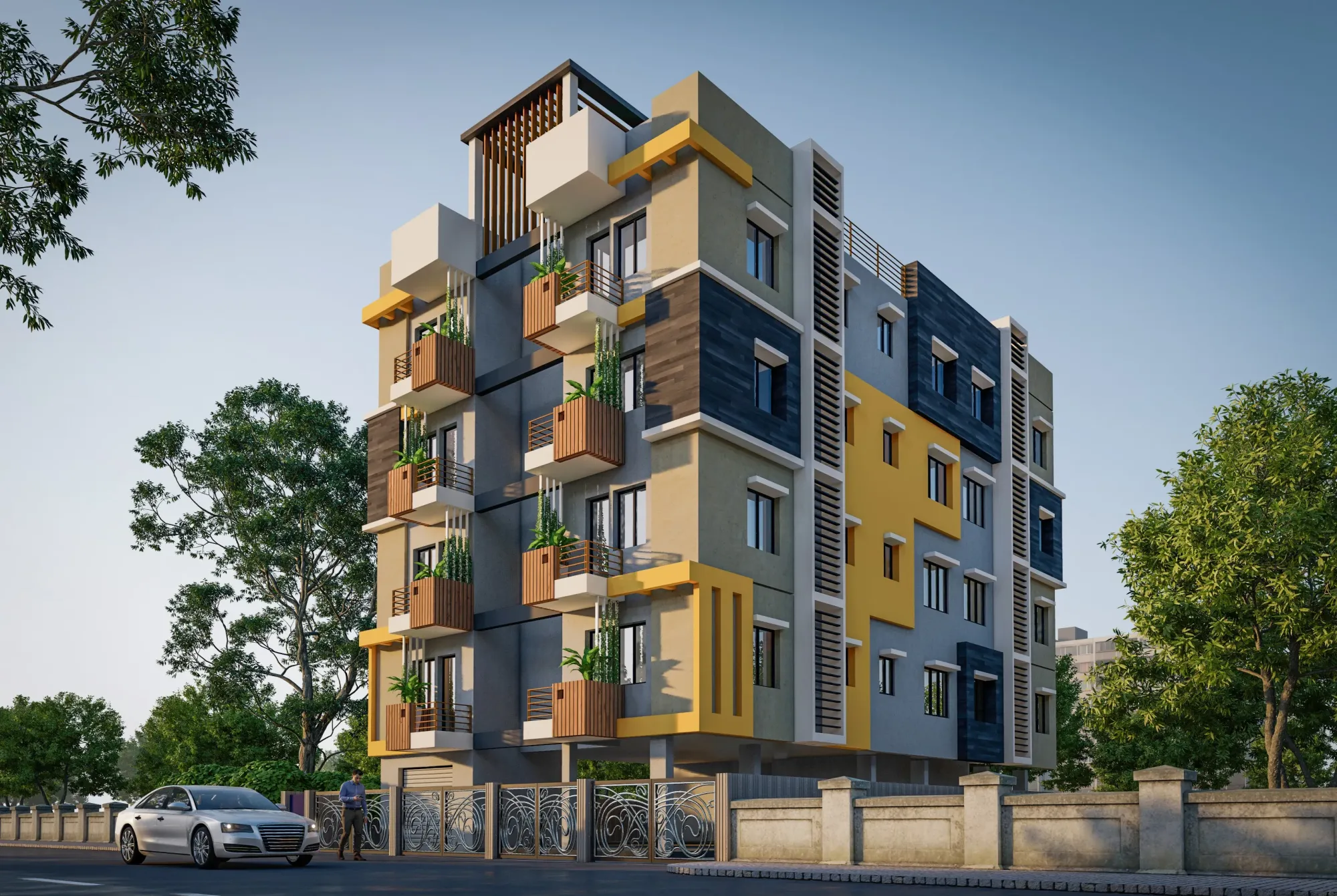
A builder floor in Kolkata typically means one independent unit occupying an entire floor of a small building, usually three to four storeys, built on a smaller plot. You share a staircase and sometimes a lift with two or three other families, but there are no apartments above or below you sharing walls on the same level. Ownership is usually structured as an undivided share of the land, with a floor-wise partition deed registered at the sub-registrar office.
An apartment in a complex is one unit in a larger building with a residents' welfare association, shared amenities like a clubhouse, gym or pool, round-the-clock security, and a maintenance committee that manages common areas. You own your flat and an undivided share of the common areas, governed by a society or association agreement.
Neither is inherently better. They suit different households at different life stages.
What Builder Floors Offer That Apartments Cannot
The first thing our clients notice once they move into a builder floor is quiet. Fewer neighbours means less corridor noise, fewer lift-lobby conversations, and no common area music on festival nights unless you are the one playing it. For households with young children or elderly parents who sleep early, this matters a great deal.
The second advantage is interior design freedom. Because there is no residents' association dictating finishes or approving renovation works, you can redesign the kitchen layout, shift a toilet, raise a ceiling with a coffered treatment, or run custom storage from floor to ceiling without seeking committee approval. We have completed some of our most ambitious residential interiors in builder floors precisely because the client had full say over every decision.
| Feature | Builder Floor | Apartment Complex |
|---|---|---|
| Neighbours on your floor | 0 other units | Multiple units per floor |
| Interior renovation | No committee approval | Must follow society guidelines |
| Staircase maintenance | Shared among 2 to 4 owners | Shared among 30 to 200 owners |
| Land share | Larger undivided share per family | Smaller undivided share per family |
| Security | Self-arranged or small building guard | Manned gate, CCTV, intercom managed by society |
Third, the land ownership component in a builder floor is proportionally larger. If the building is on a 3-cottah plot and there are four floors, each owner holds roughly a quarter share of that land. In a large complex with 200 units, your land share is a tiny fraction. In neighbourhoods where land prices are appreciating, this distinction matters at resale.
What Apartments in Complexes Do Better
We design interiors in both, and we are not here to sell one over the other. Apartments in larger complexes genuinely do some things better.
Security is the clearest example. A staffed gate, CCTV coverage, visitor management systems, and fire safety infrastructure that is collectively maintained gives many families real peace of mind, particularly when they travel frequently. A builder floor security arrangement depends entirely on the initiative of two or three co-owners, and that can be inconsistent.
Amenities are the second advantage. A gym, a children's play area, a community hall for functions, a swimming pool, and sometimes a concierge desk, are built into the price of newer complexes in New Town and Rajarhat. If you value having these within the building compound rather than driving out for them, a large complex justifies the premium.
Maintenance is also more organised in a well-run complex. The association collects maintenance dues, handles lift servicing, roof waterproofing, and common area upkeep through a professional vendor. In a four-storey builder floor building, the same decisions require all co-owners to agree and contribute, and that can get complicated if one family delays payment.
Interior Design Possibilities: Where We See the Real Difference
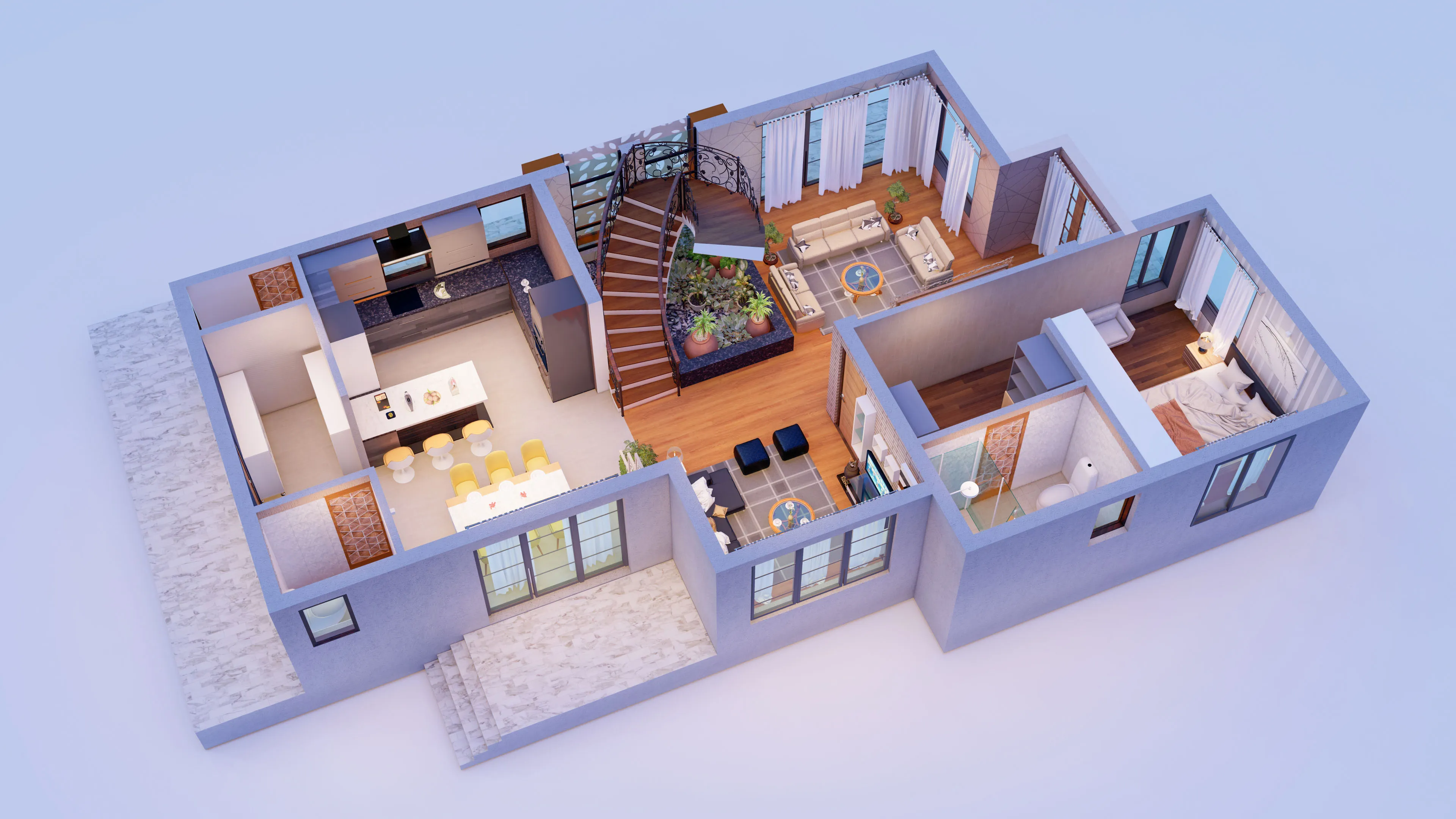
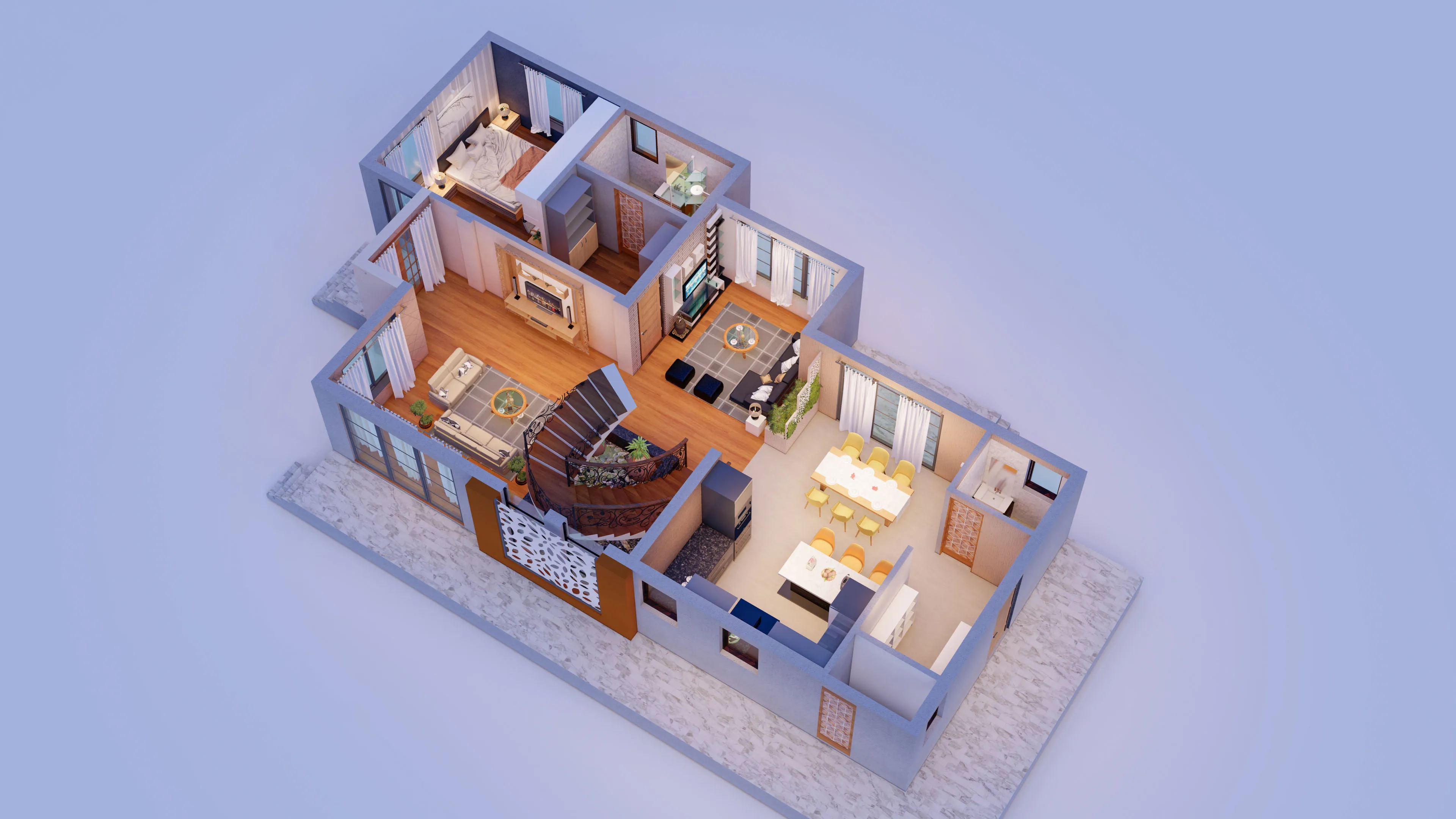
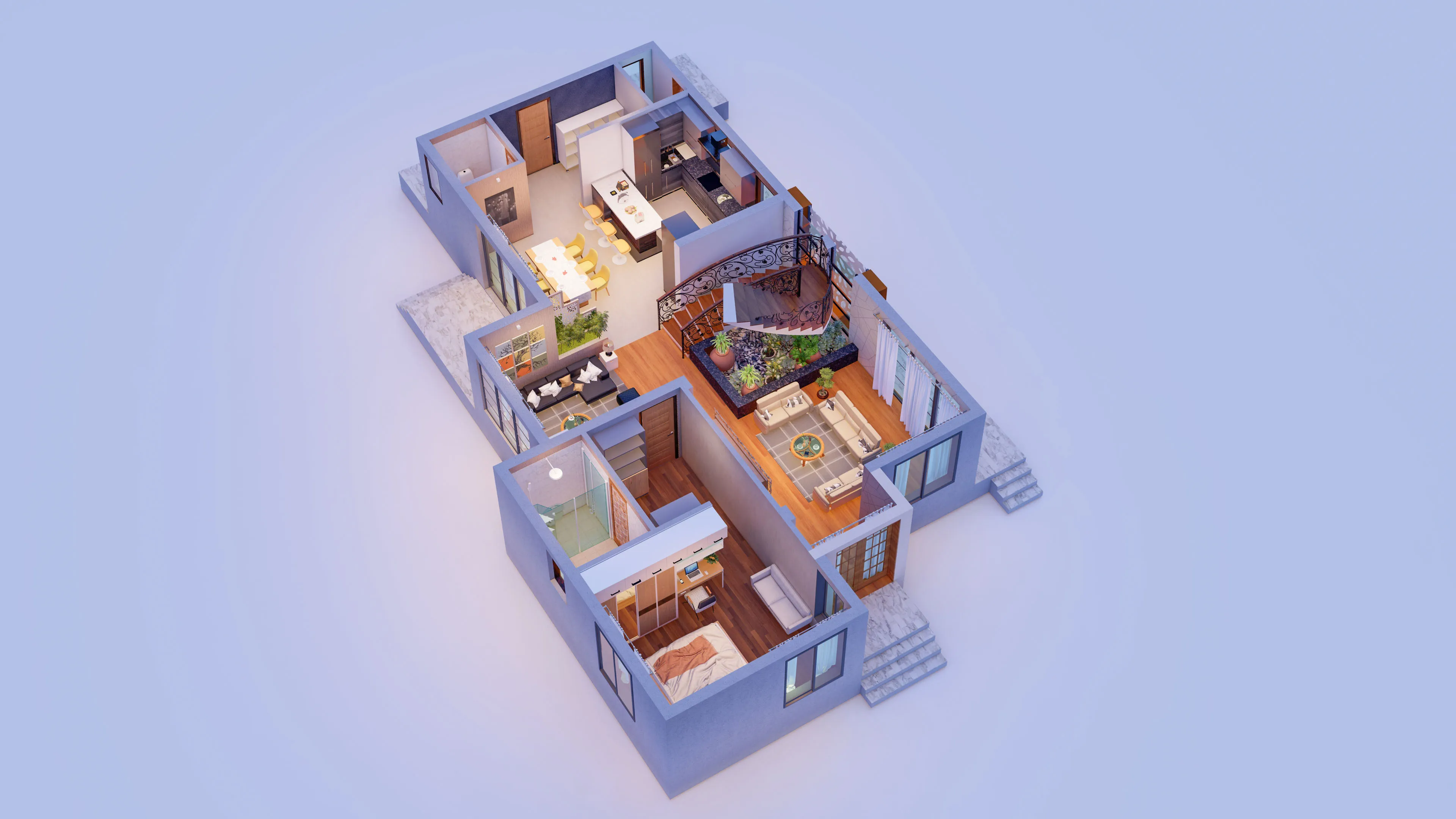
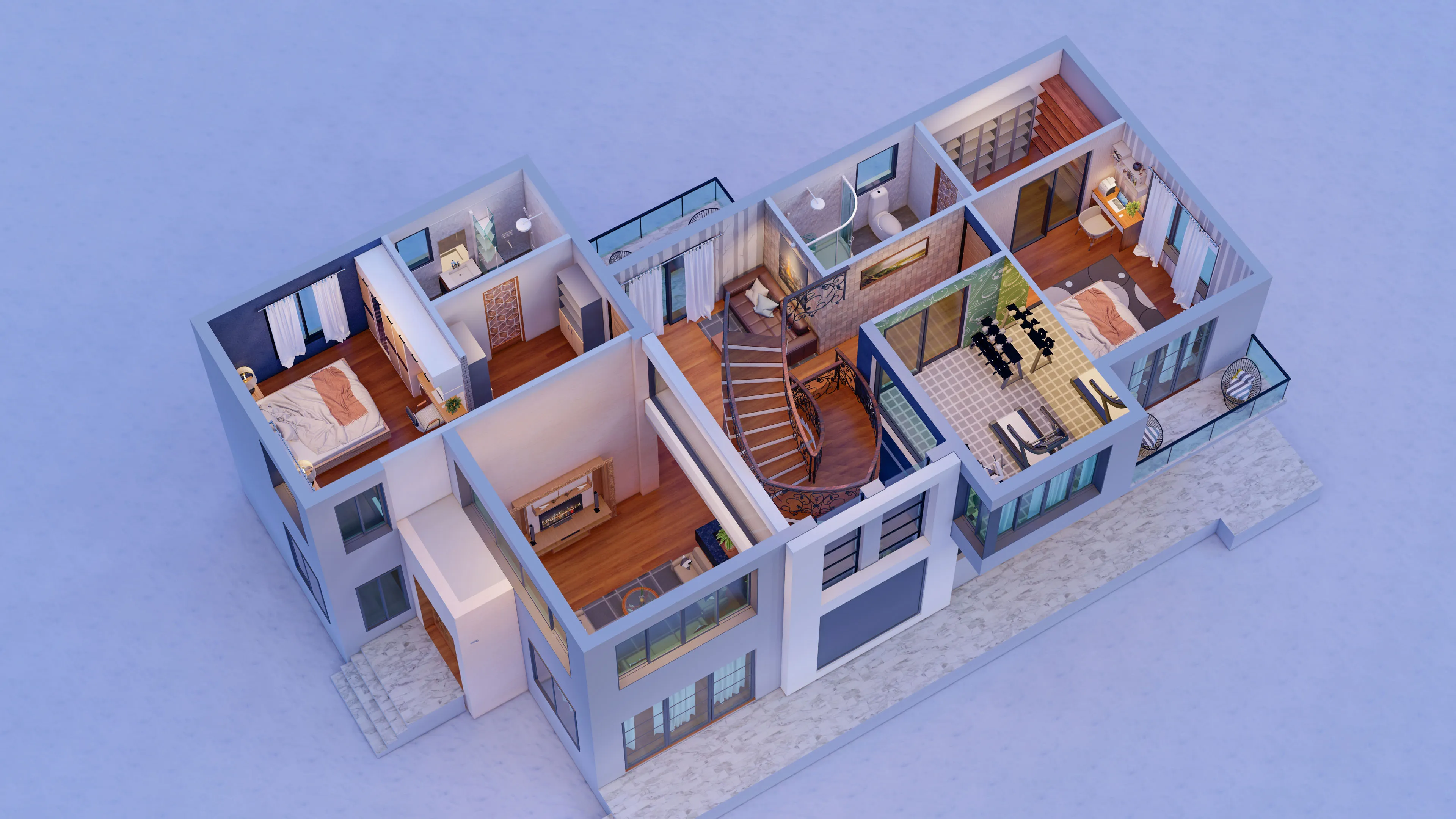
This is where our studio's experience becomes most relevant. When a client buys a builder floor and comes to us, we typically have a conversation about the full unit, from the entrance door to the rear balcony wall. There are almost no restrictions. We can design a custom kitchen island that breaks the standard modular grid, we can open up a wall between the living and dining area, and we can add a study mezzanine if ceiling heights allow it.
In apartments, particularly in newer New Town complexes, the structural grid is more uniform and the available ceiling height after concrete and MEP services is often lower. Wet area positions are usually fixed by the builder's plumbing risers, so shifting a toilet or bathroom involves significant structural work that the society may not permit. This does not mean great interiors are impossible in apartments, they absolutely are, but the design conversation starts with more constraints.
- Measure actual ceiling height after slab, not developer's brochure figure
- Check if wet areas can be reconfigured with the builder or society
- Ask whether structural walls are load-bearing before planning any wall removal
- Confirm balcony enclosure rules with the local authority or society
- Review the parking allocation and storage provisions before signing
Builder floors in older neighbourhoods like Lake Gardens, Gariahat, or Behala often have higher ceiling heights because the buildings were constructed to older floor-to-floor standards. These can accommodate coffered ceilings, hidden cove lighting, and even loft storage, which newer construction rarely allows.
Resale and Long-Term Value Considerations
Resale liquidity is a real consideration in Kolkata. Larger complexes in established micro-markets tend to have a broader pool of buyers because lenders are comfortable financing units in registered societies with clear title chains. Builder floors have a narrower buyer pool because some lenders apply more scrutiny to floor-wise partition deeds and undivided land shares.
That said, in New Town and Rajarhat, builder floors on properly sized plots with clean documentation have sold well in recent years, particularly as land values have risen. If you are buying a builder floor, we strongly recommend checking that the building has received all necessary sanctions from NKDA or the relevant authority, that the partition deed is registered, and that the title to the land has no encumbrances. A good property lawyer is essential here.
Regulatory Considerations Specific to Kolkata
NKDA governs most of New Town, while KMC governs older Kolkata wards, and Bidhannagar Municipal Corporation covers much of Salt Lake and parts of the extended corridor. Each authority has its own building rules covering permissible FAR, setbacks, height restrictions, and occupancy certificate requirements.
Builder floor buildings on smaller plots must comply with the applicable authority's regulations on how much of the plot can be built upon and how high the building can go. We work with sanctioned drawings regularly and we see variation even within the same neighbourhood depending on plot size and zoning category. Do not rely on what a developer or broker tells you verbally about permissibility, always confirm with the relevant authority before you commit.
For apartments in larger complexes, the project typically holds a sanctioned plan and completion certificate, which gives the buyer more clarity upfront, though it is worth asking for copies of these documents rather than taking them on trust.
- 01Define your must-haves (quiet, amenities, design freedom, budget)
- 02Research 3 to 5 options in your preferred micro-market
- 03Verify sanctions and title with a property lawyer
- 04Commission an interior designer before or during negotiation to assess what is actually possible in the unit
Our Honest Recommendation
If privacy, design freedom, and land ownership weigh heavily for you, a well-documented builder floor in a location with good infrastructure is worth serious consideration. If you have young children, travel often, or simply want the amenities and security of a managed community without the friction of self-organised maintenance, a reputable apartment complex in New Town or Rajarhat will serve you better.
The interior design possibilities are meaningfully different between the two, and that is worth factoring in at the buying stage rather than discovering after registration.
We are happy to walk through any specific unit with you before you decide, whether it is a builder floor in New Town or a flat in a complex. A quick site visit tells us a great deal about what the space can become, and that conversation often changes what our clients feel is possible. Reach out to Studio Contour and we can go from there.