






Interior Design Trends for Kolkata Homes in 2026
Kolkata homes in 2026 look noticeably different from what we were designing even three years ago, and the shift is not about chasing global trends but about something more honest. Homeowners here want spaces that feel considered, that survive Bengal's humidity without looking utilitarian, and that carry a quiet sense of craft without shouting about it. After more than a decade working across New Town, Rajarhat, and the older neighbourhoods of Kolkata, we at Studio Contour see a handful of clear directions shaping how people want to live this year.
Warm Minimalism Is Replacing Cold Minimalism
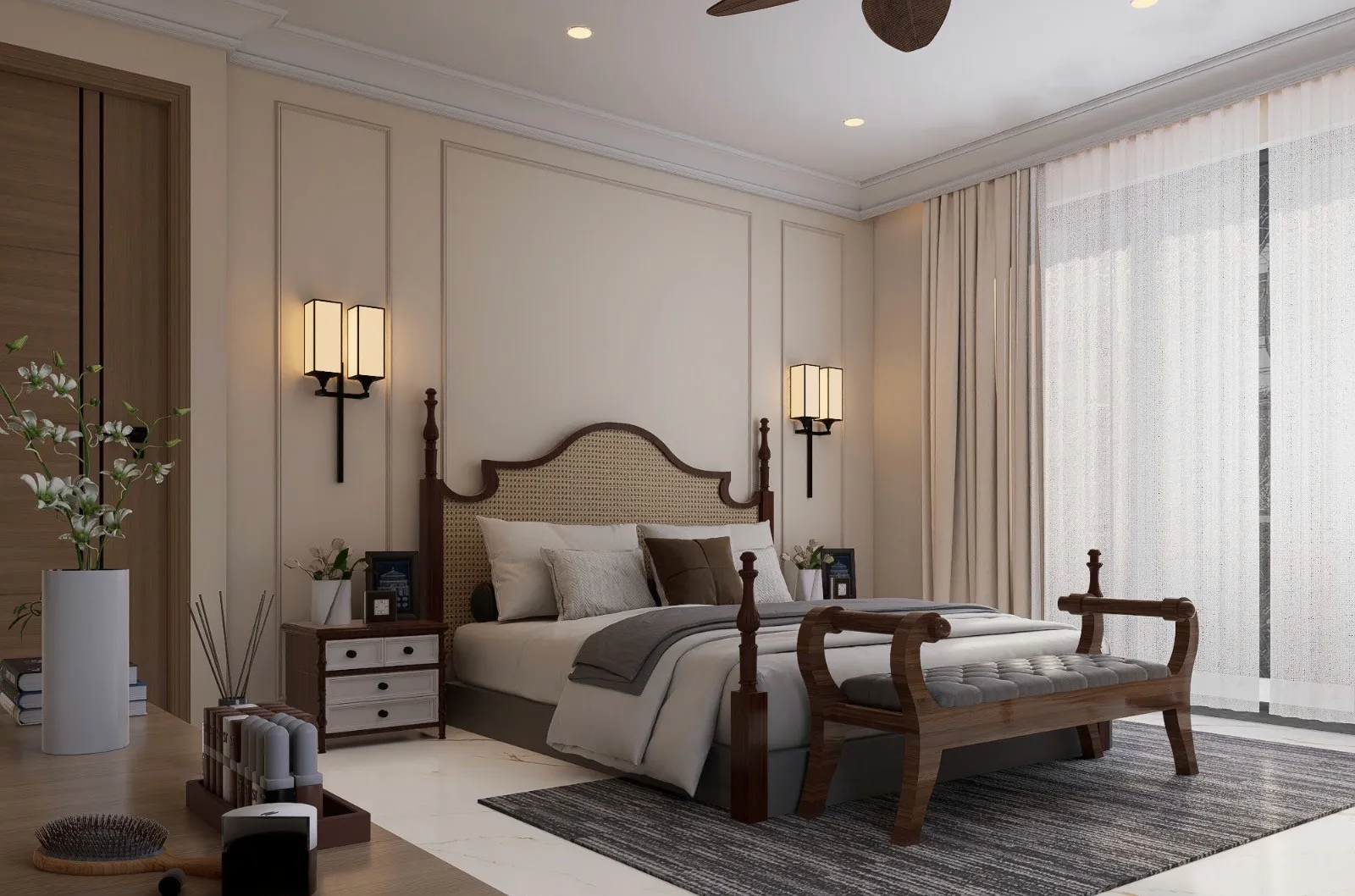
The all-white, barely-there interiors that defined aspirational homes through the last decade are giving way to something warmer. Walls now carry tones of warm white, aged linen, dusty terracotta, and soft ochre. Furniture sits closer to the floor, lines stay clean, but the palette has moved from stark to nurturing.
This shift makes particular sense for Kolkata. Strong monsoon light flooding through east-facing windows can bleach a cold white interior into something almost clinical by midday. Warm undertones hold better across the day, and they age more gracefully in our humidity than pure whites that tend to yellow unevenly.
What we are seeing in actual briefs is clients asking for "not too minimal but not cluttered", wanting surfaces that breathe without being empty. That is warm minimalism in practice.
Fluted and Textured Surfaces Everywhere
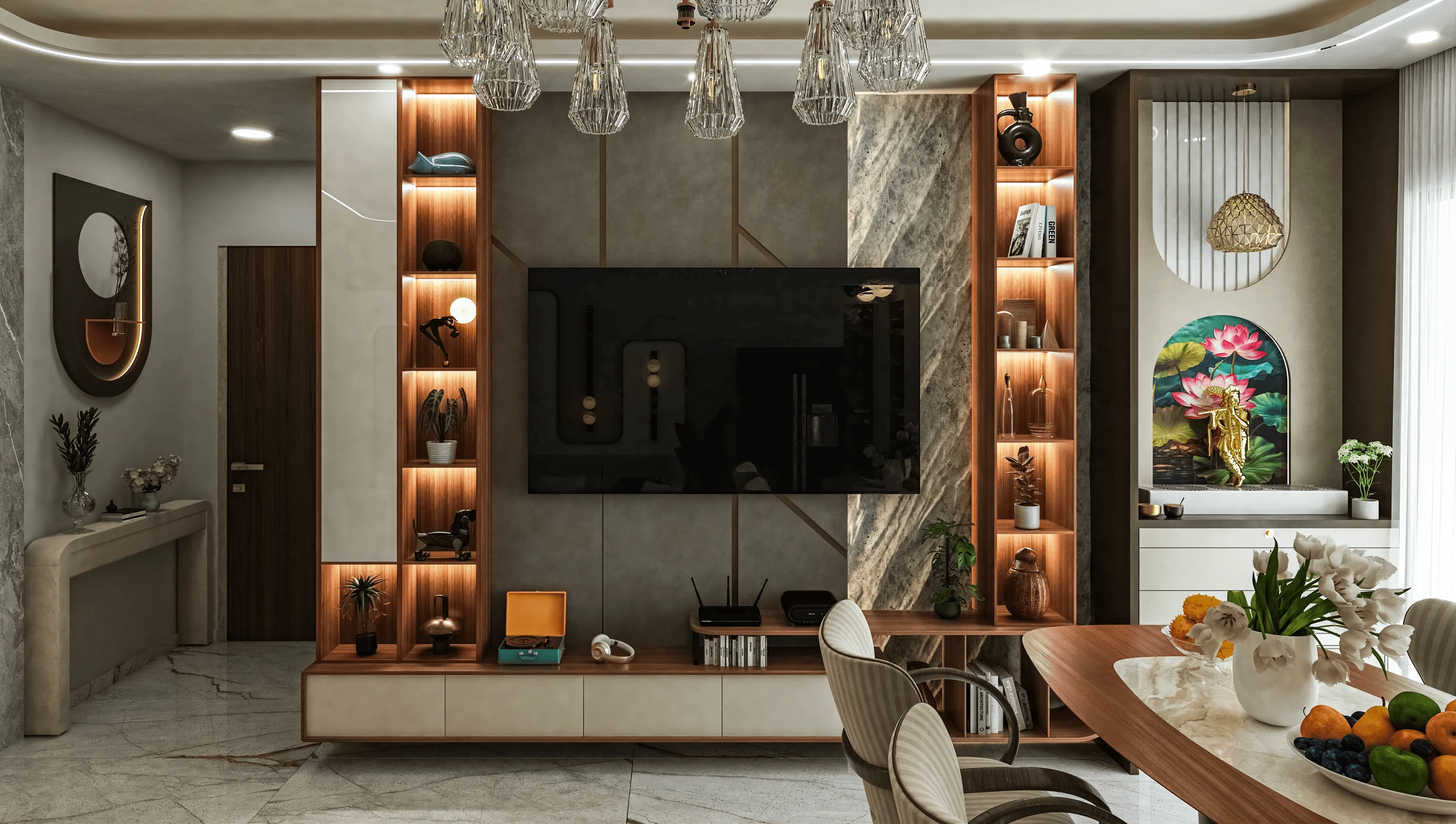
If there is one material moment that defines 2026 interiors in our market, it is the fluted panel. Fluting, the repeating vertical groove pattern seen on classical columns, has migrated onto wardrobe shutters, TV unit fronts, kitchen islands, bathroom vanity cladding, and even partition walls.
The appeal is straightforward. A flat panel surface in MDF or plywood costs a certain amount and reads as furniture. The same panel with routed flutes or an applied reed profile adds texture, catches light differently across the day, and reads as interior architecture. The added cost is modest, somewhere in the range of ₹180 to ₹350 per square foot over a plain finish in 2026 pricing, depending on the profile and material.
Beyond fluting, we are seeing a broader appetite for texture generally: lime wash on accent walls, micro-cement on bathroom floors, handmade tiles with slight surface variation in kitchens. These finishes age well, hide minor wear, and introduce an organic quality that painted drywall cannot replicate.
The Japandi and Indian Craft Combination
Japandi, the blend of Japanese wabi-sabi sensibility and Scandinavian functionalism, has been circulating globally for a few years. What is interesting for us as a Kolkata studio is how naturally it fuses with Indian craft traditions.
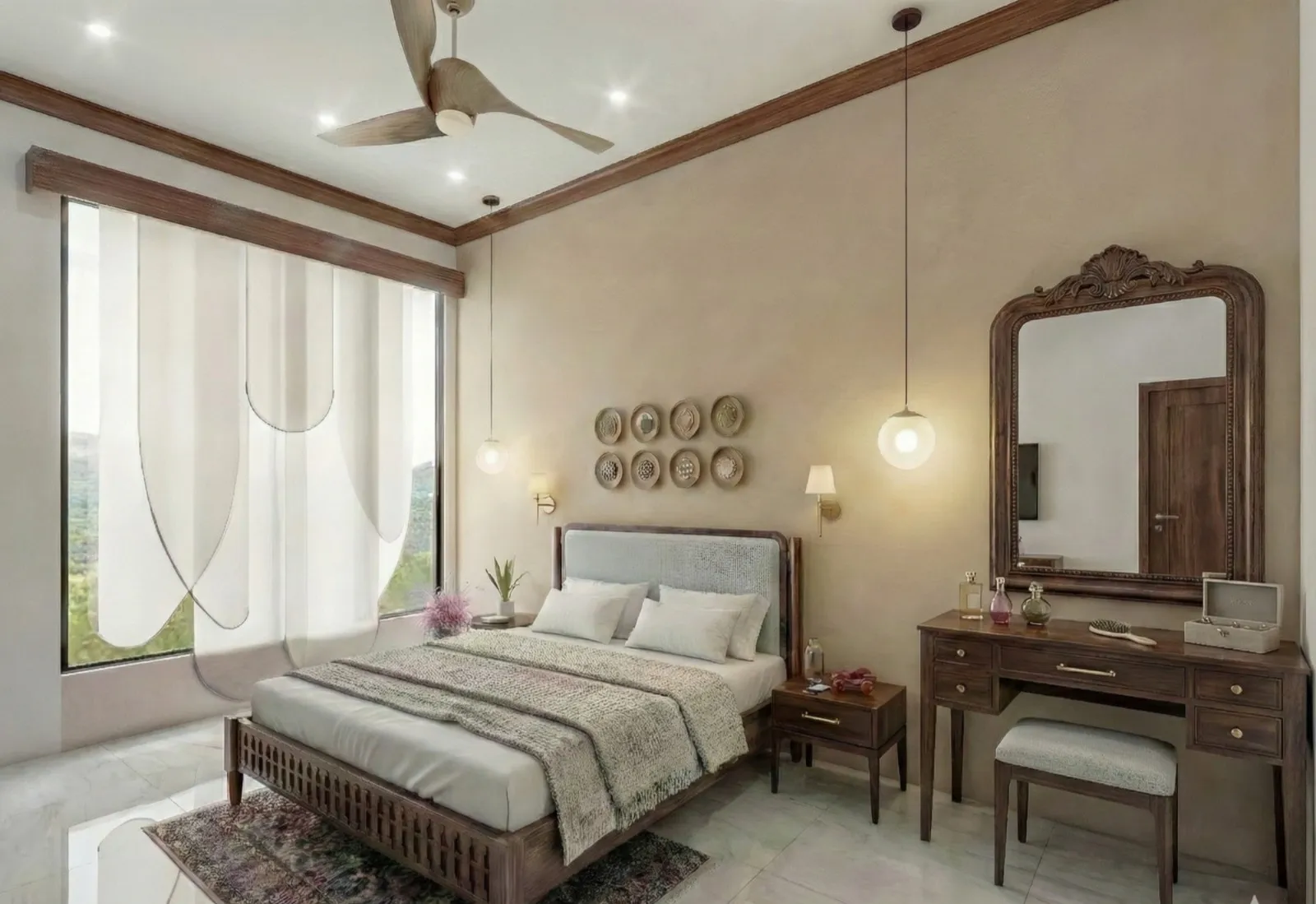
The underlying philosophy of both is similar: find beauty in honest materials, value handwork, resist excess decoration. A Japandi living room with low seating in natural linen translates effortlessly when you replace Scandinavian oak with sheesham or mango wood, substitute Japanese ceramics with Bankura or Bishnupur pottery, and layer a dhurrie or hand-knotted rug instead of a flat-weave Scandinavian piece.
This combination resonates with our clients who want their homes to feel internationally considered but also rooted in something local. It also supports small-scale artisan sourcing, which matters to a growing number of homeowners who ask us specifically about where materials come from.
- Source at least one handcraft element per room (pottery, textile, wood carving)
- Choose natural material furniture in sheesham, cane, or mango wood
- Keep the accessory count low, three to five pieces per surface at most
- Let a single craft object be the focal point rather than a gallery wall
- Mix textures: smooth stone, rough weave, matte ceramic together
Layered Lighting Is No Longer Optional
Kolkata apartments, particularly in New Town and Rajarhat high-rises, typically have a single ceiling light point per room handed over by the builder. Most homeowners have historically added a fan-light combination and called it done. That era is ending.
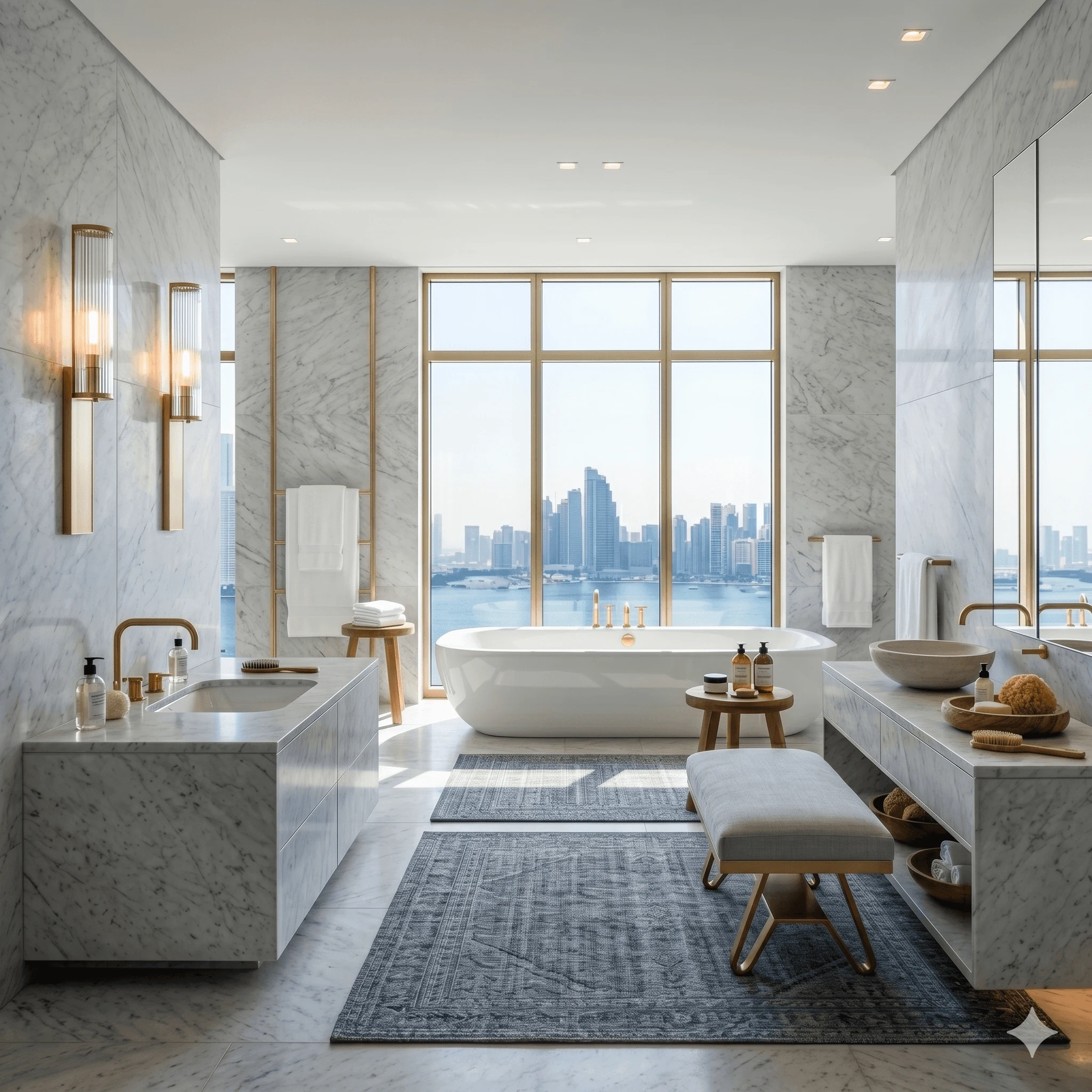
Layered lighting means working with at least three sources in any occupied room: ambient (general illumination), task (focused light for work or cooking), and accent (light that creates mood or highlights a material or object). In a bedroom this might be a recessed warm-white ceiling wash, a reading sconce or pendant on each side of the bed, and a subtle strip behind a panel or inside a wardrobe niche.
The practical investment is moderate. For a typical 1,200 square foot apartment in New Town, a well-designed lighting plan including recessed LED, accent tracks, pendant points, and under-cabinet strips typically costs between ₹1,80,000 and ₹3,50,000 in 2026, depending on fixture quality and the number of controlled zones. Smart lighting that allows dimming and scene control adds to this but gives disproportionate flexibility for daily use.
Multipurpose Rooms Designed With Honesty
The work-from-home pattern that became normal after 2020 has not reversed in Kolkata. What has changed is that homeowners no longer want to pretend the work corner does not exist. In the early pandemic years we were asked to "hide" the desk, to make it fold away or dissolve into a wardrobe. Now clients want the workspace to be well-designed and present, not apologised for.
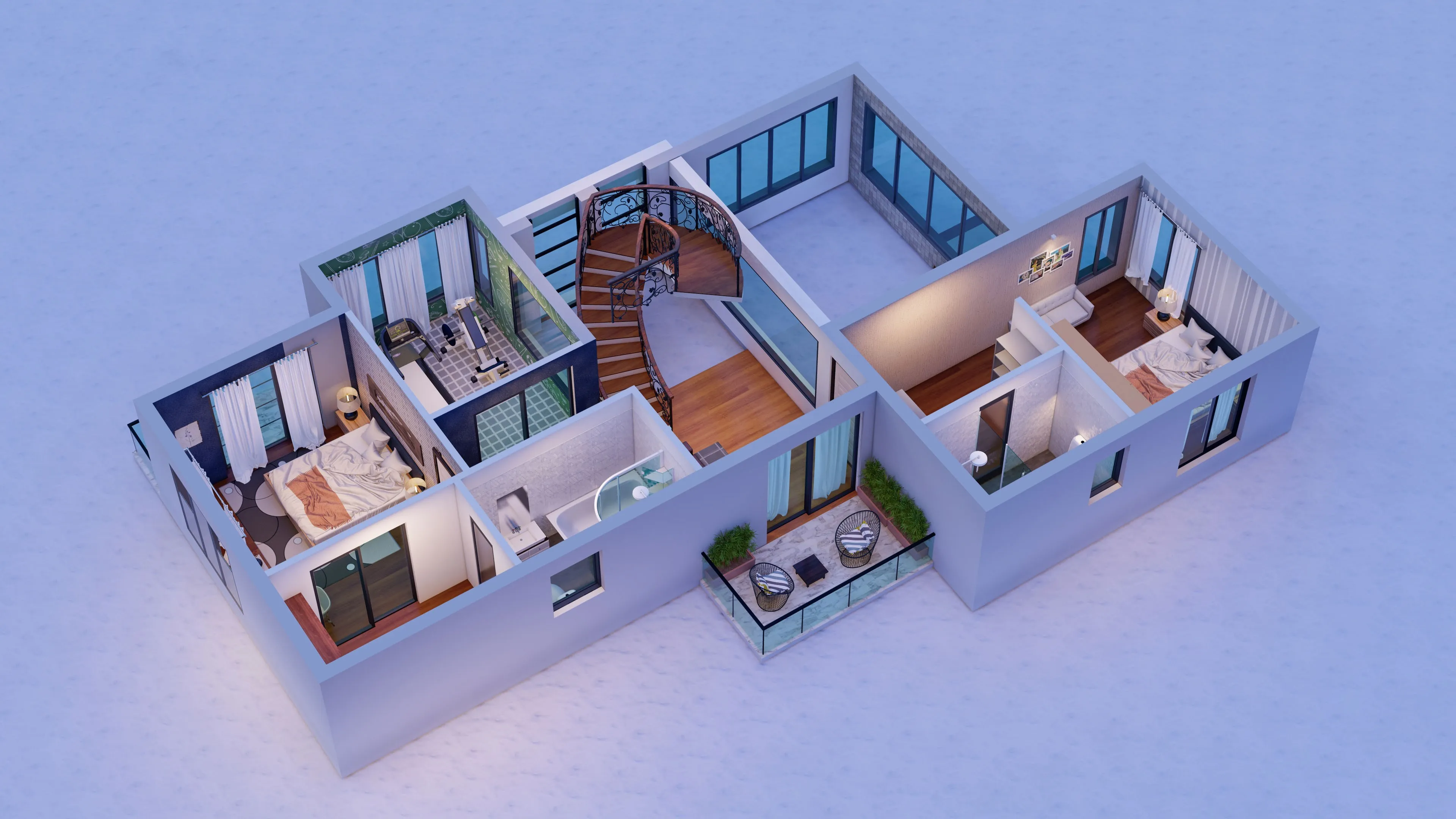
A 2026 multipurpose room in a New Town apartment might function as a guest room, home office, and occasional hobby space. Designing for this honestly means specifying furniture that does more than one job well, lighting that serves both a video call and reading, storage that absorbs professional and personal belongings without creating chaos, and acoustic treatment that makes a work call comfortable without making the room feel institutional.
| Hidden desk approach | Integrated workspace design |
|---|---|
| Folds away but ergonomically poor | Often occupies prime wardrobe space |
| Visible and ergonomically considered | Lighting and power served properly |
The best multipurpose rooms we have delivered recently are ones where we designed every scenario before choosing a single piece of furniture. Sketch the room as a home office. Sketch it as a guest room. Identify where those scenarios overlap and where they conflict. Resolve the conflicts in the design, not as an afterthought.
Materials That Actually Survive Our Climate
Bengal's humidity is not incidental to interior design, it is central. We work in a climate where the monsoon brings sustained high relative humidity for months, where sea air from the Bay of Bengal is a factor in coastal-adjacent areas, and where temperature swings between winter and summer are significant. Materials that look beautiful in a showroom in Delhi or in a European magazine may not hold in these conditions.
We have learned, over 100-plus projects, what lasts and what does not. Some clear 2026 guidance:
- Engineered wood over solid wood for large furniture pieces. Solid sheesham and teak work well for smaller items, but large wardrobe carcasses and kitchen cabinets in solid wood expand and contract seasonally. Moisture-resistant engineered core with real wood veneer or lacquer finish performs more consistently.
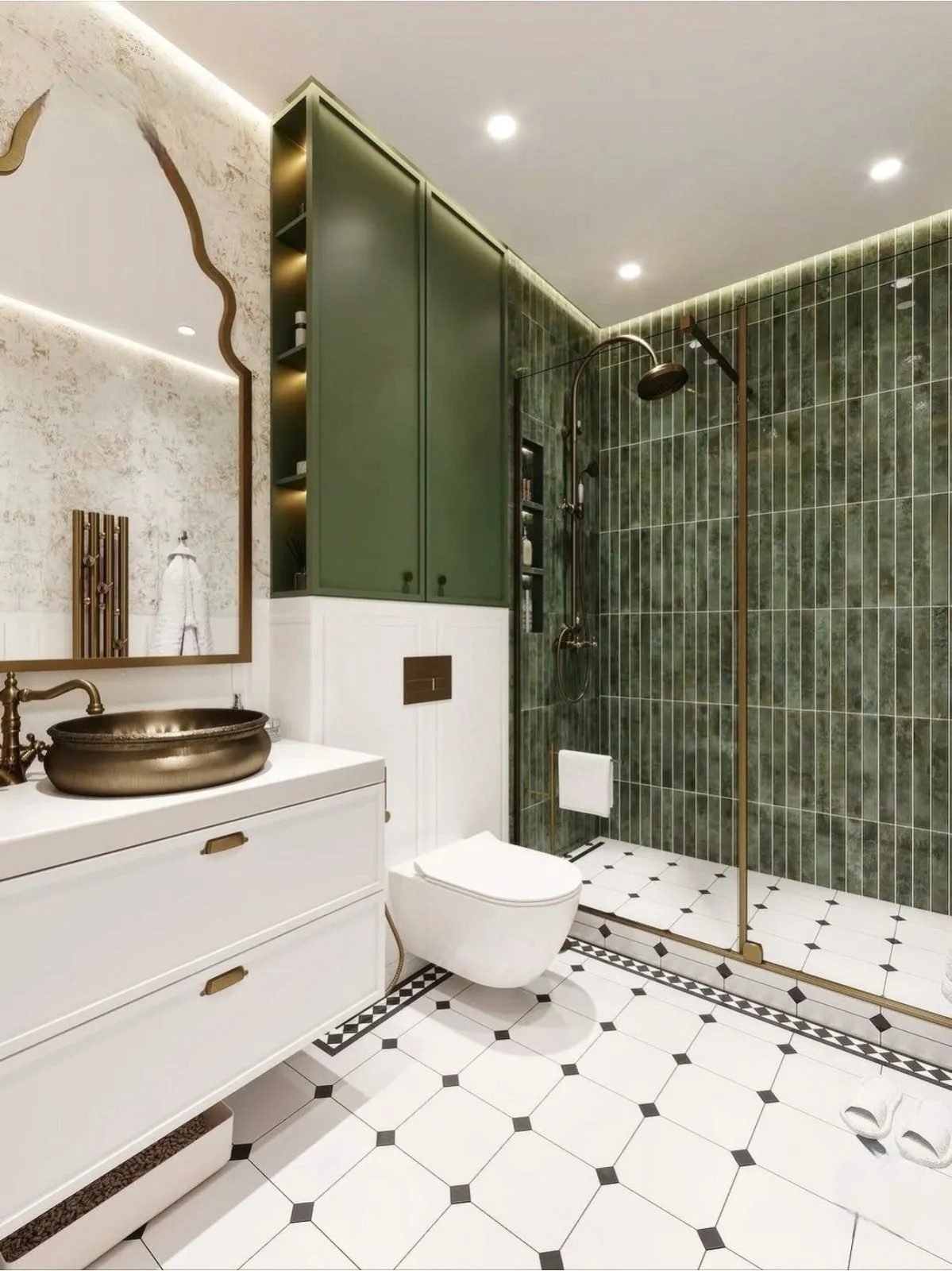
- Avoid water-based paints in bathrooms and wet-adjacent areas unless the waterproofing underneath is exemplary. Enamel or epoxy finishes on bathroom walls hold better.
- Cane and wicker are excellent choices for Kolkata. They were widely used here before air conditioning was standard and they remain well-suited to the climate. The current design moment happens to celebrate natural woven materials, so this is an easy choice to make.
- Ceramic and porcelain tile in high-traffic areas over stone that requires regular sealing. Marble looks extraordinary but unsealed marble in a Kolkata kitchen is a maintenance commitment that most households do not sustain over time.
- For upholstery, natural fabrics with performance weaves. Pure cotton breathes in summer but stains and fades. Look for cotton-linen blends or treated natural fabrics that offer breathability with durability.
| Material | Context | 2026 Suitability for Kolkata |
|---|---|---|
| Engineered wood | Wardrobe and kitchen carcasses | High |
| Solid teak or sheesham | Smaller furniture and accents | High |
| Porcelain tile | Kitchen and bathroom floors | Very high |
| Unsealed marble | Kitchen counters and floors | Low without maintenance |
| Cane and wicker | Seating and accent furniture | Very high |
| Cotton-linen blend upholstery | Sofas and cushions | High |
Budgeting a 2026 Interior Project in Kolkata
We are frequently asked what a complete interior fit-out costs in Kolkata right now. The honest answer is that it depends enormously on specification, but here is how the major buckets typically break down for a 1,000 to 1,200 square foot New Town apartment in 2026.
These are 2026 market estimates for mid-specification work. Premium material choices, complex joinery, imported lighting, or architectural interventions like structural changes or floor-to-ceiling millwork will push these figures up. Value-conscious choices in specification, particularly in modular kitchens and bathroom fittings, can bring them down.
- 01Brief and space assessment
- 02Concept design and material palette
- 03Working drawings and vendor quotes
- 04Site execution and installation
- 05Styling and handover
A typical 3 BHK interior project, from signed brief to handover, runs between 14 and 20 weeks depending on complexity and the availability of specified materials. Imported items and custom-ordered furniture are the most common causes of delays, so we factor lead times into the timeline at the start.
Talking to Us About Your Home
These trends are not a checklist to work through. They are a set of directions that we have seen produce genuinely better homes for people in Kolkata when applied thoughtfully and selectively. What works in one flat in Action Area II may not be the right call for a South Kolkata house or a Rajarhat studio apartment.
If you are planning an interior project this year, we would like to understand your brief before anything else. We work across New Town, Rajarhat, and wider Kolkata, and we bring the same rigour to a single-room refresh as to a complete fit-out. Reach out to Studio Contour through our contact page and we will set up a conversation about your space.