






Veneer vs Laminate for Kolkata Homes: A Real Cost-Per-Square-Foot Comparison
When a client sits down with us at our New Town studio to finalise their wardrobe and kitchen cabinet finishes, the veneer versus laminate question comes up in almost every single project, and we have learned over a decade of practice that the answer depends far less on which material looks nicer in a sample book and far more on how each one behaves once it has lived through three or four Kolkata monsoons inside a real home. Both materials have their place, both can look genuinely premium when specified correctly, and both can fail in ways that cost far more to fix later than they would have cost to get right the first time, so we want to walk you through the actual numbers, the application differences, and the maintenance realities that we see across our residential projects in New Town, Salt Lake, and Rajarhat rather than give you a generic pros-and-cons list that could apply to any city.
What Veneer and Laminate Actually Are
Laminate is a high-pressure or low-pressure sheet made by fusing layers of kraft paper soaked in resin under heat and pressure, finished with a decorative layer on top that can mimic wood grain, stone, or solid colours, and it is bonded onto a plywood or MDF substrate using adhesive. Veneer, on the other hand, is a genuine thin slice of real wood, typically between 0.6mm and 3mm thick, peeled or sliced from an actual log and then glued onto a plywood base before being sealed with a top coat of PU or melamine polish. This distinction matters enormously for how each material responds to Kolkata's climate, because laminate is essentially a synthetic skin that does not breathe or expand with moisture the way wood does, while veneer is real timber and will react to humidity swings much like solid wood does, just in a thinner and more controlled way.
The Actual Price-Per-Square-Foot Numbers
For a standard wardrobe or kitchen cabinet shutter in a mid-range Kolkata residential project, laminate finishes on 19mm BWP plywood typically run between ₹85 and ₹150 per sq. ft. for domestic laminate brands, and between ₹150 and ₹280 per sq. ft. if you go with imported laminate sheets that offer better texture and colour depth. Veneer, by contrast, starts around ₹280 to ₹350 per sq. ft. for commonly available options like teak or oak veneer on plywood, and can climb to ₹450 to ₹600 per sq. ft. for premium exotic veneers like walnut or rosewood, especially once you factor in the PU polish finishing that veneer almost always needs to seal and protect the wood grain. So on raw material and application cost alone, veneer runs anywhere from two to four times the cost of a comparable laminate finish, and that gap is the single biggest reason most of our clients in Salt Lake and New Town default to laminate for high-use areas like wardrobe interiors and kitchen base cabinets, reserving veneer for accent panels, wardrobe shutters in the main bedroom, or a feature wall unit where the visual warmth of real wood grain justifies the premium.
Why Kolkata's Humidity Changes This Calculation
This is the part of the comparison that generic finish guides written for drier climates tend to miss entirely, and it is the part we care about most because we have opened up enough five-year-old wardrobes in New Town flats to know exactly where things go wrong. Kolkata's relative humidity regularly sits above 80% for four to five months of the year during the monsoon and pre-monsoon stretch, and that moisture load attacks furniture finishes in two very different ways depending on which material you have chosen. Laminate, being a sealed synthetic sheet, actually performs quite well against ambient humidity itself, its failure point is almost always the edge banding and the substrate underneath, because if water gets in through a poorly sealed edge or a joint where the laminate has been cut, the plywood core beneath it can swell and the laminate will bubble or delaminate from the surface, which is why we insist on BWP-grade plywood and proper PVC edge banding on every laminate job regardless of budget. Veneer's vulnerability is different and in some ways more forgiving if handled correctly, because the wood itself will expand and contract slightly with humidity changes, which is normal and expected, but if the PU polish coat is thin, poorly cured, or has hairline cracks, moisture works its way into the wood fibres directly and you get visible grain raising, discoloration, or in worse cases the veneer sheet lifting off the plywood substrate entirely. We have seen this happen most often on kitchen cabinets positioned near the sink or on wardrobe shutters in ground-floor units in Rajarhat where damp-proofing at the base of the building was inadequate to begin with.
Application and Installation Differences That Affect Cost
Beyond the raw sheet cost, the labour and process required to apply each finish differs enough to matter for your total budget. Laminate application is comparatively fast and standardised, a skilled carpenter or a factory press can bond laminate sheets onto plywood shutters in a controlled environment, and installation across a typical 3BHK's worth of wardrobes and kitchen cabinets, say around 180 to 220 sq. ft. of shutter area, usually takes about a week once the carcass work is done. Veneer application demands considerably more craftsmanship, because the sheets need to be matched for grain direction and colour consistency across adjoining panels, which is what gives a veneer wardrobe that seamless, continuous wood-grain look when done well, and then every single shutter needs multiple coats of PU polish with sanding between coats, a process that typically adds another five to eight days to the timeline and requires genuinely skilled finishing labour, which is part of why veneer projects cost more in labour on top of the material premium. For a full 3BHK wardrobe and kitchen package, we typically see laminate finishing add ₹25,000 to ₹45,000 in labour costs depending on shutter count, while veneer with proper PU polish finishing adds ₹45,000 to ₹75,000 for the same shutter area, purely on the finishing and application side, separate from the material cost difference we outlined above.
Long-Term Maintenance: Where the Real Cost Difference Shows Up
If you only compare upfront cost, laminate wins decisively, but the long-term maintenance picture in a humid city like ours narrows that gap more than most people expect. A well-installed laminate wardrobe with proper edge sealing will typically go eight to twelve years before you start seeing edge lifting or surface wear serious enough to need replacement panels, and the maintenance in between is minimal, mostly just wiping down with a damp cloth and avoiding harsh abrasives. Veneer, when the PU polish is applied correctly with the recommended number of coats and the wood is properly seasoned before lamination, can last fifteen to twenty years and actually ages more gracefully, developing a patina that many of our clients in New Town specifically request for their main living areas. But veneer does require occasional re-polishing, typically once every six to eight years for high-touch surfaces, which runs roughly ₹40 to ₹70 per sq. ft. depending on whether you are doing a light buff-and-recoat or a full strip-and-repolish, and skipping this maintenance is exactly how we end up seeing the humidity damage we described above. Laminate has no equivalent maintenance cycle, its failure mode tends to be sudden rather than gradual, an edge lifts or a panel delaminates and you replace that specific shutter rather than maintaining the whole surface, and replacement of a single laminate shutter typically runs ₹1,500 to ₹4,000 depending on size, which is why we tell budget-conscious clients that laminate's total cost of ownership over a fifteen-year horizon often ends up closer to veneer's than the upfront price gap suggests, once you factor in a couple of panel replacements against veneer's periodic repolishing.
Our Practical Recommendation for Kolkata Homes
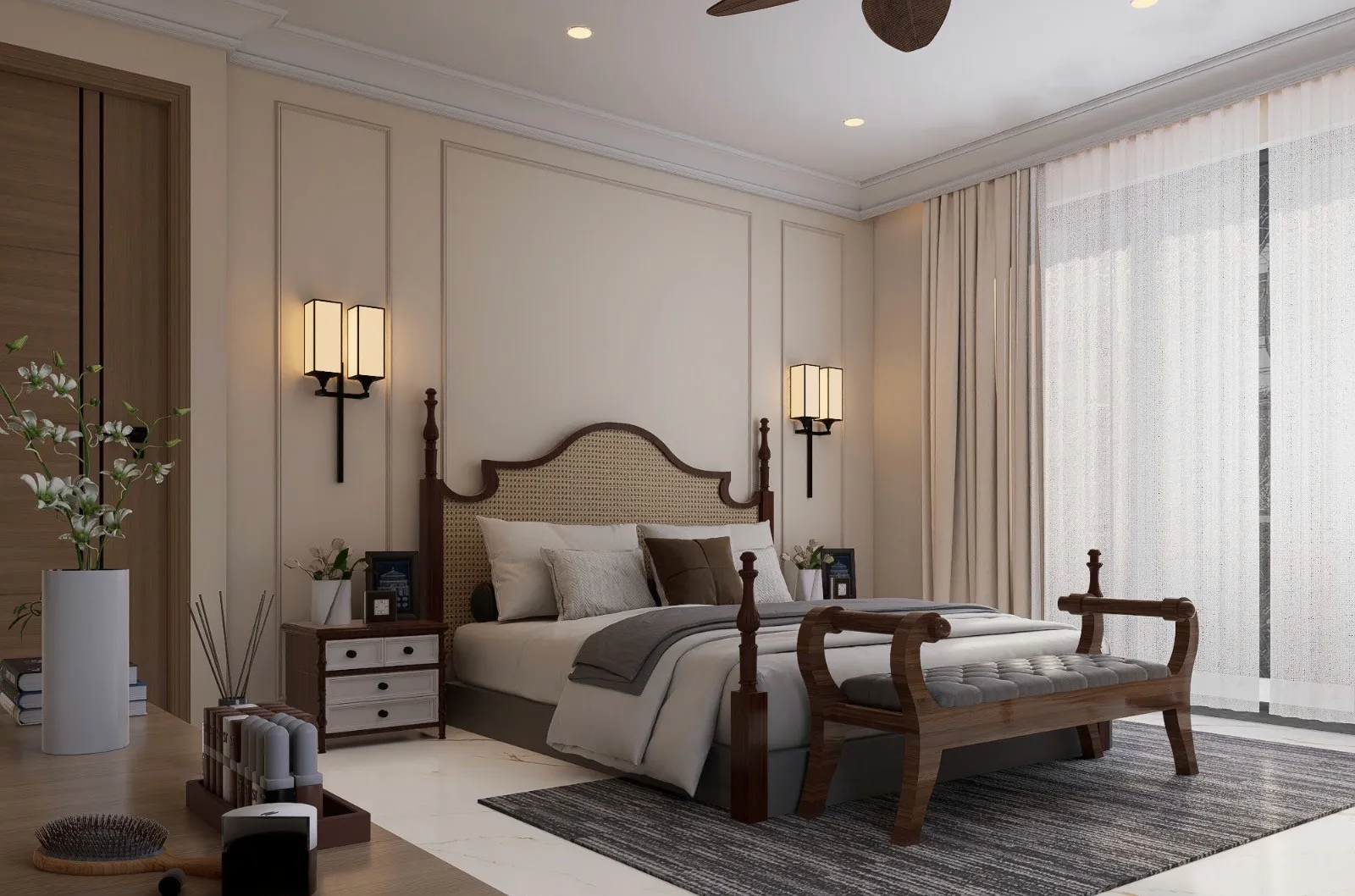
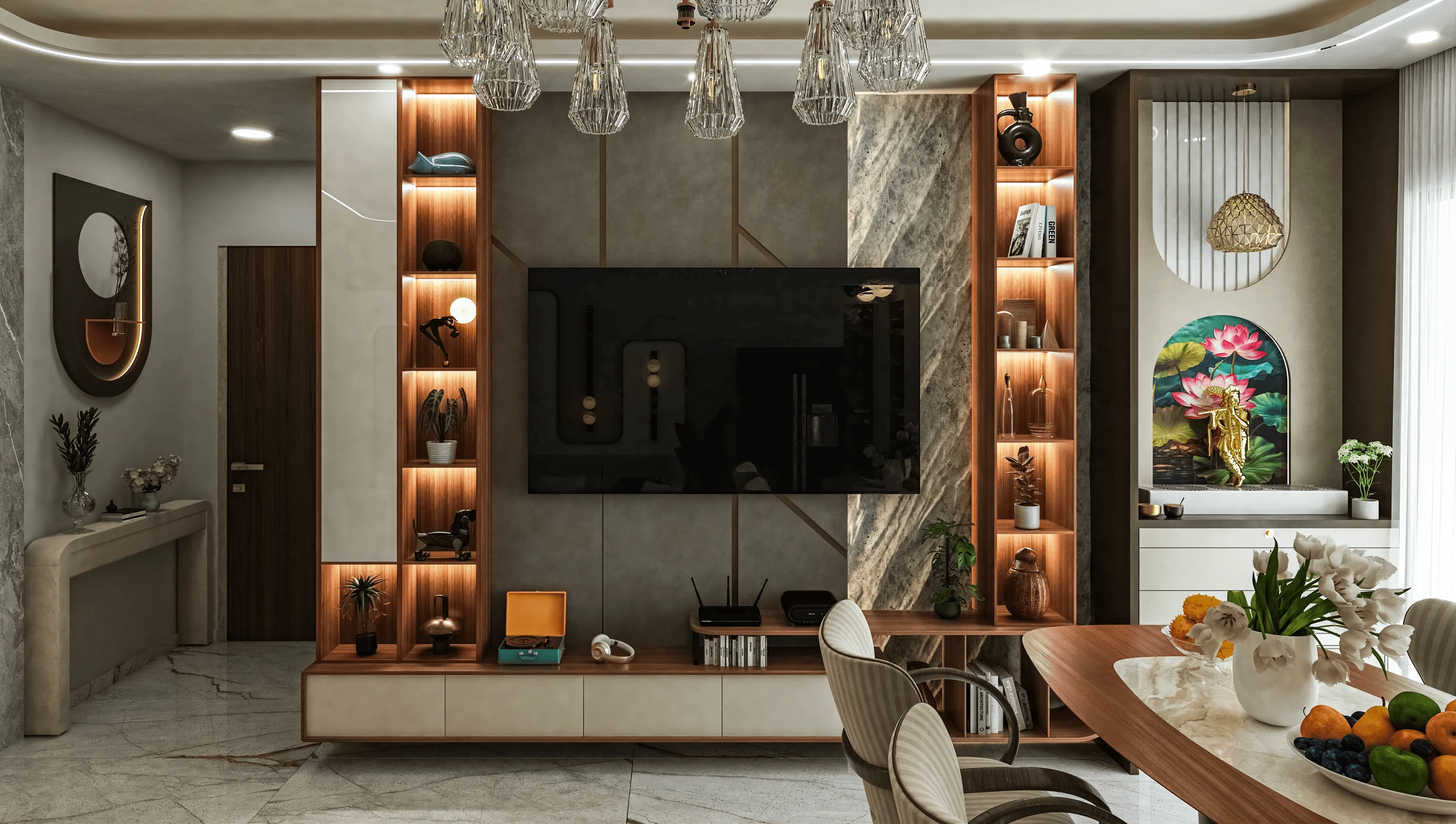
For most of the residential projects we handle across New Town, Salt Lake, and greater Kolkata, we recommend a hybrid approach rather than an all-or-nothing choice, using laminate for high-moisture zones like kitchen base cabinets under the sink, utility area shutters, and wardrobe interiors where the finish is rarely seen, while reserving veneer for wardrobe shutter fronts, TV unit panelling, and study or living room joinery where the material is both visible and less exposed to direct moisture. This approach on a typical 1,400 to 1,600 sq. ft. 3BHK in New Town usually lands the total finish budget somewhere between ₹1.6 lakhs and ₹2.4 lakhs depending on shutter count and how much veneer accenting the client wants, compared to an all-veneer approach that could run ₹3.5 lakhs or more for the same footprint. If your budget genuinely cannot stretch to any veneer, a good mid-tier laminate with proper edge sealing and BWP plywood will serve you well for a decade or more, and we would rather spec that combination correctly than push a client toward veneer they cannot comfortably afford. You can read more about how we think through plywood grading in our piece on BWP vs BWR plywood, since the substrate underneath either finish matters just as much as the finish itself when it comes to humidity resistance.
How This Fits Into Your Overall Furniture Budget
Finish selection is only one line item in a larger furniture decision, and if you are still weighing whether to go modular or carpenter-made for your wardrobes and kitchen in the first place, our comparison on modular versus carpenter-made furniture costs walks through how finish choice interacts with that decision, since carpenter-made units in Kolkata often give you more flexibility to mix laminate and veneer within a single piece than factory-pressed modular shutters do. And because finish decisions are exactly the kind of line item that tends to get underestimated when homeowners are building their initial renovation budget, it is worth reading our breakdown on the 10% snagging buffer that we recommend every client set aside, because finish touch-ups, whether that is a laminate edge that needs resealing or a veneer panel that needs a final coat, are one of the most common post-handover fixes we see.
Let Us Help You Choose the Right Finish for Your Space
Every home has a different mix of budget, sunlight exposure, moisture risk, and aesthetic priority, and the veneer-versus-laminate decision genuinely changes room by room within the same flat, which is exactly the kind of detail we work through with clients during the material selection stage of every project we take on. If you are planning a wardrobe or kitchen renovation anywhere in New Town, Salt Lake, Rajarhat, or greater Kolkata and want a finish plan that accounts for your specific site conditions rather than a one-size-fits-all recommendation, get in touch with our team and we will walk your space with you before you commit a single rupee to material.