






Cost of Wood Wall Panelling for an Accent Wall in a Kolkata Living Room
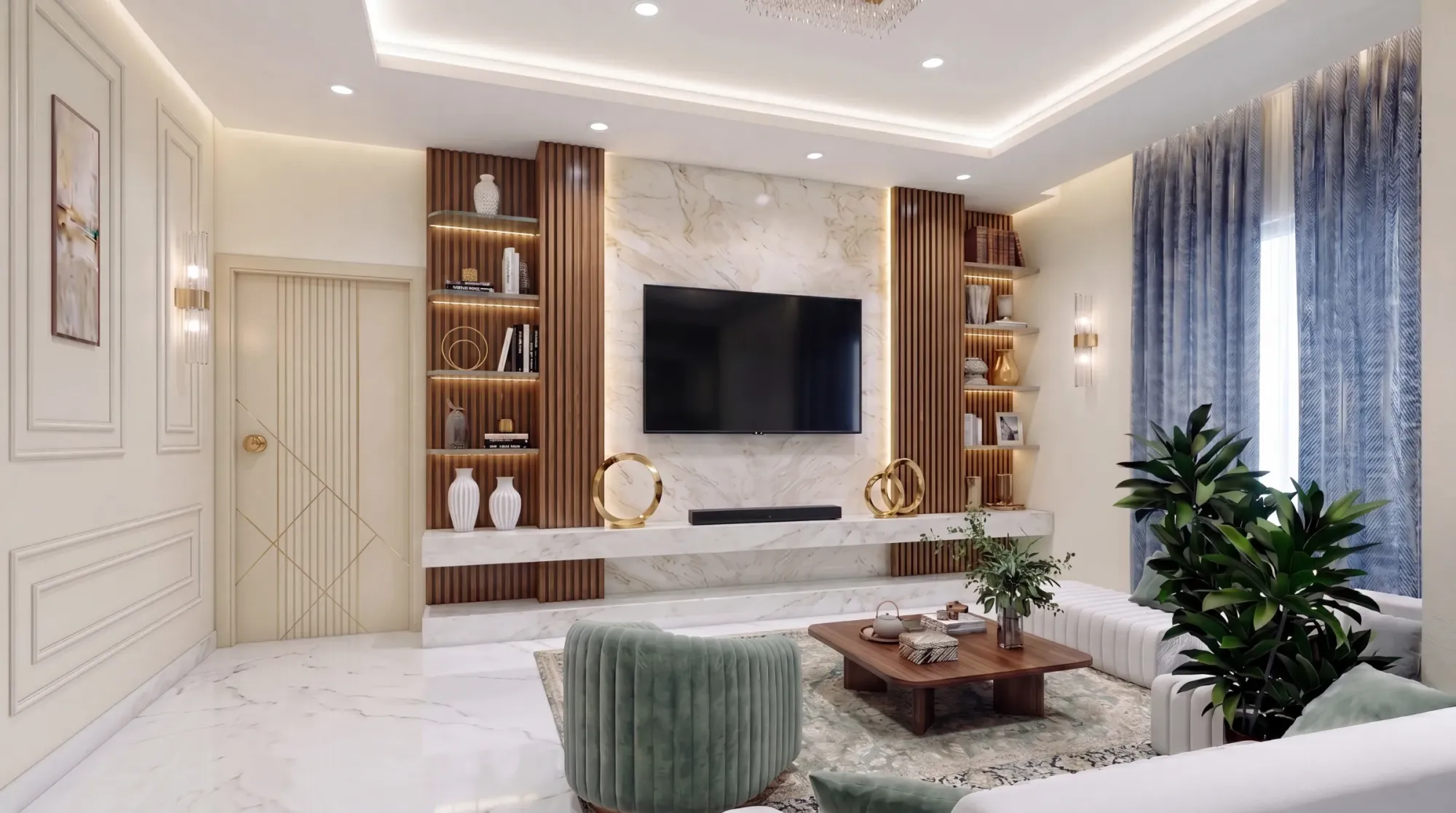
The cost of wood wall panelling for an accent wall in a living room in Kolkata depends far more on which material you choose than most clients expect walking in, and the honest range across the three options we install most often, MDF, WPC and solid wood, runs from roughly ₹180 per sq ft on the economical end to ₹950 per sq ft for genuine timber, which means the identical 90 sq ft accent wall behind a living room sofa can cost anywhere from ₹16,000 to ₹85,000 depending purely on the material behind the finish. That is a wide enough spread that we think it is worth walking through what actually separates these three options, because the difference is not just price, it is how each one behaves against Kolkata's particular humidity, and getting that part wrong is what leads to a panelled wall that looks beautiful at handover and starts lifting at the seams eighteen months later.
MDF, WPC and Solid Wood, Compared Properly
MDF, or medium density fibreboard, is the material behind the majority of fluted and grooved accent walls we install today, largely because it machines cleanly into the deep vertical grooves that have become the dominant look in Kolkata living rooms over the last few years, and it takes laminate, veneer or a sprayed PU paint finish equally well. WPC, wood-polymer composite, costs more but is genuinely water and humidity indifferent in a way plain MDF is not, which matters if your accent wall sits anywhere near a balcony door, a window that gets monsoon spray, or a room where the AC is not running every day of the year. Solid wood, whether that is teak, sal or a veneered slat system, sits at the top of the range and is chosen almost entirely for the depth and grain variation that no engineered material fully replicates, though it does need a proper sealant coat to behave well in our climate rather than being left to react to every humidity swing on its own.
| Material | Cost Per Sq Ft | Best Suited For |
|---|---|---|
| MDF with laminate or veneer finish | ₹180-320,Dry, AC-controlled rooms with stable humidity | |
| MDF with PU paint and a fluted profile | ₹280-420,Living rooms wanting a matte grooved look | |
| WPC (wood-polymer composite) fluted panels | ₹320-480,Walls near balconies or monsoon-facing windows | |
| Solid wood veneer or slat panelling | ₹550-950,Statement walls where real timber grain matters |
Why Material Choice Matters More Here Than Elsewhere in India
Kolkata's relative humidity sits above 70% for most of the year and climbs well past that through the June to September monsoon, and an accent wall behaves very differently under that kind of sustained moisture load than the same material would in a drier city like Bengaluru or Delhi. Plain MDF, left without a proper laminate or PU seal on every exposed edge, will absorb ambient moisture at the joints over time and the panels can start to swell or separate at the seams, which is the single most common panelling complaint we get called in to repair on wall systems installed by contractors who skipped edge banding to save a small amount on material. WPC solves this entirely because its polymer core does not absorb moisture the way wood fibre does, which is exactly why we default to recommending it for any accent wall within a few feet of an external window or door, even though it costs roughly ₹100 to ₹150 more per sq ft than an equivalent MDF panel.
WPC Fluted Panelling vs Solid Wood
For clients trying to decide between the mid tier and the top tier rather than starting from MDF, the choice usually comes down to how the room will be used and how much of a long-term statement the client wants the wall to make.
| WPC Fluted Panelling | Solid Wood Veneer Panelling |
|---|---|
| Fully resistant to Kolkata's humidity swings, will not warp or swell at the seams | Genuine timber grain and depth, though it needs proper sealing to behave well in our climate |
| Costs ₹320 to ₹480 per sq ft | Costs ₹550 to ₹950 per sq ft depending on the species and cut |
| Comes in ready fluted or slat profiles, faster to source and install | Often milled and matched to size, which adds a few days to the timeline |
| Well suited to rental-adjacent homes or lower-maintenance living rooms | Well suited to a genuine forever-home statement wall where budget allows real timber |
What a Fluted Accent Wall Actually Costs, Line by Line
Fluted or grooved panelling costs more per sq ft than a flat laminate panel because the vertical grooves have to be machined individually rather than simply cut to size, and most of that additional cost sits in the panel material itself rather than in labour, since fixing a fluted panel to a wall is not meaningfully harder than fixing a flat one once the plywood backing and battens are in place.
Cove or strip lighting recessed along the top or side edge of a panelled wall has become close to standard in the projects we execute now, since a warm LED strip run behind the top batten does more to make a panelled wall look intentional in the evening than almost any other single addition, and it typically adds only ₹4,000 to ₹7,000 to the total for a 90 sq ft wall.
Sizing It to Your Actual Living Room
Most Kolkata living rooms we work in, whether in a 2BHK in New Town or an older 3BHK layout around Dum Dum and Lake Town, have a sofa-facing wall somewhere between 8 and 11 feet wide and 8 to 9 feet floor to ceiling, which puts a full-height accent wall at 64 to 99 sq ft in most cases, though plenty of clients choose to panel only the section behind the sofa itself, stopping the panelling at roughly 4 to 5 feet high, which trims the material cost by close to 40% while still delivering most of the visual impact a full-height wall provides. If you are still working through the broader layout of the room before deciding where the accent wall should even sit, our guide to living room layout ideas for Kolkata flats is worth reading first, since the wall you choose to panel should generally be the one the seating faces rather than a side wall that gets less daily visual attention.
One detail worth knowing if you have dealt with municipal approvals on other parts of a renovation is that wall panelling, being a purely internal decorative addition, does not touch your flat's sanctioned built-up area or count against what planners measure as floor area ratio, unlike a structural addition such as enclosing a balcony, which does. That means an accent wall can go up on your own schedule without any separate submission to NKDA or KMC, regardless of which jurisdiction your building falls under.
Getting the Sequencing Right
Panelling should always be one of the last trades on site rather than one of the first, because it needs to go up after electrical points are finalised (a fluted wall with a switch plate awkwardly interrupting the grooves is a mistake we still see from projects done before design and electrical were properly coordinated) and after any wall dampness has been fully addressed, since panelling over an unresolved damp patch simply hides the problem behind plywood rather than solving it. We typically allow five to nine working days for a single accent wall from template measurement through final fixing, and that timeline holds steady regardless of which of the three materials you choose, since the difference in cost between MDF, WPC and solid wood shows up in the material bill rather than in how long the carpenters spend on site.
Let Us Help You Choose the Right Wall
If you have a living room wall in mind and are trying to decide whether MDF, WPC or solid wood makes sense for your specific room, its light exposure, and your budget, send us a photo and the wall dimensions through our contact page and we will recommend a material honestly rather than upselling you to the most expensive option on the table.