






Warm Japandi Living Room Ideas for a New Town Flat
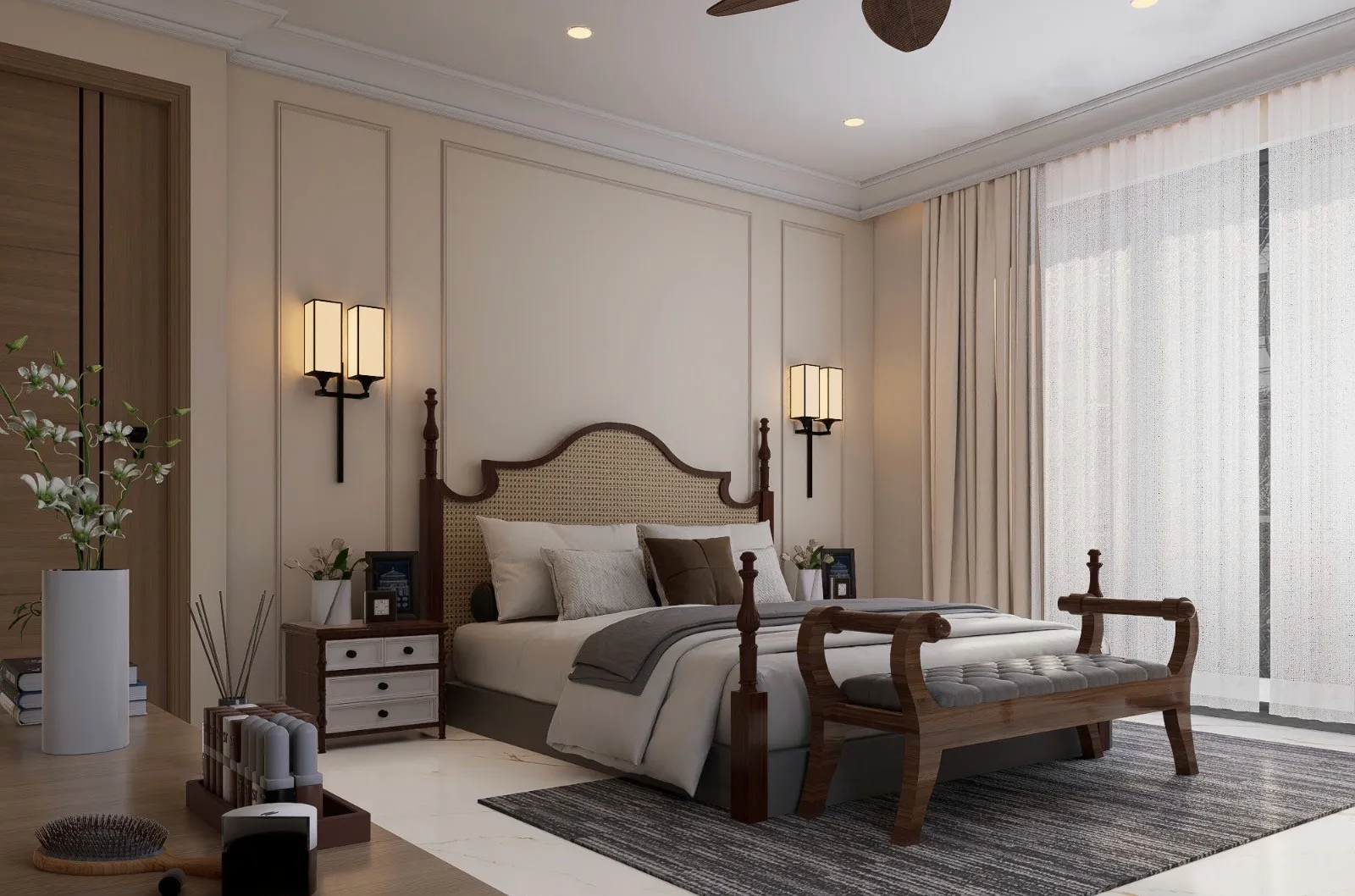
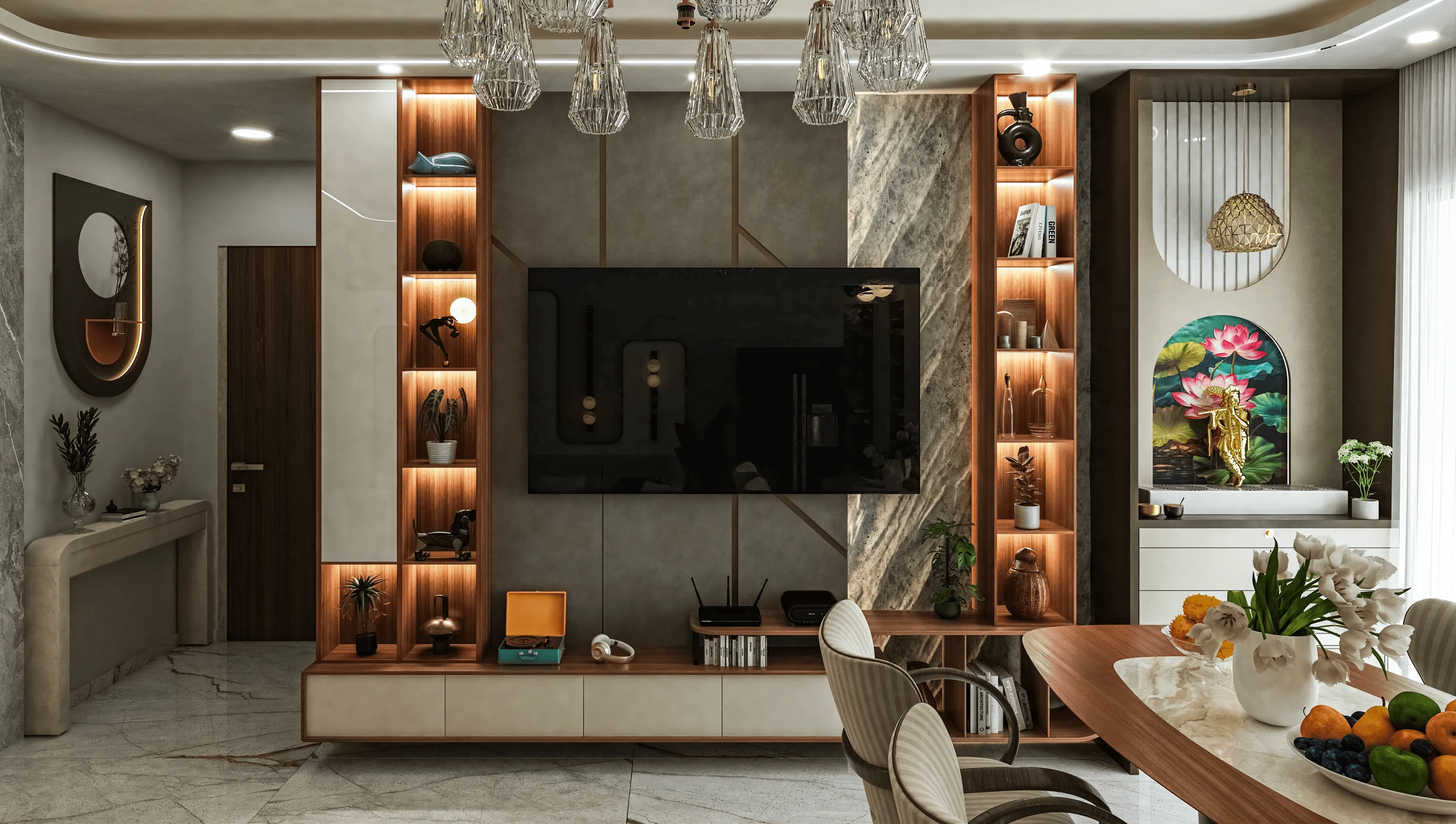
When a client in New Town asks us for a Japandi living room, the brief almost always arrives with a folder of saved images that lean the same direction, pale ash flooring, stark white walls, and furniture so spare it borders on austere, and our first real conversation with nearly every one of these clients is about how to keep that calm, uncluttered spirit while pulling enough warmth into the room that it stops reading like a showroom photographed under grey Scandinavian daylight and starts feeling like a home built for Kolkata's own sun and colour. Warm Japandi, as we practise it for New Town flats, keeps the underlying philosophy fully intact, only as much furniture as the room genuinely needs, natural materials left honest rather than dressed up, and a palette that never shouts, but it swaps out the coldest material choices for ones that hold their own against direct sun through an Action Area window, and that single shift tends to be the difference between a living room a client photographs once for the portfolio and one the family actually spends every evening in.
Why the Pinterest Version of Japandi Rarely Survives Kolkata's Light
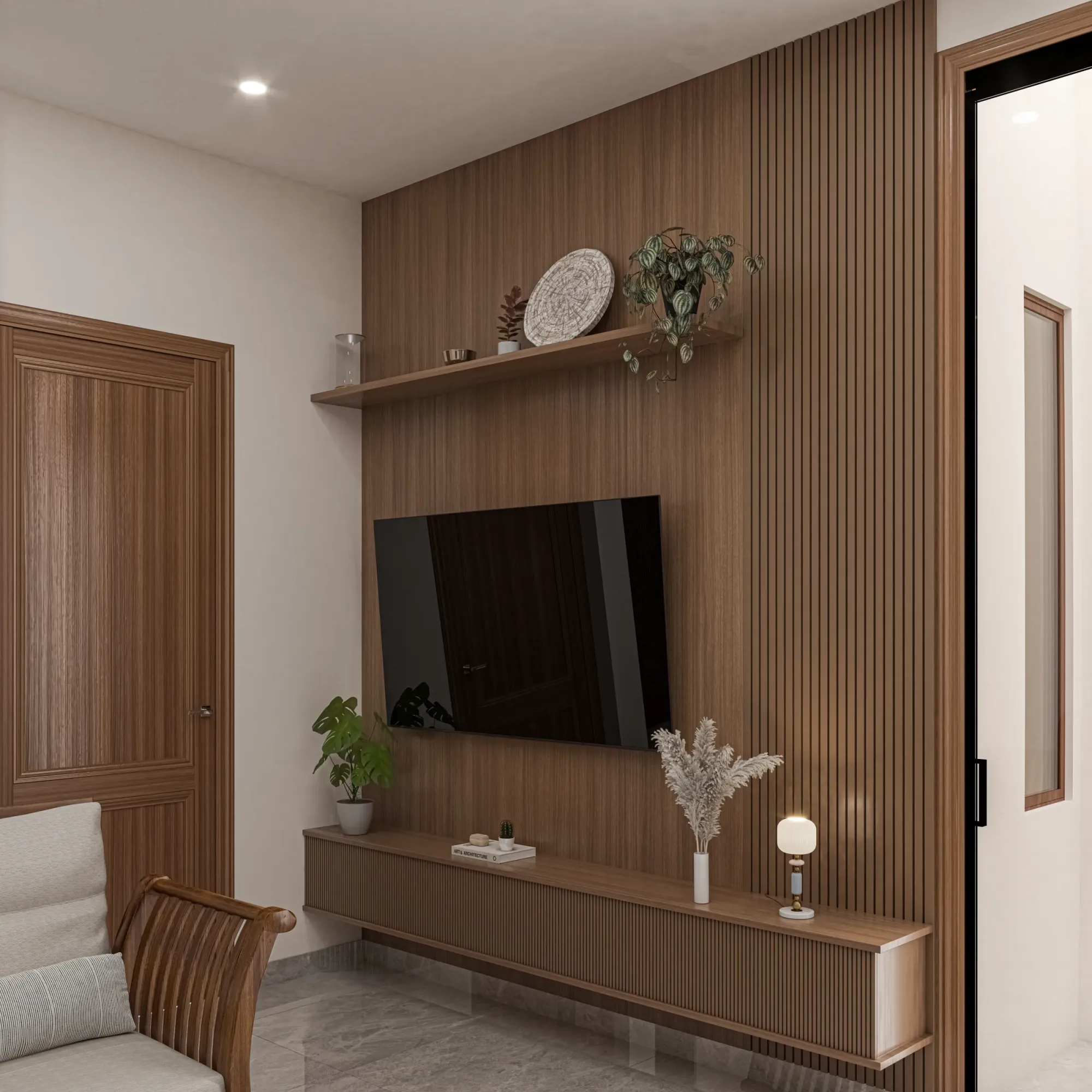
Much of the Japandi imagery circulating online was shot in Nordic interiors under low, blue toned daylight, where pale birch ply, cool grey stone, and white oak all read as soft and calm because the ambient light itself is soft and cool for most of the year, and that combination simply behaves differently once it sits inside a New Town flat facing east or south across Action Area I or Action Area II, where direct sun for several hours a day turns the same pale ash and white plaster stark rather than serene. So the very first change we make on almost every warm Japandi brief is in the wood tone itself, moving away from bleached or pale ashwood toward a warmer stained sheesham or a walnut toned veneer that still keeps its natural grain visible, which is the actual Japandi principle worth protecting, without the finish turning cold and flat the moment strong afternoon light hits it.
Bringing Timber and Linen Into the Palette Instead of Fighting Against It
Once the base wood tone is settled, the rest of the palette follows the same warming logic, and for a typical New Town living room running somewhere between 220 and 280 sq ft, we usually build the material story around three or four honest textures rather than a longer list of finishes competing for attention. Engineered wood flooring in a honey or light walnut tone replaces the pale ash default, upholstery moves into oatmeal, rust, and soft terracotta linen rather than the pure white or charcoal grey that most Japandi mood boards default to, and a jute or wool blend rug in a similarly warm neutral grounds the seating area without introducing pattern the room does not need. We also lean on rattan and cane wherever the design allows it, a woven cane door on a low sideboard or a rattan pendant shade over the coffee table, because that texture softens the straight lines of the timber furniture in a way that flat lacquered surfaces never quite manage, and it happens to be a material Kolkata's own furniture markets carry well and price reasonably.
| Standard Cool Japandi | Warm New Town Japandi |
|---|---|
| Pale ash and white oak flooring | Honey toned engineered wood or stained sheesham flooring |
| Stark white or cool grey plaster walls | Warm off white or soft clay toned plaster |
| Charcoal and pure white linen upholstery | Oatmeal, rust and terracotta linen upholstery |
| Black metal and glass accents | Brushed brass or warm bronze hardware and fittings |
Keeping the Furniture Low Without Losing Structure
Japandi's low, grounded furniture silhouette is one of the parts of the style we never compromise on, because it is exactly what keeps a small New Town living room feeling airy rather than crowded, and for most flats we design in this category the sofa seat height sits around 30 to 32 inches, the coffee table stays under 16 inches tall, and the console or media unit rarely climbs past 20 inches off the floor. This works especially well against the typical 10 foot slab-to-slab height common across New Town towers, because once an 8 to 10 inch false ceiling drop is accounted for, keeping the furniture low leaves a generous band of open wall and air above it, which does more to make a compact room feel spacious than adding floor area ever could. Our false ceiling and lighting design service is where a lot of this actually gets resolved on paper, because the cove depth, the beam placement, and the furniture height all need to be worked out together rather than decided in isolation.
Lighting That Keeps the Warmth Once the Sun Goes Down
A palette this carefully warmed can still fall flat after dark if the lighting temperature works against it, so we specify LED strip lighting in the false ceiling cove at around 2700K rather than the cooler 4000K white that reads clinical against warm timber and linen, and we layer that cove light with at least one warm bodied floor lamp and a low pendant over the coffee table or side table rather than relying on a single central fixture. This layered approach matters more in a Japandi living room than in most other styles we design, because the whole point of the low furniture and honest materials is to create a room that feels settled and lived in during the evening hours, and a single bright overhead source undoes that instantly no matter how well the daytime palette is resolved.
Storage That Keeps the Room Uncluttered Without Feeling Empty
The line between calm and empty is thin in any minimal style, and it is the single most common mistake we see clients make when they try a Japandi living room without professional joinery behind it, because stripping a room of visual clutter without replacing that clutter with warmth and texture just leaves it looking unfinished rather than serene. We handle this with concealed storage built into a low media console rather than open shelving that has to stay perfectly curated, and we always leave at least one full wall mostly bare so that the timber, linen, and brass accents elsewhere in the room have room to read as intentional rather than sparse. A single well chosen textile, whether that is a handwoven cushion cover or a linen throw folded over the arm of the sofa, usually does more to warm a Japandi room than an additional piece of furniture would.
- Swap pale ash or white oak flooring for a honey toned or walnut stained finish before any other decision
- Choose oatmeal, rust or terracotta linen upholstery over stark white or charcoal grey
- Keep coffee tables and consoles under 16 inches tall to preserve the low, grounded Japandi silhouette
- Warm the false ceiling cove lighting to around 2700K rather than a cooler 4000K white
- Add one rattan or cane textured piece to soften the timber and linen combination
- Leave at least one wall mostly bare so the warmth reads as calm rather than cluttered
How This Same Thinking Extends Beyond the Living Room
Most of the New Town clients who commission a warm Japandi living room from us are furnishing the rest of the flat around the same time, and we have written separately about the broader principles of seating, circulation, and sightlines that apply to any Kolkata living room in our guide to living room layout ideas in Kolkata, which is worth reading alongside this piece if the layout itself, not just the palette, still needs working out. The same low clutter, warm material thinking we describe here shows up in very different forms elsewhere on the blog too, from an industrial style home office for a Salt Lake apartment that leans the opposite direction on warmth, to a Scandinavian kids bedroom for a Rajarhat apartment that borrows Japandi's restraint but applies it to a child's room, and even into commercial territory in our piece on coworking space design for a 40 seat office in Sector 5, where the same low furniture, honest material logic gets adapted for a shared work environment.
Bringing a Warm Japandi Living Room to Your Own New Town Flat
A Japandi living room does not have to choose between the calm of the style and the warmth a Kolkata home actually needs, and over more than a decade of practice across New Town, Salt Lake, and Rajarhat we have found that the two sit comfortably together once the wood tone, the textile palette, and the lighting temperature are all pulled in the same warm direction rather than left at their coldest Nordic defaults. If you are furnishing a living room in New Town and want to see what a warm Japandi palette would actually look like against your own floor plan and window orientation, reach out through our contact page and we will walk through it with you.