





How AI Mood Boards Changed the First Client Meeting at Kolkata Design Studios in 2024
For most of the decade we have been practicing, the first real design meeting with a new client followed a pattern that had barely changed since the studio's earliest years in 2014: we would arrive, or the client would visit our office in New Town, carrying a physical case of laminate chips, fabric swatches, tile samples, and a stack of printed reference images pulled from magazines and earlier project photography, and we would spend the better part of an hour laying combinations out on a table, holding a laminate sample against a fabric swatch under whatever light the room offered, and asking the client to imagine how the pieces might come together across an entire home they had not yet seen built. It worked, but it asked a great deal of a client's imagination, and it is not a coincidence that a meaningful number of change requests later in a project traced back to a client agreeing to a swatch combination in that first meeting without being able to actually picture it filling a room. Through 2024, that first meeting changed shape in our studio, and we think the change is specific enough, and recent enough, that it is worth documenting plainly rather than folding into a vague statement about "technology in design."
What Changed, Specifically
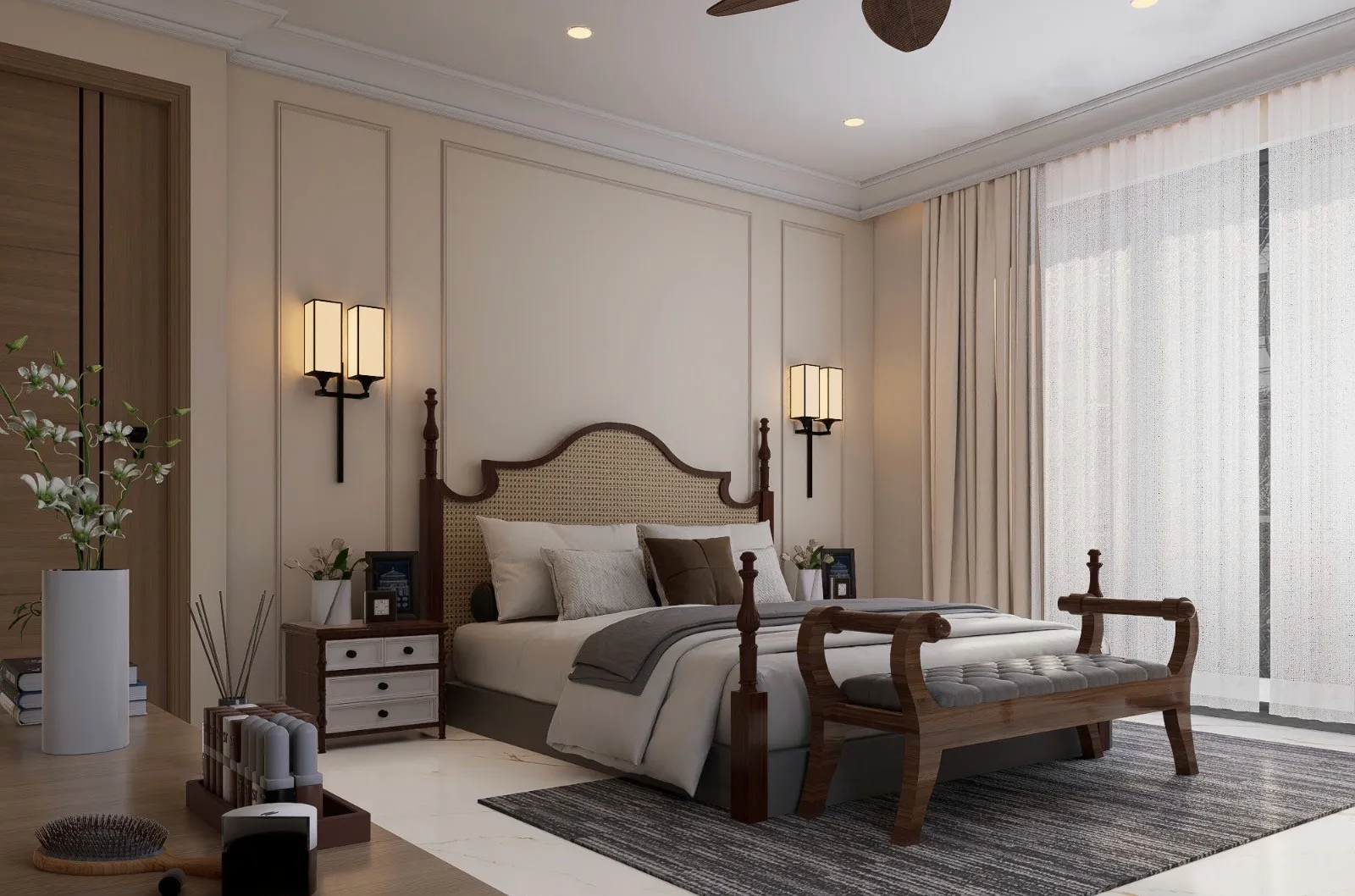
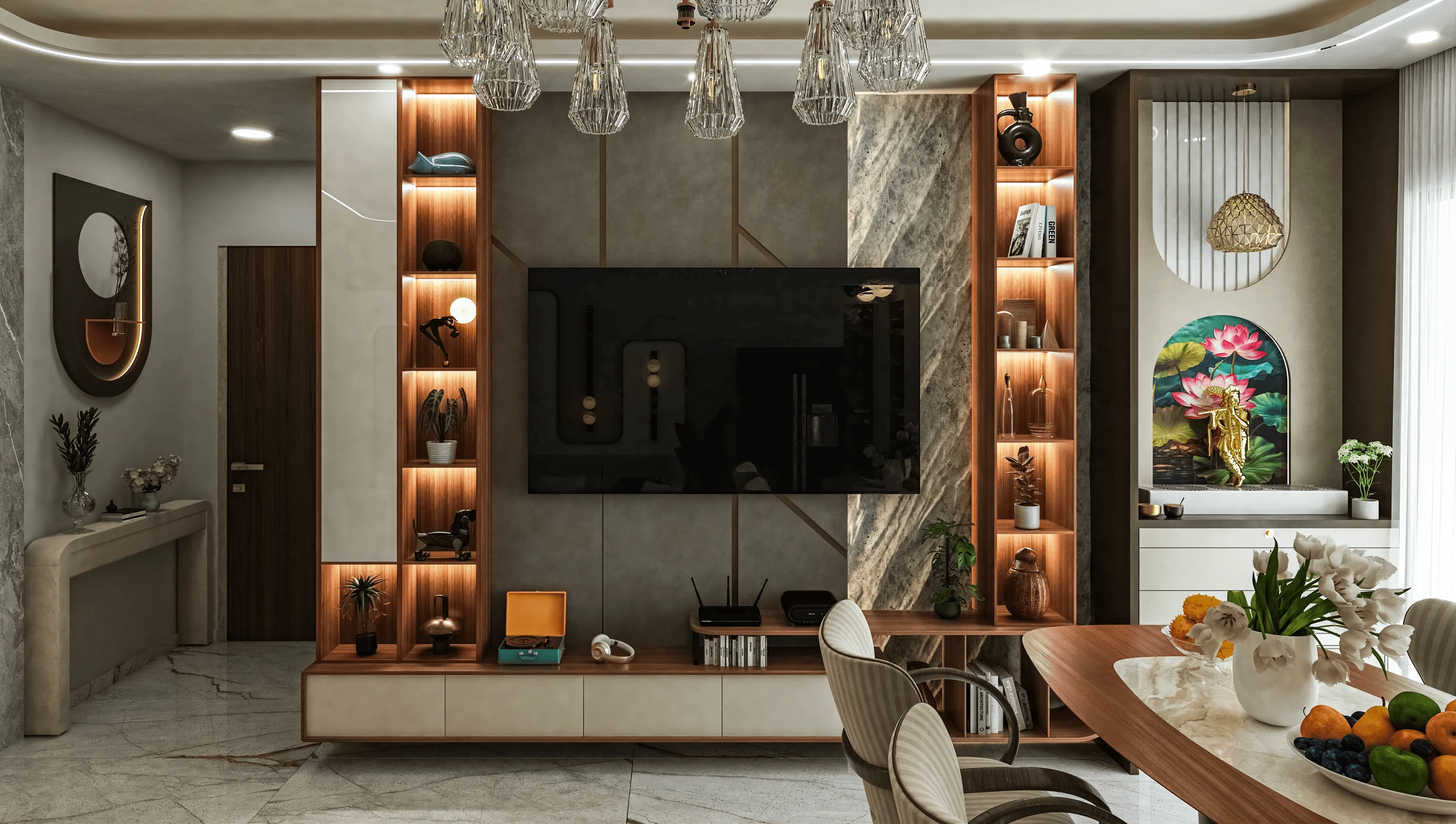
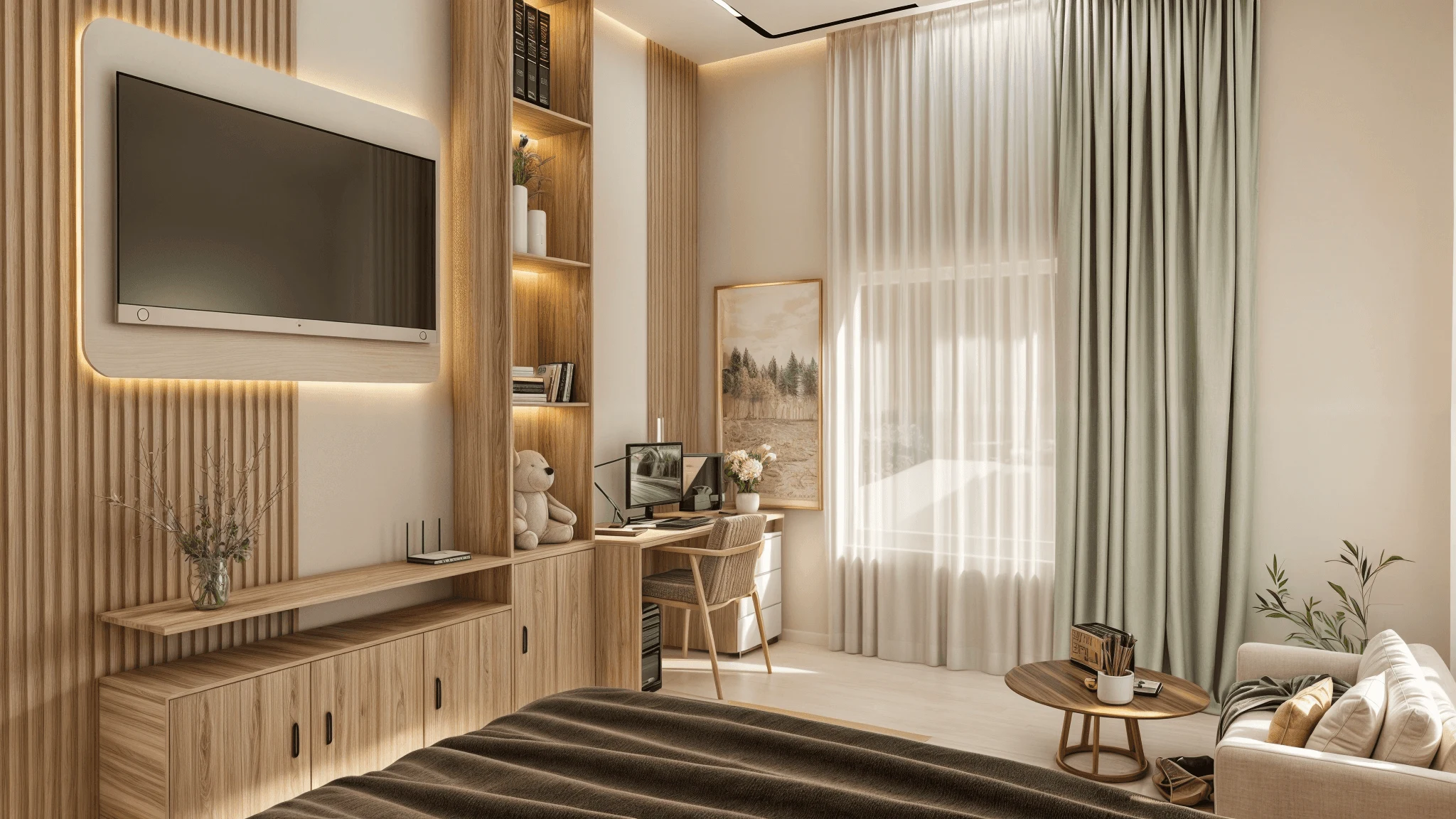
Starting in the first quarter of 2024, we began generating AI image renders during or immediately after the first client meeting, using the client's own room photographs or, where a project was pre-construction, a rough floor plan and elevation as the starting input, combined with a written description of the palette, material language, and furniture style the conversation had surfaced. Rather than asking a client to extrapolate from a laminate chip the size of a playing card, we could show them, within the same meeting or by the next morning at the latest, a rendered image of their actual living room with a terracotta accent wall, a specific sofa silhouette, and a particular flooring tone all sitting together in something close to their real light and proportions. This is a narrow, specific change to one stage of our process, the concept and briefing stage, and we want to be precise that it did not replace anything downstream: our construction drawings, material schedules, 3D visualization for final sign-off, and every technical deliverable still run through the same detailed process they always have, using the dedicated rendering and CAD tools we relied on before 2024 as well. What moved was the very first conversation, the one where a client is still deciding what they even want, and that is the stage where speed and iteration matter more than photographic precision.
Why the Physical Swatch Meeting Struggled
The old approach was not wrong, it was simply slow at exactly the point in a project where speed matters most for client confidence. A physical swatch presentation could show a client perhaps four or five curated combinations in a single sitting, each one requiring us to have pre-selected and physically transported the relevant samples in advance, which meant the client was choosing between a small number of options we had already narrowed down rather than genuinely exploring. If a client saw a combination and immediately wanted to try a warmer wall tone against the same flooring, or wanted to see how a bolder fabric would sit in the space instead, that request usually meant scheduling a second meeting once we had sourced the new samples, a turnaround that could run anywhere from three days to two weeks depending on supplier stock. Across the roughly forty to fifty new residential briefs we take on in an average year, that lag was consistently the single biggest source of delay between the first meeting and a client feeling ready to sign off on a design direction, not because clients were indecisive, but because the tools available to explore ideas quickly simply were not fast enough to keep pace with how quickly people actually think through what they want.
What the AI-Generated Mood Board Meeting Looks Like Now
A typical first meeting in 2025 and into 2026 still opens the same way it always has, with us walking the actual space, discussing the family's routines, budget, and how they use each room, because no amount of generated imagery replaces understanding how a client actually lives, and we have not changed that part of the process at all. Where it diverges is what happens once the palette and material conversation starts: instead of pulling out swatch boxes, we now work from the client's own room photographs, feeding a description of the discussed direction, wall tone, flooring type, cabinetry finish, furniture silhouette, into an AI image generation tool during the meeting itself, and within a few minutes we can show the client two or three variations rendered into their actual room rather than an abstract combination on a table. If a client says the terracotta reads too dark, or wants to see the same layout with a warmer wood tone on the flooring instead, we can generate a revised version before the meeting ends rather than scheduling a follow-up, and that immediate feedback loop has visibly changed how confidently clients commit to a direction. We have found that clients arrive at a locked concept direction in an average of one to two meetings now, down from what typically ran three to four meetings under the swatch-based process, purely because the exploration phase compressed from weeks into a single sitting.
What We Are Careful About
We want to be honest about the limits of this tool rather than oversell it, because an AI-generated render is a communication aid for the concept stage, not a substitute for the accuracy a client needs before committing money to construction or procurement. These images are useful for agreeing on mood, tone, and general material direction, but they are not dimensionally accurate, they do not reflect actual product SKUs or real fabric performance, and we never use them as the basis for a final material order or a construction drawing, that work still runs through our standard 3D visualization and rendering process, which uses dimensionally accurate CAD-based models tied to the actual floor plan and specified products. We are also careful to tell clients this distinction directly in the meeting itself, because a beautiful AI-generated image of a room can create expectations that a hand-finished, real-world material simply will not replicate pixel for pixel, and setting that expectation honestly at the first meeting avoids a much more difficult conversation later when the physical materials arrive. The technology sped up how we explore ideas together, it did not change the underlying design judgment or the technical rigor that turns an idea into a livable, structurally sound home.
Where This Sits Alongside Everything Else That Changed Around It
This shift in the first meeting did not happen in isolation, and it is worth reading alongside two other changes we have documented separately, because together they explain a lot about how differently a Kolkata design brief runs today compared to five years ago. The palette clients are now asking us to render in these AI mood boards leans heavily on the warm, earthy tones we cover in our piece on how Kolkata interiors traded greys for terracotta and ochre through 2023, and being able to show that palette convincingly, in a client's own room, at the first meeting, has almost certainly accelerated how quickly that colour shift took hold across our client base. We also saw client tastes swing briefly toward much darker, more dramatic bedroom schemes in the same period, a trend we document in our piece on the brief moment dark, moody bedrooms had in Kolkata in 2023, and being able to generate a fast preview of a near-black accent wall against a client's actual room lighting was, in our experience, exactly what let clients confidently commit to or step back from that particular look within a single sitting rather than agonizing over a swatch that told them almost nothing about how dramatic the finished room would actually feel.
Bring Your Own Room Into the First Conversation
If you have been putting off that first meeting because you are not sure how to describe what you want, the good news is you no longer need to, bring a few photographs of your actual rooms and we can start shaping a direction together in real time rather than asking you to imagine it from a swatch card. Reach out through our contact page and let us set up a first meeting where you can actually see your own home in the palette and materials we are discussing before you commit to anything.