






Bamboo Beyond Scaffolding: Structural and Decorative Uses in Bengal Homes
Every homeowner in Kolkata has seen bamboo doing one job for decades, holding up scaffolding on a construction site or a repair job, lashed together in those tall green frameworks that seem to appear overnight around any building under work, and that single visual association is honestly the biggest obstacle we run into when we suggest bamboo as a design material for the actual finished home rather than the temporary rig around it. Clients tend to hear "bamboo furniture" or "bamboo screen" and picture something flimsy, temporary, or associated with budget outdoor furniture that warps and splits within a monsoon or two, and that reaction is fair given what untreated bamboo genuinely does in this climate if nobody treats it properly, but it also means most people never get introduced to what correctly treated bamboo can actually do in a Bengal home, which in our experience is considerably more than most clients expect.
Why Untreated Bamboo Fails Here and What Changes That
Bamboo in its raw, freshly harvested state is mostly starch and sugar content sitting inside a fibrous cellulose structure, and that starch is exactly what attracts the powder post beetle and other borer insects that will happily reduce an untreated bamboo pole to a hollow, dust-filled shell within a couple of years in a climate as consistently warm and humid as Kolkata's. Add sustained monsoon humidity, which keeps ambient moisture high for months at a stretch, and untreated bamboo will also absorb water into that fibrous structure, swell, and eventually rot or fungal-stain from the inside, which is precisely the failure mode that gives bamboo its "temporary material" reputation among people who've only encountered it in scaffolding form, where nobody expects the poles to last more than a construction cycle anyway.
The treatments that change this outcome are neither exotic nor new, they're simply skipped on cheap scaffolding-grade bamboo because scaffolding doesn't need to last. The most reliable and widely used method for construction and furniture-grade bamboo is a borax-boric acid treatment, commonly called the Boucherie process when applied through sap displacement in freshly cut green bamboo, where the natural sap is pushed out of the pole under pressure and replaced with a borax-boric acid solution that permeates the fibre and makes it fundamentally unpalatable to borer insects while also raising its resistance to fungal decay. Properly treated this way and then air-dried under cover rather than in direct sun, which prevents the surface splitting that rapid moisture loss causes, a bamboo pole's usable structural life extends from the two or three years an untreated pole might survive out to fifteen years or considerably longer for interior applications kept out of direct weather exposure, which is an entirely different material proposition than what most people picture. For culms destined for outdoor pergola or screen use where direct rain exposure is unavoidable, we specify an additional water-repellent or clear protective coating on top of the borax treatment, reapplied on a periodic maintenance cycle much like any exterior timber would need, and we're upfront with clients that bamboo used outdoors is not a zero-maintenance material any more than teak or sal wood would be in the same exposed position.
Where Bamboo Genuinely Earns Its Place: Pergolas and Shade Structures
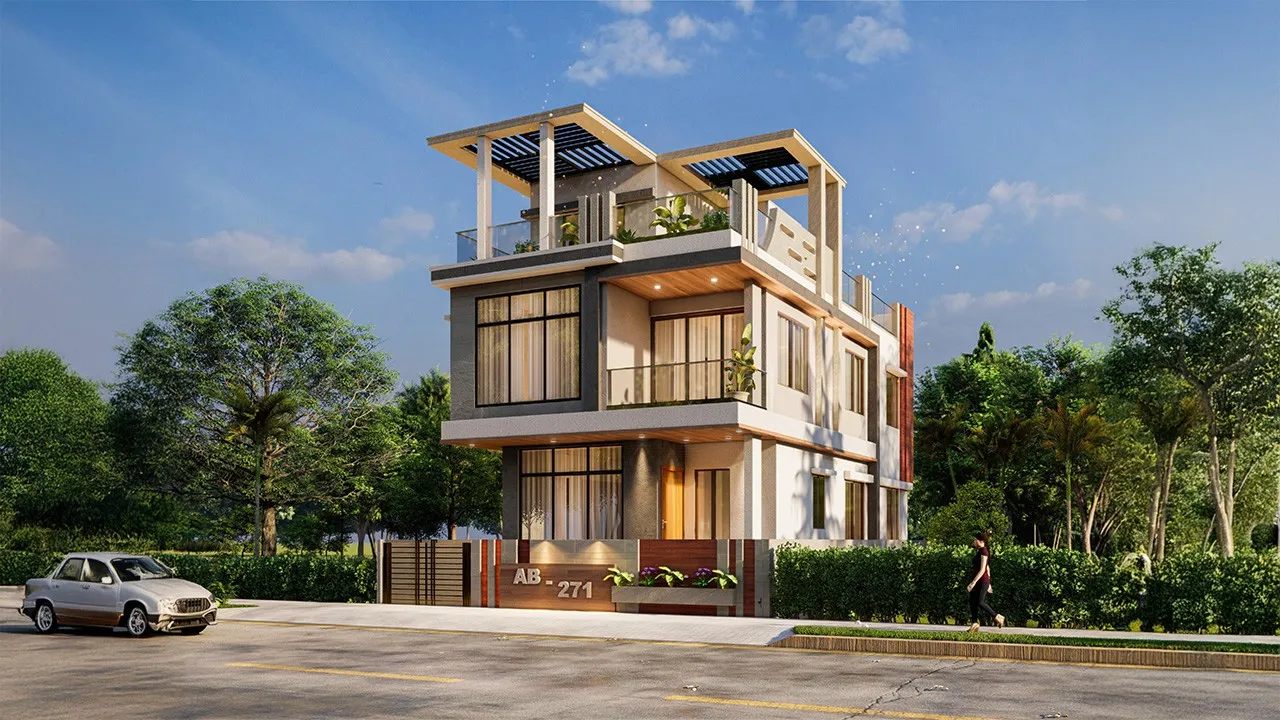
Pergolas and shade structures over terraces, balconies and courtyard sit-outs are, in our experience, where treated bamboo makes the single strongest case for itself in a Bengal home, because the material does two things simultaneously that a metal or timber pergola structure typically has to choose between. Bamboo's natural culm diameter and internodal spacing give a pergola an inherent visual rhythm and warmth that a uniform steel or aluminium frame simply cannot replicate without a lot of additional finishing effort, and at the same time bamboo is genuinely lightweight relative to its structural strength, which matters considerably on Kolkata terraces and rooftop sit-outs where we're often working within a load allowance the original structural design never anticipated for a heavy pergola addition. A bamboo pergola frame spanning a typical 10 by 12 foot terrace sit-out, built from treated culms in the 3 to 4 inch diameter range with appropriately spaced cross members, comes in at a fraction of the dead load a comparable steel box-section pergola would impose, which has let us specify shade structures on several New Town terraces where the client's structural engineer had real reservations about adding steel weight to an existing slab.
We typically detail bamboo pergolas with a galvanised steel or treated hardwood base connection at the point where the culm meets the floor or parapet, rather than letting the bamboo itself sit in standing water or direct ground contact, because that base junction is the single most common failure point we see on badly executed bamboo structures elsewhere in the city, where moisture wicks up into the pole from below regardless of how well the culm itself was treated. Get that detail right and a bamboo pergola holds up through monsoon after monsoon with nothing more than an annual visual inspection and an occasional reapplication of the protective coating on the exposed top surfaces that take the most direct sun and rain.
Screens, Partitions and Ceiling Treatments
Interior bamboo screening has become one of our more frequently requested features over the last few years, particularly for clients wanting to visually separate a living and dining zone in an open-plan New Town flat without building a solid partition wall that would block light and airflow between the two spaces, and split or whole-culm bamboo screening does that job with a warmth and texture that a metal jali or a glass partition doesn't offer in the same way. We work primarily with split bamboo strips woven or fixed into a timber or metal frame for these interior screens, since split bamboo dries and stabilises faster than whole culms and takes stain or a clear protective finish more evenly across the exposed inner and outer fibre surfaces, and a well-detailed woven bamboo screen panel of roughly 4 by 7 feet, framed and fixed, typically runs somewhere in the ₹8,000 to ₹15,000 range depending on weave density and the finish specified, which sits comfortably competitive against a custom metal jali panel of similar size once you factor in fabrication time.
Bamboo ceiling treatments, whether as a full false ceiling surface in a covered verandah or as a decorative cove and border detail layered into a plaster false ceiling in an interior room, bring a genuinely different visual register than the painted gypsum board finish that dominates most Kolkata interiors, and we've used narrow bamboo slat ceiling panels to particularly good effect in covered outdoor dining areas and home bars, where the material's warmth reads well against exposed brick or laterite accent walls of the kind we've discussed in our piece on laterite and regional stone as a Bengal building material, the two materials sharing a similar logic of leaning into regional character rather than reaching for a generic imported palette. For a client weighing a bamboo ceiling feature against a more conventional cove-lit gypsum ceiling, our broader false ceiling and lighting design service is where that comparison usually starts, since the structural fixing method and the lighting integration differ meaningfully between the two approaches.
Furniture: Where Craftsmanship Determines Everything
Treated bamboo furniture is where we see the widest quality gap in the Kolkata market, because there is a real difference between bamboo furniture built by an artisan who understands joinery, curing and finishing, and the mass-produced bamboo furniture sold cheaply that gives the material its flimsy reputation in the first place. Well-made bamboo furniture uses techniques like pinning, lashing with treated cane or synthetic cord at load-bearing joints, and increasingly lamination, where thin bamboo strips are glued and pressed under controlled conditions into engineered bamboo boards that behave dimensionally more like hardwood plywood than like a raw pole, giving furniture makers a stable, warp-resistant material for tabletops, cabinet fronts and seating frames that holds up to daily household use in a way whole-culm construction alone sometimes doesn't for load-bearing furniture pieces.
We've specified custom bamboo dining tables, low seating and storage pieces for a number of clients wanting a distinct material palette without going fully rustic, and the cost proposition sits reasonably close to solid sal or teak furniture of comparable scale once you account for the skilled artisan labour good bamboo joinery requires, though the environmental case is considerably stronger given bamboo's growth cycle, since a bamboo culm reaches full structural maturity in three to five years compared to the decades a hardwood tree needs to reach comparable timber size, making it one of the genuinely fast-renewing materials available to us regionally. This is very much the same territory our custom furniture design work explores project by project, matching the material to how a family actually intends to use a piece rather than defaulting to whatever's fastest to source.
Treating Bamboo as a Design Decision, Not a Budget Compromise
The clients who end up happiest with bamboo in their home are the ones we can walk through this treatment and detailing conversation upfront, because bamboo specified and executed properly is a design decision with real structural and aesthetic merit, not a cheaper stand-in for materials a client couldn't otherwise afford, and once that reframe happens the material tends to get used more confidently and in more prominent positions in a home rather than tucked away as an afterthought. It sits naturally alongside the other regionally rooted material choices we keep coming back to for Bengal homes, from the laterite and local stone we've written about separately to the more fundamental question of clay brick against fly ash block for a home's actual structure, all part of the same underlying instinct to build with what this region already does well rather than defaulting to whatever's easiest to specify off a standard catalogue.
Curious What Bamboo Could Do in Your Home
If you've got a terrace crying out for shade, an open-plan flat that needs a soft visual break between living and dining, or you simply want to see treated bamboo samples in person before deciding whether it belongs in your project, we'd be glad to show you what correctly treated culms and laminated bamboo boards actually look and feel like against your specific space, so get in touch with us here and we'll talk through where bamboo might genuinely fit into what you're building.