






Natural Stone vs Artificial Stone Cladding: Cost Per Sq Ft for Kolkata Facades and Feature Walls
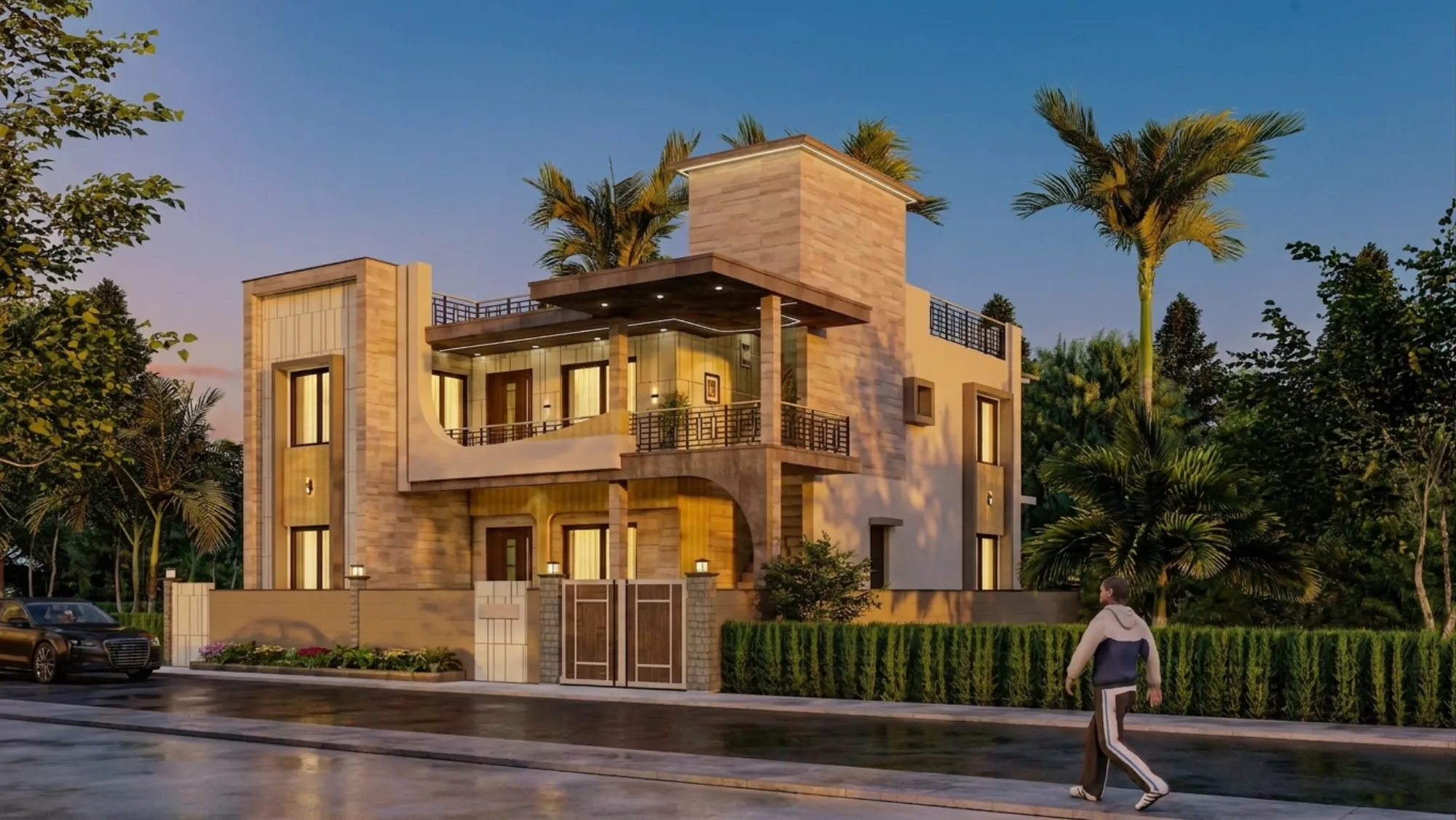
Every second or third client who walks into our New Town studio with a facade elevation or a living room feature wall in mind asks us the same opening question, which is whether they should go with real stone or one of the engineered panel systems that have flooded the Kolkata market over the last five or six years, and the honest answer is that the number on the quotation is only the beginning of that conversation. We have priced and executed both types of cladding across dozens of projects in New Town, Salt Lake, and Rajarhat, on everything from compound wall elevations to double-height entrance foyers, and what we have learned is that the sticker price per square foot tells you almost nothing about what you will actually spend over the life of the building, so this post walks through the real cost stack, material by material, so you can make the comparison with your eyes open rather than going purely on the first quote a vendor hands you.
What Natural Stone Actually Costs, Broken Down by Layer
When a client sees a natural stone quote of, say, ₹180 to ₹320 per sq. ft. for a sandstone or slate facade, that number usually represents only the raw slab or tile cost, and it rarely includes the four or five other cost layers that stack on top of it before the wall is actually finished. The first layer is the material itself, and here the range is wide because stone is a natural product with huge variation: Kota stone and local sandstone from West Bengal quarries run on the lower end, often ₹60 to ₹120 per sq. ft. for the raw material, while imported options like Italian travertine, Indian granite in premium finishes, or slate sourced from Himachal and Rajasthan quarries can run ₹250 to ₹600 per sq. ft. before a single piece is cut to size.
The second layer is transport, and this is where Kolkata projects specifically take a hit compared to cities closer to the quarry belt in Rajasthan, Gujarat, or Andhra Pradesh. Freight on heavy stone slabs from source to a New Town or Rajarhat site typically adds ₹15 to ₹40 per sq. ft. depending on the stone's weight and the distance, and breakage during transit, which is a real and recurring cost on natural stone because the material is brittle at slab edges, typically runs another 5 to 8 percent of material cost that most vendors quietly fold into their per square foot rate rather than itemizing separately.
The third layer, cutting and finishing, depends heavily on whether you are buying pre-finished tiles or ordering random-width cladding cut to your elevation drawing. Custom-cut natural stone for an irregular facade geometry, which is common on New Town plots with angled balconies or curved porticos, adds a meaningful labour premium because skilled stone masons who can miter and match veining across panels are in short supply in Kolkata right now, and we typically budget ₹25 to ₹50 per sq. ft. extra for this on any facade with more than two or three distinct planes.
The fourth and most underestimated layer is the fixing system. Natural stone on an exterior facade cannot simply be glued on with tile adhesive the way many contractors attempt on a budget job, because thermal expansion, monsoon moisture, and the sheer weight of the slab (natural stone typically runs 25 to 35 kg per sq. ft. at 20mm thickness) demand a proper mechanical anchoring system with stainless steel cramps or a dry-cladding rail system behind the stone. That fixing hardware and the additional structural bracket work typically adds ₹80 to ₹150 per sq. ft. on a ground-plus-two facade, and on taller elevations where wind load calculations come into play, it can go higher still. Add it all up and a natural stone facade that looked like a ₹200 per sq. ft. proposal on paper often lands between ₹350 and ₹550 per sq. ft. installed, and for premium imported stone on complex elevations we have seen fully installed costs cross ₹700 per sq. ft.
What Artificial Stone Cladding Actually Costs
Engineered or artificial stone cladding, which includes cement-based composite panels, GFRC (glass fibre reinforced concrete) panels, and the newer PU-based stone-look panels that have become popular for interior feature walls, follows a very different cost curve because the manufacturing process is designed precisely to eliminate the variability that makes natural stone expensive. Material cost for a mid-range GFRC or cement composite cladding panel in Kolkata currently runs ₹90 to ₹180 per sq. ft., and because these panels are manufactured to consistent thickness and weight (typically 8 to 15 kg per sq. ft., roughly half of comparable natural stone), the fixing hardware is lighter and considerably cheaper, usually adding only ₹30 to ₹60 per sq. ft. rather than the ₹80 to ₹150 we quoted above for stone.
Transport costs are also lower in absolute terms because several composite panel manufacturers now have distribution or fabrication set up within West Bengal or in nearby industrial belts, cutting the freight premium to something closer to ₹8 to ₹15 per sq. ft. Installation labour, because the panels arrive pre-cut to standard module sizes with interlocking edges, is faster and requires less specialised stone-masonry skill, which typically shaves another ₹15 to ₹30 per sq. ft. off the labour line compared to custom natural stone cutting. Put together, a fully installed artificial stone cladding job in New Town or Rajarhat typically lands between ₹150 and ₹280 per sq. ft. for mid-range panels, roughly 40 to 50 percent less than a comparable natural stone installation on the same elevation.
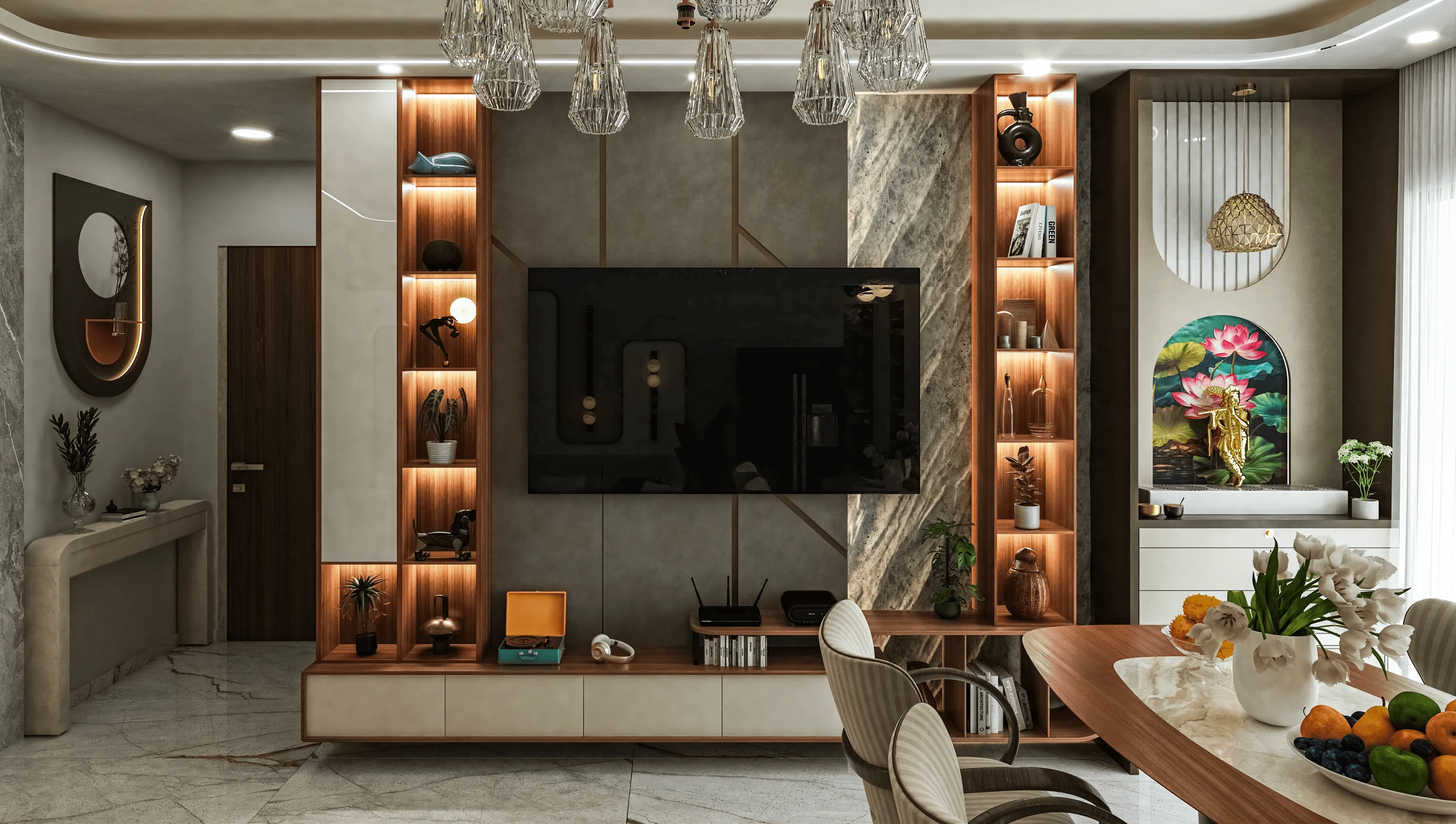
For interior feature walls specifically, where structural and weatherproofing demands are lower, the gap narrows slightly in absolute rupee terms but stays proportionally similar, and we regularly deliver a striking stone-look feature wall in a living room or a lobby for ₹120 to ₹220 per sq. ft. fully installed using PU or thin composite panels, against ₹250 to ₹450 per sq. ft. for the natural stone equivalent in the same room.
The Maintenance Cost Gap Most Quotes Never Mention
Here is where the comparison gets genuinely interesting, because the installed cost is not the end of the story for either material, and the long-term maintenance economics run in almost opposite directions depending on which type of stone you choose and where it sits on the building. Natural stone, once properly sealed and installed with correct drainage detailing behind the panels, is remarkably low-maintenance for the first eight to ten years. A quality sandstone or granite facade in Kolkata's climate, which swings between intense monsoon humidity and hot, dusty summers, typically needs resealing only once every four to six years, at a cost of roughly ₹8 to ₹15 per sq. ft. per application, and the stone itself does not fade, chip, or delaminate the way composite panels eventually do. Over a fifteen-year horizon, we typically see total maintenance spend on a well-installed natural stone facade sit around ₹40 to ₹70 per sq. ft. cumulative, mostly resealing and occasional grout repair.
Artificial stone cladding tells a less flattering long-term story, even though it wins comfortably on upfront cost. Cement-composite and GFRC panels are more prone to surface fading from UV exposure, particularly on west and south-facing elevations that catch direct Kolkata summer sun, and most manufacturers' own warranty documentation acknowledges visible colour shift within six to eight years on exposed facades. Repainting or refinishing a faded composite panel facade runs ₹25 to ₹45 per sq. ft. per cycle, and because the colour match on partial repairs is notoriously difficult to get right, many owners end up refinishing the entire elevation rather than patching sections, which compounds the cost. Edge chipping at panel joints, where the composite material is thinner and more brittle than at the panel centre, is also a recurring repair item we get called out for on projects that are five to seven years old. Over the same fifteen-year horizon, cumulative maintenance on an artificial stone facade often runs ₹90 to ₹150 per sq. ft., which meaningfully closes the gap with natural stone's higher upfront cost once you look at total cost of ownership rather than day-one price.
| Feature | Natural Stone | Artificial Stone |
|---|---|---|
| Higher upfront cost, lower long-term maintenance | Lower upfront cost, higher long-term maintenance | Heavier, needs robust structural fixing |
| Lighter, faster and cheaper installation | Resists UV fading over decades | Prone to colour shift in 6-8 years on sun-facing walls |
| Best for premium facades and heritage-style elevations | Best for budget-conscious feature walls and rental properties |
Where Each Material Genuinely Makes Sense
We do not believe in a blanket recommendation here, because the right answer changes with the specific wall, its orientation, and how long the client plans to hold the property. For a facade on a self-owned family home in New Town or Salt Lake that the client intends to occupy for fifteen-plus years, and particularly for elevations that get significant direct sun, we usually steer clients toward natural stone despite the higher day-one cost, because the total cost of ownership calculation favours it once you run the maintenance numbers honestly, and there is also an intangible but real difference in how natural stone ages, developing a patina rather than simply degrading.
For interior feature walls, rental or resale-focused properties, and commercial spaces like retail frontages or office receptions in Rajarhat's IT corridor where the design language may need refreshing every few years anyway to stay current, artificial stone cladding is usually the smarter spend, since you are not trying to future-proof the surface for decades and the lower installed cost frees up budget for other parts of the project. We also point out to clients that mixing the two is often the most cost-effective approach in practice: natural stone at ground floor and entrance level where it takes the most visual and physical wear, with a well-chosen artificial stone system on upper floors or interior accent walls where the cost savings compound across a larger area without the same durability trade-off. If you are weighing this cladding decision alongside other big-ticket material choices on a renovation, it is worth reading our breakdown on designer fee plus contractor versus a turnkey package, since how you structure the overall project can affect how much negotiating leverage you have on cladding vendor rates in the first place. And because cladding is rarely the only surface decision on a project, our piece on matte, glossy, or textured laminate finishes is a useful companion read if you are also finalising interior surfaces at the same time.
One more cost trap worth flagging before you sign a cladding contract: the same false-economy pattern we have seen play out with bathroom fittings applies here too, where a cheaper material choice looks like a win on the initial invoice but costs more in call-backs and replacements within a few years, a pattern we walked through in detail in our piece on cheap CP fittings, and the underlying lesson transfers directly to stone cladding decisions.
Getting an Honest Quote for Your Elevation
If you are staring at a facade or feature wall decision right now and the quotes you have gathered so far do not seem to add up the way we have described here, that mismatch is usually a sign that transport, fixing hardware, or long-term maintenance has been left out of the number, and it is worth getting a second opinion before you commit. We walk every cladding client through a full 3D visualization of both material options on their actual elevation before they decide, so you are comparing real renders side by side rather than guessing from a sample board, and we price both natural and artificial systems transparently, layer by layer, the way we have laid it out above. If you would like us to run these numbers against your specific plot and elevation, get in touch with our team and we will put together a like-for-like comparison for your project.