






Why Cheap CP Fittings Cost More in 5 Years: A Bathroom Fixture Cost Breakdown
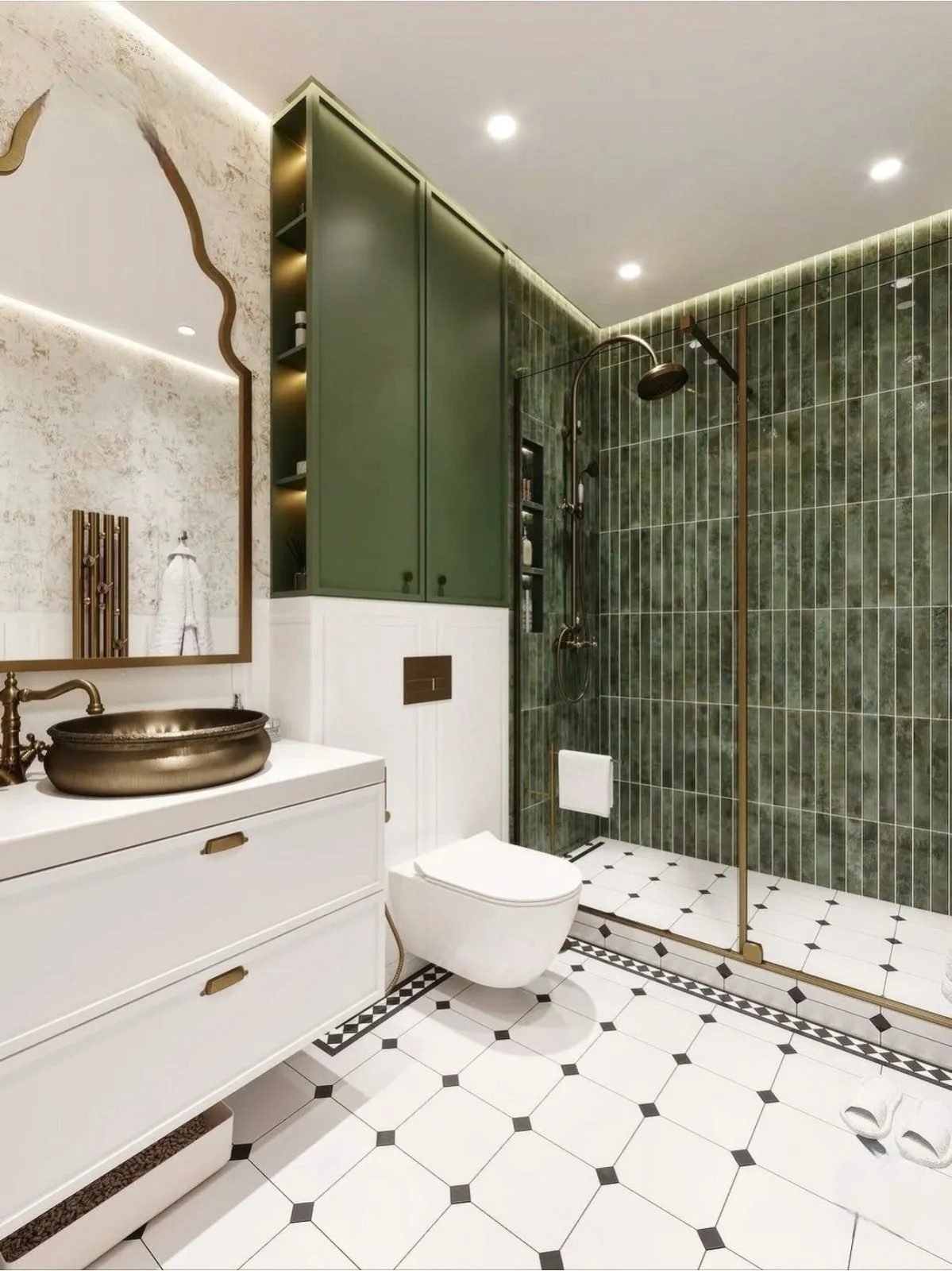
When we sit down with a client to finalize a bathroom design, the CP fittings line item, meaning the taps, showers, mixers, and health faucets, is almost always where we see the most pressure to cut cost, and we understand why, because a bathroom's CP fittings package can easily run into five figures across a single unit, and on paper a budget tap that looks identical to a branded one for a third of the price feels like an obvious way to trim the budget without touching anything visible like tiling or the vanity. What we have learned over a decade of executing bathroom projects across New Town, Salt Lake, and Rajarhat is that this is one of the few places in a renovation budget where the cheaper choice almost never turns out to be cheaper once you track the actual cost over five years rather than the cost on day one, and Kolkata's water quality specifically is what tips that math so decisively in favor of spending more upfront.
Why Kolkata's Hard Water Changes the Entire Calculation
CP, meaning chrome-plated, fittings work by electroplating a layer of chrome, typically over a nickel undercoat, onto a brass or zinc alloy body, and the durability of that plating is what determines whether a tap still looks and functions the same in year five or has gone dull, pitted, or started leaking internally by year two. Kolkata's municipal and groundwater supply carries a meaningfully higher mineral and dissolved solids content than many other parts of the country, and that hardness accelerates two specific failure modes in cheap fittings. First, thin or poorly bonded chrome plating on budget fittings develops micro-pitting faster when exposed to mineral-heavy water, which starts as cosmetic dulling around the tap spout and base within twelve to eighteen months and eventually exposes the base metal to corrosion. Second, and more expensive, the internal cartridge or washer mechanism inside a tap or mixer, the part that actually controls water flow when you turn the handle, accumulates scale buildup from hard water far faster in cheap fittings that use lower-grade ceramic discs or basic rubber washers instead of the denser, more precisely machined ceramic cartridges used in branded mid-tier fittings. That scale buildup is what causes the classic budget-tap symptoms of a handle that gets stiffer every month, a drip that will not fully stop no matter how tightly you close it, or a mixer that starts leaking from the base.
The Real Numbers: Budget Tap vs Mid-Tier Branded Tap Over Five Years
Let us put actual figures against this rather than leave it as a general warning. A budget, unbranded or low-tier branded single-lever basin mixer typically costs somewhere in the range of ₹800 to ₹1,800 at the point of purchase, and a mid-tier branded equivalent, from a manufacturer with a proper ceramic cartridge and a thicker, better-bonded chrome finish, runs roughly ₹2,800 to ₹5,500 depending on the finish and model. On the invoice, the budget option looks like a saving of ₹2,000 to ₹3,700 per fixture, and across a full bathroom with a basin mixer, a shower mixer, a health faucet, and a bath spout, that can add up to a visible ₹8,000 to ₹15,000 saving on the initial quote, which is exactly the kind of number that makes a tight budget feel more manageable.
Now trace what actually happens over five years with the budget option in Kolkata's water. Within 18 to 24 months, it is common to need a plumber visit to address a drip or a stiffening handle, and a service call for this kind of work typically runs ₹300 to ₹600 for labor alone, sometimes with a replacement washer or cartridge on top if one is even available for that specific budget model, which is not always the case since many budget fittings use non-standardized internal parts. By year three to four, cosmetic pitting on the chrome has usually become visible enough that clients start asking us about replacement rather than repair, and by year five, a genuinely reliable outcome across the budget fittings in a bathroom is a full second purchase, meaning you have effectively paid for the fixture twice, plus at least one or two service call charges in between, plus the inconvenience and water wastage of a fitting that was dripping for months before it got fixed. Add that up, and the budget route across five years commonly lands at ₹1,600 to ₹4,000 per fixture in original cost, plus ₹600 to ₹1,200 in service calls, plus a full ₹800 to ₹1,800 replacement, putting the five year real cost close to or even above what the mid-tier branded fitting would have cost once, with none of the plumber visits or the mid-project frustration.
What You Actually Get for the Extra Money
The price difference between budget and mid-tier branded fittings is not just marketing or a name on the box, it reflects real, measurable manufacturing differences. Mid-tier branded fittings typically use a solid brass body rather than a zinc alloy or a brass and zinc composite, and brass resists corrosion from hard water dramatically better over time. The chrome plating itself is applied in more layers, often nickel plus chrome over a copper undercoat, which bonds more securely to the base metal and resists the pitting that hard water causes in thinner single-layer plating. And the internal cartridge, whether it is a quarter-turn ceramic disc valve in a tap or a thermostatic cartridge in a shower mixer, is machined to tighter tolerances, which is what actually determines whether the tap still turns smoothly and seals properly after five years of twice-daily use by a family. None of these differences are visible when you are comparing two taps side by side in a showroom, which is exactly why the decision so often gets made on price alone unless someone walks a client through what is actually inside the fitting.
Where We Do Recommend Trimming, and Where We Never Do
We are not against cost-consciousness in a bathroom budget, and there are genuinely reasonable places to save money that do not carry this kind of hidden five-year cost. Tile selection, vanity design complexity, and mirror or lighting fixtures all have a much wider range of acceptable quality tiers without the same functional failure risk that a cheap CP fitting carries, since a budget tile that looks slightly less premium does not eventually leak into your wall cavity the way a corroded mixer body can. Where we consistently advise clients not to cut corners is anything that carries water under pressure daily, meaning taps, mixers, shower systems, and health faucets, because the failure mode for these is not just cosmetic, it is functional and sometimes structural, since a slow leak inside a wall-mounted mixer can silently damage tiling and waterproofing behind it long before it becomes visible as a drip at the spout. This is part of a broader pattern we see across renovation budgets in New Town specifically, where labor and material costs already run higher than in smaller Bengal towns, a dynamic we unpack fully in our piece on why the same interior package costs more in New Town than in a Tier 2 Bengal town, and cutting corners on fittings to offset that regional cost gap tends to be exactly the kind of saving that costs more later.
Fittings Are Not the Only Wet-Area Decision With This Same Pattern
The lifecycle cost logic that applies to CP fittings extends to other wet-area material choices too, which is worth keeping in mind if you are budgeting a full bathroom rather than just the fittings package. Door material in bathrooms and utility areas, for instance, faces its own version of this same hard water and humidity exposure, and we have written specifically about how PVC and WPC doors perform differently under Kolkata's wet-area conditions in our comparison of PVC versus WPC doors for bathrooms and utility areas, which is worth reading if you are finalizing that decision alongside your fittings. And if your bathroom renovation includes any stone or cladding element, whether on a feature wall or around a wet zone, the same principle of upfront quality versus long-term maintenance cost applies there too, something we go into in more depth in our guide comparing natural stone versus artificial stone cladding cost per square foot.
Let's Spec Your Bathroom Fittings Properly the First Time
If you are finalizing a bathroom renovation and trying to decide where your budget should actually go, we would rather spend twenty minutes with you walking through which fittings are worth the extra spend and which finishes genuinely do not matter than watch you replace a bathroom's taps twice in five years. Reach out to Studio Contour and we will give you a fittings specification built around what actually holds up against Kolkata's water, not just what looks good on the showroom shelf.