






Cupboard Colour Combination for Bedroom: 8 Ideas for 2026
You've shortlisted a cupboard finish on your phone, but beside your bedroom wall it suddenly looks too yellow, too dark or too glossy. The bed still needs to fit, the curtains aren't changing, and the wardrobe will occupy most of the wall. A small sample now has a much bigger job than it did in the showroom.
Your cupboard colour can matter more than your wall paint because the cupboard is often the largest uninterrupted surface you see from the bed. Wall paint is also easier to change than a fitted wardrobe. Choose the cupboard finish first, then test wall colours that support it, while keeping existing flooring and furniture in view.
For a balanced bedroom, think beyond the shutters. The principles behind matching dressers and nightstands to paint are useful here: timber undertones, painted surfaces and bedside furniture should look related, not necessarily identical.
Start with the room you have: A cupboard colour that works in a bright, spacious bedroom may feel overpowering in a shaded apartment.
The right cupboard colour combination for bedroom interiors depends on room size, natural light, wall colour and the construction behind the finish. In Kolkata and other humid cities, sealed edges and suitable boards matter as much as the shade. These combinations offer different ways to balance those conditions without copying a mood board wholesale.
Table of Contents
- 1. Warm White Cupboards with Natural Oak Accents
- 2. Sage Green Cupboards with Cream and Ivory Walls
- 3. Navy Blue Cupboards with Brass Hardware
- 4. Charcoal Grey and White Monochrome Cupboards
- 5. Walnut Brown Cupboards with Off-White Walls
- 6. Terracotta or Blush Pink Cupboards with Ivory Walls
- 7. Matte Black Cupboards with Natural Wood or Rattan Accents
- 8. Sky Blue or Soft Grey Cupboards with White and Timber Details
- How the eight cupboard colour combinations compare at a glance
- Choosing Your Bedroom Cupboard Colour with Confidence
1. Warm White Cupboards with Natural Oak Accents
Warm white and natural oak are a forgiving starting point for a compact bedroom. The pale shutters keep a large storage wall visually quiet, while oak adds enough texture to stop it looking flat. Choose an off-white without a strong yellow cast, particularly if the floor already has cream or beige tones.
Say your apartment bedroom has a floor-to-ceiling wardrobe beside the bed. Keep the main shutters warm white and introduce oak through a drawer bank, recessed handles or an open bedside niche. Avoid outlining every shutter in wood, which breaks the elevation into smaller, busier rectangles.
Keep the timber selective
Warm beige, greige and wood finishes suit the restrained approach described in DesignCafe's Kolkata bedroom guidance. As a design-planning allocation, not a survey finding, a light colour can occupy roughly 60 to 70% of the visible cupboard frontage, with a secondary wood or earthy tone across about 20 to 30% and restrained trim across approximately 5 to 10%.
- Room and walls: Pair warm white shutters with ivory, pale greige or a muted coloured wall. Compare whites directly so one doesn't make the other look dirty.
- Finish: A smooth satin laminate is practical for wiping. Semi-gloss adds reflection but also makes uneven surfaces more noticeable.
- Monsoon detailing: Seal shutter edges, plinth joints and cut-outs. Don't fit the wardrobe against an untreated damp external wall.
Oak-look laminate offers a consistent pattern and straightforward upkeep. Real veneer gives more variation, but it needs a properly finished surface and protected edges. For a shaded room, choose a pale oak rather than a heavily amber teak effect.
2. Sage Green Cupboards with Cream and Ivory Walls
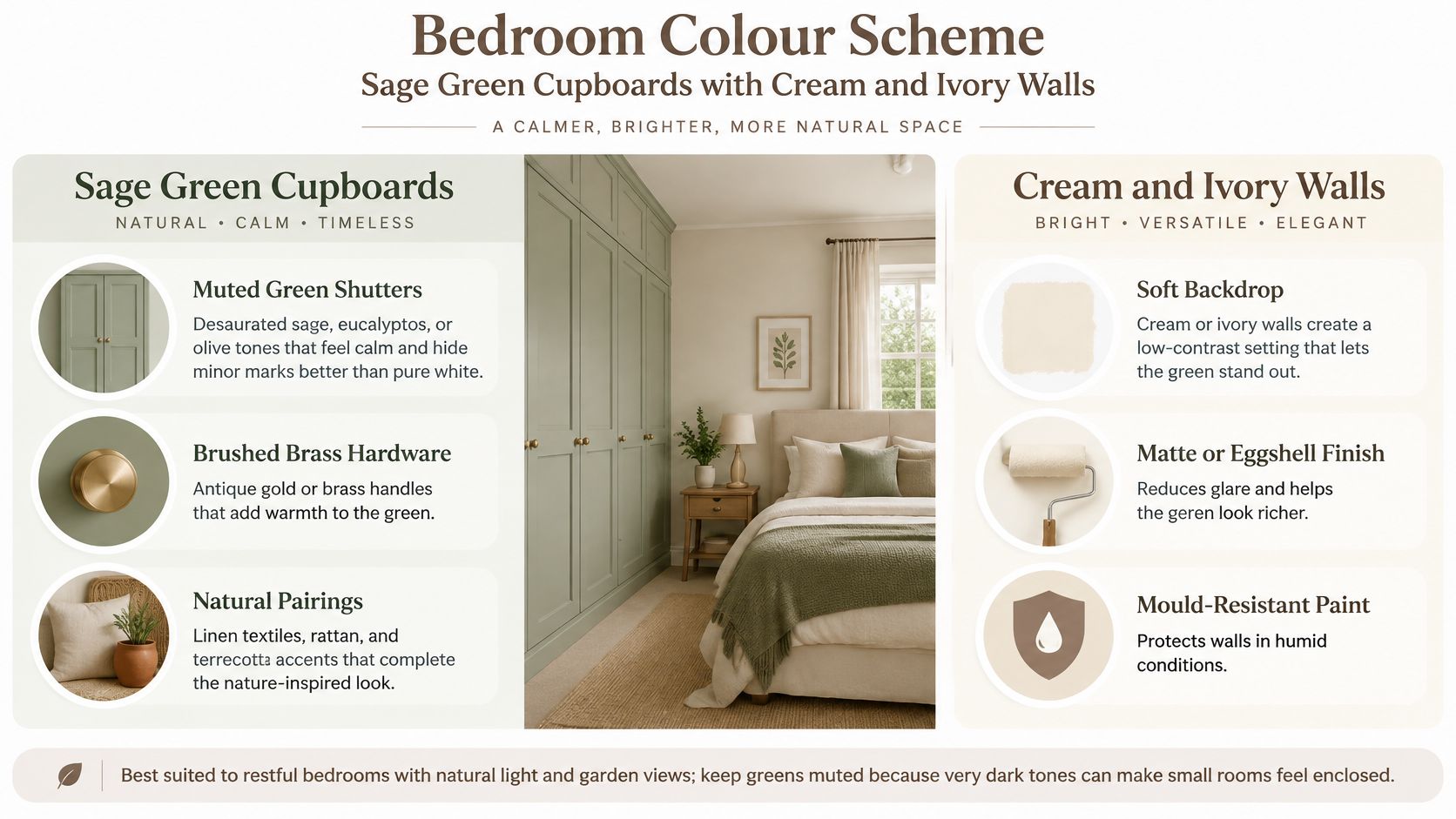
A garden-facing bedroom with cream walls, a timber bed and muted sage cupboards can carry colour without strong contrast. The green relates easily to foliage outside, while ivory prevents the storage wall from looking stark. A jute rug or woven lampshade adds texture without introducing another competing colour.
The important choice is the sage itself. Grey-heavy sage can look dull in weak daylight, while a yellow-green version can become unexpectedly olive beside cream paint. For a small, shaded bedroom, start with a lighter muted green rather than a deep olive.
Test green beside the actual cream
Hold the cupboard sample vertically beside the wall paint sample. Check it near the window and in the darkest part of the wardrobe wall, then repeat under your evening lights. Don't approve green from a phone image, where screen settings can hide its undertone.
For shutter layouts and wood pairings, these sage green cabinet ideas for Indian homes offer useful cabinet references, even though bedroom storage needs a different internal layout. The green styling tips from Stahl can also help coordinate smaller furnishings without making everything green.
Humidity changes the specification, not the palette. Use sealed laminate or a properly finished painted shutter, with protected edges around handles. On surrounding walls, a mould-resistant coating may be useful, but it won't fix seepage. Resolve damp patches before fitting cupboards, and keep the interior light enough to inspect easily.
3. Navy Blue Cupboards with Brass Hardware
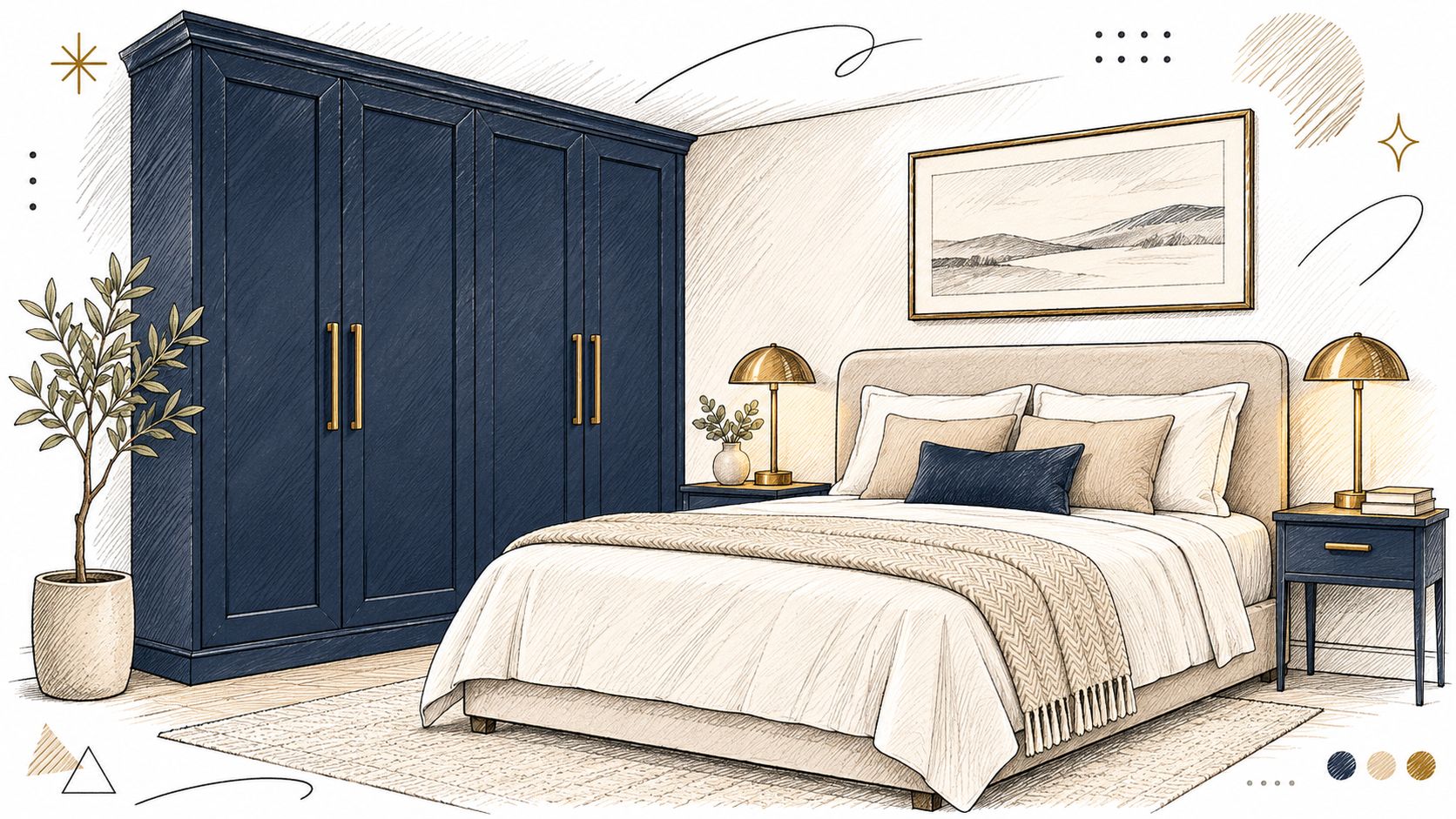
Choose navy when you want the wardrobe to be a deliberate feature. Unlike warm white, it won't blend into the wall. Brass handles add warm contrast, but the combination needs pale surroundings and enough light to keep the blue visible rather than almost black.
A main bedroom with a broad window, white walls and neutral bedding is a good candidate. In a narrow room shaded by another building, use navy on a central shutter group and keep the remaining storage ivory. A bright ceiling fixture alone won't recreate the effect of daylight across a large dark surface.
Give dark blue enough light
Building Material Reporter's interior colour guidance cautions against extensive dark tones where natural light is limited. For a bedroom, judge the cupboard from the doorway and the bed, not just while standing beside a brightly lit sample.
- Wall colour: Start with warm white or a restrained ivory. Strong yellow cream can make the navy-and-brass pairing feel heavier.
- Hardware: Choose coated or lacquered brass if you prefer less polishing. Keep handle shapes simple when the shutters already have decorative profiles.
- Surface: Specify a wipeable matte laminate or a fully finished PU system. Colour and sheen alone don't establish moisture resistance.
Interior lighting makes clothes easier to find, but it doesn't lighten the closed cupboard front. These navy blue cabinet ideas show ways to interrupt dark cabinetry with lighter surfaces. In humid bedrooms, pay particular attention to coating continuity around routed handles and shutter edges.
4. Charcoal Grey and White Monochrome Cupboards
For a contemporary bedroom with pale flooring and minimal furniture, charcoal and white create a crisp cupboard elevation. The contrast defines the storage clearly, so it works best when the rest of the room isn't already full of strong lines. A heavily patterned headboard, dark window frames and striped curtains can make the same scheme feel crowded.
In a compact apartment, reverse the usual dark-wardrobe approach. Use white for the broad shutter areas and charcoal for a drawer section or narrow vertical band. Reserve predominantly charcoal fronts for a brighter room with sufficient space around the bed.
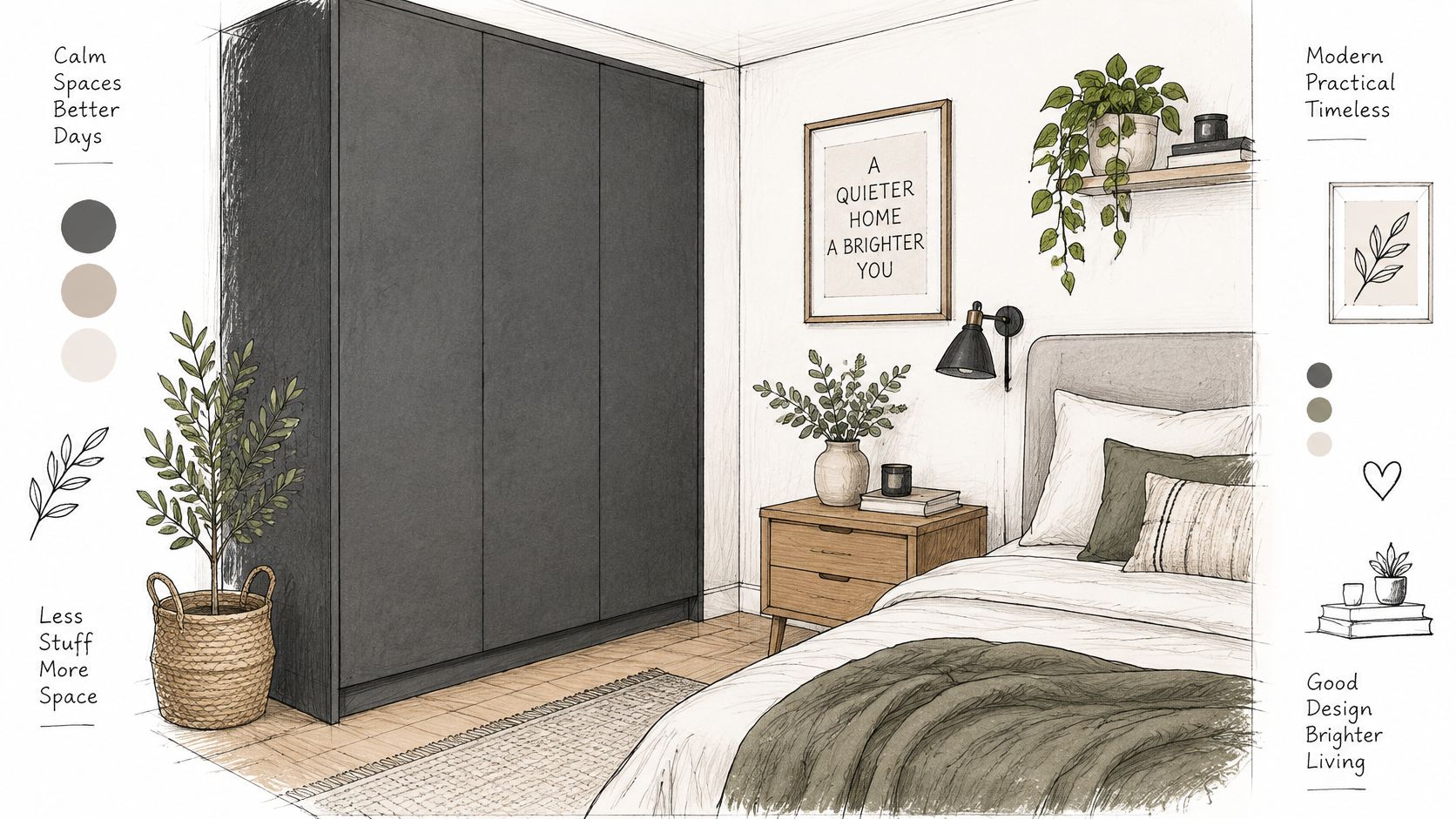
Charcoal doesn't need black accessories everywhere. A timber bed and textured cotton bedding usually provide a better balance than more dark metal.
Check the grey and the board beneath it
Charcoal can lean blue, green or brown. Place it against the proposed white wall and existing floor before approval, particularly under cool evening lighting. Warm timber is helpful when both the grey and the wall read cold.
For pre-laminated particle board, EVTL India's BIS certification guide identifies IS 12823:2015 as the relevant standard addressing properties including surface durability and bond strength. Record the board specification and declared emission class alongside the finish, rather than accepting a colour code as the complete material description.
Matte or soft-touch fronts reduce glare, but some show greasy hand marks. Try a sample with clean, dry hands before choosing handleless shutters. In monsoon conditions, protect the back panel and exposed edges, and allow for ventilation rather than enclosing an existing damp patch.
5. Walnut Brown Cupboards with Off-White Walls
Walnut works particularly well when you're keeping a substantial timber bed. Off-white walls give the wood room to stand out, while pale bedding prevents the bedroom from becoming uniformly brown. The result can feel settled without relying on ornate doors or traditional hardware.
The risk is excessive visual weight. A dark walnut cupboard opposite a dark headboard can make a compact room feel enclosed, especially when the window faces a shaded courtyard. In that situation, choose a medium walnut grain, introduce off-white shutters, or restrict walnut to the lower drawers and side panels.
Choose the grain before matching the paint
Compare the cupboard sample with the bed and bedside tables. They don't need to match exactly, but a reddish walnut beside a yellow-orange timber bed can look accidental. These wood-finish cabinet colour combinations provide references for balancing wood with painted surfaces.
Sourcing Hardware's Indian interiors report identifies warm beige, muted clay, sage and walnut among accepted residential palettes, supporting a softer alternative to an entirely dark elevation. For a family bedroom, a mushroom or warm beige panel can break up walnut without introducing a conspicuous accent colour.
- Small rooms: Use quieter grain and fewer changes in direction. Strong horizontal grain across every shutter can become busy.
- Wall undertone: Test warm off-white first, but avoid an obviously yellow cream if the walnut already looks red.
- Humid conditions: Choose walnut-look laminate or fully sealed veneer. Raw veneer isn't a finished cupboard surface.
A mirror can add useful reflection, but place it deliberately rather than using it to rescue an overly dark palette. A lighter cupboard section is often the cleaner solution.
6. Terracotta or Blush Pink Cupboards with Ivory Walls
Terracotta and blush aren't interchangeable. Muted terracotta gives a bedroom earthy warmth and suits oak, rattan and cream. Dusty blush is softer and can work with pale timber, restrained brass and warm grey textiles.
Say you're furnishing a bedroom with ivory flooring and a simple upholstered bed. Blush cupboards can provide the main colour, with plain ivory walls and a rattan bedside table. If the floor is already reddish brown, a terracotta wardrobe may add too much orange, so compare a dustier clay or beige-pink instead.
Decide how much warmth the room needs
Strong afternoon sunlight can make an orange-leaning terracotta look more intense. In a small bedroom, use it on a drawer bank or recessed panel rather than automatically covering the entire storage wall. A pale blush is easier to use broadly, but a very sweet pink can look out of place beside heavy traditional furniture.
The video below offers another visual reference to consider alongside physical finish samples.
Keep the surrounding palette restrained. The undertone considerations involved in pairing muted greens with cherry dining tables are relevant when existing reddish timber must sit beside a new cupboard colour, even though the furniture setting differs.
Test pink under the lights you'll use. A sample can look peachier under warm lamps and flatter under another fixture. Choose matte or satin shutters to soften the appearance, and use metallic hardware sparingly.
For monsoon upkeep, specify a sealed, wipeable finish rather than an absorbent decorative surface. Don't apply a new coating over damp or swollen board, however attractive the colour.
7. Matte Black Cupboards with Natural Wood or Rattan Accents
Black is the least forgiving choice here for a small, poorly lit bedroom. It works best as a controlled feature, with pale walls, good daylight and a clear reason for using such strong contrast. Natural wood or rattan can soften the effect, but neither cancels the visual weight of a full black cupboard wall.
For a spacious bedroom with warm white walls, consider black framing around wood-finish shutters. In a smaller industrial-style room, use black on the drawer unit and handles instead. Keep the main storage frontage lighter if the bed already has a dark frame.
Maintenance trade-off: Matte means low sheen, not automatically fingerprint-proof. Test the actual laminate rather than relying on the finish name.
The humidity considerations discussed in Indoor Air Guide's India-focused review reinforce the need to judge wardrobe finishes alongside moisture conditions. A fashionable black front doesn't compensate for poorly sealed boards or placement against a damp external wall.
Make texture manageable
- Black surfaces: Choose an anti-fingerprint laminate where practical, and test whether routine wiping leaves streaks.
- Rattan panels: Use a protected, securely framed panel. Open cane exposes the interior to dust and isn't the right choice if you want enclosed storage.
- Wood accents: Keep grain and tone consistent across niches, drawer fronts and nearby furniture.
- Lighting: Use warm room lighting and separately planned cupboard lighting. Avoid exposed bright strips reflected in nearby mirrors.
Rattan adds a cleaning task because dust collects within the weave. For a low-maintenance bedroom in a humid location, a sealed wood-look panel may be the more practical partner to black. Repair leaks and inspect the wall before the joinery conceals it.
8. Sky Blue or Soft Grey Cupboards with White and Timber Details
A compact bedroom doesn't have to default to beige. Sky blue or soft grey offers a pale alternative, while timber handles or a bedside niche prevent the room from feeling too cool. Keep white trim selective so the cupboard doesn't become a patchwork of outlined panels.
For example, powder-blue shutters with a warm oak bedside table suit a room with neutral flooring and simple white walls. If the daylight is already cool and weak, compare the blue with a warmer grey or greige. A colour that looks fresh in a sunlit photograph can look chilly beside blue-white walls.
Keep the pale palette warm enough
Use the actual timber sample when choosing the cupboard shade. Golden oak adds noticeable warmth, while grey-washed wood can make the entire scheme colder. Cotton bedding in cream or sand provides a quieter balance than adding another cool pastel.
- Room size: Broad, pale shutter surfaces keep the elevation simple. Avoid unnecessary contrasting bands in a narrow room.
- Wall colour: Compare white and ivory beside the cupboard sample. The better option depends on the blue or grey undertone.
- Finish: Choose washable cabinet paint or smooth laminate. A wall paint labelled scrubbable isn't automatically suitable for cupboard shutters.
Construction remains important even with a light finish. Evospace's Indian materials guide distinguishes MR plywood for relatively dry bedroom furniture from BWR plywood for occasional moisture exposure, with both categories commonly specified under IS 303.
Match the substrate to the room's exposure rather than treating MR as suitable everywhere. Protect cut edges and the plinth, and address damp bathroom-adjoining walls before installation. Pale interiors also make routine inspection easier when you're checking corners and stored clothes during humid weather.
How the eight cupboard colour combinations compare at a glance
| Item | Best For | Typical Hardware | Key Limitation |
|---|---|---|---|
| Warm White Cupboards with Natural Oak Accents | Small to medium bedrooms needing brightness and flexibility | Brass, matte black, or chrome handles; oak-look accents | White surfaces show fingerprints and scuffs |
| Sage Green Cupboards with Cream and Ivory Walls | Restful bedrooms with natural light or garden views | Brushed brass or antique gold handles | Dark greens can make small rooms feel enclosed |
| Navy Blue Cupboards with Brass Hardware | Master bedrooms seeking a luxurious, layered look | Brass, gold, or antique bronze handles | Can feel heavy in small or poorly lit rooms |
| Charcoal Grey and White Monochrome Cupboards | Bright contemporary bedrooms with clean lines | Slim handles or push-to-open fittings | High contrast can feel stark in small rooms |
| Walnut Brown Cupboards with Off-White Walls | Family bedrooms seeking warmth and a timeless look | Brass, leather, or woven accents | Dark wood can absorb light in dim rooms |
| Terracotta or Blush Pink Cupboards with Ivory Walls | Personal or guest bedrooms seeking a soft, stylish mood | Gold, rose gold, or warm brass handles | The trend-sensitive palette may feel dated over time |
| Matte Black Cupboards with Natural Wood or Rattan Accents | Bold modern bedrooms with good lighting | Black metal or brushed black handles | Dark finishes can make small rooms feel closed in |
| Sky Blue or Soft Grey Cupboards with White and Timber Details | Light-filled bedrooms seeking a calm, fresh atmosphere | Timber or cane accents; white trim | Pale colours show dirt and marks easily |
Choosing Your Bedroom Cupboard Colour with Confidence
Start with light and size, then choose the cupboard colour, then test the walls against it. Include the floor, bed and curtains if they're staying. Those fixed elements matter more than whether a particular shade is fashionable.
Look at how much of the room the wardrobe occupies from the doorway and from the bed. When storage covers a full wall in a compact room, warm white, pale sage, sky blue or soft greige is usually easier to balance. Add contrast through hardware, a timber niche or a drawer section rather than making every shutter dark.
Narrow the choice with physical samples
Bring home cupboard samples in the intended finish, not just printed colour cards. Stand them vertically where the wardrobe will sit, with the proposed wall paint beside them. Check them in daylight and under the evening fixtures you'll keep.
Compare sheen as carefully as colour. A glossy navy and a matte navy won't have the same presence, and a textured walnut can look busier than a smooth sample. Touch the surface, wipe it and look across it from an angle before approving the order.
Choose the combination you still like in the room's least flattering light, not only beside the window on a bright afternoon.
For Kolkata bedrooms, colour approval and material approval belong together. Specify the substrate, surface finish, edge treatment and back-panel detailing before fabrication. A pale cupboard isn't moisture-resistant because it's pale, and a dark laminate isn't unsuitable just because it's dark.
Resolve the room before committing to the shutters
Don't conceal seepage, peeling paint or a musty corner behind new storage. Repair the moisture source and let the affected construction dry before enclosing it. Plan ventilation and access so the wardrobe remains inspectable after installation.
Studio Contour in New Town, Kolkata, takes on single-room design commissions, so a bedroom can be planned without committing to a full-home project. Cupboard finishes, storage layout and lighting can be coordinated together, with remote design options for homeowners in other Indian cities.
The strongest choice isn't necessarily the boldest or palest combination. It's the one that suits your actual daylight, leaves the room comfortable to use and has a finish you can maintain. Once those conditions are right, choosing the wall paint becomes a much more focused decision.
Studio Contour offers single-bedroom interior design, including custom cupboard planning, material selection and lighting coordination. Visit Studio Contour to discuss your room dimensions, existing furniture and preferred colour combinations, whether you're in Kolkata or need remote design support elsewhere in India.