






Understanding Kolkata's Sun Path Before You Decide Your Facade Orientation
When a client walks into our New Town studio holding a brochure for a flat and asks us whether the "west facing" unit is a problem, we almost always end up drawing the same diagram on a notepad, because the honest answer depends on more than a compass direction printed in a sales flyer. Kolkata sits at roughly 22.5 degrees north latitude, which places it close enough to the Tropic of Cancer that the sun's path across our sky changes meaningfully between December and June, and a facade that behaves gently in winter can turn into a heat trap for four or five months of the year if nobody accounted for that swing at the design stage. We have been working through exactly this problem for homeowners and developers across New Town, Salt Lake, and Rajarhat since 2014, and what follows is the same reasoning we walk clients through before a single wall gets drawn.
How the Sun Actually Moves Over Kolkata Through the Year
At our latitude, the sun is never directly overhead the way it is closer to the equator, but it does swing far enough north and south of due east-west that a simple "east is good, west is bad" rule of thumb misses most of what actually matters. Around the winter solstice in late December, the sun rises noticeably south of due east and sets south of due west, tracing a relatively low, short arc across the southern sky, which is exactly why a south-facing room in Kolkata gets pleasant, welcome sun in January when everyone actually wants it. By the summer solstice in June, the sun has swung far enough north that it rises well north of east and sets well north of west, climbing to an altitude close to 89 degrees at solar noon, almost directly overhead, before dropping into a long, punishing low-angle path in the late afternoon that drives directly into any west-facing glazing or plastered wall that isn't shaded. The months that actually give Kolkata homeowners the most grief are not the peak of summer but the shoulder period from mid-March through May and again in September and October, when the sun's angle is high enough to bypass shallow overhangs yet still low enough in the evening to blast horizontally into west and southwest walls, combined with humidity levels that make radiant heat gain feel far worse than the thermometer alone suggests.
This is the detail that most orientation advice glosses over: it is not the compass direction alone that decides how a facade performs, it is the combination of direction, the sun's seasonal altitude, and how long that wall stays exposed to direct, low-angle light each day. A west-facing wall in Rajarhat with no shading device will absorb direct sun from roughly 3 PM to sunset for eight or nine months of the year, and because west walls receive their peak heat load in the late afternoon when the building mass has already absorbed a full day's warmth, that heat continues radiating into interior rooms well past sunset, which is exactly why west-facing bedrooms in Kolkata so often feel stifling at 9 or 10 PM even after the sun is long gone.
What This Means for Choosing a Plot Direction or a Flat Facing
For clients buying a plot in areas like Action Area II or III in New Town, where road layouts often give you a genuine choice of orientation before you finalize the purchase, our first recommendation is almost always to prioritize a north-south long axis over an east-west one wherever the plot geometry allows it, because this arrangement puts your largest wall surfaces facing the directions that receive the gentlest, most manageable sun exposure and leaves only the narrower gable ends to deal with the harsher east and west sun. For a typical 3 katha to 5 katha residential plot, this single decision at the layout stage often does more to control indoor heat than any amount of insulation or glazing upgrade added later, because you are reducing the actual surface area exposed to the worst sun angles rather than trying to defend against them after the fact.
For clients buying into an existing multi-storey development where the facing is already fixed, which describes the majority of our interior design clients in Salt Lake and the built-up pockets of New Town, the calculation shifts from plot selection to interior planning and shading retrofit. A west-facing 2BHK is absolutely liveable in Kolkata, we have delivered dozens of them, but it requires treating the west wall as the priority zone in your design brief rather than an afterthought. We typically recommend pushing bedrooms and living areas away from the west facade where the floor plan allows it, using that exposure instead for bathrooms, store rooms, kitchens, or stairwells that tolerate heat better and are occupied for shorter stretches of the day. Where a west-facing room cannot be avoided for a primary living space, which is common in narrower urban plots, we lean heavily on operable window treatments and, wherever the building's facade allows structural changes, projected sun shades rather than trying to solve the problem with curtains alone, because curtains block light but do very little to stop a masonry wall from absorbing and re-radiating heat for hours after sunset.
Shading Devices That Actually Match Kolkata's Sun Angles
The shading device that works depends entirely on which wall you are protecting and at what time of day the sun is a problem there, and this is where a lot of generic facade advice falls short because it borrows shading strategies from drier, more temperate climates that do not map onto Kolkata's combination of high humidity and low-angle tropical sun. For south-facing walls and windows, a horizontal overhang or a simple chajja projecting 600mm to 900mm off the facade works well precisely because the sun stays high in the sky through most of the year on that face, so a horizontal projection blocks the harsh midday sun in April and May while still allowing the lower, welcome winter sun to reach in during December and January, which is the seasonal balance you actually want on a south wall.
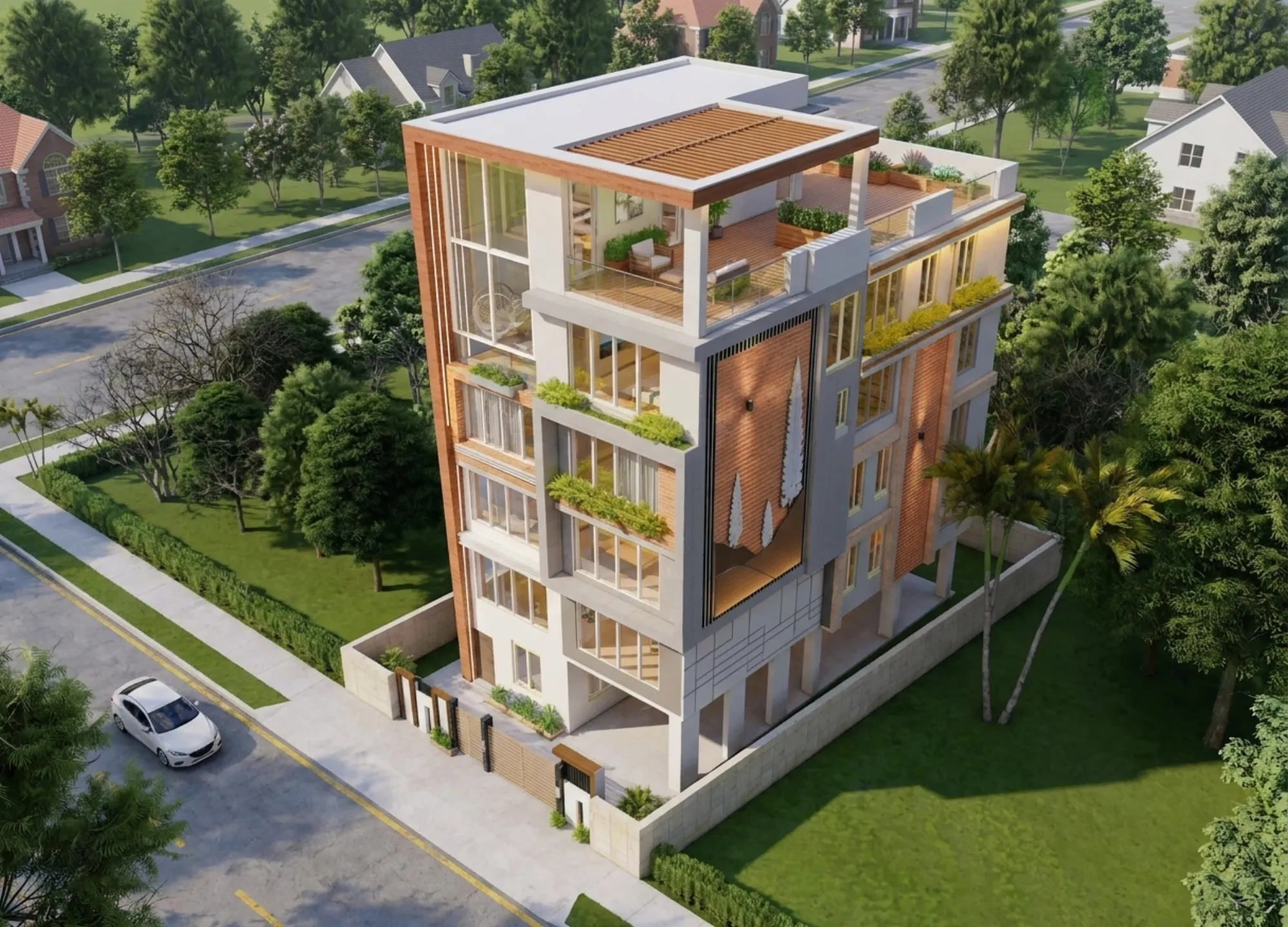
East and west walls need a fundamentally different approach because the problem there is not sun angle but sun direction, the light comes in nearly horizontal at sunrise and sunset regardless of season, and a horizontal overhang of any practical depth does almost nothing to block it. For these faces we specify vertical fins, louvered screens, or perforated jali panels set at an angle to the wall, which intercept the low horizontal light while still permitting airflow and some diffused daylight through. On several of our recent New Town and Rajarhat projects we have used precast concrete jali screens on west-facing balconies and staircases for exactly this reason, since they cut direct radiant heat gain substantially while keeping the space from feeling sealed off, and they tend to read as a genuine architectural feature rather than a bolted-on afterthought, which matters when a client is also thinking about how the facade looks from the street. Double-height balconies and recessed windows, where the structural depth of the building itself creates the shadow, are another option we push for at the design stage whenever the floor plan and setback rules permit it, because a passive architectural solution like a recessed opening needs no maintenance and never breaks down the way a mechanical louvre system eventually will.
Glazing selection matters just as much as shading geometry, and for west and southwest facing windows in particular we now routinely specify double-glazed or low-emissivity glass rather than standard clear float glass, because ordinary clear glass in a low-angle western sun transmits an enormous amount of radiant heat directly into the room regardless of how good your shading device is, while a coated or double-glazed unit cuts that transmission meaningfully without sacrificing the view or the natural light the room needs.
Orientation Decisions Connect to Everything Else in the Design
None of this sits in isolation from the rest of a home's design, and we always walk clients through orientation and shading alongside how the rest of the floor plan handles Kolkata's climate, because a facade that manages solar heat gain well but blocks airflow just trades one comfort problem for another. If you are at the stage of thinking through how air actually moves through a Kolkata home across our long, humid summers, our piece on cross-ventilation design strategies for Kolkata's long, hot summers goes into how window placement, room sequencing, and stack effect work alongside solar orientation rather than against it. And because orientation decisions get made at the very earliest stage of a project, often before the foundation is even designed, it is worth reading how ground conditions shape what is buildable on a given plot in the first place, which we cover in why Kolkata's soft, waterlogged soil demands a different foundation approach. Once orientation, shading, ventilation, and structural approach are all settled and agreed with the client, that is the point where we move into what we call design freeze, and if you want to understand why we insist on locking those decisions before construction drawings begin, our explainer on what design freeze means and why we won't start construction drawings without it lays out exactly why revisiting orientation mid-construction is one of the costliest changes a project can make.
Planning Your Facade Around Kolkata's Actual Sun, Not a Rule of Thumb
If you are choosing between plots, deciding on a flat facing, or looking at a west-facing home you already own and wondering what can realistically be done about the heat, we would rather sit down with your specific site, its orientation, and its neighbouring structures than hand you a generic answer, because shadow patterns from an adjacent building or a boundary wall can change the entire shading calculation for your facade. Reach out through our contact page and we will walk your plot or your existing flat through the same sun-path analysis we have used on every residential project we have delivered across New Town, Salt Lake, and Rajarhat over the past decade, so that whatever direction your walls end up facing, they are working with Kolkata's sun rather than being ambushed by it every afternoon from March to October.