

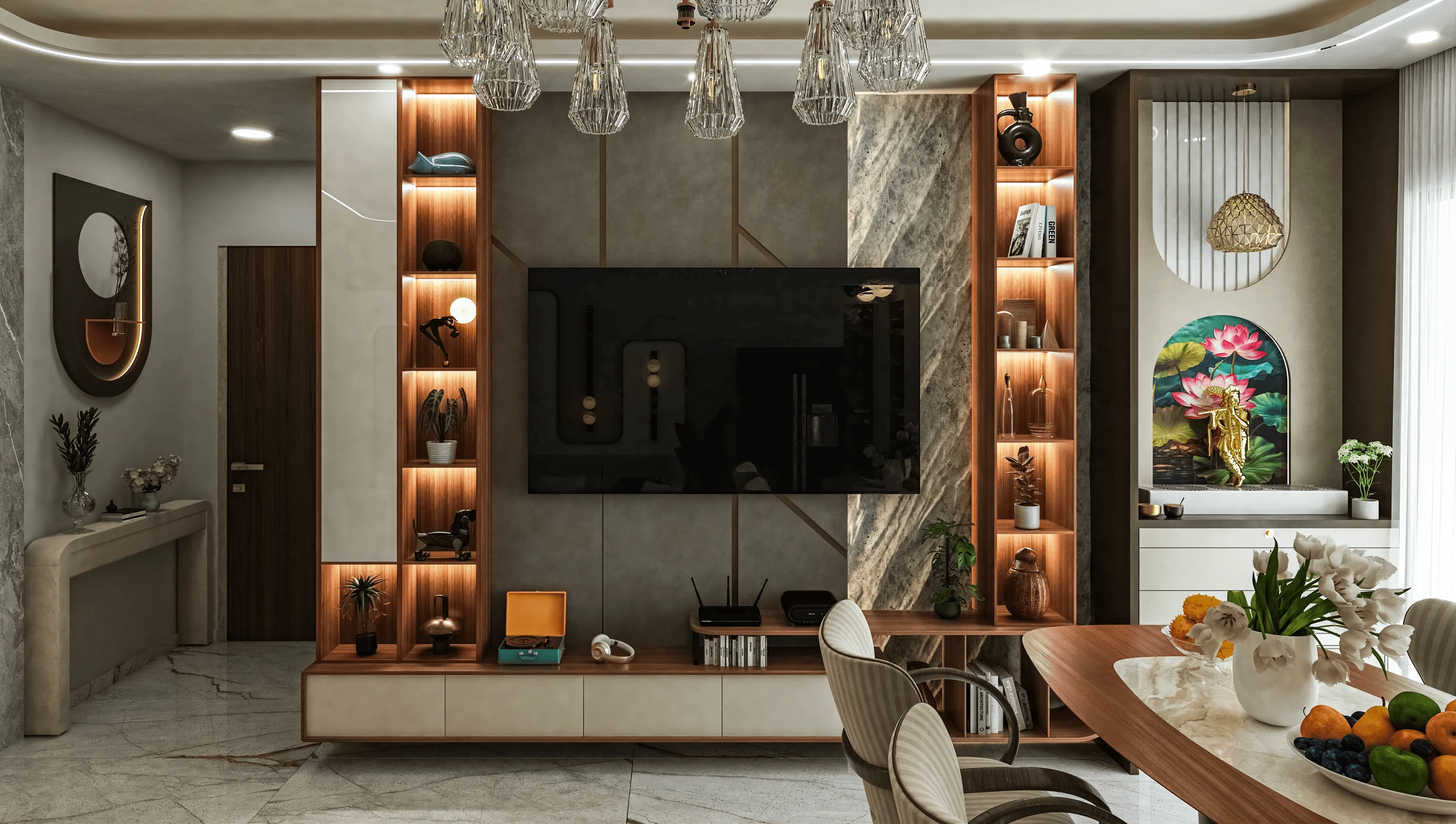






Micro-Cement Walls Arrive in Kolkata: The 2025 Finish Replacing Textured Paint
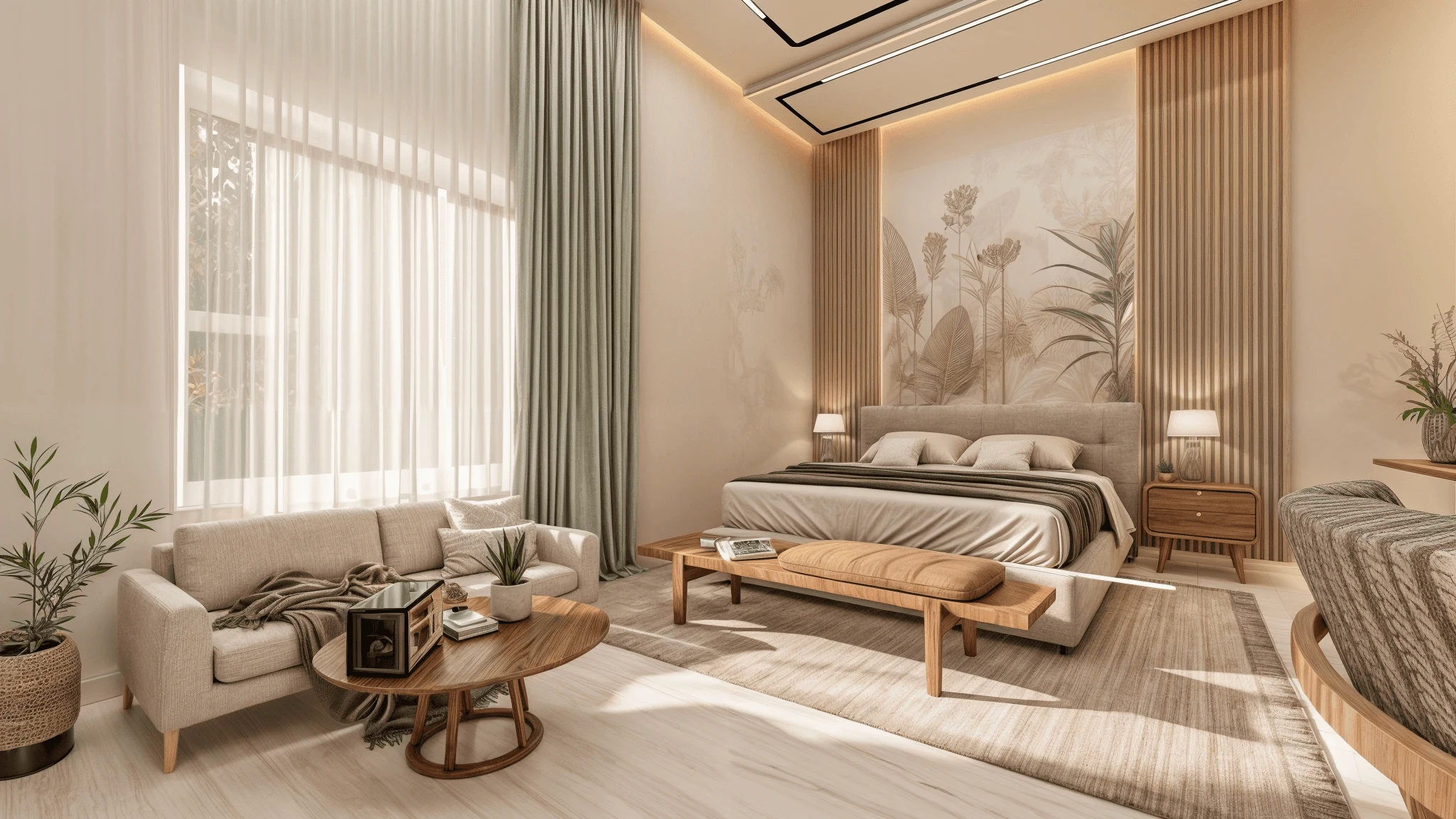
The first time a client asked us specifically for a micro-cement wall was in January 2025, a Rajarhat homeowner who had seen the finish on a European interiors account and brought us a saved screenshot rather than a material name, describing it as wanting a wall that looked "like polished concrete but soft, not cold," and it took us a couple of site visits and material trials before we were confident enough in the specification to commit a full living room feature wall to it. By the end of that year we had applied micro-cement, sometimes called microtopping or microcement depending on the manufacturer, across nine separate projects spanning feature walls, full bathroom walls, and two kitchen countertops, and it had gone from an unfamiliar import to a finish we now discuss with almost every client planning a renovation or a new build who wants something beyond paint or wallpaper.
What Micro-Cement Actually Is
Micro-cement is a mineral-based coating, typically a blend of cement, fine aggregates, polymer resins, and pigment, applied in extremely thin layers, usually between one and three millimetres total across two or three coats, directly over an existing wall, floor, or countertop substrate without the demolition and re-tiling that a genuine concrete finish would require. Once cured and sealed, it produces a continuous, joint-free surface with a soft, slightly variegated texture that reads as considerably warmer and more tactile than raw concrete, which is exactly the "soft, not cold" quality our January 2025 client had been trying to describe. Because it goes on as a coating rather than a masonry material, it can be applied over existing plaster, tile, or even certain painted surfaces with the right primer, which made it a genuinely practical renovation option rather than something that only worked in new construction, and that practicality is a large part of why it found traction with our clients so quickly through 2025.
Why It Displaced Textured Paint So Fast
For roughly the five years before 2025, textured paint finishes, whether that was a stone-effect roller texture, a lime wash effect, or one of the metallic and Venetian plaster style paints that several Indian paint majors had pushed hard through their premium ranges, were the default answer whenever a client wanted a feature wall with more depth than flat emulsion. We used a great deal of textured paint ourselves across projects in New Town and Salt Lake through that period, and it did the job reasonably well, but it had two limitations that became more obvious to clients once micro-cement gave them a point of comparison. The first was durability, since textured paint finishes, particularly the more elaborate multi-step Venetian plaster effects, are essentially still paint at their core, meaning they scuff, chip at corners, and show wear around switchboards and furniture contact points within a few years in a way that is difficult to spot-repair invisibly. The second was a sense, once clients started seeing micro-cement in design media through late 2024, that textured paint was trying to simulate a material effect with pigment and roller technique, while micro-cement actually was the material, a genuine mineral coating rather than a paint film mimicking one.
A New Town client we worked with in mid 2025 had, in fact, had a Venetian plaster feature wall done by a previous contractor only three years earlier in the same living room, and when we removed the existing finish to prep the wall for micro-cement, the plaster had already developed visible hairline cracking along a section near the window where seasonal humidity movement in the wall had stressed the coating. That kind of firsthand comparison, seeing an older textured finish fail while a newer material option sat right in front of them, did more to convince clients to make the switch than any amount of description from us could have.
The Humidity Problem We Had to Solve First
Kolkata's climate is not a neutral backdrop for a material like this, and we want to be direct about the challenges rather than presenting micro-cement as a simple drop-in replacement for paint, because the honest truth is that our first two applications in early 2025 taught us lessons the hard way. Micro-cement cures through evaporation of the water content in each coat, and it needs a reasonably controlled humidity and temperature environment during that curing window, typically wanting relative humidity well under the 80 percent plus levels Kolkata regularly sees for six months of the year, along with adequate airflow across the wall while each coat sets. Our very first micro-cement wall, applied during a particularly humid stretch in early 2025 without the ventilation controls we later adopted as standard, cured unevenly, with a visible tonal variation across roughly a third of the wall where trapped moisture had slowed the set in that zone, and we ended up reapplying that section once we understood what had gone wrong.
From that point on we built a firm set of site protocols around micro-cement application in Kolkata specifically, which we now treat as non-negotiable on every project. We schedule micro-cement work for the drier months where possible, generally favouring the November through February window when Kolkata's humidity sits meaningfully lower than the monsoon and immediate post-monsoon months, and when a client's timeline forces application during a wetter period we bring in portable dehumidifiers to hold the room environment within the manufacturer's tolerance for the full curing cycle, which typically runs several days per coat before the next layer or the final sealer goes on. We also became far more particular about the top sealer coat, since a proper polyurethane or specialised micro-cement sealer is what actually protects the finish from moisture ingress and staining once it is in daily use, and skipping or under-applying that sealer is, in our experience, the single most common cause of micro-cement failures we have seen in projects we did not originally execute ourselves. In wet zones specifically, meaning bathroom walls and kitchen countertops, we now specify a minimum two-coat sealer application with a mandatory recoat inspection at the twelve month mark, something we did not build into our original 2025 specifications and added only after seeing how much harder Kolkata's ambient humidity works a sealed surface compared with drier climates where the material originated.
Cost and Where We Recommend Using It
Micro-cement carries a real premium over both standard textured paint and most tile finishes, reflecting both the imported or licensed material systems most reliable suppliers work with and the skilled trowel application it demands, since an uneven hand shows immediately on a finish with no pattern or grout line to disguise a mistake. Through 2025 our installed costs, covering surface prep, primer, two to three coats of micro-cement, and full sealing, generally landed between 350 and 650 rupees per square foot depending on colour complexity and whether the client wanted a fully seamless corner-to-corner treatment, which requires considerably more skilled labour time than a feature wall bounded by clean edges. That puts it above most vitrified and terrazzo-look tile options, a comparison worth making directly against the material we cover in Terrazzo's 2023-24 Takeover: Why Kolkata Flooring Moved Past Marble and Vitrified Tiles, since several 2025 clients ended up choosing a terrazzo-look floor specifically because it gave them a comparable sense of considered, non-generic texture at a lower cost than extending micro-cement from the walls down onto the floor as well.
We steer most clients toward micro-cement as a feature treatment, on a single living room or bedroom accent wall, a bathroom's wet wall and vanity counter, or a kitchen island face, rather than recommending it across every wall in a home, both for cost reasons and because a home entirely finished in micro-cement can start to feel monotonous in a way that a considered mix of textures generally does not. Bathrooms have actually become our most requested micro-cement application by the second half of 2025, since a seamless, jointless wall in a wet zone eliminates the grout lines that are usually the first thing to look tired and require regrouting in a Kolkata bathroom, provided the sealing protocol we described above is followed properly.
Presenting the Finish to Clients Before Committing
Because micro-cement is still an unfamiliar material to most clients when they first hear the name, one of the more useful tools we picked up through 2025 for helping people commit to it with confidence was rendering the exact proposed wall in a photorealistic 3D walkthrough before any material order went in, a workflow we describe in more detail in How AI-Generated 3D Walkthroughs Changed Client Approvals in Kolkata Studios by 2025, since a finish with this much tonal variation and hand-applied texture is genuinely difficult to picture from a small physical sample alone. Pairing that visualisation with an in-person sample board, ideally viewed under the client's own room lighting rather than our studio's, became a standard part of how we walk anyone through a micro-cement decision before committing a full wall to it.
Bringing a Seamless Wall Into Your Own Renovation
If you have been drawn to that soft, seamless concrete-adjacent look in a project photo and wondered whether it could actually hold up in a Kolkata home, we would genuinely enjoy talking through where it would work best in your space, because getting micro-cement right here is entirely about the prep, the timing, and the sealing discipline behind a finish that looks effortless once it is on the wall. Reach out through our contact page with the room you have in mind, and we can tell you honestly whether it is the right fit or whether another finish would serve your renovation better.