





Reusing Old Terracotta Roof Tiles and Bricks in New Construction
Bengal has one of the richest terracotta traditions in the country, and long before we started specifying salvaged material on client projects, we were simply admiring the way old khapra roof tiles and hand moulded bricks from a hundred year old structure carry a warmth and irregularity that no factory extruded modern tile can quite replicate, each piece slightly different in tone because of variations in the local clay and the wood fired kilns that produced them decades ago. Over the years, as demolition has accelerated across older parts of Kolkata and the surrounding districts to make way for new construction, we have increasingly found ourselves specifying reclaimed terracotta and brick as feature material on client projects in New Town and Salt Lake, and this piece is meant to be a straightforward, practical account of how that process actually works on our sites, from the moment salvaged material arrives dirty and mismatched through cleaning, grading, and finally installation, along with an honest account of where this material genuinely cannot be used no matter how much a client might want it.
What kind of material we are talking about
The terracotta roof tiles we salvage most often are the traditional Bengal khapra tiles, the flat or slightly curved overlapping tiles that were standard roofing material on older pucca houses across the region before RCC slab construction became universal from roughly the 1960s onward, along with the older hand moulded bricks that predate the more uniform machine pressed bricks common in construction today. Both materials share a quality that makes them worth the extra effort of reclamation, which is that they were fired at lower, less consistent kiln temperatures than modern industrial brick and tile, producing a colour range across a single batch that runs from deep red through burnt orange to occasional near brown pieces, a variation that reads as rich and handmade rather than defective the way an inconsistent batch of new material would. We source this material through the same demolition and salvage channels we rely on for reclaimed timber, and if you want more detail on how that sourcing relationship actually works on the ground in Kolkata, we cover it at length in our piece on sourcing reclaimed teak doors and windows from Kolkata's demolished heritage homes, since the dealers and demolition contractors who hold onto old timber very often have brick and tile from the same structures sitting in the same yard.
The cleaning and grading process
Salvaged tile and brick arrives on our sites in genuinely rough condition, coated in decades of soot, old lime mortar, moss growth and in many cases a layer of bitumen or waterproofing compound applied during some previous repair, and the first stage of processing is always a dry mechanical cleaning pass, using wire brushes and, for stubborn mortar deposits, a chisel worked carefully along the tile or brick face to avoid chipping the surface itself. We deliberately avoid aggressive pressure washing at this stage, because older terracotta, having been fired at lower temperatures than modern material, is more porous and can absorb water into hairline cracks that then expand during Kolkata's summer heat, so any wet cleaning we do happens later, in a controlled way, once the bulk of loose debris and old mortar is already off. Once cleaned, every piece gets sorted into three grades. The first grade is structurally sound material with minimal chipping and a face profile still true enough for flush installation, which we reserve for visible flooring and prominent cladding areas. The second grade includes pieces with moderate edge chipping or surface wear that are still fully usable but get placed in less prominent zones, like the underside of a covered veranda or a boundary wall face, where minor imperfection reads as texture rather than damage. The third grade, pieces that are cracked through, badly spalled, or too fragile to handle without further breaking, we generally do not use in finished work at all, though broken fragments occasionally find a second life as aggregate in garden paving mixes where their structural role is minimal.
Where this material works as decorative and flooring reuse
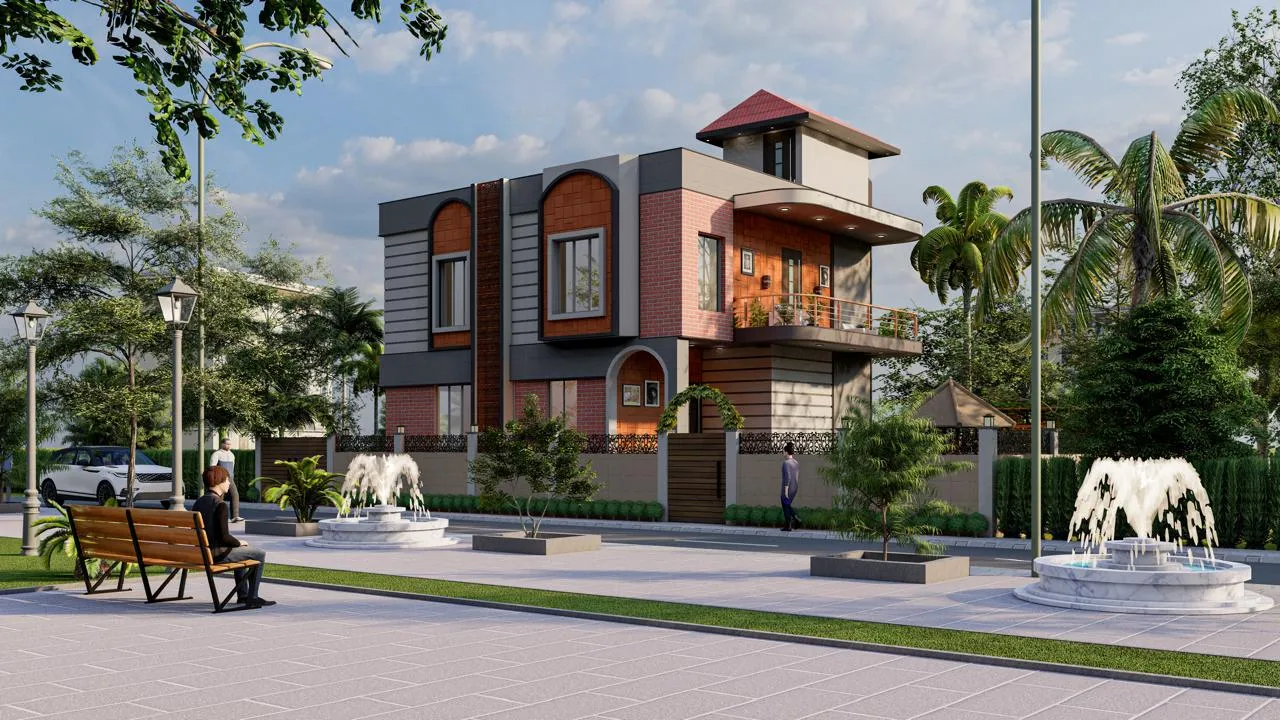
The application we recommend most often, and the one that gives clients the best return on the effort of sourcing salvaged material, is as a flooring or cladding finish rather than a structural building material, and this distinction matters enough that we want to be direct about it before going further. Salvaged khapra tiles laid as flooring, typically in a covered outdoor space like a veranda, courtyard or balcony rather than an interior living room where foot traffic and furniture loads are heavier, need to be reset in a fresh mortar bed with the tiles cut and ground where necessary for consistent thickness, since old tiles pulled from different sections of a demolished roof rarely arrive perfectly uniform in depth. Once relaid and sealed with a breathable stone sealer suited to Kolkata's humidity, this flooring develops a genuinely beautiful worn in patina within the first year of use that new terracotta tile, however well made, simply cannot replicate on delivery. As accent cladding, we have used salvaged brick and tile most successfully on feature walls, both interior and exterior, mounted as a thin veneer over a properly waterproofed backing wall rather than as full thickness structural brick, which lets us achieve the visual warmth of old material without the weight or structural complications of load bearing reclaimed masonry. We have also used broken and graded tile fragments in a controlled mosaic pattern for garden paths and planter surrounds, an application where the natural inconsistency of salvaged material actually becomes the main visual asset rather than something to work around.
Where structural reuse is not appropriate, and why we say no
This is the section we think is most important to be upfront about, because clients sometimes come to us wanting to reuse salvaged brick as actual load bearing structural masonry in a new build, imagining a wall built entirely from reclaimed material the way it might have been originally, and we have to be honest that this is very rarely something we recommend. Old hand moulded brick, even when visually intact, has typically lost a meaningful percentage of its original compressive strength through decades of weathering, moisture cycling and, in many cases, exposure to lime mortars that interact differently with brick than the cement mortars used in structural calculations today, and without individually testing every single brick's compressive strength, which is not practical at the volume a real wall requires, using this material as primary structural masonry introduces a level of engineering uncertainty that we are simply not willing to build a client's home around. Old roof tiles have an even clearer limitation here, since khapra tiles were never designed to bear structural load in the first place, only to shed water while resting on a wooden batten framework, so any application asking them to do more than that, whether as flooring subject to real foot traffic loads without a proper mortar bed, or worse, as any kind of load bearing element, is a misuse of the material regardless of how sound any individual tile looks. Our position, and what we tell every client considering this route, is that salvaged terracotta and brick belong in decorative, cladding and light duty flooring roles, always installed over a new, properly engineered structural base, and never as a substitute for new material where genuine structural performance is required. This is really the same underlying principle we apply across all salvaged material reuse, structural need gets met with new, code compliant material every time, and reclaimed pieces earn their place through character and finish rather than by cutting corners on engineering.
Sourcing volume and planning around irregular supply
One practical constraint worth setting expectations around early is volume, because unlike ordering new tile from a manufacturer where quantity is simply a matter of placing a larger order, salvaged material supply is entirely dependent on which demolitions happen to be underway at the time we are sourcing, and matching tile or brick tone and size across a large area can require pulling from more than one demolished structure, which is one more reason we always recommend clients commit to salvaged material early in a project's design phase rather than trying to source it at the last stage of construction when timelines are tight. For a project with a large area to cover, we sometimes recommend salvaged material be reserved specifically for the most visually prominent zones, like an entrance courtyard or a primary feature wall, while adjoining lower visibility areas use new terracotta tile manufactured to closely match the reclaimed tone, a hybrid approach that keeps both budget and sourcing timeline realistic without sacrificing the impact of the salvaged pieces where they matter most.
This material philosophy runs through several other threads in our own project thinking as well, including how we have handled salvaged steel and industrial offcuts on interior fit outs, which we cover in our piece on turning scrap steel and industrial offcuts into interior design accents, and it has also shaped how we approach commercial spaces that need to feel distinct from the moment a customer walks in, something we explore further in our notes on jewelry showroom interior design and balancing security, lighting and luxury in the same footprint, where material choice does as much work as layout in setting the tone of a space.
Bring us your reclaimed material questions before you break ground
If you are planning a new build anywhere in New Town, Salt Lake or greater Kolkata and want to explore where salvaged terracotta or brick could genuinely add character to the project, the best time to have that conversation with us is well before your structural drawings are finalised, since decisions about cladding zones and flooring build ups need to be planned into the base construction rather than added on afterward. Get in touch through our contact page and tell us roughly what look you are after, and we can talk through what is realistically achievable with the salvage market as it stands right now.