






What to Save, Not Scrap: Upcycling Furniture and Fittings From an Old Salt Lake Flat

Every renovation brief we take on in Salt Lake eventually arrives at the same tense moment, usually somewhere around the second site visit, when the homeowner stands in front of a decades old almirah or a dining table inherited from a grandparent and asks us the question they have clearly been rehearsing, which is whether the piece is worth keeping or whether it should simply go to the scrap dealer along with the broken tiles and the old wiring. We have been doing this work since 2014 across more than a hundred residential projects in New Town, Salt Lake, Rajarhat and the wider Kolkata belt, and if there is one lesson that keeps repeating itself on these older Salt Lake flats, many of which were built in the 1980s and 1990s when Bengal furniture makers still worked almost exclusively in solid teak and sal, it is that the instinct to scrap everything and start fresh is usually wrong, and the instinct to keep everything out of sentiment alone is just as wrong, so what actually works is a structured way of triaging each piece on its own merits before the demolition crew shows up.
Why older Salt Lake furniture is worth a second look in the first place
The furniture that came out of Bengal workshops in that era, whether it was a bedroom almirah, a study table, a set of dining chairs or the heavy panelled doors that separated the drawing room from the rest of the flat, was almost always built from teak or sal wood sourced in solid planks rather than the plywood and laminate that dominates furniture manufacturing today, and solid wood of that density simply does not degrade the way people assume it does. We have opened up almirahs that were sealed shut with decades of paint and found the internal structure completely sound, the joinery tight, the wood dense enough that a moisture meter reading comes back well within safe range even when the surface looks alarming. The economics also favour restoration far more often than clients expect, because a solid teak almirah roughly six feet by four feet that would cost somewhere in the range of eighty to a hundred and twenty thousand rupees to replicate new in equivalent solid wood today can usually be stripped, repaired, reinforced where needed and refinished for a fraction of that, often between fifteen and thirty thousand rupees depending on the extent of veneer or hardware replacement required. That gap alone is reason enough to slow down before anything goes into the scrap pile.
The triage framework we actually use on site
When our team walks a flat that is about to be renovated, we sort every candidate piece into three buckets, and we do this physically, tagging items rather than relying on memory, because renovation sites move fast and a piece earmarked for restoration can vanish into a scrap truck within a day if it is not clearly marked.
Structural soundness first. We tap the joints, check for give in the frame, and look specifically at the base of legs and the bottom rails of almirahs and cabinets, because that is where capillary moisture from mopped floors does the most damage over the years. A piece with a solid frame and only surface level cosmetic wear, meaning chipped polish, faded colour or minor veneer lifting, is almost always a keep. A piece with rot at the joints, active borer infestation with fresh dust trails, or a warped carcass that no longer sits square is usually a genuine scrap candidate, though even then we salvage the hardware and any usable panels before letting it go.
Wood species and cut matter more than age. Teak, being naturally resistant to moisture and pests because of its high oil content, tolerates decades of neglect far better than sal, which is harder and more rot resistant structurally but tends to develop surface checking and colour inconsistency when exposed to Kolkata's humidity swings between monsoon and winter. We have found that solid teak pieces from this era, even ones that look grey and lifeless under old varnish, respond extremely well to restoration, while sal pieces need a more careful assessment of moisture content before committing, because sal that has taken on water over years in a ground floor or poorly ventilated flat can be more brittle than it looks.
Fittings and doors deserve the same scrutiny as furniture. Panelled teak doors, old brass hardware, cast iron window grilles and the deep set almirah doors that many older Salt Lake flats still have are frequently torn out and discarded during renovation simply because they look dated next to a moodboard full of flush laminate doors, but these are often the single most characterful elements available to a project, and reclaimed teak of this quality is genuinely difficult to source new at any price. If you want a deeper look at how we source similar material when a flat's original doors are too far gone to save, our piece on sourcing reclaimed teak doors and windows from Kolkata's demolished heritage homes covers where we go hunting when the original fittings simply are not salvageable.
Restoring teak: what actually happens in the workshop
Once a teak piece clears the structural check, the restoration sequence we follow starts with a full strip of the existing polish using a combination of mechanical sanding and, where carving or moulded detail is involved, chemical paint remover applied by hand so the profile of the woodwork is not flattened out by an orbital sander. Underneath decades of varnish, teak almost always reveals a warm honey to amber tone that old French polish or synthetic lacquer had dulled into a flat brown, and this stripping stage alone is often the moment clients stop talking about replacing the piece and start asking how soon it can go back into the room. Any loose joints get re-glued with a proper wood adhesive and, where the original joinery has genuinely failed, we reinforce with hidden dowels or brackets rather than visible metal repair plates. Veneer lifting, which is common on the sides of almirahs where cheaper veneer was sometimes applied over a solid teak frame even in this era, gets re-adhered with contact cement under clamped pressure, and any missing veneer sections are patched with matched teak veneer rather than left as a visible scar. The final finish is usually a hand rubbed oil or a matte polyurethane rather than the high gloss lacquer that was standard decades ago, partly because a satin finish reads as more contemporary against the rest of a renovated interior and partly because oil finishes are dramatically easier to maintain and spot repair over the coming years.
Restoring sal wood: a different set of problems
Sal behaves differently enough from teak that we treat it as its own category rather than applying the same process. Because sal lacks teak's natural oil content, it is more prone to surface checking, those fine parallel cracks that appear along the grain when humidity levels swing, and while these checks are almost always cosmetic rather than structural, they do need to be filled before refinishing or they will telegraph through even a fresh coat of polish. We use a wood filler tinted to match the surrounding grain rather than a generic tan filler, because sal's colour range runs from a pale straw to a deeper reddish brown depending on the specific tree and cut, and a mismatched filler is more visually jarring than the original crack. Sal is also considerably harder to work by hand than teak, which means any structural repairs to joinery typically need power tools and more time in the workshop, and this is reflected in our restoration quotes running somewhat higher for sal pieces of comparable size. The upside is that a well restored sal piece, once refinished, has a richness of grain that many clients end up preferring to the teak pieces sitting alongside it in the same room.
Where upcycled pieces actually land in the finished interior
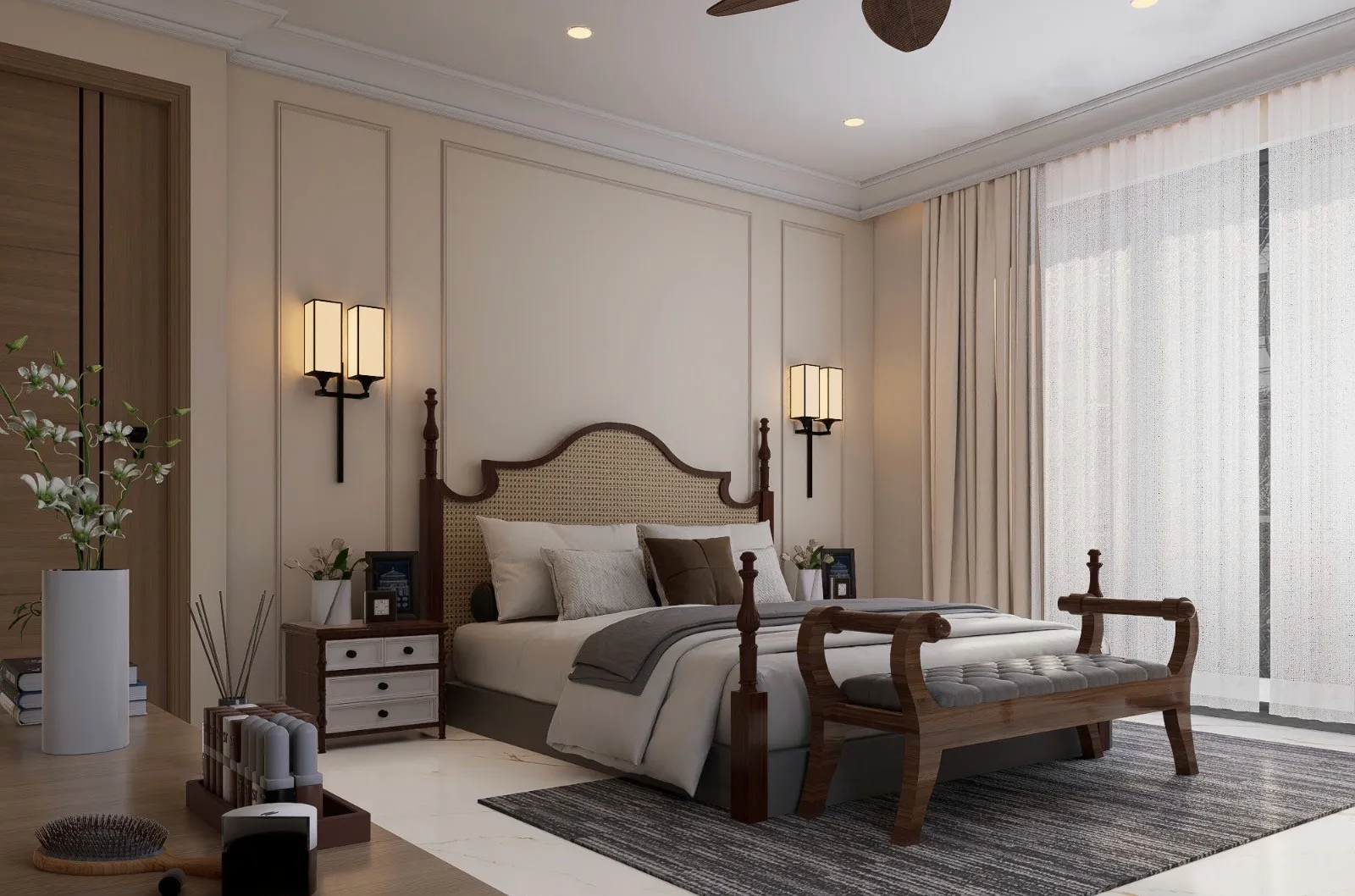
The mistake we see other renovation projects make is treating a restored heirloom piece as something to apologise for, tucking it into a guest room or a passage where it will not clash with the new scheme, when in our experience these pieces work best when they are given a genuine role in the primary living spaces. A restored teak almirah with reworked interior shelving makes an excellent freestanding wardrobe in a primary bedroom even when the rest of the room runs modular, a set of restored dining chairs paired with a new table top built to match their height and proportions gives a dining area a sense of history that no amount of new furniture can manufacture, and salvaged panelled doors repurposed as sliding wardrobe fronts or as a room divider between a living and dining zone become the one detail every visitor asks about. If the flooring scheme in the rest of the renovation is also leaning toward natural, tactile materials, our notes on jute, coir and sisal natural fibre flooring options for Bengal interiors pair well conceptually with restored wood furniture, since both approaches are really about choosing materials that age with character rather than materials that simply look new on delivery day.
We have also carried this same upcycling logic into commercial fit outs, most memorably a New Town retail project where a client's grandfather's old teak counter was rebuilt into the checkout desk rather than replaced with laminate, and it remains one of the more talked about details in that space, a good reminder that this thinking is not limited to residential work alone, and it connects naturally to how we think about product display architecture for New Town showrooms when a retail client has existing material worth carrying forward into a new commercial identity.
Let us walk your flat with you before anything goes to scrap
If you are staring down a renovation in Salt Lake, New Town or anywhere in greater Kolkata and you are unsure whether that old almirah, dining set or panelled door is worth saving, bring us in before the demolition schedule is finalised rather than after, because once a piece is off the site it is very hard to bring back. Our team can walk the flat with you, tag what is structurally worth restoring, and build the restoration cost directly into your renovation budget so there are no surprises later, and you can start that conversation through our contact page whenever you are ready.