





Why 2024 Was the Year Kolkata Swapped Stark White Minimalism for Warm Minimalism
Somewhere around the middle of 2024, we noticed that almost nobody walking into our New Town office was asking for what they had been asking for in 2021 and 2022, which was the cool, museum-white, grey-accented minimalism that had dominated aspirational Kolkata interiors for the better part of a decade, and instead every second client meeting opened with some version of "we want it simple but not cold." That phrase, or something close to it, came up so often across our residential briefs that year that we started treating it as a genuine market signal rather than a coincidence of a few particular tastes, and by the time we closed out 2024 we had delivered close to eighteen projects across New Town, Salt Lake, and Rajarhat that were built explicitly around a warm minimalist palette rather than the stark white-and-grey language that had defined the years before it.
What Stark Minimalism Actually Looked Like Before 2024
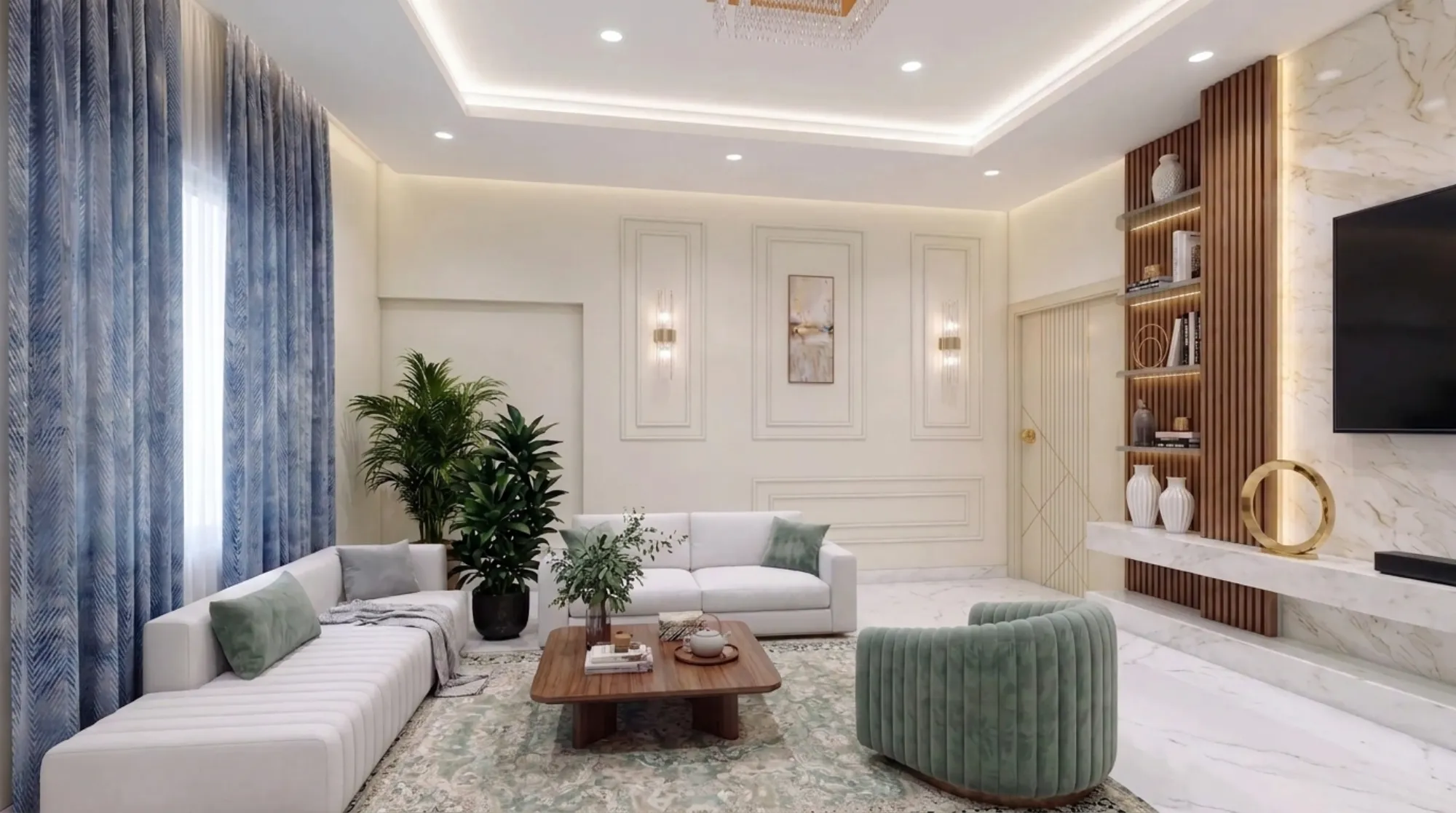
To understand why the swap mattered, it helps to be specific about what we were building through 2021 to early 2024. The dominant living room formula in that period was a white or off-white wall (usually something close to RAL 9010 or a similarly cool-toned white), grey or charcoal upholstery, matte black hardware, and a TV unit in either high-gloss white laminate or a cool grey stone-finish laminate. Flooring leaned toward light grey vitrified tiles, often in a 600x1200mm format with a honed or matte finish, and the overall effect, when it worked, was crisp and photographable, the kind of interior that looked extremely good in a listing photo taken at eleven in the morning under bright light. The problem, which we started hearing about directly from clients living in these homes rather than just touring them, was that the same interior at seven in the evening under warm LED lighting, or on an overcast monsoon afternoon, could feel flat and a little clinical, like a space designed for a photograph rather than for the hours a family actually spends in it.
The Specific Shift We Tracked Through 2024
What changed in 2024 was not a vague mood, it was traceable in our material specification sheets and paint orders, and we can point to three concrete shifts.
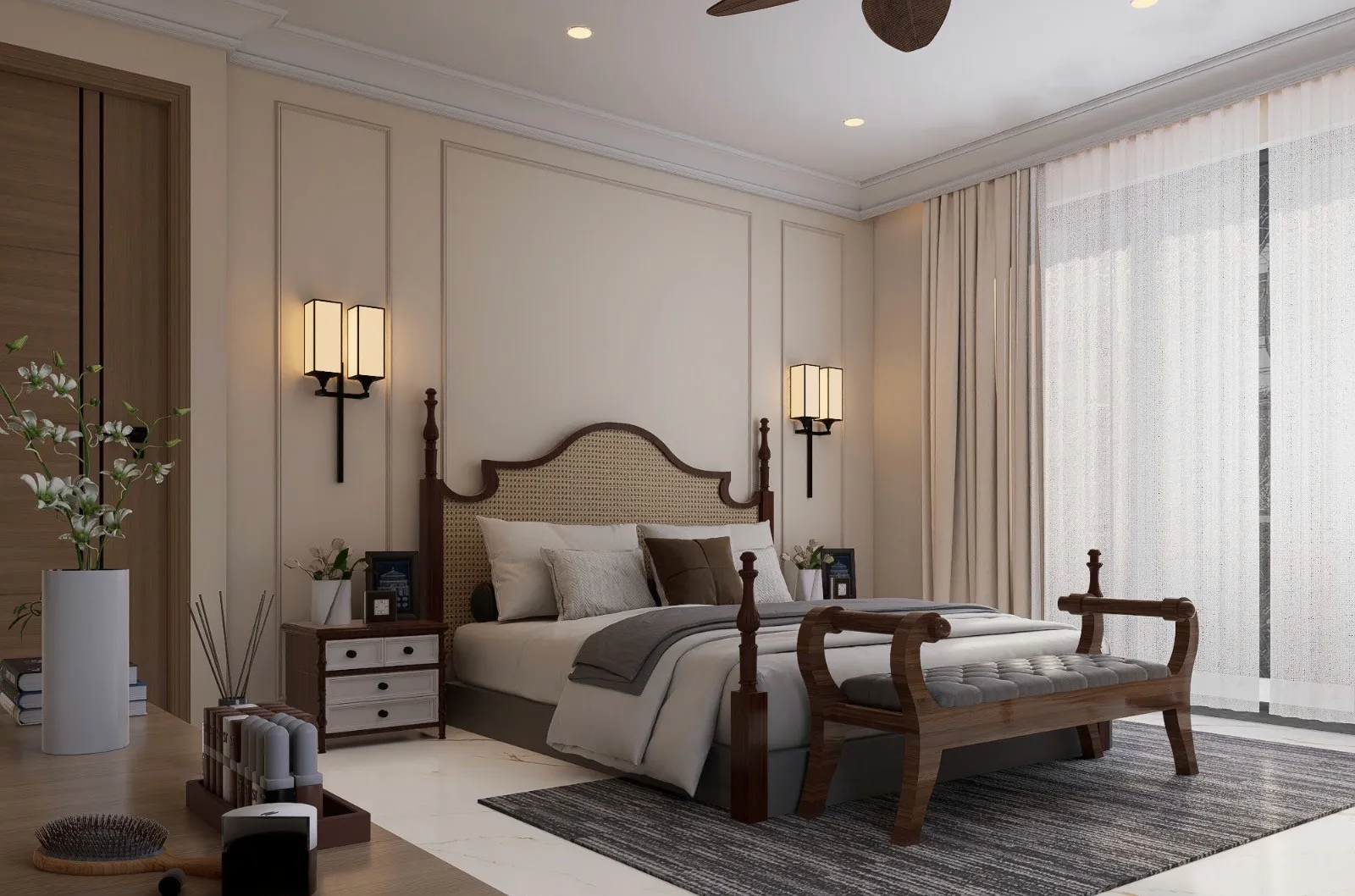
The first was in wall colour. Cool whites and greys were replaced by warm neutrals, and the specific shades our clients gravitated toward were tan and ivory undertones rather than the blue-grey undertones that had been standard. We moved a significant share of our residential paint specifications toward warm off-whites in the Asian Paints ColourNext and Royale ranges, shades with names that leaned toward "sand", "wheat", and "warm ivory" rather than "arctic" or "silver grey", and we started specifying clay and terracotta as full accent walls rather than as a single decorative object placed against a white backdrop, a change that alone reset the entire colour temperature of a room.
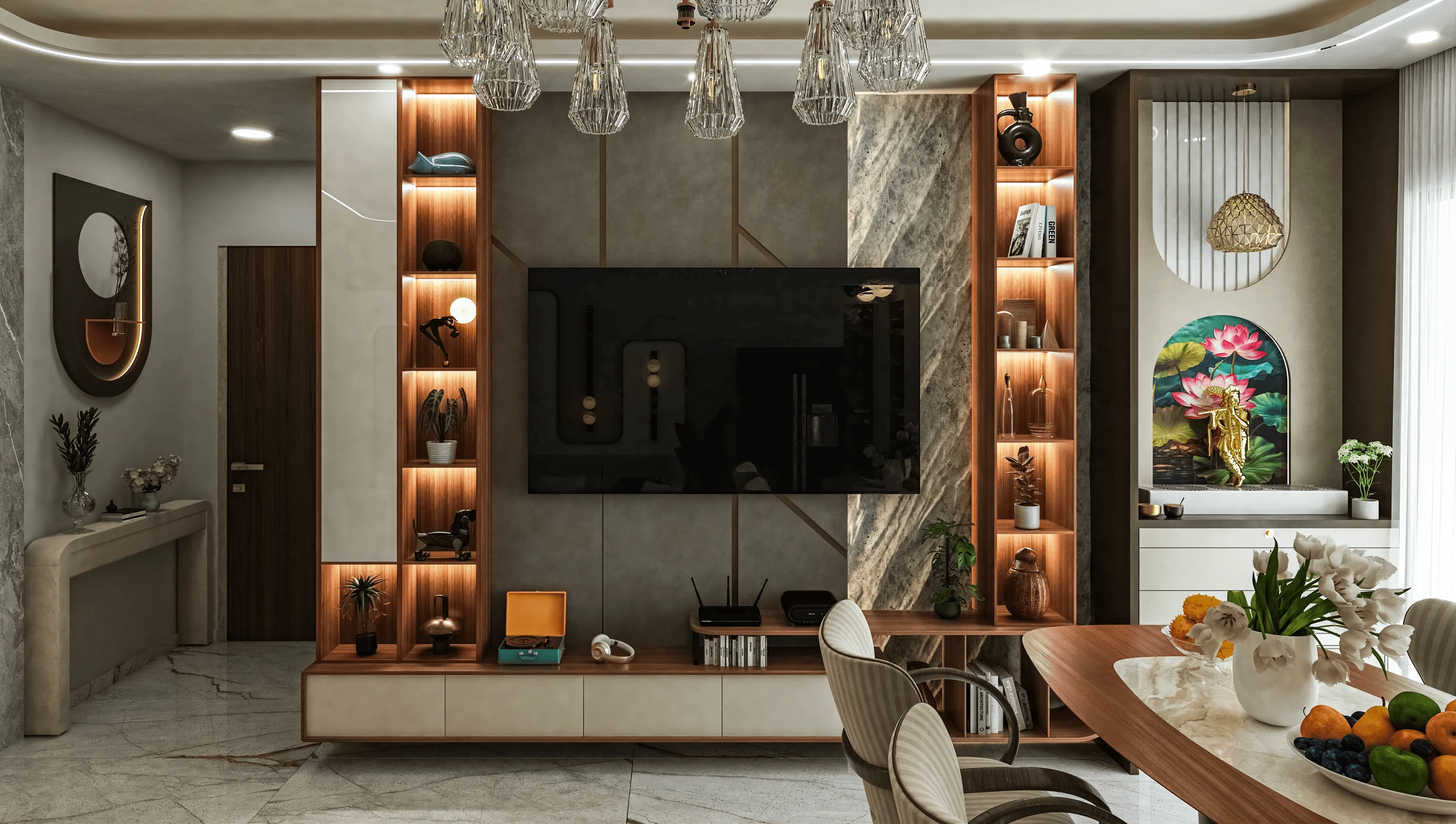
The second was in wood. Where 2022 and early 2023 briefs frequently asked for laminate finishes that mimicked concrete or stone, sometimes explicitly requesting "industrial" TV units and wardrobes, 2024 briefs asked for visible wood grain, warm oak and walnut veneers, and natural teak in furniture legs and shelving edges. We tracked this in our own vendor orders too, our laminate suppliers in Kolkata reported a clear tilt toward warm wood-grain finishes like natural oak and honey teak over the cooler concrete-grey and pure white laminates that had made up the bulk of our orders as recently as 2022.
The third, and the one that surprised us most because it came from clients rather than from us pushing a trend, was texture. Flat, seamless surfaces gave way to requests for lime-washed walls, handmade terracotta jaali inserts, and woven cane paneling on wardrobe fronts, a texture-forward instinct that we had actually already been tracking in facade and screen design, something we wrote about at length when terracotta jaali screens made their 2023 comeback on Kolkata facades and interiors well before the warm minimalism shift reached full living-room adoption in 2024.
Why This Happened in Kolkata Specifically
We think there is a genuinely local reason this shift landed as strongly as it did in our market, and it has to do with light. Kolkata's east-facing flats, which dominate a huge share of New Town and Rajarhat's residential stock because of how the plots were laid out along the main thoroughfares, get strong, warm morning light that shifts to a softer, more golden quality by late afternoon, and cool white walls under that light can develop an odd greyish cast that reads as dull rather than clean. Warm ivory and tan-toned walls, by contrast, hold their character across the full arc of the day, and they respond better to the amber-toned LED lighting, typically in the 2700K to 3000K range, that most of our clients prefer for evening ambience over the cooler 4000K daylight tone that suited the older stark-white palette. We had already been thinking hard about how north-east facing units in particular interact with natural light, a subject we cover in detail in our piece on why Vastu favours north-east facing flats in New Town and how to actually use that corner, and the warm minimalism shift only reinforced how much light temperature was driving material choice across the board.
The Budget Reality of the Switch
For clients who were curious whether warm minimalism cost more than the stark version, our honest answer through 2024 project data was that it was close to cost-neutral in most cases and occasionally slightly cheaper. A warm off-white emulsion paint job runs the same per-square-foot rate as a cool white or grey job, typically ₹28 to ₹45 per square foot for a good two-coat premium emulsion depending on brand and finish, so the wall colour shift itself carried no premium. Where costs did move was in the wood veneer upgrade, since genuine wood-grain laminate or a thin natural veneer finish on wardrobes and TV units runs roughly ₹15 to ₹40 per square foot more than a plain matte laminate, and for a typical 1,400 to 1,800 square foot New Town apartment with wardrobes across three bedrooms plus a living room TV unit, that upgrade added somewhere between ₹35,000 and ₹90,000 to the overall interior budget, a number most of our clients found reasonable given how much warmer the finished home felt.
How Warm Minimalism Differs From Japandi, Even Though They Overlap
We want to be precise here because the two get conflated constantly in client conversations. Warm minimalism is fundamentally about colour temperature and material warmth applied to whatever furniture layout a home already has, while Japandi, the style that quietly took over a meaningful share of New Town apartments the year before this warm minimalism shift, is a more specific furniture and spatial philosophy built around low-slung furniture lines, generous negative space, and a Japanese-Scandinavian material vocabulary. A home can be warm minimalist without being Japandi at all, simply by swapping a cool palette for a warm one while keeping the same sofa heights and room layouts, and plenty of our 2024 clients did exactly that, keeping their existing furniture footprint and layering in warm paint, wood accents, and softer textiles rather than undertaking the fuller Japandi reset. The two trends arrived in close succession in our market and share a family resemblance, but they are answering different questions, one about colour and material and the other about proportion and spatial discipline.
Where We See This Heading
By early 2025 the warm minimalism palette had become close to a default starting point in our residential consultations rather than a special request, which tells us it has moved past trend status into something closer to a genuine recalibration of what "clean" and "simple" mean to a Kolkata homeowner. We do not think stark white minimalism disappears entirely, some clients still want that gallery-crisp look for a specific room or a compact studio where visual expansion matters more than warmth, but as a whole-home default it has clearly lost ground to the warmer palette, and every material order we place now reflects that.
Ready to Warm Up Your Own Space
If your current interior still carries that cool, slightly clinical white-and-grey palette from a few years back and you have been wondering whether a full renovation is the only way to fix it, in most cases it is not, since a considered repaint in a warm tone paired with a handful of wood-grain surface upgrades can shift an entire home's character without touching layout or structure. We would be glad to walk your space with you, look at how your natural light actually behaves across the day, and put together a warm minimalism plan sized to your rooms and your budget, so get in touch with our team whenever you are ready to talk it through.