






How Japandi Design Quietly Took Over New Town Apartments in 2023
Nobody who walked into our studio in early 2023 used the word Japandi, and yet by the middle of that year we were designing an unmistakable, consistent style across a growing share of our New Town apartment projects without a single client ever naming it directly, which is exactly how we know it was a real shift rather than something we imposed from a mood board. The requests came in oblique forms, clients would show us a photo of a Tokyo apartment or a Copenhagen living room saved from Pinterest and say they wanted "that calm feeling," or they would ask us to keep furniture low and keep the room from feeling crowded, and when we traced those requests back to their source we found they were describing Japandi, the fusion of Japanese wabi-sabi restraint and Scandinavian functional warmth that had been building internationally for a few years before it reached a genuine tipping point in our own client base in 2023.
The Furniture Height Signal
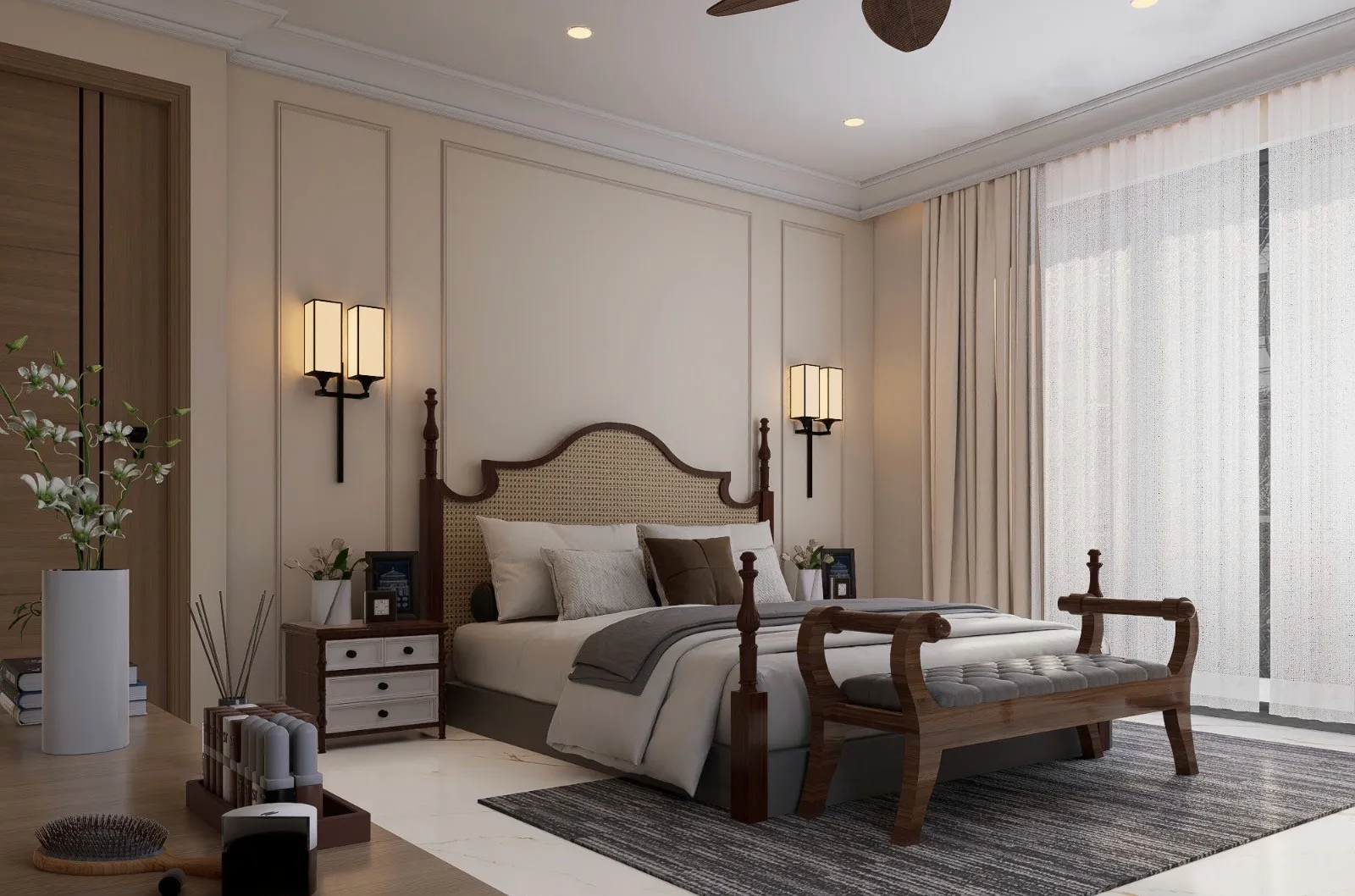
If there is one measurable marker that separates Japandi from the general minimalism that preceded it in our market, it is furniture height, and this is the detail we track most closely in our own design briefs because it changes room proportions in a way clients feel immediately even when they cannot articulate why. Sofas that had typically sat at a seat height of around 17 to 18 inches in our 2021 and 2022 projects dropped to 14 to 15 inches in the Japandi-influenced briefs we ran through 2023, coffee tables came down from the standard 16 to 18 inch range to something closer to 12 to 14 inches, and bed frames, particularly in projects for younger couples in one and two bedroom New Town flats, moved toward low platform designs sitting just 10 to 12 inches off the floor rather than the taller box-spring-style frames that had been standard. The effect of dropping furniture height across an entire room is that ceiling height reads as more generous even in a standard 9 to 10 foot New Town apartment ceiling, and the eye travels further across open floor space before it hits an object, which is precisely the sensation clients were describing when they used words like "calm" and "breathing room."
Oak, Not Just Any Wood
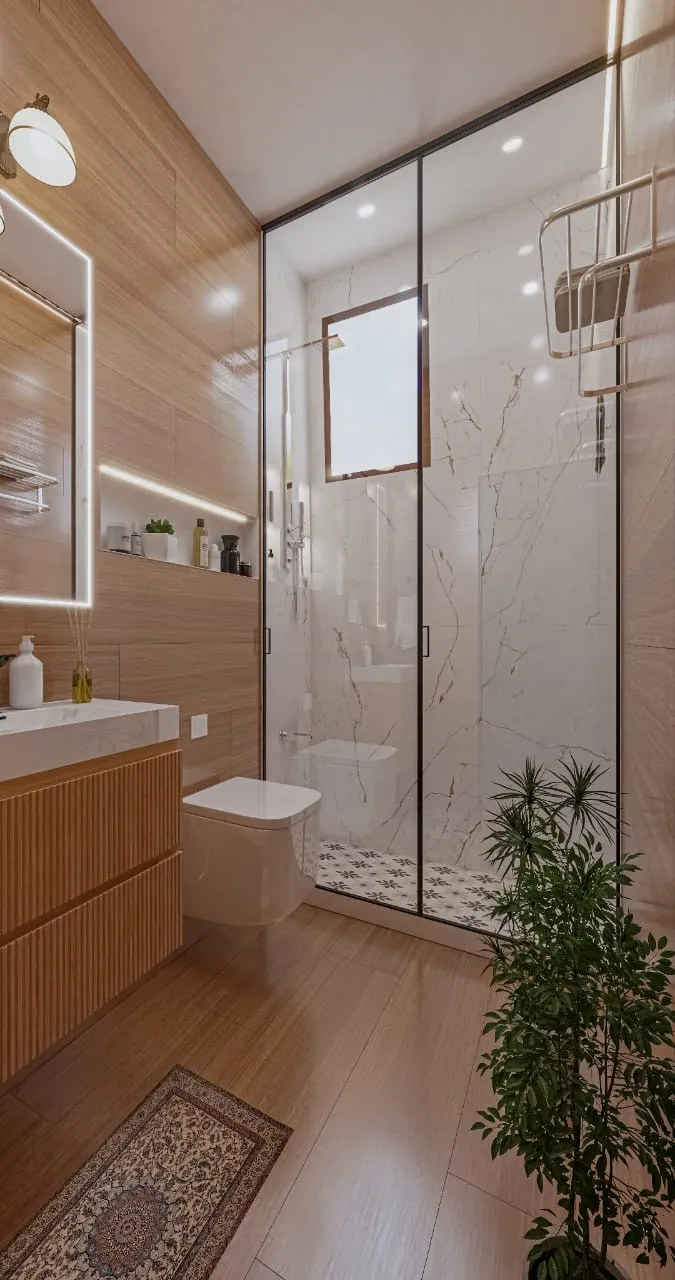
The second marker was material specificity, because Japandi is not simply "wood tones" in the way that warm minimalism, the broader palette shift that followed a year later across Kolkata living rooms, treats wood as one warm element among several. Japandi calls for a particular family of pale, low-contrast wood tones, natural oak being the reference point, and in our 2023 projects we substituted true oak veneer where budgets allowed and, more commonly given Kolkata pricing realities, used light ash-toned laminates and washed teak finishes that approximated oak's pale, slightly grey-warm character rather than reaching for the honey-gold teak or dark walnut tones that had dominated Bengali interior design for a generation before. This was a genuine departure locally, because traditional Bengali furniture sensibility, going back to the sheesham and teak pieces found in older Kolkata homes, leans toward richer, darker wood tones, so specifying pale oak-adjacent finishes for a New Town apartment in 2023 was a visible break from that inherited palette, one that read as distinctly international to clients who had grown up around darker wood furniture.
Negative Space as a Design Decision, Not a Budget Constraint
The habit we had to actively unlearn ourselves through 2023 was treating empty wall and floor space as something to eventually fill once budget allowed. Japandi briefs asked us to do the opposite, to design negative space in deliberately from the start, which meant we were specifying fewer wall-mounted shelving units, leaving stretches of wall bare rather than layering in gallery walls or decorative ledges, and pulling furniture away from walls to create breathing room around each piece rather than pushing everything to the perimeter to maximise open floor area in the middle of the room, which had been the standard efficient layout logic for smaller New Town flats. In a typical 900 to 1,100 square foot two bedroom unit, this meant we were sometimes specifying two or three fewer furniture pieces than a client's initial wishlist, replacing a planned console table or a second armchair with simply more open floor, a conversation that required real trust from clients since it runs against the instinct to fill a smaller flat with more storage and more furniture to feel like it is being used efficiently.
Where the 2023 Wave Concentrated
Looking back at our 2023 project list, the Japandi requests concentrated heavily among first-time buyers in their late twenties and early thirties furnishing their first owned apartment, largely in New Town's Action Area I and Action Area II developments, and among a smaller but notable group of clients renovating older Salt Lake flats who wanted to shed what they described as an overly ornate inherited interior in favour of something calmer. We did not see the same concentration in our larger villa and independent house projects that year, where Vastu considerations and joint-family living patterns tend to demand more furniture, more storage, and more distinct functional zones than Japandi's pared-back logic comfortably accommodates, a tension that comes up constantly in our work balancing Vastu kitchen direction against modular layout efficiency for larger family homes.
Craft Details That Made It Feel Local Rather Than Imported
What kept our 2023 Japandi projects from feeling like a straight import of a Scandinavian catalogue was a deliberate layering of Bengali and Indian craft elements into the same restrained framework. We used hand-thrown terracotta vessels from Panchmura sourced through Kolkata's craft markets as the sculptural objects that Japandi interiors typically reserve for a single ceramic piece on an otherwise bare shelf, we specified handloom cotton and linen-cotton blend upholstery in undyed or lightly dyed natural tones rather than the wool and boucle fabrics more common in European Japandi references, and in a handful of projects we worked jute and cane into low bench seating and lighting fixtures, materials that carry genuine local craft history and that happen to sit comfortably within Japandi's natural-material vocabulary without needing to be forced into it. This is the detail we are proudest of from that year's work, that the style read as authentically ours rather than as a downloaded aesthetic, and it is also, we think, part of why it caught on as fast as it did, because it gave clients an international-feeling calm without asking them to abandon material choices that felt recognisably Bengali.
What Came After
By the end of 2023 we could see Japandi's influence bleeding into adjacent requests even from clients who were not asking for the full style, low coffee tables and pale wood tones started showing up as isolated asks within otherwise conventional briefs, and the appetite for negative space and natural materials that Japandi established in our market set up much of the ground for the biophilic shift the following year, when clients started wanting greenery and daylight built into the architectural plan itself rather than treated as an afterthought, something we track closely in our piece on 2024's biophilic shift toward designing homes around plants from day one. Japandi in 2023 was, in hindsight, the year our clients first started asking us to slow a room down rather than fill it, and that instinct has kept compounding in every style wave we have designed since.
Thinking About a Calmer Layout for Your Own Flat
If you have been drawn to that same low-furniture, pale-wood, breathing-room quality in homes you have seen and wondered whether it would work in your own New Town or Salt Lake apartment, the honest answer is that it works best when we plan for it from the layout stage rather than retrofitting it onto an existing furniture list, so we would love to sit down with your floor plan and talk through where genuine negative space can live in your rooms. Reach out to us through our contact page and we can start mapping out what a properly considered Japandi layout looks like for your specific square footage.