






MS, SS, or Glass? Choosing Balcony Railing Hardware That Survives Kolkata Monsoons
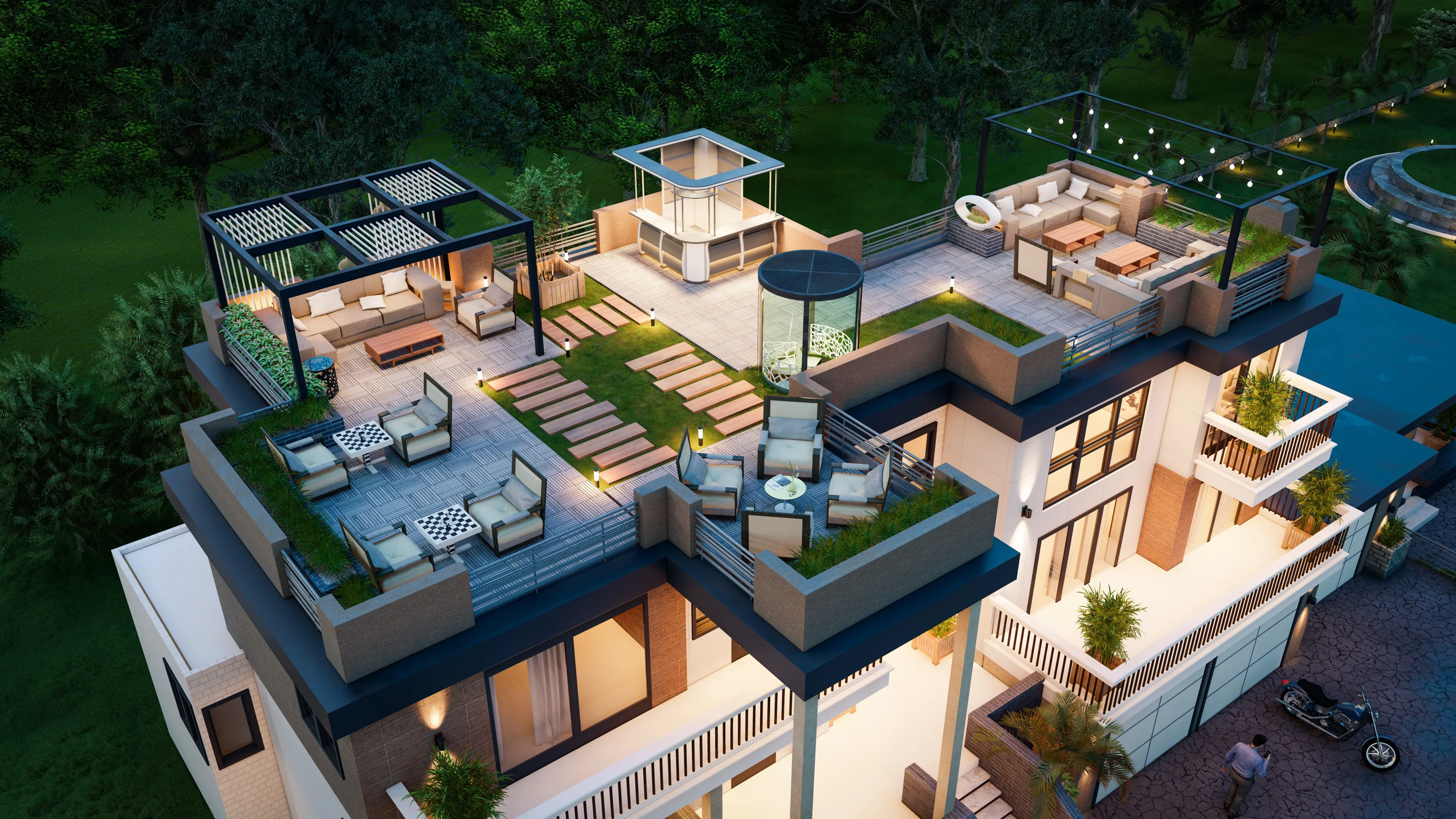
Clients ask us this almost every time a balcony or terrace comes up in a project brief, and the question is always some version of the same thing, which is the best balcony railing material for the monsoon climate in Kolkata, given that our city sees roughly four straight months of rain, humidity that rarely drops below seventy percent even in the dry season, and the kind of driving, wind-blown moisture that gets into joints and welds that a drier city would never test. We have installed and later revisited enough railings across New Town, Salt Lake, and Rajarhat to know that the sticker price on day one tells you almost nothing about what a railing will actually cost you over five years, and this piece lays out mild steel against SS304 stainless steel against toughened glass with stainless clamps on that longer, more honest timeline.
Mild Steel: The Cheapest Railing You Will Ever Buy Twice
Mild steel box-section or square-bar railing is still what most contractors quote first, mainly because the raw material and fabrication cost is the lowest of the three options, typically landing between three hundred fifty and four hundred fifty rupees per running foot installed with a basic primer and enamel paint finish. The problem is not the steel itself but what Kolkata's monsoon does to any painted finish over a box-section joint, because water works its way into the smallest pinhole in the enamel coat, sits against bare metal inside a sealed section, and begins rusting from the inside out long before any surface staining becomes visible from the balcony side. We have seen railings installed with a good quality paint job start showing rust bleed streaks down the building facade within fourteen to eighteen months in exposed, rain-facing balconies, and by year three the same railing usually needs either a full strip-and-repaint or, in the worst cases we have been called in to assess, a structural section replacement where pitting has gone deep enough to compromise the weld.
SS304: Higher Entry Cost, Genuinely Low Maintenance After That
Stainless steel railing in SS304 grade runs considerably higher on installed cost, typically nine hundred fifty to twelve hundred rupees per running foot depending on the section profile and finish, but the difference in long-term behaviour is not subtle. SS304 carries enough chromium and nickel content in the alloy to form a passive oxide layer that self-repairs when scratched, which is precisely why it does not rust the way mild steel does even under sustained monsoon exposure, and beyond an occasional wipe-down to remove salt-laden grime and water spotting, we have clients who have not touched their SS304 railings in six or seven years and they still look close to new. The one specification detail we insist on with every SS railing job, and where we see other contractors quietly cut cost, is the grade stamp itself, because a lot of what gets sold in Kolkata's hardware markets as stainless steel is actually SS202, a cheaper alloy that substitutes manganese for some of the nickel content and is genuinely prone to rust streaking and pitting once it sits through a few humid monsoon seasons, even though it looks identical to SS304 on the showroom floor.
Toughened Glass with SS Clamps: The Premium, Low-Fuss Option
Frameless or semi-framed toughened glass railing held with SS304 spider fittings or U-channel clamps sits at the top of our pricing table, generally between fourteen hundred and eighteen hundred rupees per running foot for twelve millimetre toughened glass with proper stainless hardware, and it earns that price with a genuinely different maintenance profile from either metal option. The glass panel itself does not corrode at all, obviously, so the only real vulnerability in this system is the clamp hardware, and this is exactly where the SS304 versus SS202 distinction matters even more than it does on a solid metal railing, because a cheaper clamp corroding under monsoon exposure will streak rust directly onto the glass panel it is holding, which looks far worse cosmetically than the same corrosion would on an already-metal railing. We specify SS304 clamps as standard on every glass railing we install, and the ongoing maintenance for a client then becomes essentially just glass cleaning, which most households were already doing anyway.
Plywood is not part of a balcony railing system, but the same underlying principle from timber grading applies here in a useful way, which is that the visible finish tells you almost nothing about what is happening at the bonded or welded joint underneath, a point covered well in the general manufacturing background on Wikipedia's plywood entry when it discusses how layer bonding quality, not surface appearance, determines a material's real durability.
What the Numbers Actually Look Like Over Five Years
Running the installed cost against a realistic maintenance schedule for a typical fifteen running foot balcony railing changes the ranking considerably from what the day-one quote suggests. Mild steel at an average of four hundred rupees per running foot comes in around six thousand rupees installed, but four repaint cycles over five years at roughly one hundred rupees per running foot each cycle add another six thousand rupees, pushing the true five-year cost close to twelve thousand rupees before accounting for the labour disruption of scaffolding a balcony for repainting every year and a half. SS304 at an average eleven hundred rupees per running foot installs for around sixteen thousand five hundred rupees and essentially stays there, with only nominal cleaning cost. Glass with SS304 clamps installs highest at around twenty four thousand rupees for the same run but again adds almost nothing on top across five years.
| Railing Type | Installed Cost (15 ft run) | 5-Year Maintenance Add-On | True 5-Year Cost |
|---|---|---|---|
| Mild steel (painted) | ₹6000 approx | ₹6000 approx across 4 repaint cycles | ₹12000 approx |
| SS304 stainless steel | ₹16500 approx,Negligible | ₹16500 approx | |
| Toughened glass with SS304 clamps | ₹24000 approx,Negligible | ₹24500 approx |
| Mild Steel | SS304 Stainless Steel |
|---|---|
| Lowest install cost, highest long-term cost | Higher install cost, near-zero long-term add-on |
| Needs repainting every 12-15 months in exposed monsoon balconies | Needs only occasional cleaning, no rust cycle |
| Rust often starts inside sealed box sections, invisible until it bleeds through paint | Self-repairing oxide layer resists both surface and hidden corrosion |
| Reasonable for sheltered, covered balconies away from direct rain | Our default recommendation for any rain-facing or high-floor balcony |
A Note on Mixing Metals and on What Faces the Weather
One detail that trips up a surprising number of otherwise sound railing installations is galvanic corrosion, which happens when two dissimilar metals sit in direct contact in the presence of moisture, so a mild steel post fitted with stainless steel screws, or an SS railing bolted to an MS embedded plate without an isolating gasket, will corrode faster at that contact point than either metal would on its own. We always specify matched hardware, meaning SS fasteners on SS railings and MS fasteners on MS railings, and where a stainless railing has to anchor into an existing mild steel embed from an older building, we insert a nylon or rubber isolation washer at every contact point. For clients weighing this decision before construction rather than after, we typically render both the metal and glass options in 3D against the actual balcony elevation so the aesthetic tradeoff is visible alongside the cost one, a service we detail further on our 3D visualization and rendering page, and for readers specifically building or renovating within New Town's Action Area I, where a large share of our balcony and terrace railing work has been concentrated, our location page for the area has more on the kind of building stock and balcony configurations we see there most often.
- Confirm SS304, not SS202, on the material certificate before installation, not after
- Budget a repaint cycle every 12-15 months if you choose mild steel for an exposed balcony
- Use matched fasteners, SS on SS and MS on MS, to avoid galvanic corrosion at contact points
- Insert isolation washers wherever new SS hardware anchors into an older MS embed
- Compare five-year cost, not installed cost, before deciding between the three options
If your balcony already has planting or a garden setup you are trying to protect through the monsoon rather than build around, our earlier post on balcony garden design for Kolkata apartments covers how railing choice and drainage interact with planter placement. And once the railing question is settled, most of our clients move straight on to the carcass and hardware questions inside the flat itself, which is where our pieces on BWP vs BWR vs MR Plywood: Which Grade Your Kolkata Kitchen Carcass Needs, Which Wardrobe Hinge Type Actually Survives Kolkata's Humidity, and, for anyone building on a lower-lying plot rather than renovating a flat, Flood-Proof Foundation Design for Low-Lying Plots in Hatiara-Tegharia, Rajarhat pick up the same climate-first thinking at ground level and inside the joinery.
Ready to Spec Your Railing Before the Next Monsoon Hits
If you are staring at a balcony or terrace edge right now trying to decide between a cheaper quote and a longer-lasting one, send us the running footage and the elevation and we will price out mild steel, SS304, and glass side by side against your actual five-year horizon rather than just the install-day number. Reach our team through our contact page, by email at studiocontour.mail@gmail.com, or call +91 98312 50307, and we will walk you through which option fits your balcony's exposure and your budget honestly.