








How to Spot Fake or Mislabeled Plywood at Kolkata's Timber Markets
Every so often a client tells us they are planning to save on contractor markup by heading to Bagri Market or one of the local timber depots around the city and buying their plywood directly, and while we understand the instinct, since cutting out a middleman's margin feels like straightforward savings, we always tell them the same thing before they go, which is that buying plywood without someone who inspects boards for a living standing next to you is one of the easier ways to end up paying premium-grade prices for a board that will not survive premium-grade use. This is not a knock on Kolkata's timber markets generally, because there are genuinely reputable dealers doing honest business at Bagri Market and across the city's local depots, and most of the plywood moving through the city is exactly what it claims to be. But mislabeling, whether it is a lower core-quality board sold under a premium brand's marking, a BWR board passed off verbally as BWP, or a board with a thin face veneer disguising a core full of voids, is common enough that we have developed a specific site-inspection routine over the years, and we want to hand that same checklist to anyone who is buying ply without a contractor present to catch it for them.
Start With the Edge, Not the Face
The single most revealing part of any plywood sheet is not the polished face veneer, which is designed to look good regardless of what is underneath, it is the raw edge, and this is the first thing we check on any board before anything else. Genuine plywood is built from an odd number of thin wood veneer layers cross-laminated at alternating grain directions and pressed together under heat and adhesive, and a quality 19mm board should show somewhere between 11 and 15 distinct, evenly thick layers along its cut edge, depending on the manufacturer's construction. What we look for specifically, and what a fraudulent or lower-grade board will often fail on, is consistency: layers that are visibly uneven in thickness, layers that appear to have been bulked out with thicker, cheaper core veneers concentrated in the middle while thin veneers sit only near the two visible faces, or worse, actual gaps and voids between layers that show as dark lines or hollow pockets when you look closely at the edge in good light. A board padded with cheap core material to hit a target thickness while using minimal adhesive and minimal true veneer count will often look completely normal from the face but reveal itself immediately the moment you inspect the cut edge, so if a dealer is reluctant to let you examine a fresh-cut edge or only shows you factory-edged boards with the true edge sanded and sealed, treat that as worth pushing back on.
Verify the ISI Mark, Not Just Its Presence
An ISI mark stamped on a board is meant to indicate Bureau of Indian Standards certification confirming the board was tested and manufactured to the relevant IS specification, IS:710 for BWP marine and exterior grade or IS:303 for BWR general-purpose grade, but the mark's mere presence on a board is unfortunately not proof of anything on its own, since counterfeit or unlicensed ISI stamps do circulate, particularly on lower-tier boards moving through high-volume wholesale markets where verification gets less scrutiny than it should. What we actually do on site is check that the stamp includes a legible manufacturer license number alongside the ISI mark itself, not just the ISI logo in isolation, and we cross-reference that the brand name stamped on the board matches a manufacturer we recognize or can verify, because a genuinely blank or generic stamp with no license number and no traceable brand name is a meaningful red flag on its own. It is also worth asking the dealer directly for the manufacturer's test certificate or batch documentation if you are buying in bulk for a full home's worth of carpentry, since a legitimate dealer sourcing from an authorized distributor should be able to produce this without hesitation, and hesitation or evasiveness on this specific request has been the single most reliable tell we have found across the sourcing disputes we have helped clients resolve over the years.
Run the Water-Boil Test Before You Commit to a Bulk Order
The water-boil test is the most decisive check available to a buyer without lab equipment, and it directly tests the claim that actually matters, whether the adhesive bond will hold up to sustained moisture the way the grade on the invoice claims it will. To run it yourself, cut or ask the dealer for a genuine offcut sample of the exact board you intend to purchase (not a separate showroom sample that may not represent the actual stock), submerge it fully in a pot of water, bring it to a rolling boil, and keep it boiling for a minimum of 72 minutes for a proper IS:710 simulation, then remove it and let it dry completely at room temperature for 24 hours before inspecting. A genuine BWP board will show no delamination, no separation between layers, and no bubbling at the edges after this cycle, since that is precisely the condition the phenol formaldehyde bonding is engineered to survive. A board that separates at the layers, develops visible bubbling or lifting, or where you can insert a fingernail into a gap between veneer layers after this test has failed to perform to the grade it was sold under, regardless of what the invoice or the stamp claims. We recognize most homeowners are not going to run a 72-minute boil test on a market floor before making a purchase, which is exactly why we recommend buying one representative offcut sample first, running the test at home over a weekend, and only placing the full bulk order once that sample has passed, rather than committing to your entire kitchen and wardrobe carpentry's worth of ply on a single site visit's inspection alone.
Check for Core Gaps With a Simple Tap Test
Core gaps, hollow pockets inside the board where veneer layers were not fully pressed together or where cheap filler material was used to bulk out thickness, are harder to spot visually than edge inconsistencies but are just as damaging to the board's structural integrity and moisture resistance, since a gap is a pathway for water to travel through the core rather than staying blocked at each laminated layer. The simplest field test here is a tap test, using a coin or a small hard object to tap firmly across the full face of the board in a grid pattern, roughly every 6 inches, and listening for a consistent solid, slightly dull knock throughout. A hollow or noticeably higher-pitched sound at any point on an otherwise consistent board indicates a void or a gap beneath that specific spot, and if you find more than one or two such spots on a single sheet, we would treat that board as compromised and ask to inspect a different sheet from the stack rather than accepting it. This test takes under two minutes per board and is something any homeowner can do standing right at the dealer's counter, and a reputable dealer will not object to you running it before you commit to a purchase.
Why This Matters More for Kitchen and Bathroom Carpentry Specifically
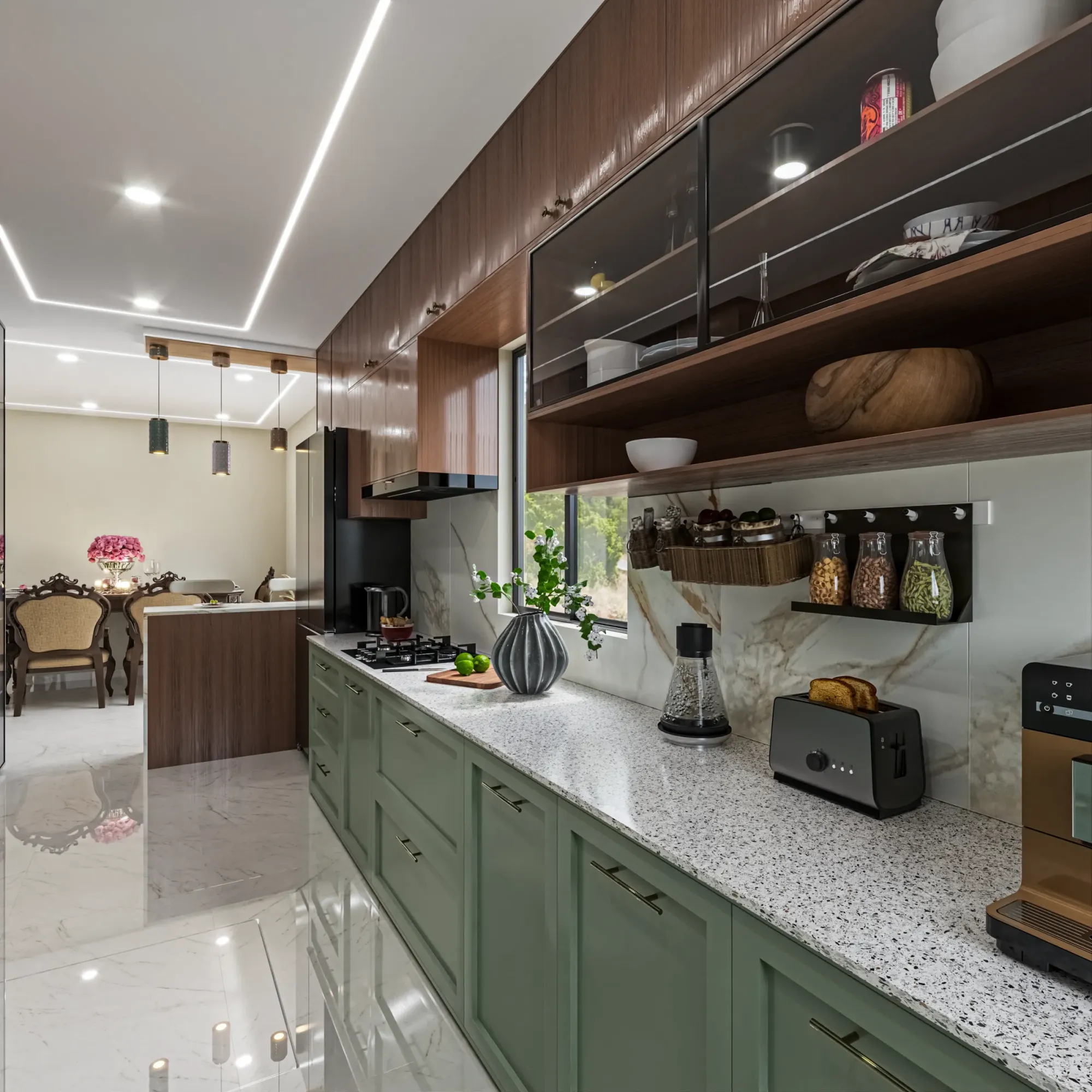
The stakes of getting this wrong scale directly with how much moisture exposure the finished carpentry will face, so a mislabeled or structurally compromised board used in a bedroom wardrobe is a disappointment, but the same board used in kitchen base cabinetry or bathroom vanity units is a near-certain early failure, since those are exactly the applications where the board's true water resistance gets tested by real household use within the first couple of monsoons. We go into the specific grade distinction that governs this, and exactly why a board that looks fine on delivery day can still be wrong for a wet-zone application even when it is not fraudulent, in our companion piece on BWP versus BWR plywood and the grade difference that determines if your kitchen swells, which is worth reading alongside this checklist since grade misidentification and outright fraud often get conflated but require slightly different diagnostic steps to catch. If you are trying to decide whether the extra cost of marine-grade ply is justified for a specific application in your home at all, our breakdown of marine ply versus commercial ply and which one actually justifies its price in Kolkata's humidity covers that budget-versus-application trade-off in more depth than we can here.
What We Recommend If You Are Buying Without a Contractor Present
If you are set on sourcing your own plywood rather than routing it through a contractor's supply chain, our strongest practical recommendation is to buy your first order small, a single representative sheet or two rather than your full home's requirement, run the edge inspection, ISI verification, and water-boil test on that initial batch, and only place the full bulk order once you have confidence in that specific dealer and that specific stock lot, since even a reputable dealer's inventory can vary between batches depending on which manufacturer's overrun they picked up that month. It is also worth timing your purchase and installation with the rest of your renovation sequence in mind, since plywood that sits in storage for months in Kolkata's humidity before installation can pick up moisture regardless of its grade, which is one of several sequencing details that tend to get overlooked when homeowners manage sourcing independently rather than as part of a coordinated residential interior design process where material delivery is timed against the actual carpentry schedule.
If You Would Rather Not Learn This the Hard Way
Plywood fraud and mislabeling are the kind of problem that is completely avoidable with the right five minutes of inspection at the point of purchase, but genuinely expensive to fix once it is already fabricated into a finished cabinet or wardrobe, and if you would rather have someone who does this inspection routinely handle your sourcing rather than running these tests yourself between meetings and market visits, that is exactly the kind of groundwork we build into every project we take on. Reach out through our contact page with the scope of carpentry you are planning, and we will either source and verify the material ourselves or walk you through exactly what to check if you would still prefer to buy it directly.