

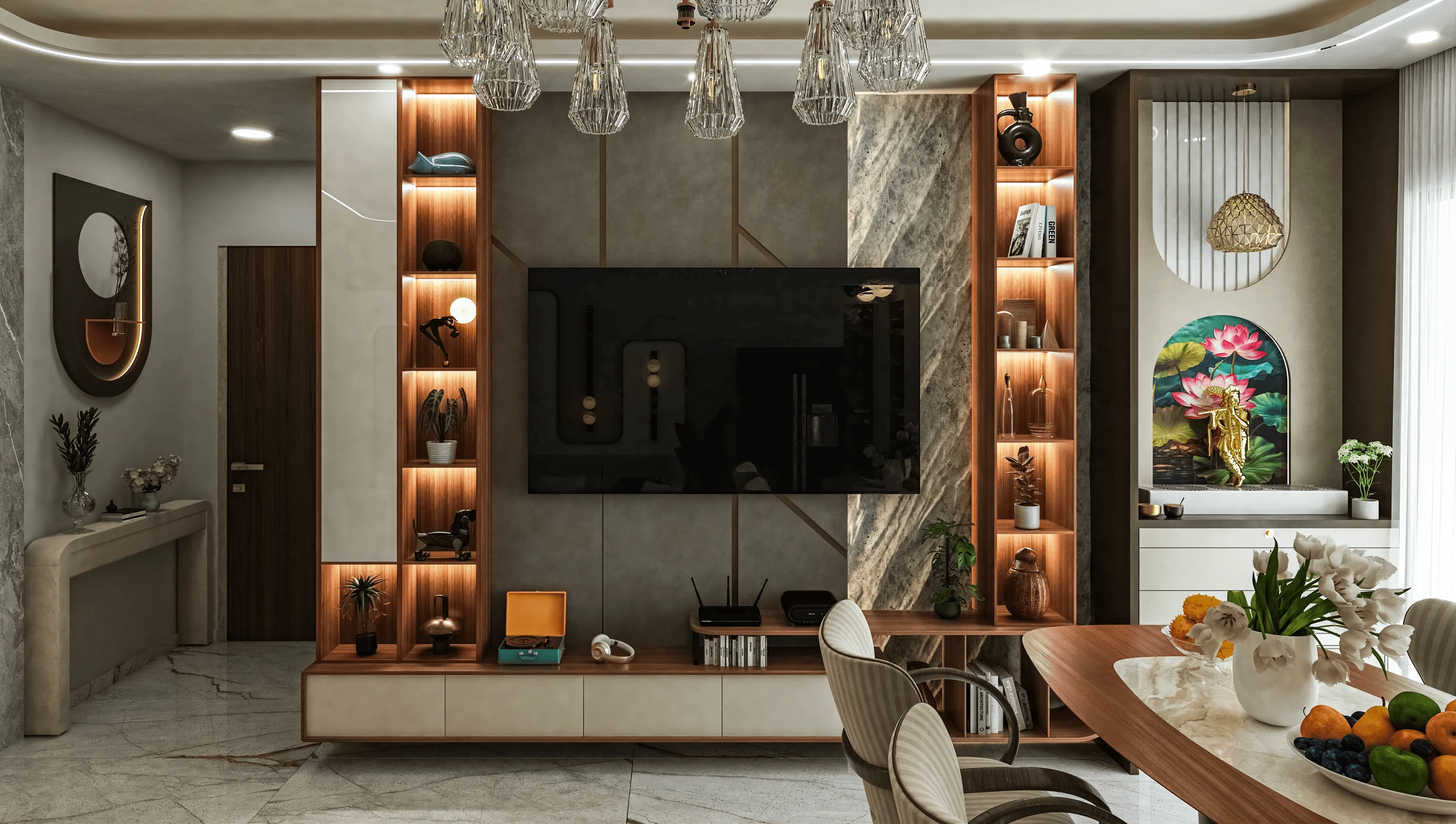






Italian Marble vs Indian Marble for Your Entryway Flooring

Every entryway we design in New Town or Salt Lake takes a beating that the rest of the home never sees, monsoon slush tracked in on shoe soles, gritty road dust from Kolkata's streets, the occasional dropped umbrella dripping straight onto the floor, and it is exactly this high-abuse, high-footfall reality that should decide whether you choose Italian marble or Indian marble for your foyer, more than which one simply looks more expensive in a showroom sample. Italian marble, most commonly Statuario or Carrara varieties imported through Rajasthan-based processing units, brings a translucent depth of veining and a brightness that Indian stone genuinely struggles to match, but it is also softer and more porous than most homeowners realise, while Indian marble, particularly Makrana from Rajasthan, is denser, less prone to staining at the entrance, and priced at roughly a third to half the cost per square foot, so the honest comparison here is really about how much risk you are willing to accept at your front door in exchange for that extra visual polish.
Why the Entryway Is a Different Test Than Any Other Room
We treat entryway flooring as its own category of decision entirely separate from marble choices in a living room or a bedroom, because no other surface in the home absorbs this specific combination of grit, moisture, and constant foot traffic within the first ten feet of walking in. A living room floor might see spilled tea or the occasional scuff, but an entryway takes wet monsoon mud in July and August, fine construction dust that settles on Kolkata streets year round, and the direct impact of shoe soles carrying whatever was on the pavement outside, several dozen times a day in an active household. Marble is a calcium carbonate stone, which means it reacts to acidic substances and absorbs liquid through its pores at a rate that varies significantly by variety, and an entryway is precisely the zone where that porosity gets tested hardest and earliest, often within the first monsoon season if the stone was not sealed properly at installation.
Porosity and Staining: Where Italian Marble Loses Ground
Italian Statuario and Carrara marbles carry a porosity rate typically between 0.4 and 0.8 percent, which sounds negligible until you consider that this is the difference between a stone that beads water briefly and one that absorbs a faint tea-coloured stain from an unwiped shoe within a season. We have walked into more than a few Kolkata homes where an Italian marble entryway installed without a proper penetrating sealant showed visible yellowing or dull patches near the door within 18 months, not because the marble itself was a poor grade, but because the sealant schedule was skipped or under-applied during installation, and porosity does not forgive that kind of shortcut in a zone that sees this much moisture. Indian Makrana marble, by contrast, typically runs a porosity between 0.2 and 0.5 percent, a genuinely tighter stone structure that resists staining more reliably even under imperfect maintenance, which is one of the main reasons we lean toward Indian marble specifically for entryways even when a client's budget could comfortably stretch to Italian stone for the rest of the home.
| Feature | Italian Marble | Indian Marble (Makrana) |
|---|---|---|
| Porosity | 0.4 to 0.8% | 0.2 to 0.5% |
| Cost per sq ft | ₹180 to ₹420 | ₹90 to ₹180 |
| Veining character | Bold, translucent | Subtler, denser grain |
| Staining risk at entry | Higher without sealing | Lower, more forgiving |
| Resealing frequency | Every 12 to 18 months | Every 24 to 30 months |
What Each Option Actually Costs for a Kolkata Foyer
Cost is where the decision becomes concrete rather than aesthetic, and the gap between the two options is wide enough that it genuinely changes what else you can afford in the same renovation. Italian marble slabs, imported and processed through Rajasthan before reaching Kolkata suppliers, typically run between ₹180 and ₹420 per square foot depending on the specific variety, veining grade, and slab thickness, before you add installation, and for a modest entryway of 60 to 80 square feet, that puts material cost alone somewhere between ₹10,800 and ₹33,600. Indian Makrana marble, sourced domestically and requiring far less transport and duty overhead, typically costs between ₹90 and ₹180 per square foot, which for the same 60 to 80 square foot entryway works out to roughly ₹5,400 to ₹14,400, meaning the Italian option can cost two to three times more for the identical floor area before installation labour, cutting, and edge finishing are even factored in.
| Entryway Size | Italian Marble Cost | Indian Makrana Cost | Difference |
|---|---|---|---|
| 60 sq ft (compact foyer) | ₹10,800 to ₹25,200 | ₹5,400 to ₹10,800 | ₹5,400 to ₹14,400 |
| 80 sq ft (standard foyer) | ₹14,400 to ₹33,600 | ₹7,200 to ₹14,400 | ₹7,200 to ₹19,200 |
| 120 sq ft (villa-style entry) | ₹21,600 to ₹50,400 | ₹10,800 to ₹21,600 | ₹10,800 to ₹28,800 |
Installation itself adds a further ₹35 to ₹65 per square foot for both options, covering cutting, laying, grouting, and polishing, and that portion of the cost stays roughly consistent regardless of which marble you choose, so the material price gap is really the entire story here.
A Middle Path Some Clients Choose
Not every client we work with has to choose one or the other for the entire foyer, and one solution we have implemented successfully in a few New Town homes is using Italian marble for a smaller feature strip or border inlay near the main door threshold, where it is genuinely visible and makes the strongest first impression, while running Indian Makrana marble across the bulk of the entryway floor where daily wear happens most. This approach lets a client get the translucent brightness of Italian stone in the zone that actually gets seen and photographed, while keeping the higher-traffic, higher-risk expanse in the more durable, more affordable Indian marble, and it typically adds only ₹4,000 to ₹8,000 over a full Indian marble installation depending on how large the inlay border runs.

Maintenance Realities Through a Kolkata Monsoon
Both marble types need a penetrating sealant reapplied periodically to hold up against Kolkata's humidity and monsoon moisture, but the schedule differs meaningfully. Italian marble at the entrance genuinely needs resealing every 12 to 18 months given its higher porosity and the volume of moisture an entryway sees during July through September, while Indian Makrana marble in the same location can often go 24 to 30 months between resealing cycles without visible risk, purely because its tighter pore structure buys more margin before moisture becomes a real problem. Neither stone should ever be cleaned with acidic cleaners, including anything vinegar or citrus based, since marble's calcium carbonate composition etches on contact with acid, leaving a permanently dulled patch that no amount of polishing fully restores, so a pH-neutral stone cleaner used weekly at the entrance is worth the small extra discipline it requires.
- Ask your supplier for the specific porosity rating of the exact slab batch, not just the variety name
- Confirm a penetrating sealant is included in the installation quote, not sold separately
- Set a resealing reminder based on your chosen marble's actual schedule
- Choose a matte or honed finish over high-gloss polish at the entrance for better slip resistance
- Keep a pH-neutral stone cleaner on hand and avoid vinegar or citrus-based products entirely
Slip Resistance Matters as Much as Staining Here
One factor that gets less attention than staining but matters just as much at a front door is slip resistance, since an entryway is precisely where wet shoes meet a hard floor most directly. Highly polished, high-gloss marble of either origin becomes genuinely slippery when wet, and we recommend a honed or leather finish specifically for entryway zones over the mirror-polish look that suits an interior living room floor better, a small finish decision that costs little extra but meaningfully reduces slip risk during the exact months, June through September, when your entryway floor is wettest most often.
Planning the Rest of Your Flooring Alongside This Choice
Entryway flooring rarely gets decided in isolation from the rest of a home's material palette, and we usually walk this conversation alongside a few related decisions clients are weighing at the same time. If you are also finalising a home office space in the same renovation, our comparison of laminate flooring versus vinyl flooring for a Kolkata home office covers a very different set of trade-offs for a lower-traffic interior room, and if your bedroom storage is still an open question, our piece on sliding versus hinged wardrobe doors for a small Kolkata bedroom works through a similarly grounded cost comparison. For anyone planning a larger plot rather than a flat, our design priorities guide for an 1800 sq ft villa plot in Rajarhat touches on entryway scale in a way that applies directly to a bigger foyer footprint, and our broader piece on entryway and foyer design for Kolkata flats is worth reading if you are still shaping the layout of the space before the flooring decision itself.
Bring Us Your Entryway Dimensions
The right marble for your entryway depends on the exact footfall pattern of your household, how exposed your front door is to monsoon rain, and how much of your total renovation budget you want tied up in a single ten-foot stretch of floor, and those are questions we would rather work through with your actual entryway plan than answer in the abstract. If you are planning a foyer renovation anywhere in New Town, Salt Lake, or greater Kolkata and want a straight comparison quoted against your specific dimensions, reach out through our contact page and we will bring slab samples of both marble types to your site before you decide.