






Choosing a Modular Kitchen Drawer Channel That Won't Jam in Kolkata's Monsoon
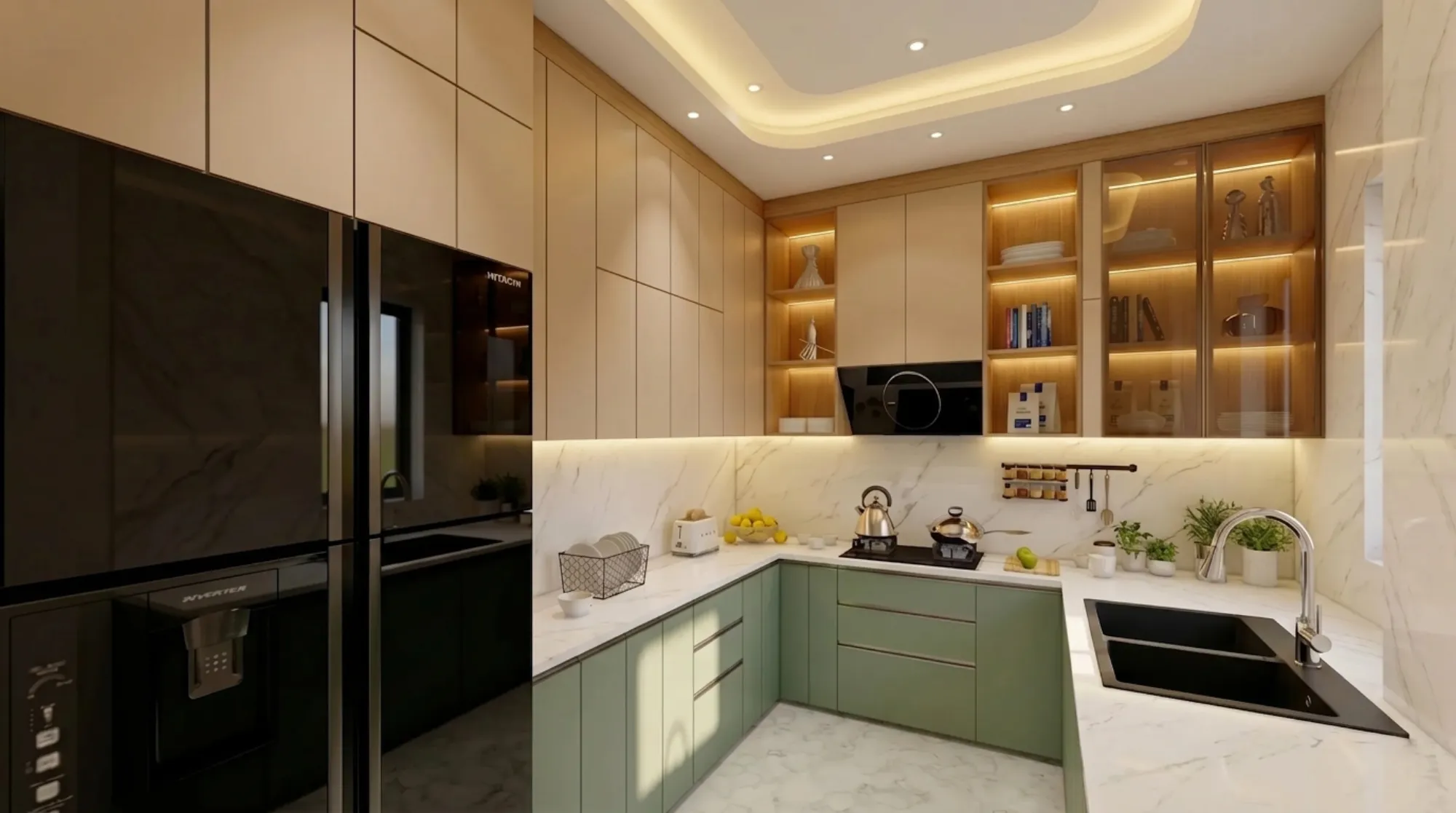
Ask ten different modular kitchen vendors in Kolkata what the best drawer channel type is for a humid kitchen and you will get ten different answers, mostly because most vendors are selling whatever channel brand gives them the best margin rather than what actually survives four months of monsoon humidity sitting inside a kitchen carcass, and after specifying drawer hardware across well over a hundred residential kitchens for our studio, our answer has become fairly specific: for any kitchen in New Town, Salt Lake, Rajarhat, or greater Kolkata, a fully concealed tandem box channel with a zinc-nickel plated steel body and a soft-close mechanism rated for at least 40,000 cycles is the category that reliably avoids the sticking, swelling, and rust-seized drawers we get called out to repair in kitchens fitted with basic telescopic channels.
Why Kolkata's Monsoon Attacks Drawers From Two Directions at Once
Most homeowners assume a stuck drawer is a single problem with a single cause, but in our climate it is almost always two separate mechanisms happening together, and treating it as one problem is why so many monsoon repair jobs do not actually fix anything. The first is straightforward moisture swelling of the drawer box itself, since a standard drawer built from plywood or MDF sides absorbs ambient moisture through its edges and faces once relative humidity climbs above 85%, which it does for extended stretches through June to September in Kolkata, and that swelling, even a millimetre or two across a drawer side, is enough to create friction against a tightly toleranced channel that was calibrated for a dry-season fit. The second mechanism is happening inside the channel hardware itself, where moisture works into the ball bearing raceway of a basic channel and, combined with kitchen dust, cooking oil vapour, and whatever grit gets tracked in from outside, starts to gum up and eventually rust the bearing surfaces, so that even a drawer box with zero swelling starts dragging or grinding because the mechanism carrying it has degraded.
Telescopic Ball-Bearing Channels: The Default That Struggles Here
Telescopic side-mounted channels, the visible metal runners you see bolted to either side of most budget and mid-range modular kitchen drawers, are what roughly three-quarters of the kitchens we get asked to inspect for complaints have installed, largely because they are cheap and every carpenter in the city knows how to fit them, typically running 150 to 350 rupees a pair depending on length and load rating. The design problem for our climate is that the ball bearing raceway sits exposed on both sides of the channel, in full contact with ambient kitchen air, and most budget lines use a standard zinc plating on the steel body that runs a bare few microns thick, which corrodes and stiffens up within two to three monsoon seasons in our experience, well before the drawer box itself, the cabinet carcass, or anything else in the kitchen has reached the end of its useful life. Full extension, which lets the drawer pull all the way out and is a genuinely useful feature for deep cabinets, comes at the cost of that exposed mechanism, and it is the single most common hardware complaint we field on kitchens we did not originally specify.
Tandem Box Systems: Sealed, Undermount, and Monsoon-Resistant
Tandem box, or undermount, drawer systems, sold under brand names like Hettich, Blum, and Hafele among others active in the Kolkata market, solve both halves of the monsoon problem at once rather than addressing one and leaving the other exposed. The channel mechanism sits concealed underneath the drawer rather than visible on its sides, which means the bearing surfaces are largely shielded from direct kitchen air, dust fallout, and splashed water, and the better systems in this category use a zinc-nickel plating with genuinely higher corrosion resistance than the standard zinc used on budget telescopic channels, holding cycle ratings of 40,000 to 80,000 or more depending on the brand and load class. Just as important for our climate, tandem box drawer sides are typically fabricated from powder-coated steel or extruded aluminium profile rather than plywood, so the swelling half of the monsoon problem is largely designed out of the drawer box itself, leaving only the front panel, which is still plywood or MDF with a laminate or acrylic finish, exposed to the same humidity every other piece of kitchen furniture faces. The trade-off is cost, with tandem box systems running roughly 800 to 1,800 rupees per drawer depending on width and soft-close specification, a genuine premium over telescopic channels but one we think is worth paying for any kitchen drawer that sees daily use, which in practice means nearly every drawer in the kitchen except perhaps a rarely opened top-tier storage bin.
| Feature | Telescopic Ball-Bearing | Tandem Box (Undermount) |
|---|---|---|
| Drawer box material typically paired | Plywood or MDF sides | Powder-coated steel or aluminium sides |
| Bearing exposure to air | Exposed on both side channels | Largely enclosed under the drawer |
| Typical cycle rating | 15,000 to 30,000 in budget lines | 40,000 to 80,000 or more |
| Price per drawer set | ₹150 to ₹350 | ₹800 to ₹1,800 |
The Coating Specification That Actually Matters
The single most useful question we tell clients to ask a kitchen vendor is not which brand of channel they use but what plating the channel body carries, because "soft-close" as a spec describes the closing mechanism, not the corrosion resistance of the steel underneath it, and a soft-close channel with plain zinc plating will still rust and stiffen on the same timeline as any other unprotected steel hardware in our humidity. Zinc-nickel plating, sometimes listed on a spec sheet as simply "corrosion resistant coating" without further detail, holds up considerably longer than standard zinc plating because the nickel component slows the electrochemical corrosion process that plain zinc is prone to in salt-adjacent, high-humidity air, and we ask vendors to confirm this in writing on the quotation rather than trusting a verbal assurance at the showroom. It is also worth budgeting for basic maintenance regardless of channel quality, since even the best tandem box system benefits from an annual wipe-down of the visible track to clear cooking-oil residue and dust before it has a chance to work into the mechanism, a five-minute job that meaningfully extends the working life of even premium hardware.
What to Ask Your Kitchen Vendor Before Signing Off
- Confirm whether the channel is telescopic ball-bearing or a fully concealed tandem box system, not just described as "soft-close"
- Ask for the plating type, specifically zinc-nickel versus standard zinc, and the cycle rating in writing on the quotation
- Specify tandem box or steel-sided drawers for any kitchen wall exposed to direct humidity from an operable window or a poorly ducted exhaust
- Check that the drawer box material is BWP-grade plywood or powder-coated steel, not moisture-sensitive particle board
- Request the brand and model number on the final invoice rather than accepting "imported soft-close channel" as a description
How the Drawer Box Material Plays Into This Too
Even with a good tandem box channel underneath, the drawer front and any plywood components still involved in the kitchen carcass need the right substrate to hold up over years of humidity cycling, and this is where the plywood grade genuinely matters rather than being a line item to skim past. Plywood is built from thin layers of wood veneer glued together with the grain of each layer rotated roughly ninety degrees against the one below it, a cross-lamination method described in detail on its Wikipedia entry, and that construction gives it far better dimensional stability across humidity swings than a single solid piece of timber or a particle board panel would have, which is exactly why we specify BWP-grade, boiling water proof, plywood for kitchen carcasses and drawer fronts on every project regardless of what channel hardware sits behind it.
Where This Fits Into the Rest of Kitchen Planning
Drawer channels rarely get decided in isolation from the rest of a kitchen brief, and the same humidity logic that governs channel selection runs through several other decisions we walk clients through on the same project. Cabinet and wardrobe hardware sitting right above those drawers faces an almost identical corrosion problem, which we cover in our guide to handle and hinge finishes that won't rust in Kolkata's air. Kitchen humidity does not stay contained to the kitchen either, and bathrooms directly adjoining a kitchen wall or sharing a utility duct often need the same ventilation thinking, which we break down in our piece on sizing a bathroom exhaust fan correctly for Kolkata's humidity. And if you are planning a compact kitchen where drawer count and channel choice have to work within a genuinely tight footprint, our layout guide for modular kitchens in compact 2BHK flats at Uniworld City, Rajarhat covers how we balance storage density against hardware cost in exactly that kind of plan. If an island forms part of your layout, the drawer and channel choices we describe here apply equally to island-side storage, something we go into further in our guide to kitchen island layouts for Kolkata flats.
Specifying Drawers That Will Still Glide Smoothly Five Monsoons From Now
A kitchen drawer that sticks, grinds, or has to be yanked open by the second monsoon after handover is almost always a hardware specification problem rather than a workmanship one, and it is one of the cheapest things to get right at the start of a project and one of the most annoying and disruptive things to fix once cabinetry is already installed and laminated shut around it. If you are finalising a kitchen anywhere across New Town, Salt Lake, Rajarhat, or greater Kolkata and want channel and drawer box specifications written into your quotation the way we write them for our own projects, reach out through our contact page and we will go through your kitchen layout drawer by drawer.