






Kitchen Ventilation Fixes for Pitha-Making Season Around Makar Sankranti
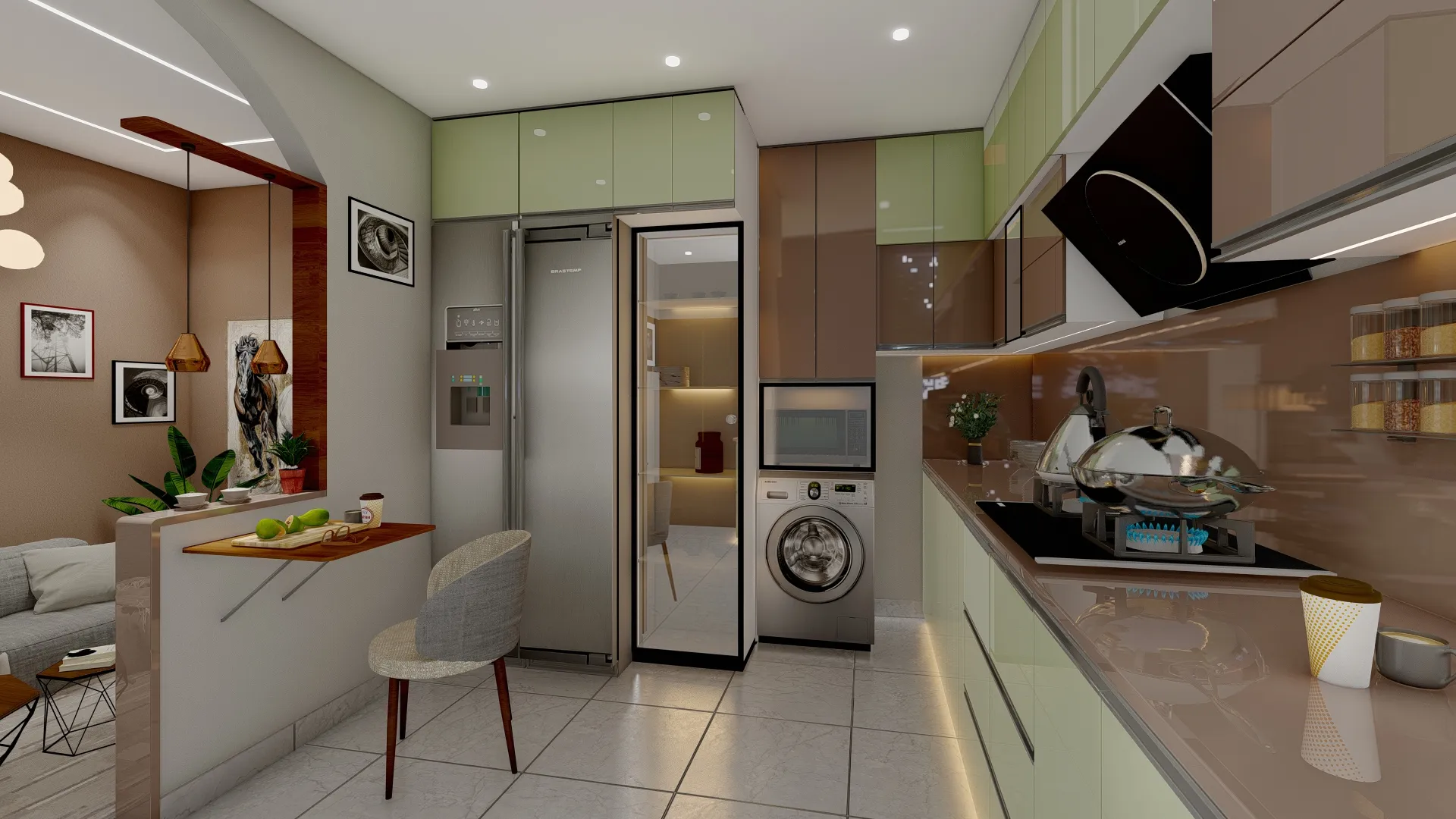
If you are searching for how to get kitchen ventilation right for making pitha at home during Makar Sankranti in Kolkata, you have almost certainly just lived through the exact problem we hear about every January, a kitchen that handles daily cooking perfectly well suddenly filling with steam and lingering smoke the moment a household commits to a full day of patishapta, dudh puli, and gokul pitha for Poush Sankranti, and by mid-afternoon the exhaust fan is losing the battle, condensation is beading on the kitchen window, and the smell has drifted well past the kitchen door into the rest of the flat. This is a genuinely narrow, specific ventilation problem rather than a general kitchen design issue, because pitha making is a sustained, multi-hour cooking marathon involving continuous steaming on top of frying, which puts a very different load on a kitchen's exhaust system than the shorter, single-dish cooking sessions that system was likely sized for.
Why Pitha-Making Day Exposes Ventilation Gaps Other Days Don't
A typical day of pitha preparation in a Bengali household layers several high-moisture and high-smoke cooking methods back to back, steaming rice flour dumplings in a covered vessel for patishapta and puli pitha, which releases sustained water vapour into the kitchen air for stretches of twenty to thirty minutes at a time, deep frying gokul pitha and other fried varieties in mustard oil, which produces the same pungent, clinging smoke that shapes so much of how we design kitchen ventilation for Bengali households generally, and often reducing khejur gur or milk on an open pan for hours in the background, which adds its own steady humidity load. Individually, a kitchen's standard chimney and exhaust fan handle each of these fine for a normal thirty to forty five minute cooking window, but stacked together across four or five continuous hours, which is a realistic timeline for a household making several varieties of pitha for Poush Sankranti, the moisture load alone can exceed what a single wall-mounted exhaust fan is rated to clear, and that is before accounting for the additional smoke from frying.
Kolkata's own climate compounds this. The city sits in a humid subtropical zone with high ambient humidity for large stretches of the year, a fact reflected in general geographic descriptions of Kolkata's climate, and a kitchen that already starts the day at high relative humidity has far less headroom to absorb an additional multi-hour steaming session before condensation starts forming on cool surfaces, tiles, windows, even the underside of overhead cabinets. We have opened up kitchen exhaust ducting in more than a few New Town and Salt Lake flats after a client mentioned recurring dampness or a persistent smell that seems to appear "only once or twice a year," and traced it directly back to an exhaust system that is adequate for daily cooking but undersized for the specific steam-and-smoke combination that a festival cooking marathon produces.
Sizing an Exhaust System for a Steam-Heavy Cooking Day
The core fix is almost never a bigger chimney over the stove alone, because a chimney captures smoke and steam rising directly off the pan it sits above, but a lot of pitha preparation happens across multiple burners and often a separate steaming setup that may not sit directly under the chimney's capture zone at all. We look at total kitchen air changes per hour rather than just chimney suction rating when we are advising a household on this specific brief, and for a kitchen that regularly hosts multi-hour steaming sessions we generally recommend a combined system, a chimney rated for at least 1000 to 1200 cubic metres per hour extraction over the primary cooktop, paired with a separate exhaust fan on an adjoining wall sized to handle general room air turnover independently, so that steam rising from a second burner or a dedicated steaming vessel away from the chimney's direct capture zone still has a clear path out of the kitchen rather than drifting and condensing.
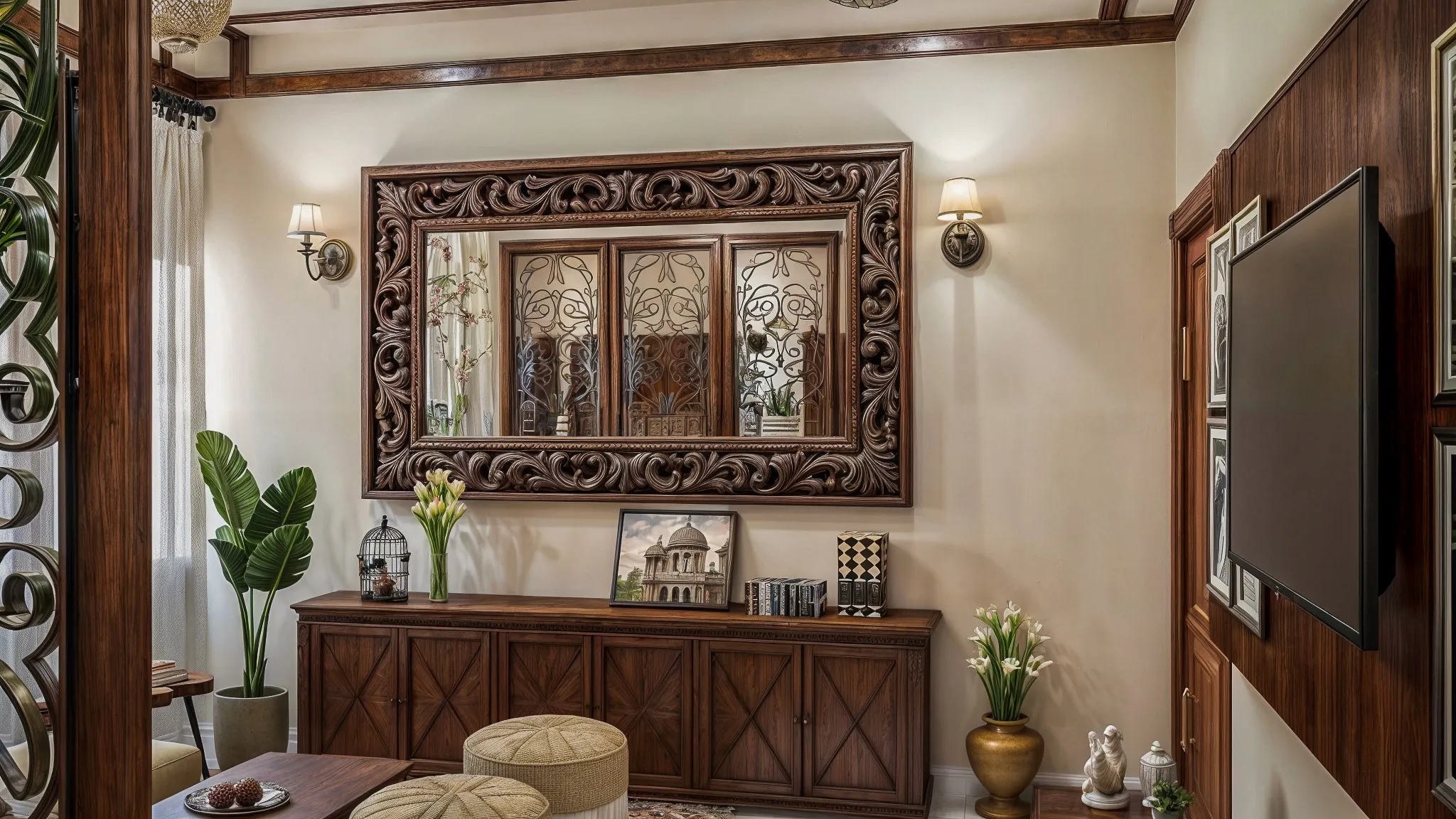
Duct routing matters just as much as the appliance rating. We have seen chimneys with a perfectly adequate motor underperform badly because the ducting run to the outside wall is too long, has too many sharp bends, or terminates in an undersized outlet grille, all of which choke airflow regardless of how strong the extractor itself is rated. Where a kitchen's existing duct run is the bottleneck, which is common in flats where the kitchen sits in the interior of the layout rather than against an external wall, we either shorten and straighten the run during a renovation or, where that is not possible, add the second wall-mounted exhaust fan as a more direct path to the outside for steam specifically, since steam disperses faster through a short, direct route than smoke needs to travel through a long chimney duct.
| Chimney Only | Chimney Plus Secondary Wall Exhaust |
|---|---|
| Handles smoke and steam directly over the cooktop well | Adds independent extraction for a second burner or steaming station |
| Can be overwhelmed during multi-hour, multi-burner cooking | Spreads the extraction load so no single unit is overworked |
| Sufficient for typical daily cooking | Built for festival-scale cooking marathons like pitha-making day |
Practical Fixes Beyond the Exhaust Itself
Ventilation upgrades are the structural fix, but we pair them with a few lower-cost adjustments that make an immediate difference on the day itself. Keeping the kitchen window cracked open even slightly during a steaming session, in addition to running the exhaust, gives moist air a second exit path and reduces the pressure differential that otherwise pulls steam back into the room through gaps around the exhaust unit itself. Covering steaming vessels as tightly as the recipe allows and lifting the lid away from the body rather than straight up reduces the burst of steam released directly into the room each time a batch is checked, which sounds minor but adds up meaningfully across a dozen or more steaming cycles in a single day. And where condensation on kitchen tiles or the underside of cabinets has already become a recurring January problem, we specify a matte or anti-fog laminate finish on overhead cabinet undersides during any kitchen renovation, since a glossy finish shows water beading far more visibly and can develop a musty smell over repeated seasonal exposure if it is not wiped down promptly.
- 01Assess current chimney and exhaust capacity against multi-hour steaming load
- 02Check duct routing length and bend count to the outside wall
- 03Add or upsize a secondary wall exhaust near the steaming station
- 04Finish overhead surfaces near the cooktop in anti-fog, wipeable materials
- Chimney rated for at least 1000-1200 m3/hr for households that cook multi-burner festival meals
- Secondary wall exhaust fan positioned near where steaming vessels are typically placed
- Duct run to the outside wall kept short and free of sharp bends
- Window left slightly open during long steaming sessions for a secondary air path
- Overhead cabinet undersides finished in a wipeable, anti-fog laminate near the cooktop
How Pitha Season Fits Into the Rest of the Year's Planning
Poush Sankranti sits right at the start of a run of predictable annual pushes we see across Kolkata households, with Madhyamik and Higher Secondary exam preparation following close behind in February, and our piece on a Distraction-Free Study Room Setup Before Madhyamik and Board Exams in Kolkata covers that entirely separate but similarly time-boxed brief. Kitchens that handle a festival cooking marathon well tend to be kitchens that were planned with flexibility in mind from the start, and if you are weighing whether an open layout can even survive heavy Bengali cooking habits, our retrospective on how the open kitchen shift finally worked for Kolkata homes is worth reading before committing either way. Further out on the calendar, once exams end and the long summer school break begins, household layout priorities shift again toward keeping children occupied at home, which is what we cover in Multi-Use Kids' Room Ideas for Kolkata's Long Summer School Vacation, and for a 2BHK that needs one flexible room to carry both study and general use across these seasonal shifts, our Transitional-Style Study Room Ideas for a New Town 2BHK covers a layout approach built for exactly that kind of year-round adaptability.
A kitchen that only shows its ventilation limits once a year around Poush Sankranti is still worth fixing properly rather than working around annually, because the same undersized extraction that struggles on pitha day is also quietly under-clearing everyday cooking smoke and humidity the rest of the year, just below the threshold where anyone notices. If your kitchen turns into a steam room every time a full day of pitha-making gets underway, or you are planning a kitchen renovation and want the exhaust sized for how your household actually cooks during festival season rather than a generic daily-use estimate, talk to our team and we will look at your duct routing and cooking load before recommending a fix.