








Membrane Shutters vs Acrylic Shutters for a Kolkata Kitchen's Humidity
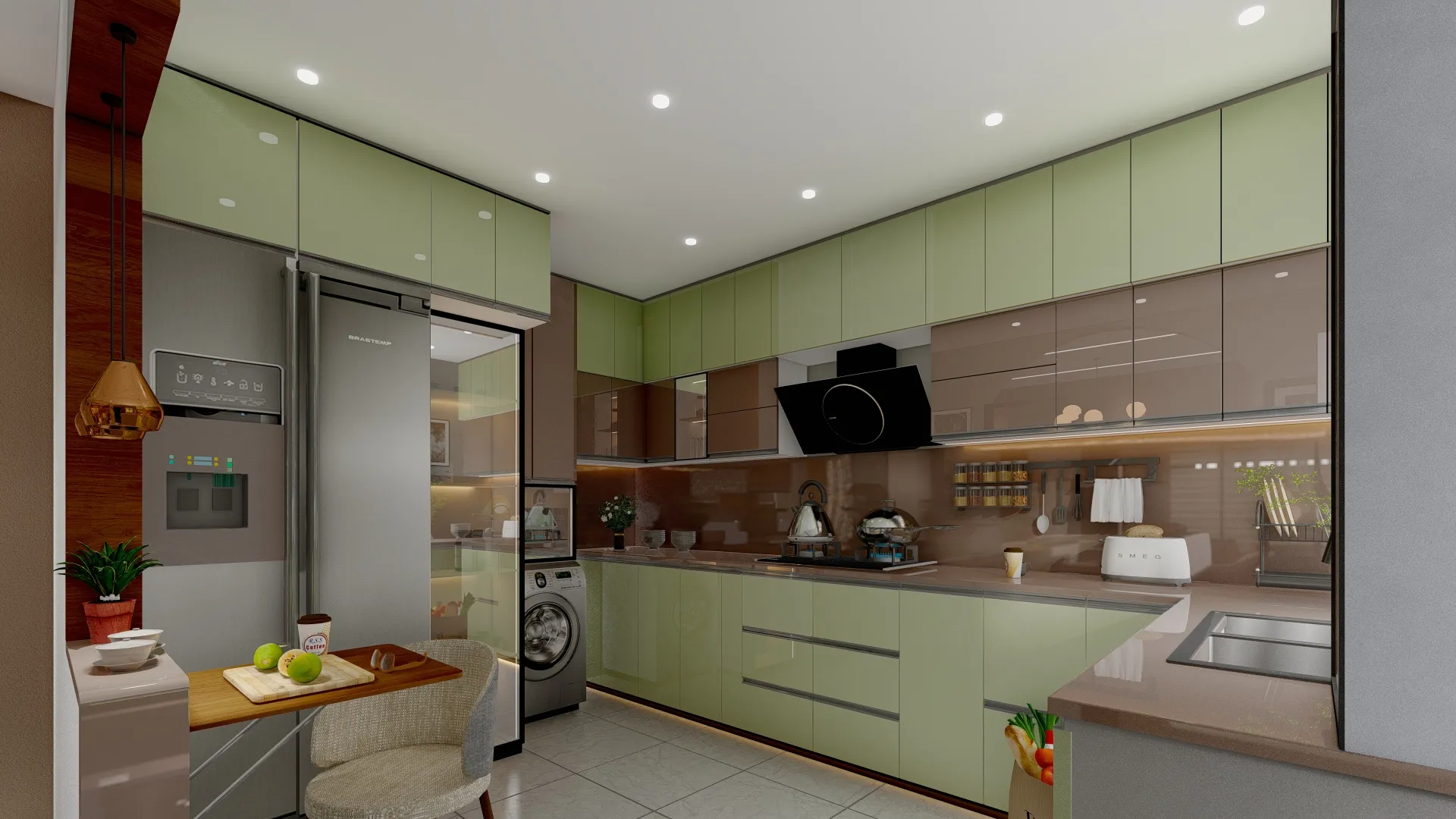
When a client picking finishes for a modular kitchen in Salt Lake or Action Area I asks us to choose between membrane shutters and acrylic shutters, the question that actually matters is not which one looks glossier under a showroom light, it is which one survives eight or nine months a year of Kolkata's ambient kitchen humidity, made worse by steam off a stovetop running two or three times a day, without the edges lifting, the board underneath swelling at a joint, or a high-gloss surface turning into a smudge magnet that shows every fingerprint from a kitchen a family actually cooks in daily rather than a kitchen styled for photographs.
What Membrane and Acrylic Shutters Actually Are, Construction-Wise
Membrane shutters, sometimes called PVC foil shutters, start with an MDF board that gets a PVC foil vacuum-pressed onto it under heat, and the defining feature of this process is that the foil wraps continuously around the edges of the board in a single unbroken layer, so there is no separate edge-banding strip glued on afterward, the same membrane simply folds over and seals every side of the shutter in one pass. Acrylic shutters work differently, starting with a high-gloss acrylic sheet that gets bonded flat onto the front face of an MDF or particleboard core using adhesive under press, and because the acrylic sheet itself does not wrap around corners the way a heated foil does, the edges of an acrylic shutter need a separate PVC or ABS edge band glued on as a finishing step, which is a genuinely different construction detail from membrane and turns out to matter more than most showroom conversations let on once humidity enters the picture. We have specified both finishes across a good number of the modular kitchens we have fitted over the years across New Town, Salt Lake, and the Action Area pockets of the city, and the callbacks we get in year one or two are rarely about the flat face of either material, they are almost always about an edge or a corner.
How Membrane Shutters Actually Hold Up Against Humidity
Because the PVC foil wraps every edge of a membrane shutter in one continuous piece with no seam or separate strip, moisture from steam, splashback, or general kitchen humidity has genuinely nowhere to get in through the sides the way it can with a taped or banded edge, which is membrane's real structural advantage in a humid climate and the main reason we default to it for base cabinets directly under a sink where water contact is frequent. Where membrane does show a real weakness is heat rather than moisture on its own, since the same foil that was heat-pressed onto the board during manufacture can, over years of proximity to an uninsulated hob or a steam vent placed too close, start to soften, bubble, or lift at that specific spot if the shutter was installed without adequate clearance from the heat source, so peeling on a membrane shutter, when it does happen, is very often a heat-and-humidity combination near the cooking zone rather than humidity alone. The other honest trade-off is surface feel, since membrane finishes are typically matte or low-sheen rather than the glassy high-gloss acrylic achieves, and while that matte surface hides fingerprints and light scuffs noticeably better through daily use, clients who specifically want a mirror-bright kitchen face will find membrane a visibly different look.
How Acrylic Shutters Perform in the Same Environment
The acrylic sheet itself is a non-porous plastic that does not absorb moisture on its flat face, so a wiped-down acrylic shutter front handles ambient kitchen humidity perfectly well as a material in isolation, and this is genuinely where acrylic has an edge over membrane, since acrylic tolerates heat from a nearby hob considerably better than a heat-pressed foil does, making it a safer choice directly beside a cooktop where membrane's heat sensitivity becomes a real concern. The weak point on an acrylic shutter is almost always the edge band, that separate glued PVC or ABS strip finishing the sides, because the adhesive bond holding that strip in place is the one part of an acrylic shutter genuinely exposed to the same heat-and-humidity cycling that troubles membrane edges, and a poorly applied or lower quality edge band can lift at a corner within a couple of humid seasons in exactly the kind of zone, near a sink or a hob, where membrane's seamless wrap would have had no seam to fail at in the first place. Acrylic's other well known trade-off has nothing to do with humidity and everything to do with daily use, since its high-gloss surface shows fingerprints, oil splatter, and water spots far more visibly than membrane's matte finish does, which means an acrylic kitchen genuinely needs wiping down more frequently to keep its showroom look, a maintenance commitment worth being honest with clients about before they commit to the finish for a family that cooks daily rather than occasionally.
| Membrane (PVC Foil-Wrapped) | Acrylic (High-Gloss Sheet) |
|---|---|
| Foil wraps edges seamlessly, no separate edge band to fail from moisture | Requires a separate glued edge band, the main weak point for lifting near sinks and hobs |
| More heat sensitive, foil can soften or bubble too close to an uninsulated hob | Better heat tolerance, generally safer directly beside a cooktop |
| Matte or low-sheen finish hides fingerprints and light scuffs well | High-gloss finish shows fingerprints, oil splatter, and water spots readily |
| Softer surface can show scuffing over years of daily contact | Harder, glossier surface resists scuffing but shows every mark more visibly |
| Generally lower cost per shutter for standard MDF core options | Generally higher cost per shutter, more so for premium branded acrylic sheet |

Fingerprint Show and the Daily Cleaning Reality
Beyond the structural humidity question, the two finishes genuinely differ in how much daily upkeep they demand from whoever is cooking, since a high-gloss acrylic front in a kitchen that sees regular fish frying, tempering, or any oil-heavy cooking will show splatter marks and fingerprints within hours of a wipe-down, and clients who choose acrylic for its brighter, more reflective look need to go in expecting a genuine daily wiping routine rather than an occasional one if they want the kitchen to keep looking the way it did on handover day. Membrane's matte surface is meaningfully more forgiving here, absorbing light without reflecting fingerprints and smudges the way a glossy face does, which is one of the quieter reasons membrane has become the more commonly specified finish for full kitchen runs in our recent projects, with acrylic reserved more often for a smaller accent run or an island face where the household is comfortable with the extra care it asks for.
Where We Actually Specify Each, Cabinet by Cabinet
Our general default across a full kitchen is membrane for the base cabinets nearest the sink and for any run that will see heavy daily contact, precisely because the seamless edge wrap removes the edge-lifting risk that a humid, splash-prone zone would otherwise create, while we reserve acrylic for wall cabinets and display-facing panels set back from direct heat and water contact, where its heat tolerance is less of a concern and its brighter finish gets to do more visual work without the daily grime that a hob-adjacent gloss panel would collect. Where a client specifically wants acrylic directly beside the hob for a particular design look, we insist on a reinforced edge-banding detail with a higher grade adhesive and a slightly wider clearance from the burner, a small additional cost that meaningfully reduces the lifting risk in that specific zone over the kitchen's working life.
- Ask whether the edge band on any acrylic shutter quoted is PVC or the more durable ABS, and what adhesive grade is being used
- Confirm the clearance distance being planned between any membrane shutter and the nearest hob burner
- Request membrane for base cabinets nearest the sink if moisture exposure is the bigger daily concern in your kitchen
- Request acrylic only where daily wiping is a routine you are genuinely willing to keep up with, not just a look you liked in the showroom
- Inspect a completed reference kitchen from the same fabricator that is at least a year old, not just a fresh sample board
Related Decisions for the Same Kitchen Renovation
If your kitchen work is happening alongside a false ceiling replacement, our comparison of gypsum board and POP false ceiling performance in Kolkata's humid months covers a parallel humidity question worth reading before that scope gets finalized separately, and if the same renovation touches a room facing a busier stretch of Salt Lake, our piece on double-glazed versus single-glazed windows for a Salt Lake home facing traffic noise addresses a different but related material trade-off for that side of the home. For a more compact footprint, our guide to storage solutions for a 950 sq ft 2BHK in Salt Lake covers how shutter choice interacts with a tighter overall cabinetry plan, and if you are curious what a full kitchen transformation actually looks like from start to finish, our before and after feature on an open kitchen shift walks through one such project in detail. Custom cabinetry work of this kind falls under our broader custom furniture design service for clients who want the shutters built around a layout rather than picked from a catalogue.
Tell Us How Your Kitchen Is Actually Used Before You Pick a Finish
Choosing between membrane and acrylic shutters comes down less to which looks better in a catalogue photo and more to how close each cabinet run sits to your hob and sink, and how much daily wiping you are honestly prepared to keep up with, so describe your kitchen's actual layout and cooking habits to us and we will tell you which finish belongs on which run rather than specifying one material across the whole kitchen by default. Start that conversation through our contact page whenever you are ready to move from finish samples to an actual plan.