





Mid-Century Modern Dining Room Ideas for a South Kolkata Flat
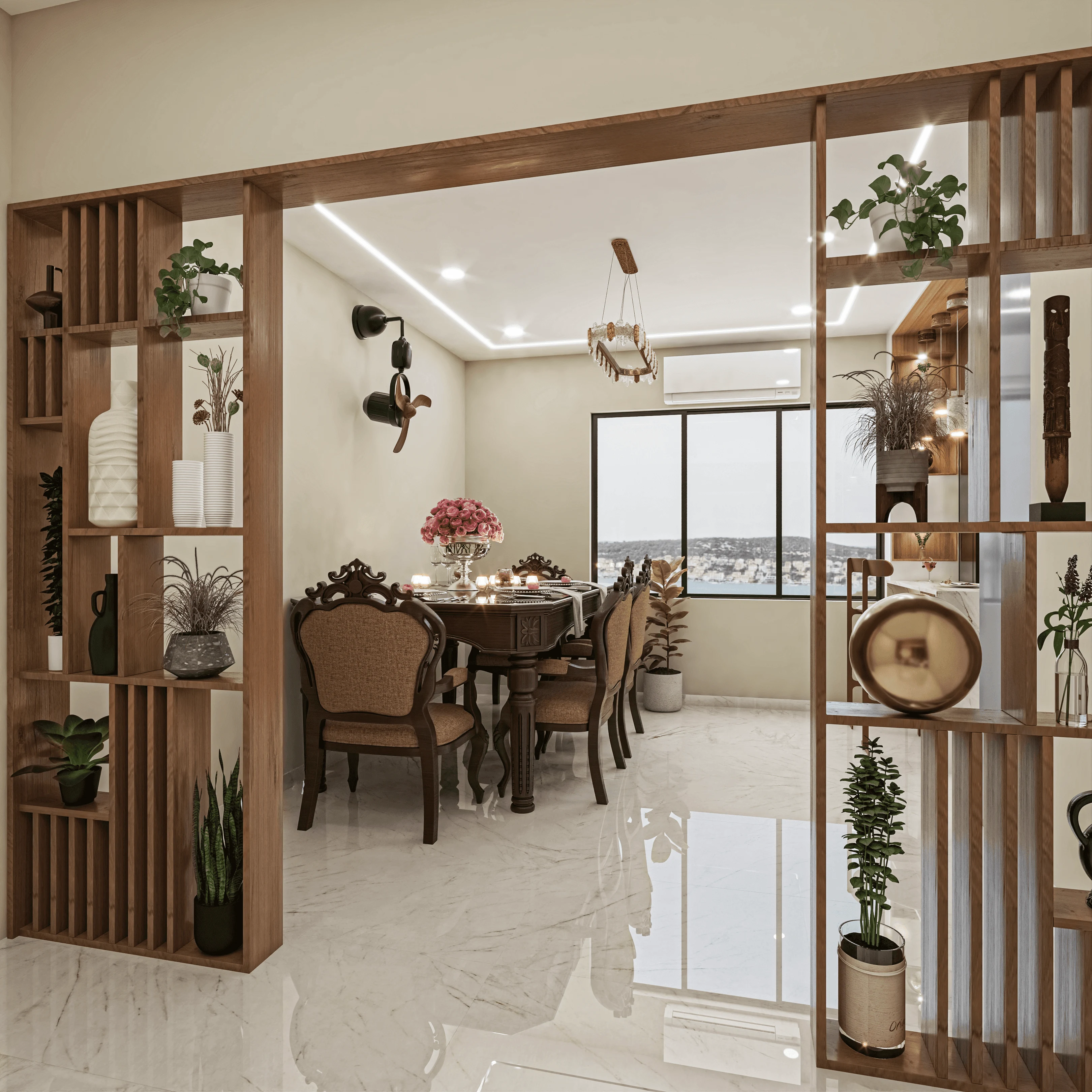
A mid century modern dining room in a South Kolkata flat asks for something most New Town or Rajarhat briefs never really need, a genuine sense of period, and the clients who bring us this request are almost always renovating an older apartment somewhere around Lake Gardens, Jodhpur Park, or Ballygunge and want the dining room to feel like it belongs to the 1960s furniture their own grandparents might have owned, tapered teak legs, warm timber grain left visible rather than lacquered flat, and just enough brass to catch the light without turning the room precious. Our approach to this brief leans specifically on restoring or reproducing genuine mid century silhouettes rather than buying generic dark wood furniture and calling it retro, because the difference between the two is almost entirely in the leg, a mid century dining chair or table tapers outward from a narrow foot, usually in solid teak, and that single detail does more to sell the period than any amount of brass hardware layered on top of a heavier, more conventional frame.
What Mid Century Modern Actually Means for a Dining Room, Not Just a Vague Feeling
The mid century modern movement that this style borrows from ran roughly from the mid 1940s through the 1960s and was built around clean lines, function led forms, and an honest use of natural materials rather than heavy ornamentation, and when we translate that into a South Kolkata dining room the brief usually breaks down into three specific commitments, a solid teak table with tapered or splayed legs rather than a bulky pedestal base, dining chairs with a similarly slim profile and either a caned or upholstered seat pad, and lighting that hangs low and warm over the table rather than a large formal chandelier. South Kolkata's older apartment stock actually helps here more than it hurts, because dining rooms in these flats, often somewhere between 100 and 160 sq ft depending on the building, tend to have taller ceilings than newer New Town construction, sometimes 11 or even 12 feet on the ground and first floors of older buildings, which gives a low hanging pendant far more room to breathe than it would get in a newer 9 foot slab.
Restored Teak Versus New Built Teak Look Furniture
One of the first decisions on almost every mid century dining room we design for a South Kolkata renovation is whether to restore an existing piece of family furniture, a dining table that has been sitting under a cloth in a store room for years, or to commission new furniture built to the same silhouette in fresh teak or a teak veneer over engineered timber. Restoration keeps the actual grain and patina of a piece that may be sixty or seventy years old, which no new furniture can fully replicate, but it depends entirely on the underlying frame being structurally sound and the client actually owning a piece worth restoring in the first place, whereas commissioning new furniture to a mid century silhouette gives more control over the exact dimensions needed for the room and is almost always faster to deliver on a renovation timeline.
| Restoring an Existing Teak Piece | Commissioning New Mid Century Furniture |
|---|---|
| Genuine decades old grain and patina | Consistent, predictable finish across the full set |
| Depends on the frame being structurally sound | Built to the exact dimensions the dining room needs |
| Often slower, subject to what needs repair | Faster to deliver on a fixed renovation timeline |
| Carries real family history into the new room | No existing piece required to start the project |
Brass Accents and the Lighting That Actually Sells the Period
Brass is the accent that does the most work in a mid century dining room, and we use it sparingly and specifically rather than everywhere, on drawer pulls if the room includes a sideboard, on the stem and canopy of a pendant light over the table, and occasionally as a thin trim along the edge of a bar cart or console if the layout allows for one, because brass laid on too heavily starts to read as a different, more maximalist style entirely rather than the restrained mid century look we are aiming for. A single pendant light, warm brass finish, hung at roughly 30 to 34 inches above the table surface, paired with a dimmer so the room can shift from a bright family dinner setting to a warmer evening mood, tends to be the one lighting decision that does more for the room's period feel than every other furniture choice combined, and it is a detail we walk through carefully with clients using our 3D visualisation and rendering service before any fixture is actually ordered, since brass tone and pendant height both photograph very differently from how they read in the finished room.
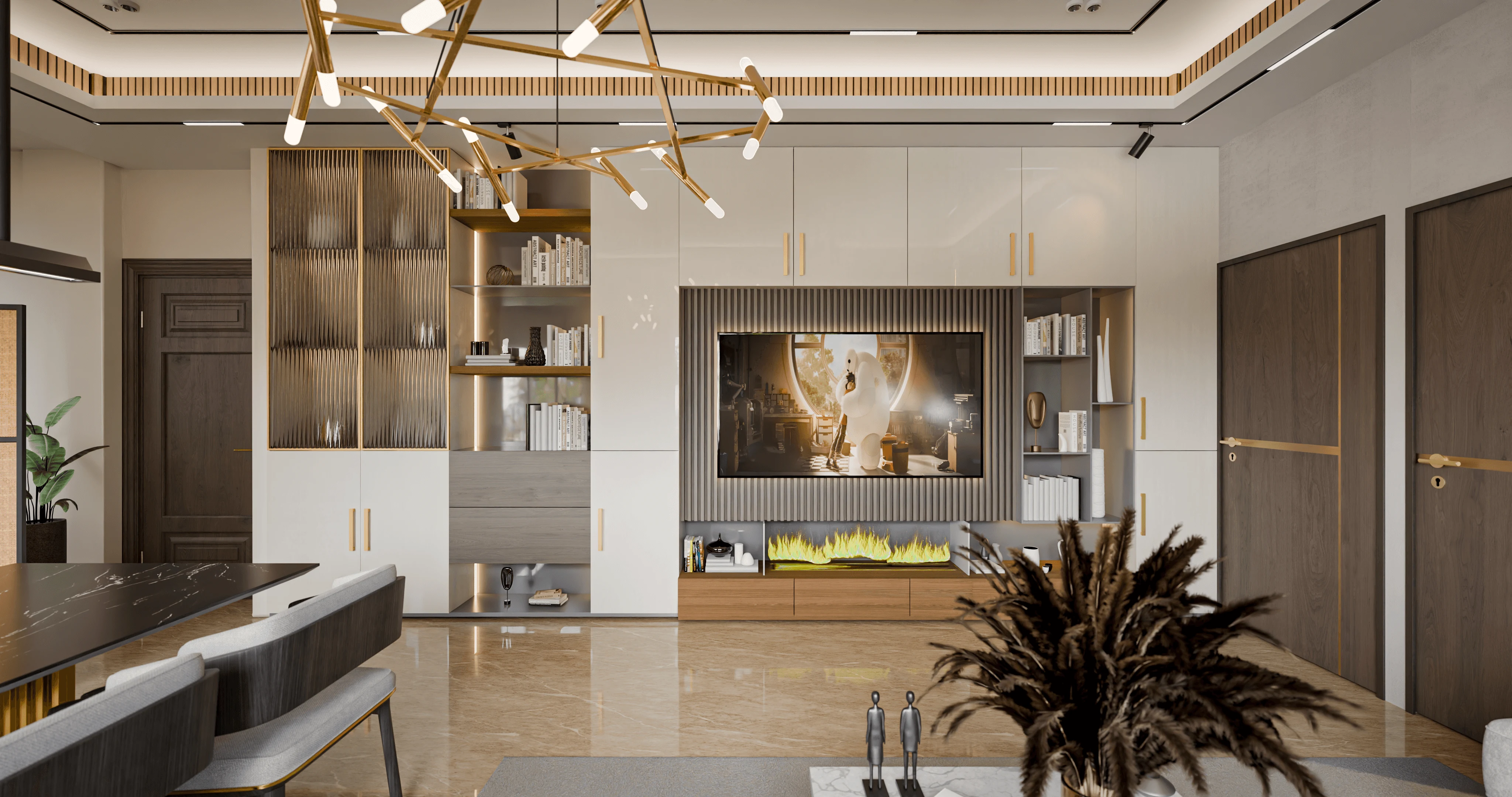
- Choose a dining table and chairs with tapered or splayed teak legs rather than a heavier conventional frame
- Decide early whether you are restoring an existing family piece or commissioning new furniture to a mid century silhouette
- Keep brass accents limited to hardware and light fixtures rather than layering it across every surface
- Hang a single warm brass pendant at roughly 30 to 34 inches above the table rather than a large formal chandelier
- Fit the furniture scale to your actual dining area, most South Kolkata flats we renovate work with 100 to 160 sq ft
- Preview the teak finish and brass tone under your room's actual lighting before ordering the full set
Fitting a Retro Dining Set Into an Older Flat's Real Footprint
Older South Kolkata buildings rarely follow the open plan layouts common in newer New Town towers, and the dining room in many of the flats we renovate here is a genuinely separate room off the kitchen rather than a zone carved out of an open living and dining area, which actually works in the mid century style's favour because it lets the room commit fully to its own material story, teak, brass, and warm timber tones, without having to negotiate a shared palette with an adjoining living room in a different style. Where the room runs on the smaller side, closer to 100 sq ft than 160, we typically scale down to a six seater table with a slightly narrower top rather than compromising on the leg detail or the chair silhouette, because in a mid century dining room the furniture's proportions matter more to the overall look than the raw number of seats it holds.
Where the Rest of the Home Fits Into This Renovation
A mid century dining room rarely exists on its own in these renovation projects, and clients who commission this style for the dining room are often working through similar period appropriate decisions in a child's bedroom down the hall, which is the kind of brief we cover in our guide to designing a growing family's children's room in Kolkata. Readers furnishing other rooms in a similar spirit may also find our pieces on a Scandinavian kids bedroom for a Rajarhat apartment useful for a lighter, more contemporary children's room approach, our guide to an Art Deco powder room for a New Town duplex for another period leaning material story, and on the commercial side our breakdown of interior design costs for a 600 sq ft salon and spa in Baguiati for anyone planning a project outside the home entirely.
Bringing a Genuine Mid Century Dining Room Into Your South Kolkata Flat
A mid century modern dining room works when the furniture's proportions and the room's own period details are respected together rather than when dark wood and a few brass fittings are dropped into a space without regard for either, and after more than a decade renovating older apartments across Kolkata we have learned that the tapered leg and the pendant height usually matter more to the finished feel than any single big ticket purchase. If you are renovating a flat in South Kolkata and want a dining room built around genuine mid century proportions rather than a generic retro look, reach out through our contact page with a few photos of the room and any family furniture you are hoping to restore, and we will tell you honestly what is worth keeping.