






Soundproof Window Design for CC Block Flats Facing New Town's Major Arterial Road

If you own or are about to move into a flat in CC Block or one of the similar blocks facing New Town's Major Arterial Road, you already know the sound before you even step inside, because the moment the lift doors open on your floor the traffic hum is right there, and by the time you have lived through one monsoon of dust settling on every windowsill you are ready to fix it properly rather than just keep the windows shut all day.
We have handled enough renovations along this stretch of New Town, where the flats sit close enough to the arterial carriageway that bus and truck movement is a near-constant background layer, that we have a fairly settled view on what actually works here and what is a waste of money dressed up as a soundproofing solution.
Why This Particular Road-Facing Exposure Is Harder Than Most
New Town, developed by HIDCO as one of the planned townships ringing Kolkata, was laid out with wide arterial roads carrying a significant share of the city's north-eastern traffic, and the Major Arterial Road is one of the busiest of these corridors (the township's broader planning history is documented on Wikipedia). That width and traffic volume is exactly what makes the noise profile here different from a flat facing an internal society road: it is not occasional car pass-by noise, it is a continuous low-frequency rumble punctuated by horn bursts, and low-frequency noise is the hardest frequency band for any window system to block.
Dust is the second issue that compounds the noise problem, because the natural instinct in a lot of these flats is to keep windows cracked open for ventilation, which defeats any acoustic gain and lets in the fine grey film that settles on furniture within days along this road. Any fix we design here has to solve both problems together, sealing out the noise while still giving the flat a legitimate way to breathe.
The Double-Glazed Window Specification We Use
For flats directly fronting the Major Arterial Road, we specify an asymmetric double-glazed unit rather than two panes of identical glass, because matching the thickness on both panes creates a resonance frequency where the assembly's isolation performance actually dips. A typical specification we land on for a bedroom or living room window here uses a 6mm outer pane and a 4mm inner pane, separated by a 12mm to 16mm air gap, with the frame sealed using a compression gasket rather than a simple foam strip, since foam compresses unevenly over a couple of monsoons and starts letting sound and dust leak through the gaps.
The frame material matters almost as much as the glass. uPVC frames with multi-chamber profiles outperform standard aluminium sliding frames on both the acoustic and dust-sealing fronts, because the chambered profile itself adds a degree of sound damping and the compression-seal hardware that uPVC systems use closes more tightly than a typical aluminium slider track. We have moved almost entirely to uPVC casement or tilt-and-turn systems for road-facing rooms in this stretch of New Town over the last few years, keeping aluminium sliders for the quieter, courtyard-facing openings where the priority is ventilation rather than isolation.
| Standard Aluminium Sliding Window | uPVC Double-Glazed Casement |
|---|---|
| Lower upfront cost | Higher upfront cost, better long-term value |
| Foam strip seals wear within 2-3 years | Compression gaskets hold seal for 8-10 years |
| Minimal noise reduction on arterial-facing rooms | Meaningful reduction on low-frequency traffic noise |
| Simple to operate and maintain | Slightly higher maintenance but far tighter seal |
Acoustic Curtains and the Layering That Makes the Real Difference
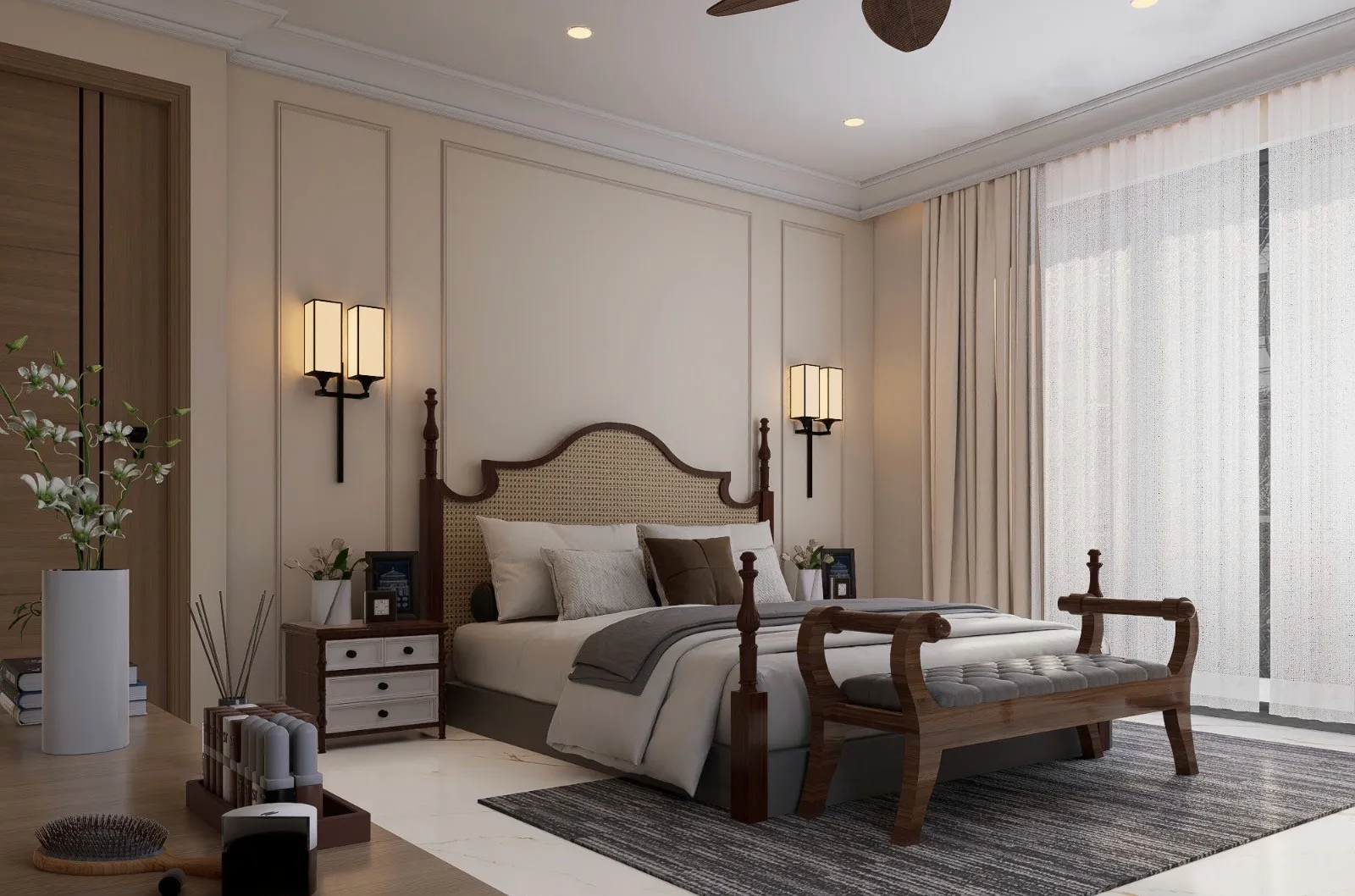
Glazing alone rarely gets a bedroom on this road down to a comfortable night-time noise level on its own, which is why we always pair the window upgrade with a layered soft-furnishing treatment. A heavyweight, tightly woven curtain fabric, hung on a track set at least 4 to 6 inches proud of the window frame with a generous width overlap at the centre, adds a genuinely measurable amount of additional sound absorption, particularly for the mid and high-frequency components of traffic noise that the glazing alone does not fully catch.
We typically specify a double-layer arrangement for these road-facing rooms: a sheer inner layer for daytime light control, and a heavier lined acoustic curtain behind it for use at night or when the flat is empty. Beyond the curtains, a soft upholstered headboard wall or a fabric wall panel on the road-facing wall of a bedroom gives a further, smaller but real, reduction in reflected noise inside the room itself, which matters because reflected sound off hard plastered walls can undo some of the gain from the window upgrade.
- Specify asymmetric double glazing, not matched-thickness panes
- Choose uPVC multi-chamber frames over standard aluminium sliders for road-facing rooms
- Confirm the gasket type is compression seal, not foam strip
- Hang acoustic curtains on a track set proud of the frame with generous width overlap
- Add a soft wall treatment behind the bed on the road-facing wall
- Seal balcony doors and grille gaps with the same gasket standard as the windows
Sealing the Balcony: The Weak Point Most Renovations Miss
The window can be perfect and the flat will still feel loud if the balcony door and the surrounding grille work are left as an afterthought, and this is the single most common gap we find when we survey a CC Block flat that has already had "soundproofing" done by someone else. Sliding balcony doors, in particular, tend to have wider tolerance gaps at the base track than a fixed window, and that gap is a direct sound and dust channel straight into the living room.
Our approach is to treat the balcony door with the same gasket specification as the windows, add a threshold seal at the base track rather than relying on the door's stock weatherstripping, and where the balcony itself is used as a semi-open space, glaze in the grille opening with a slim-profile fixed acoustic panel that can still be opened for cleaning access but stays sealed the rest of the time. For flats where the balcony is genuinely used as an outdoor sit-out, we sometimes recommend converting it into a proper enclosed sunroom extension instead, which both solves the noise problem completely for that zone and adds usable interior floor area, though that route needs its own approval check with KMC or Bidhannagar Municipal Corporation depending on which authority governs your specific plot.
Clients who go through the full window, gasket, and curtain package on a road-facing bedroom generally report the room going from a space where a phone call meant stepping away from the window to one where the traffic outside becomes background hum rather than a constant intrusion, and that shift alone is usually what convinces a household to extend the same specification to the living and dining rooms in a second phase.
Budget Range for a Full Soundproofing Retrofit
A complete window, balcony, and curtain soundproofing retrofit for a two-bedroom flat facing the Major Arterial Road typically runs in the range of a substantial mid-project budget once you account for uPVC casement windows across two or three road-facing rooms, the balcony door and grille sealing, and the layered curtain treatment. As a rough 2026 estimate, glazing and frame work tends to account for the largest single share of that budget, with the balcony sealing and soft furnishing layering making up a smaller but still meaningful portion.
Getting the Jurisdiction and Compliance Side Right
Because window and balcony modifications along a major arterial frontage sometimes intersect with facade guidelines set by NKDA or the relevant municipal body for your specific plot, we always check compliance before finalising the frame specification, particularly for any external grille glazing or balcony enclosure work. This overlaps with a broader pattern we have written about in our guide to common building violations to avoid in New Town, where unauthorised facade changes, even well-intentioned ones like a balcony enclosure, can create complications at resale or loan verification if they were not properly documented.
If your flat is in one of New Town's solar-fitted housing blocks and you are weighing a terrace and ceiling renovation alongside the window work, our companion piece on terrace and false ceiling design for New Town's solar housing complex flats covers a similar constraint-first approach for that building type. And if your kitchen layout needs attention at the same time, our guide to modular kitchen layouts for compact 2BHK flats in Uniworld City, Rajarhat walks through a comparable galley-footprint problem in a different New Town area township. If a soundproofing budget leaves you with a spare room to repurpose once the noise is under control, our before-and-after on turning a disused servant's room into a compact home gym is worth a look for ideas on making a small enclosed space earn its keep.
Ready to Quiet Down Your Road-Facing Flat
We have specified enough of these window and balcony packages along the Major Arterial Road corridor to know exactly which glazing thickness, frame type, and curtain layering combination earns its cost and which does not, and we would rather walk your specific flat with a decibel meter before quoting anything generic. If the traffic hum in your CC Block flat has finally worn you down, get in touch through our contact page and we will assess your exact exposure and put together a soundproofing plan that fits your rooms and your budget.