








Building Near Salt Lake's Wetlands and Water Bodies: What BMC and Environmental Clearances Require
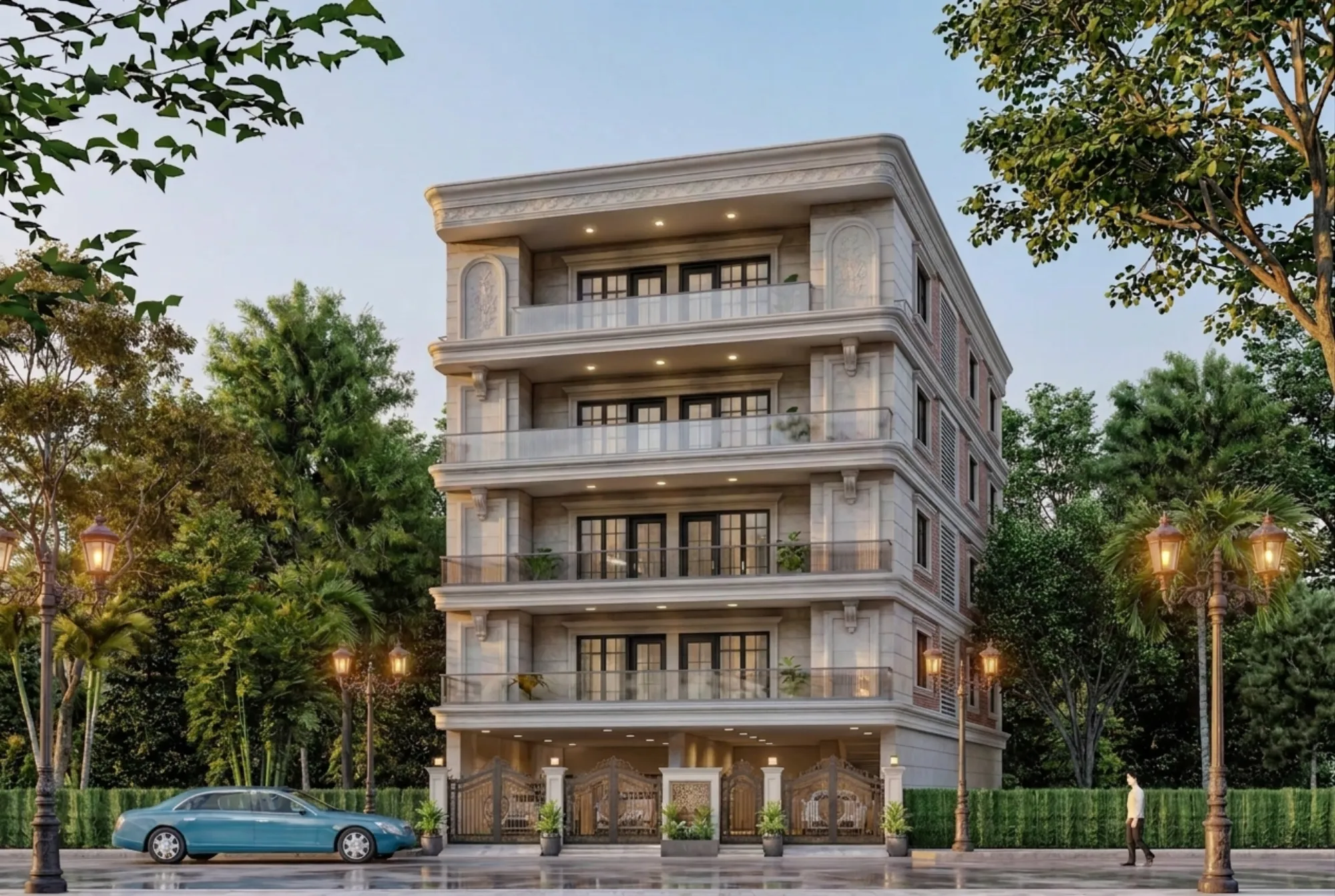
Every general guide to building in Salt Lake we have read treats Bidhannagar Municipal Corporation's building bye-laws as the whole story, setbacks, FAR, height restrictions, the usual list, and for the overwhelming majority of plots in the township that is indeed the whole story, but for the specific subset of plots that sit along Salt Lake's internal canal network, its residual lake pockets, or close to the edge of the East Kolkata Wetlands to the township's east and southeast, there is an entirely separate layer of clearance that most general guides never mention, and we bring this up with every client whose plot backs onto water because getting caught by this after purchase is one of the more expensive surprises we see in this market. Salt Lake, or Bidhannagar as it is formally known, was built on reclaimed marshland to begin with, and the canal system running through the township along with the wetland edge to its east are not incidental landscape features, they are part of a recognised ecological system that carries statutory protection, which means a plot's proximity to any part of that system can trigger clearance requirements that have nothing to do with BMC's standard sanction process and everything to do with environmental law operating at a different level entirely.
Why the East Kolkata Wetlands Change the Calculation for Nearby Plots
The East Kolkata Wetlands were designated a Ramsar site, a wetland of international importance under the Ramsar Convention, and that designation is not a symbolic label, it comes with a statutory buffer framework that West Bengal's government and the courts have enforced with genuine teeth over the years, including High Court and National Green Tribunal orders specifically addressing encroachment and unauthorised construction pressing into the wetland's edge from the Salt Lake and adjoining EM Bypass side. Plots that sit within or immediately adjacent to the notified wetland boundary, which runs along Salt Lake's eastern and southeastern flank toward Bhagabanpur, Chowbhaga and the stretch running down toward the Bypass, fall under restrictions that go well beyond what BMC's own sanctioning process would flag on its own, because the wetland's protected status is administered separately, with the East Kolkata Wetlands Management Authority holding jurisdiction over what can happen near its boundary regardless of what a municipal sanction alone might otherwise permit. We have had clients arrive with a plot that looked, on paper and by every municipal document they had gathered, like a perfectly ordinary residential parcel, only for us to flag during our own due diligence that the plot's boundary sat close enough to the notified wetland edge that an additional clearance layer applied, and in every one of those cases it was far better that we caught it before design work began than after foundation work had started.
The Canal Network Inside Salt Lake Itself Carries Its Own Setback Logic
Distinct from the wetland question, Salt Lake's internal canal system, the network that channels the township's stormwater and connects into the broader East Kolkata drainage and wetland system, carries its own setback requirements that apply to any plot fronting or backing onto a canal edge, independent of how far that plot sits from the notified wetland boundary itself. These canal-side setbacks exist for a genuinely practical reason beyond environmental protection, the canals are Salt Lake's primary stormwater drainage infrastructure, and construction encroaching on the canal edge narrows the effective drainage channel, which is precisely the kind of incremental encroachment that has measurably worsened waterlogging in parts of the township during the heavier monsoon weeks over the years. BMC and the Irrigation and Waterways Department, which retains jurisdiction over the canal system's maintenance and embankment even where the canal runs through municipal land, both have a stake in keeping a clear setback from the canal edge, and in practice this means a plot backing onto one of Salt Lake's internal canals needs a no-objection confirmation from the relevant drainage or irrigation authority in addition to the standard BMC building sanction, a step that a general BMC-only reading of the rules will not surface. The exact setback distance varies by which stretch of canal a plot fronts and how that particular segment has been classified, which is exactly why we always recommend pulling the specific embankment classification for a given plot rather than assuming a blanket figure from a neighbouring stretch applies equally.
What This Means Practically for a Client's Timeline and Budget
The honest answer, and one we give every client whose plot touches a canal edge or sits near the wetland boundary, is that this additional clearance layer adds real time to the front end of a project, commonly extending the pre-construction clearance timeline by several additional weeks to a couple of months beyond a standard BMC sanction, because the no-objection or clearance confirmation from the relevant water body authority is a separate submission with its own review cycle rather than something that moves in parallel with the municipal sanction automatically. We build this into the project timeline from the very first client conversation for any water-adjacent plot rather than let a client discover the delay midway through what they assumed was a standard sanction process, because that mismatch between expectation and reality is what causes the most frustration on these projects, not the clearance requirement itself. On the design side, the practical response to a confirmed setback is usually to treat the water-facing edge of the plot as a landscape buffer zone rather than fight for every square foot of built area right up to the boundary, which, handled well, often becomes a genuine asset rather than a loss, a canal-facing or wetland-edge-adjacent garden strip with the right planting does more for a home's outlook and cross ventilation than a few extra feet of built floor area would have, and we have designed several projects on canal-adjacent Salt Lake plots where the mandated buffer became the most photographed part of the finished house.
How to Check Before You Buy, Not After
For anyone evaluating a plot in Salt Lake that sits anywhere near visible water, whether that is one of the internal canals, a residual lake pocket, or the stretch running toward the wetland edge on the township's east side, our advice is to treat proximity to water as a due diligence flag requiring its own specific check, the same way you would check title and encumbrance, rather than something to sort out after the purchase is finalised. This means requesting the plot's distance from the nearest notified wetland or canal boundary in writing from the relevant authority, confirming whether that distance falls inside or outside the applicable buffer, and getting that confirmation before finalising the purchase, because a plot that looks identical to its neighbour on the surface can carry a materially different clearance burden depending on exactly how many metres separate it from a notified boundary that is not always obvious from a site visit alone. We have walked several prospective buyers through exactly this check before they signed anything, and in more than one case the buffer distance changed what we recommended they offer for the plot, because the buildable footprint after the mandated setback was smaller than the seller's listing implied.
Related Reading for Plots in This Part of the Township
If your plot clears these environmental checks and you are now working through the design brief itself, the questions shift toward orientation and outlook, which we cover from a different angle in designing for Salt Lake's park-facing plots, since canal-adjacent and park-adjacent plots share some of the same privacy and glazing logic even though the underlying regulatory question is completely different. If you are weighing whether to renovate an existing water-adjacent property rather than build fresh, our piece on which Salt Lake flat renovations actually add resale value in 2026 is worth reading alongside this one, since a documented, cleared water-adjacency status is itself a factor buyers increasingly ask about. And for owners specifically planning ahead for long-term occupancy near a quieter, greener edge of the township, our guide to designing a retirement-ready home in Kolkata touches on why several of our senior clients specifically seek out these calmer, water-adjacent pockets of Salt Lake despite the additional clearance step.
Let Us Check Your Plot's Water Proximity Before You Commit to Anything
If you are holding a plot or considering one near any of Salt Lake's canals, lake pockets, or the wetland edge toward Chowbhaga and the Bypass, we can pull the relevant boundary distances and clearance requirements for that specific plot before you finalise a purchase or lock a design brief, using our standing familiarity with BMC's process and the additional authorities involved in water-adjacent sanctions. Reach out through our contact page with the plot's location and we will tell you plainly what clearances actually apply before you spend a rupee on design.