






Sliding Wardrobe Door Tracks: Which Roller System Holds Up in Kolkata Flats
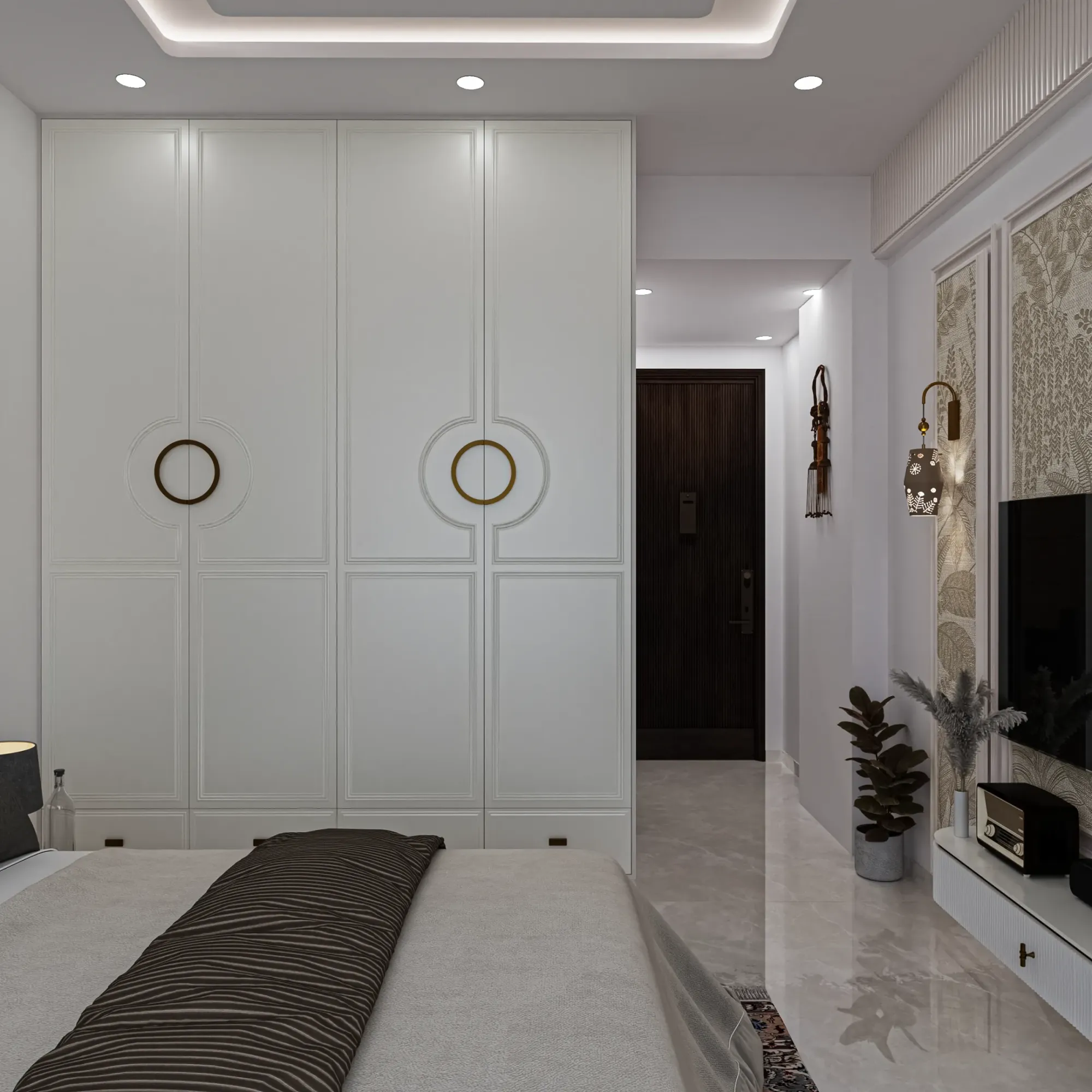
Clients who call us six or eight months after moving into a new flat almost always ask the same question in slightly different words, which is what the best sliding wardrobe door track roller system actually is, because the one their carpenter installed has started sticking halfway across the run or jumping the channel entirely every time someone opens it in a hurry, and having specified wardrobe hardware across well over a hundred residential projects in New Town, Salt Lake, and Rajarhat since 2014, we can tell you the honest answer depends less on the brand printed on the box and more on whether the system is nylon or aluminium roller, top-hung or bottom-rolling, and whether it was ever specified with Kolkata's humidity swing in mind at all.
Nylon Rollers vs Aluminium Rollers: The Wheel Material Matters More Than People Think
Most budget modular wardrobe packages in Kolkata still ship with nylon or basic plastic roller wheels running inside a thin aluminium or even mild steel channel, and on paper this looks identical to a premium system because the track profile looks the same and the door glides smoothly on day one in the showroom. The difference shows up after a year or two of daily use, because nylon rollers under a heavy laminate or veneer shutter, which for a standard 6 to 7 foot wardrobe door can weigh anywhere from 12 to 20 kilograms depending on panel thickness, gradually flatten at the contact point where the wheel rests against the channel when the wardrobe is closed overnight, and that flat spot turns into an audible thud and a slight catch every time the door passes over it afterward. Aluminium or hardened steel ball-bearing rollers do not flatten the same way under sustained load, and they distribute the shutter's weight across a wider bearing surface, which is why we specify them on almost every wardrobe wider than 6 feet or any shutter finished in a heavier veneer rather than laminate.
Top-Hung vs Bottom-Rolling: Why the Direction of Load Matters in Our Climate
The second decision that matters as much as roller material is whether the door hangs from a top track or rolls along a bottom track, and this is a question we get wrong assumptions about constantly, because most homeowners assume bottom-rolling systems are sturdier simply because the door looks like it is resting on something solid. In practice, a bottom-rolling track collects dust, lint, and the fine grit that comes in through open windows in New Town and Rajarhat far more readily than a top-hung system, because gravity pulls debris straight into the channel the wheels run in, and once that grit packs into the roller groove, it grinds against the wheel surface every time the door moves, accelerating exactly the kind of wear a ball-bearing roller is otherwise built to resist. Top-hung systems, where the full weight of the shutter is carried by rollers riding inside an upper aluminium track and the bottom just guides the door via a small nylon stabiliser, keep the load-bearing mechanism up out of the dust and are far easier to clean, which is why we default to top-hung for anything but the most budget-constrained wardrobe briefs.
| Feature | Bottom-Rolling Track | Top-Hung Track |
|---|---|---|
| Dust and grit exposure | High, collects in floor channel | Low, mechanism sits above door |
| Ease of cleaning | Requires vacuuming the channel | Wipe-down maintenance only |
| Load handling for heavy veneer doors | Adequate for lighter laminate | Better suited to heavier panels |
| Typical cost premium | Baseline | 15 to 25% higher |
How Kolkata's Monsoon Humidity Actually Derails a Wardrobe Door
The mechanical wear from roller material and track direction is only half the story, because the other half is what happens to the wardrobe shutter itself once monsoon humidity sets in across June through September, when relative humidity in Kolkata regularly sits above 85 to 90 percent for weeks at a stretch. A shutter panel built on ordinary MR-grade or even a mediocre BWR-grade plywood core absorbs moisture unevenly along its edges faster than at its centre, since edges are where the plywood's laminated layers are most exposed unless edge banding has been applied properly, and that uneven absorption causes the panel to bow very slightly, sometimes by no more than 2 to 3 millimetres across a 7 foot door, which sounds negligible until you realise that a roller track is machined to a tolerance far tighter than that. A door that bowed even 2 millimetres out of true will bind against the track on one side and ride loose on the other, and this is precisely why so many wardrobe doors that glided perfectly in March start catching and derailing by the end of August, and why we insist on a BWP-grade plywood carcass for any wardrobe shutter wider than 5 feet regardless of what finish sits on top of it.
Soft-Close Tracks: Worth the Upgrade, With One Caveat
Soft-close mechanisms, which use a small hydraulic or magnetic damper built into the last few centimetres of the track to slow the door down before it reaches the end of its run, have become one of the most requested upgrades on our recent residential briefs in New Town and Salt Lake, and for good reason, because a slammed sliding door on a hot humid evening when everyone's patience is a little shorter is one of the more common small frustrations we hear about from clients living with older wardrobes. The caveat is that a soft-close damper only performs reliably when the roller and channel underneath it are already running true, because a damper trying to slow down a door that is already binding or dragging on a warped track will wear out its own mechanism within a year rather than the five to seven years it is rated for, so we always pair soft-close hardware with the aluminium ball-bearing track and BWP-grade carcass combination rather than retrofitting it onto an older or budget system.
- Confirm roller wheels are aluminium or hardened ball-bearing, not basic nylon
- Choose top-hung tracks for shutters over 6 feet wide or finished in veneer
- Specify BWP-grade plywood carcass so the panel does not bow in monsoon humidity
- Ask whether soft-close dampers are rated for the actual shutter weight
- Check the warranty period against mechanical wear, not just against manufacturing defects
Where Wardrobe Hardware Fits Into the Rest of Your Bedroom Planning
Track and roller selection is one of those decisions that rarely gets discussed until something has already gone wrong, much like CP fitting finishes in a bathroom, where we have written before about which CP fitting finish resists Kolkata's hard water spotting best and made a similar point that the hardware you cannot see on day one is what determines whether the fixture ages well over years rather than months. If your wardrobe budget is already accounting for a 3-door layout with a loft above it, our detailed cost breakdown on 3-door wardrobe with loft pricing in Kolkata is a useful companion piece for working out where a track upgrade fits against the rest of the bill. And because bedroom hardware decisions rarely happen without a kitchen renovation running alongside them in a full flat overhaul, our comparison of ducted versus ductless kitchen chimneys for Kolkata apartment kitchens covers the same principle of matching the mechanism to your specific flat rather than defaulting to whatever a showroom pushes hardest. We have applied the same humidity-first thinking to ceiling work too, including in flats where floor height forced difficult tradeoffs, which our piece on false ceiling solutions for low floor-height flats in Salt Lake Sector III walks through in more detail.
Getting a Wardrobe Track Spec That Actually Survives Its First Monsoon
If you are choosing between wardrobe quotations right now and one of them lists a roller system you cannot quite evaluate from a line item alone, that gap between what is written on a quotation and what actually holds up in a Kolkata flat is exactly the kind of thing we walk clients through as part of our modular kitchen and wardrobe design process, where we specify hardware based on shutter weight, panel width, and your building's typical humidity exposure rather than defaulting to whatever margin works best for the vendor. Reach out through our contact page with your wardrobe dimensions and we will tell you plainly whether the track your carpenter has quoted is built to survive its first real monsoon or whether it is worth the extra spend to move up a tier.