








Timing a New Town Build Around Ongoing Road and Utility Work: A Construction Scheduling Guide
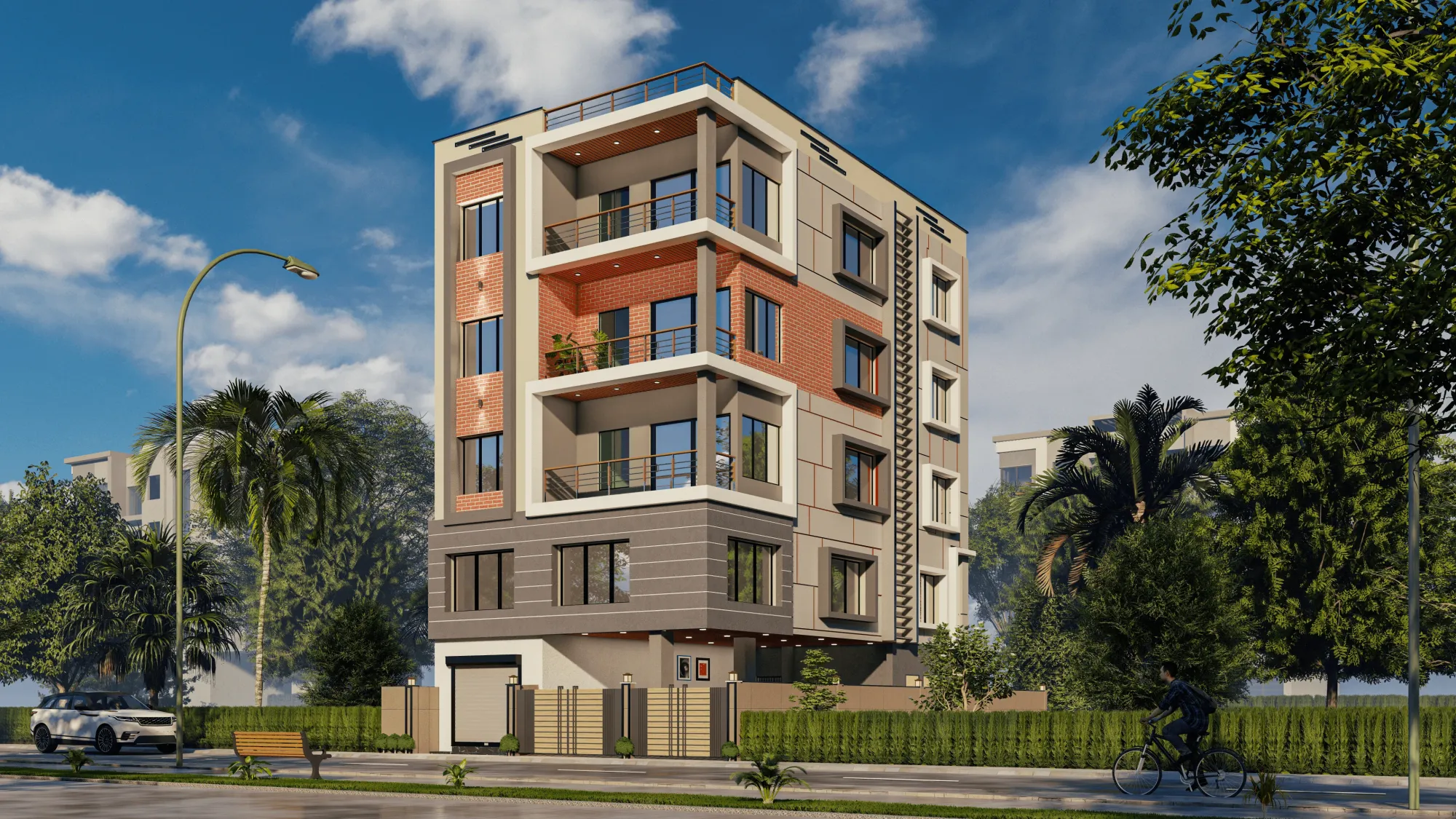
If you have watched a boundary wall go up on your New Town plot only to see the access road outside it get dug up for a utility line three weeks later, you already know the problem this piece is about. New Town is still, in a very real sense, a city under construction, and that is not a complaint, it is just the operating reality of a township that is filling in its Action Areas one sector at a time, so water lines, sewer trunks, road widening, and the odd new service corridor keep showing up on streets that were finished and handed over a year or two ago. For a homeowner or plot owner trying to time a build here, that has direct consequences for material delivery, machinery access, and even how your finished driveway holds up.
This guide is written from the site side of that problem, not the policy side. We are Studio Contour, an architecture and interior design studio based in New Town, and since 2014 we have delivered more than 330 buildings across New Town, Salt Lake, and the surrounding Action Areas, which means we have watched a lot of trucks get rerouted around a lot of trenches. What follows is how we actually sequence a New Town build around the civic work happening on the same road, so your project doesn't lose weeks to something that was entirely predictable if someone had checked first.
Why New Town's Infrastructure Timeline Runs Parallel to Yours
New Town, Kolkata was planned and is still being built out in phases by NKDA, and that phased rollout means different sectors and Action Areas are at genuinely different stages of infrastructure maturity at the same time, right down to which streets have full stormwater drainage and which are still running on interim arrangements. A plot in an interior lane of Action Area II can be sitting next to a road that gets dug up for a trunk sewer connection at the exact moment your foundation work needs concrete trucks to reach the site every other day. This is not unique to New Town, most planned townships in India go through this, but it is more pronounced here because so much of the area was allotted and built out within the last decade, so multiple generations of utility work are still catching up to each other block by block.
The practical upshot is that your project's own construction schedule and the surrounding road's civic works calendar are two separate timelines running in parallel, and if you don't check the second one before locking the first, you are gambling with your own delivery date.
What to Check Before You Fix a Start Date
Before you commit to a groundbreaking date, there are a few things worth confirming on the ground, and none of them require anything exotic, just a site visit and a few questions to the right people. Walk the access road itself and note any barricading, marker paint, or freshly patched trench lines, since those are the clearest sign that work has recently happened or is about to. Ask neighbours who have been on the road longer, because local residents usually know if a water line replacement or road widening has been discussed at the ward level even before it shows up as visible digging. And if your plot sits in a newer pocket of Action Area I, II, or III, it is worth checking directly with NKDA on the status of that stretch, since these are municipal works and the authority is the only reliable source for planned schedules rather than rumour.
This is also the stage where your building plan sanction process and your site logistics planning should be happening together rather than sequentially, because the documents required for NKDA building sanction and the road access reality on your specific street are two separate checks that both need to clear before you break ground. We walk every client through both in parallel rather than waiting for sanction to come through before someone asks whether trucks can even reach the plot.
- Walk the access road for barricading or recent patchwork
- Ask long-term neighbours about planned ward-level utility work
- Confirm current road status directly with NKDA for newer AA-I/II/III pockets
- Cross-check sanction timeline against site logistics, not after it
- Build a two-to-three week buffer into material delivery windows near known work zones
Sequencing Deliveries and Machinery Around Active Work Zones
The single biggest cost of ignoring a nearby dig is not the delay itself, it is the compounding effect on everything scheduled after it. A ready-mix concrete pour that gets pushed by four days because the truck couldn't get down the lane doesn't just cost four days, it pushes the curing window, which pushes formwork strip, which pushes the next floor's rebar tie, and by the time you're three floors up a four-day hiccup has become a three-week slip. So the way we sequence around active road or utility work is to front-load the heavy, access-dependent deliveries, meaning concrete, steel, and any crane or boom-pump mobilisation, into windows we've confirmed are clear, and push the more flexible interior-fit deliveries, like tiling, cabinetry, and fixtures, to later stages when the road situation has usually settled anyway.
For a plot where the approach road is genuinely constrained, we also look at whether there's a secondary access point, even a rough one, that machinery can use if the primary route gets blocked mid-project. This matters more in the interior blocks of Action Area II and III than it does on the wider arterial-facing plots, simply because those interior lanes tend to be single-access and narrower to begin with.
- 01Confirm road and utility status before fixing start date
- 02Front-load concrete, steel, and crane mobilisation into clear windows
- 03Sequence structural work around any confirmed civic dig nearby
- 04Shift flexible interior-fit deliveries to later stages
- 05Build in a secondary access contingency for single-lane plots
Foundation and Basement Work Near Active Utility Lines
If your plot is anywhere near a water table concern or a basement is part of the plan, the presence of nearby utility trenching adds a layer worth thinking through properly, since open trenches change groundwater behaviour temporarily and can affect dewatering plans for a basement pour. We'd point you to our guide on basement construction rules and the New Town water table if that's relevant to your plot, because the sequencing logic there interacts directly with what's happening on the road outside. The same goes for waterproofing work at foundation level, which is far easier to get right when the surrounding ground isn't being actively disturbed by a parallel dig fifty metres away.
Setback and boundary considerations also come into play here, particularly if the road widening itself nudges the effective edge of your plot. It's worth reviewing setback and open space rules for New Town early, specifically the clause on future road-widening reservations, so your boundary wall and compound planning account for it rather than getting built and then challenged later.
| Building Without a Road-Works Check | Building With One |
|---|---|
| Start date fixed on paper schedule alone | Start date confirmed against NKDA works status |
| Concrete and crane windows booked blind | Heavy deliveries front-loaded into confirmed-clear windows |
| Single access point assumed reliable | Secondary access mapped for constrained lanes |
| Delays discovered mid-pour | Delays anticipated and buffered in advance |
What This Means for Your Overall Project Timeline
At the end of the day, none of this changes the fundamental shape of a New Town build, it just changes how carefully the early weeks are sequenced. Our own architecture projects here typically run several months from sanctioned plan to structural completion depending on scale, and once you're into the interior phase, a typical residential interior design fit-out runs 8 to 12 weeks, largely because interior work is far less exposed to what's happening on the street outside. The exposure is almost entirely concentrated in the structural phase, which is exactly why getting the road and utility check right at the start pays off disproportionately later.
This is also where having an architect who actually works this specific township, rather than a generalist contractor working from a generic schedule, makes a measurable difference. Local familiarity with which stretches of Action Area I are still catching up on drainage, which sectors have settled utility infrastructure, and which lanes genuinely need a contingency access plan isn't something you get from a standard project template, it comes from having built here repeatedly. We've walked this exact problem through on projects like our Action Area II residence, where sequencing around a nearby utility corridor was part of the early planning conversation, not an afterthought once trucks got stuck.
Timing Your Own Utility Tie-Ins When the Mains Outside Are Mid-Upgrade
There is a piece of this problem that sits slightly to the side of the delay-and-delivery conversation, and it is one clients rarely think about until they are actually standing at the boundary wall waiting for a water or sewer connection, and that is the fact that your plot's own utility tie-in is directly dependent on the state of the very main line that has been causing you scheduling headaches all along. Getting a road-works delay is one thing, you buffer around it and move on, but discovering that the water or sewer main your house needs to connect to is itself mid-upgrade, and that NKDA or the contractor executing that upgrade won't be doing new house connections until the trunk work is signed off, is a different category of problem, because it doesn't just slow you down, it can genuinely stall your occupancy certificate at the very last stage of the project.
The catch here is that this information almost never surfaces during the same conversations that flag road access, because road access is something you can see with your own eyes when you walk the site, whereas the status of an underground main is not, so it needs a direct query rather than an observation. What we actually do on our own projects, and what we'd point any New Town client toward doing early, is asking the specific question of which agency and which contractor is executing the utility upgrade on that stretch, and whether they are taking new house-connection applications on a rolling basis or holding them until the section is commissioned. That single answer changes how we plan the last quarter of a project, because if new connections are on hold, we know to get the application filed the moment the window opens rather than assuming it can happen whenever the interior fit-out finishes.
This matters more for water and sewer than it does for electricity, since electricity connections in New Town generally route through a separate WBSEDCL process that isn't as tightly coupled to the road-level civic dig, so a plot can often get power sorted even while the sewer main outside is still being relaid. Sewer in particular is the one to watch, because a house without a working sewer tie-in cannot get its final occupancy sign-off no matter how finished the building itself is, and we have seen projects sit fully built and fully painted for three to four extra weeks purely because the connection application was filed late against a main that was still under upgrade. So our own sequencing now treats the utility connection application as a task with its own lead time, separate from and running earlier than the point where you'd naturally think to file it, which is usually somewhere around final fit-out.
| What to Check | Why It Matters | When to Ask |
|---|---|---|
| Main line upgrade status | Determines if new tie-ins are even accepted | Before finalising interior fit-out timeline |
| Executing agency/contractor | New connections may route through them not NKDA directly | At the same time as the road-works check |
| Rolling vs held applications | A held window can add 3-4 weeks to occupancy | As soon as structural phase begins |
| Electricity vs water/sewer coupling | WBSEDCL power often decouples from the road dig | When filing utility applications |
At the end of the day, this is basically an extension of the same principle that runs through everything else in this guide, which is that a New Town build has more moving civic parts around it than a plot in an older, fully settled locality, and the only real defence is asking the specific question early rather than assuming the standard timeline applies. We build this utility tie-in check into our own project schedules as a matter of course now, right alongside the road-access walk-through, precisely because we have watched a finished house wait weeks for something that could have been flagged in the first site visit. If you are mid-project and unsure whether your plot's sewer or water main is caught up in nearby upgrade work, it is worth raising with whoever is managing your site before it becomes a last-mile surprise rather than a first-week checklist item.
Bringing It Together on Your Plot
If you're at the stage of finalising a start date for a New Town build, or you're mid-project and dealing with an unexpected dig outside your plot, the fix is rarely dramatic, it's just a matter of checking the road's own timeline before locking yours, front-loading the access-dependent work into confirmed windows, and keeping a buffer where the lane is narrow or single-access. It's the kind of planning that costs an afternoon and saves weeks. If you'd rather have someone who already knows which stretches of New Town and Salt Lake are mid-infrastructure-work walk your specific plot and build the schedule around it, get in touch with us and we'll go through your site, your plan status, and the road outside it together before anything gets poured.