






Paint Finishes That Don't Fade on a West-Facing Bedroom Wall in Kolkata Summer
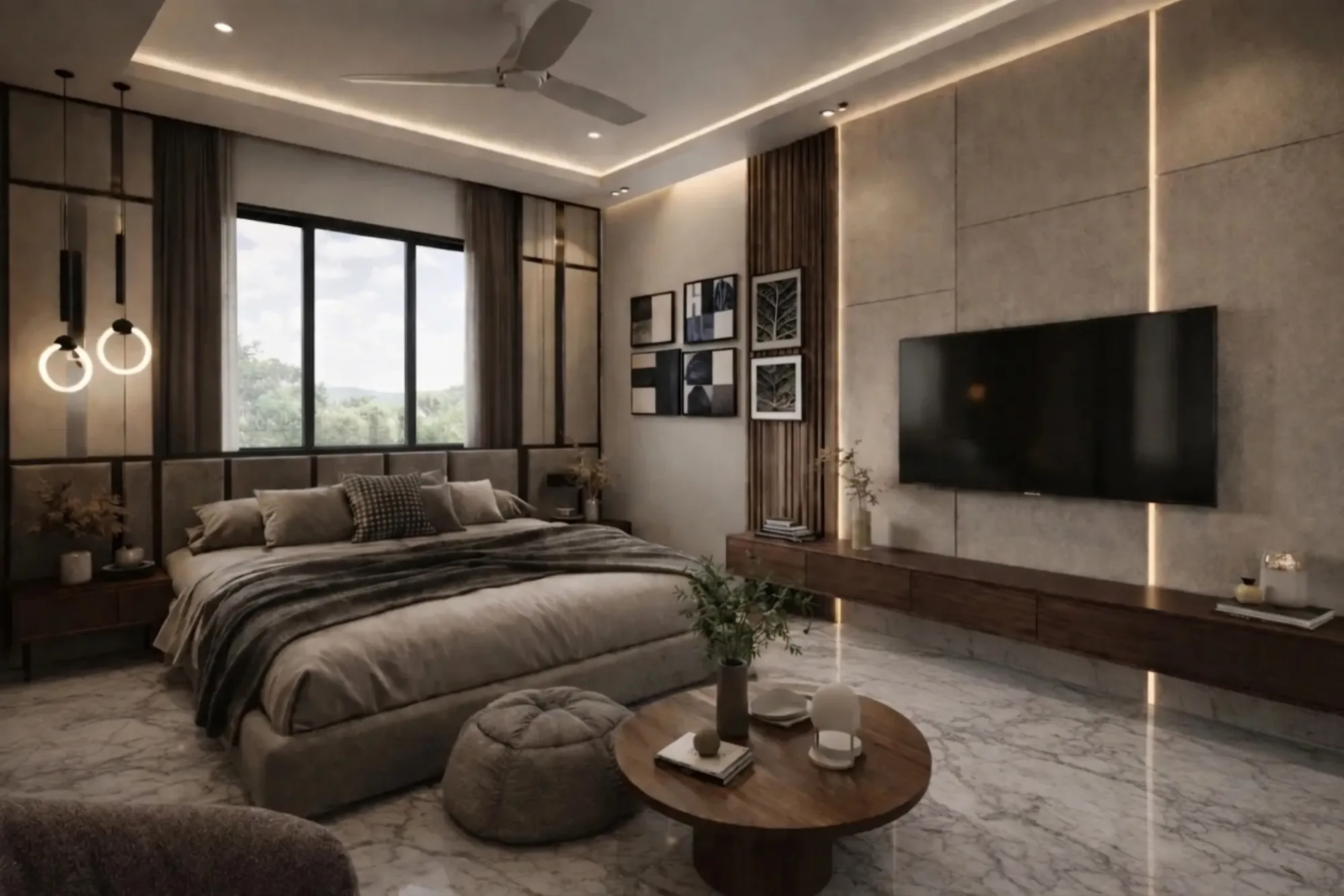
The pattern we get called out for most often between March and June is a client pointing at one specific wall in a bedroom, almost always the west-facing one, and asking why that single surface has gone chalky and visibly lighter than the exact same paint on the other three walls of the same room painted from the same batch at the same time, and the answer has nothing to do with paint quality in the abstract and everything to do with what that one wall is exposed to that the others are not, because a west-facing bedroom wall in Kolkata takes direct afternoon sun for roughly three to four hours through the hottest part of the day from March through June, with surface temperatures on an exterior west wall commonly climbing well past what the interior-facing paint film was ever tested to withstand, and heat transmitted through the masonry raises the interior wall surface temperature enough to accelerate pigment breakdown from the inside even before you account for any direct light hitting the paint film through a window.
Why This Is a Heat Problem as Much as a UV Problem
Most homeowners assume fading is purely a sunlight exposure issue, something about UV rays hitting the paint and bleaching the pigment the way fabric bleaches on a clothesline, and that mechanism is real and does contribute, but on an interior west-facing bedroom wall in Kolkata the bigger driver is usually thermal, because the exterior face of that wall is absorbing direct solar radiation all afternoon and the masonry itself, whether it is brick or block construction, conducts a meaningful portion of that heat through to the interior face over several hours, meaning by early evening the interior plaster surface behind your paint can sit measurably warmer than an equivalent north or east wall in the same flat, and standard interior emulsions, particularly the softer, more affordable acrylic emulsions used in a lot of budget and even mid-range Kolkata residential painting, were formulated primarily for washability and application ease rather than sustained thermal cycling, so the binder in the paint film degrades faster under that repeated heat load, showing up first as a dulling or chalking of the pigment and, in worse cases we have been called to repair, actual blistering where the paint film separates from the plaster in small raised bubbles because trapped moisture under the film expands with the heat and has nowhere to escape.
Pigment Choice Matters More Than People Expect
Once we have established that a wall is genuinely west-facing and taking direct afternoon exposure, the first specification decision we make is around pigment, because not all colourants degrade at the same rate under sustained heat and light, and this is where a lot of otherwise reasonable paint choices go wrong, since deep reds, certain blues, and some organic-based pigments used to achieve very saturated or trendy colours are simply less lightfast than the inorganic oxide-based pigments used in earth tones, ochres, and most of the muted, warmer neutrals that have become common in Kolkata bedroom palettes over the last few years, and when a client specifically wants a strong, saturated accent colour on a west wall we now say so plainly before the order goes in, telling them the exact shade may need a re-coat cycle of two to three years rather than the five-plus years we would expect from the same brand's mid-tone neutral on an identical wall, because a saturated organic pigment breaking down faster is a known behaviour of the chemistry involved, not a defect in a specific tin of paint, and setting that expectation upfront avoids a client feeling misled when the accent wall visibly shifts tone before the rest of the room does.
Sheen Level Is a Bigger Lever Than Most People Realise
Beyond pigment, the sheen or finish level of the paint itself plays a larger role in west-wall performance than most homeowners expect walking into the decision, because a flat or matte emulsion, while it hides plaster imperfections beautifully and has become the default aesthetic preference in a lot of contemporary Kolkata interiors, has a more porous, less protected paint film surface than a satin or eggshell finish, meaning it absorbs more heat into the film itself and shows chalking and fading more visibly over time on a high-exposure wall, whereas a satin or low-sheen eggshell finish, which sits slightly more reflective and has a tighter, more sealed film structure, both reflects a small but meaningful amount of incident heat and resists the chalky breakdown that shows up first as a visible colour shift. For a genuinely exposed west bedroom wall we now default to recommending at least a satin finish over a flat matte, even when the client's stated preference leans toward the softer matte look everywhere else in the room, and where a client is firm on keeping the matte aesthetic throughout, we specify a premium exterior-grade or weather-shield range emulsion applied on the interior face instead of a standard interior-only product, since those ranges are formulated with UV-stable resins and additional heat-resistant binders specifically because they are designed to survive direct exterior exposure on the other side of the same wall.
| Standard Interior Emulsion | Weather-Shield or Exterior-Grade Range Applied Indoors |
|---|---|
| Lower cost per litre | 15-30% higher cost per litre |
| Formulated for washability, not sustained heat exposure | Formulated with UV-stable resin and heat-resistant binder |
| Visible chalking or dulling within 1-2 summers on a west wall | Holds pigment integrity through 4-5+ summers typically |
| Fine for north, east, or shaded interior walls | Worth the premium specifically for direct west or exterior-adjacent walls |
The Blistering Problem Is Usually a Moisture Issue Hiding Behind a Heat Trigger
When a west wall goes beyond simple fading into actual blistering or peeling, which we do see on older constructions and on walls where the exterior face has any hairline cracking or compromised waterproofing, the root cause is almost always trapped moisture inside the wall assembly rather than the heat alone, because heat is the trigger that expands that trapped moisture into visible film failure, not the underlying source of it, so before we ever repaint a blistering west wall we check the exterior face for cracks, check whether the exterior waterproofing or weatherproof coat is intact, and confirm there is no ongoing seepage source before applying any new paint system, since repainting over an active moisture problem with even the best heat-resistant emulsion available will blister again within a season, and we would rather tell a client the honest sequence, exterior crack repair and waterproofing first, then interior repainting, than sell a repaint job we know will fail.
- Confirm the wall genuinely takes 3+ hours of direct afternoon sun before treating it as a special case
- Choose inorganic oxide-based pigments over saturated organic pigments for any strong west-wall accent colour
- Default to at least a satin sheen rather than flat matte on high-exposure walls
- Consider a weather-shield or exterior-grade emulsion applied on the interior face for genuinely severe exposure
- Check the exterior face for cracks or compromised waterproofing before repainting a blistering wall
- Budget for a shorter repaint cycle, roughly 2-3 years, on saturated accent colours in this exposure
What We Specify in Practice for a New Town or Salt Lake Bedroom
In actual project specifications across New Town and Salt Lake, where a huge share of residential blocks have at least one bedroom with genuine west exposure given typical plot orientation and road-facing constraints, our default now is a premium acrylic emulsion in the satin range for any confirmed west wall, priced modestly above the standard interior product the rest of the flat uses but well below the cost of a full exterior-grade system, reserved for that one wall specifically rather than applied flat across the whole flat's paint budget, and we walk every client through this reasoning at the material selection stage rather than letting them discover the fading eighteen months later and assume the painter simply did a poor job, because in our experience that assumption, that fading means bad workmanship, is the single most common misunderstanding we correct on repaint consultations.
How This Fits Into the Rest of a Room's Finish Plan
A west wall's paint spec rarely sits in isolation from the rest of a bedroom's material decisions, and lighting layered correctly across that same wall can actually reduce how harsh the late-afternoon glare reads in the room, which we go into more in our piece on layering master bedroom lighting. If the flat also has a ground-floor or lower-level moisture issue affecting materials elsewhere in the home, our guide on which laminate finish actually resists humidity in a ground-floor Kolkata flat covers a related but distinct moisture challenge, and bathrooms attached to or near a west-facing bedroom face their own version of a humidity problem we detail in bathroom tile grout that won't turn black during Kolkata's monsoon months. If ceiling seepage from an upstairs neighbour is part of what is driving moisture into a wall assembly near this bedroom, our guide on fixing that specific problem is worth a look too.
Tell Us Which Wall Is Fading and We Will Tell You Why
If you have a west-facing bedroom wall in your New Town, Salt Lake, or greater Kolkata flat that is already showing chalking, colour shift, or early blistering, send us a photo and the wall's orientation through our contact page and we will tell you honestly whether the fix is a pigment and sheen change on your next repaint or whether there is an exterior moisture issue behind it that needs addressing first.