






How to Cool Down a West-Facing Flat That Overheats Every Kolkata Afternoon
If your west-facing flat in a New Town or Rajarhat tower turns noticeably hotter than the rest of the apartment every single afternoon, particularly between roughly 2 PM and sunset when the low western sun hits the glass at an almost horizontal angle, you are dealing with a specific and very fixable heat-gain problem, not a flaw in the building or something you simply have to live with by cranking the AC higher. We have reworked enough west-facing living rooms and bedrooms across towers in New Town's Action Area I and II, and along the Rajarhat stretch, to know that the standard homeowner response of buying a bigger split AC unit treats the symptom while leaving the actual cause, direct unfiltered solar radiation pouring through glass and thin exterior walls, completely unaddressed.
Why West-Facing Units Heat Up Differently Than Any Other Orientation
The physics here matters because it dictates the fix. A west-facing wall or window receives the sun at its lowest, most direct angle in the late afternoon, precisely when the day's ambient temperature is already at its peak, which is a very different situation from a south-facing room that gets sun overhead for a shorter, more manageable window, or an east-facing room where the morning sun is less intense and the day cools from there. By the time west sun hits your glass at 4 or 5 PM, the exterior wall and window frame have also been absorbing radiant heat for hours, so even after the sun moves past, that thermal mass keeps releasing heat into the room well into the evening, which is why a west-facing bedroom often stays uncomfortably warm long after sunset even with the AC running.
In our project experience, an unshaded west-facing window in a typical New Town high-rise can push room temperatures 4 to 6 degrees Celsius above an equivalent east or north-facing room during peak summer months, and that gap is almost entirely attributable to solar heat gain through glass rather than any difference in the AC unit's actual capacity.
External Shading: The Single Highest-Impact Fix
If your flat has any usable exterior surface, a balcony, a sit-out, or even a narrow ledge outside the affected window, external shading devices are the intervention that makes the biggest measurable difference, because they block solar radiation before it ever converts to heat on the glass surface. We typically specify one of three approaches depending on the flat's structure and the society's exterior modification rules.
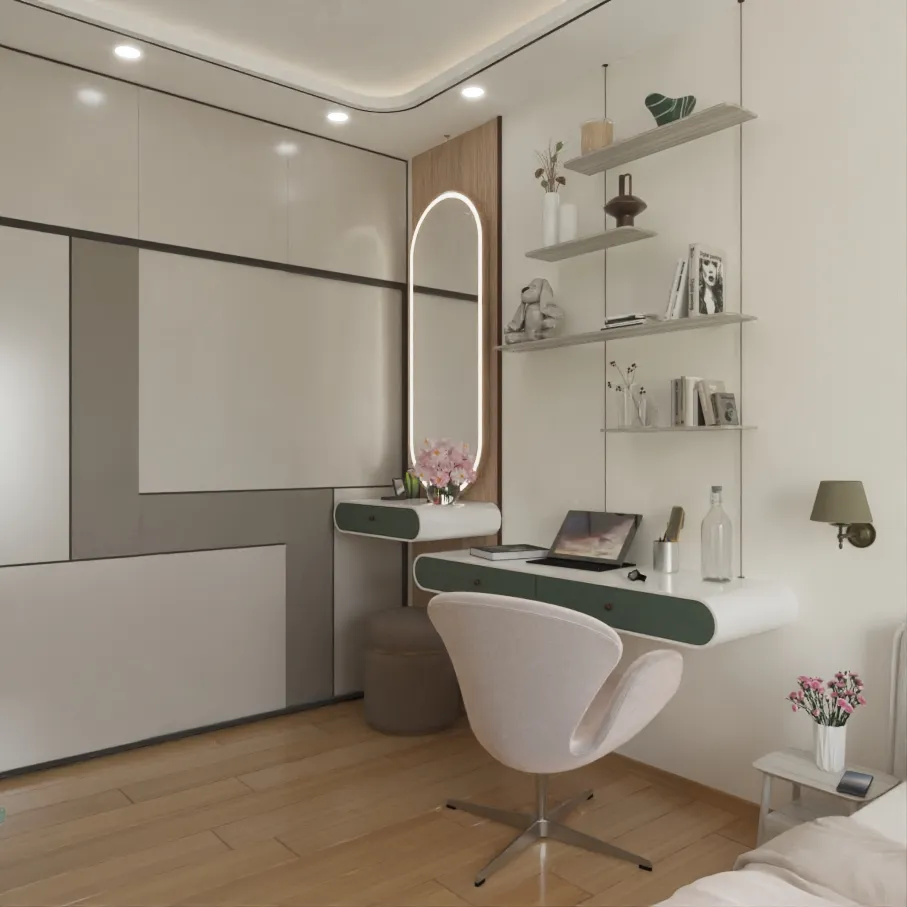
Louvred aluminium or WPC fins mounted at an angle calculated for Kolkata's summer sun path (roughly 20 to 22 degrees north latitude) block the low western sun while still permitting airflow and a filtered view, and these run somewhere between ₹450 and ₹900 per square foot of coverage depending on material and motorisation. A simpler and considerably cheaper option is a projecting horizontal chajja or awning extending 2 to 3 feet from the wall above the window, which is highly effective against the steep midday sun but less effective against the near-horizontal west afternoon angle unless paired with vertical fins on the sides. For flats where the society will not permit permanent exterior structures, retractable external bamboo or synthetic chik blinds mounted just outside the glass on a simple track are a low-cost, reversible option that still intercepts heat before the glass, and we have installed these for well under ₹150 per square foot in several Rajarhat projects where NKDA exterior modification approval was a concern.
Glass Film and Window Treatment
When external shading is not possible, whether due to society restrictions, a lack of exterior ledge, or budget, a solar control window film applied directly to the interior glass surface is the next most effective single measure. Quality ceramic or metallic-nanoparticle films can reject 40 to 60 percent of incoming solar heat while still allowing visible light through, which matters because you do not want to trade a hot room for a permanently dark one. Pricing for a good film runs roughly ₹65 to ₹150 per square foot installed, and for a standard 4 by 6 foot bedroom window, that puts the job comfortably under ₹4,000, making it one of the better cost-to-impact ratios available for this problem.
We would flag one caution from experience: cheap tinted films sold on price alone often just darken the glass without meaningfully rejecting infrared heat, so ask any vendor for the film's Solar Heat Gain Coefficient (SHGC) rating rather than trusting visual darkness as a proxy for performance. A film with an SHGC below 0.35 is doing real work; a film that simply looks dark but has no published rating usually is not.
Wall Insulation and Reflective Exterior Treatment
Glass gets the attention because it is the most visible heat source, but the exterior wall mass itself absorbs and re-radiates heat for hours after sunset, which is why a west-facing bedroom can still feel warm at 9 PM even with curtains drawn all day. For flats where we are doing a fuller renovation, we sometimes recommend a lightweight insulation board, typically extruded polystyrene (XPS) or a similar rigid foam, applied to the interior face of the west wall before replastering, which measurably slows heat transfer through the wall. This adds roughly ₹120 to ₹180 per square foot of wall treated, including replastering and repainting, and it is most worth doing on a top-floor unit where the roof slab is also absorbing heat, since the two effects compound.
A far cheaper partial measure is switching the exterior wall's paint to a high-reflectivity, heat-reflective exterior coating, which can lower the wall surface temperature noticeably for a fraction of insulation board cost, though it will not match the performance of proper insulation on its own.
Re-Planning the Layout, Not Just the Windows
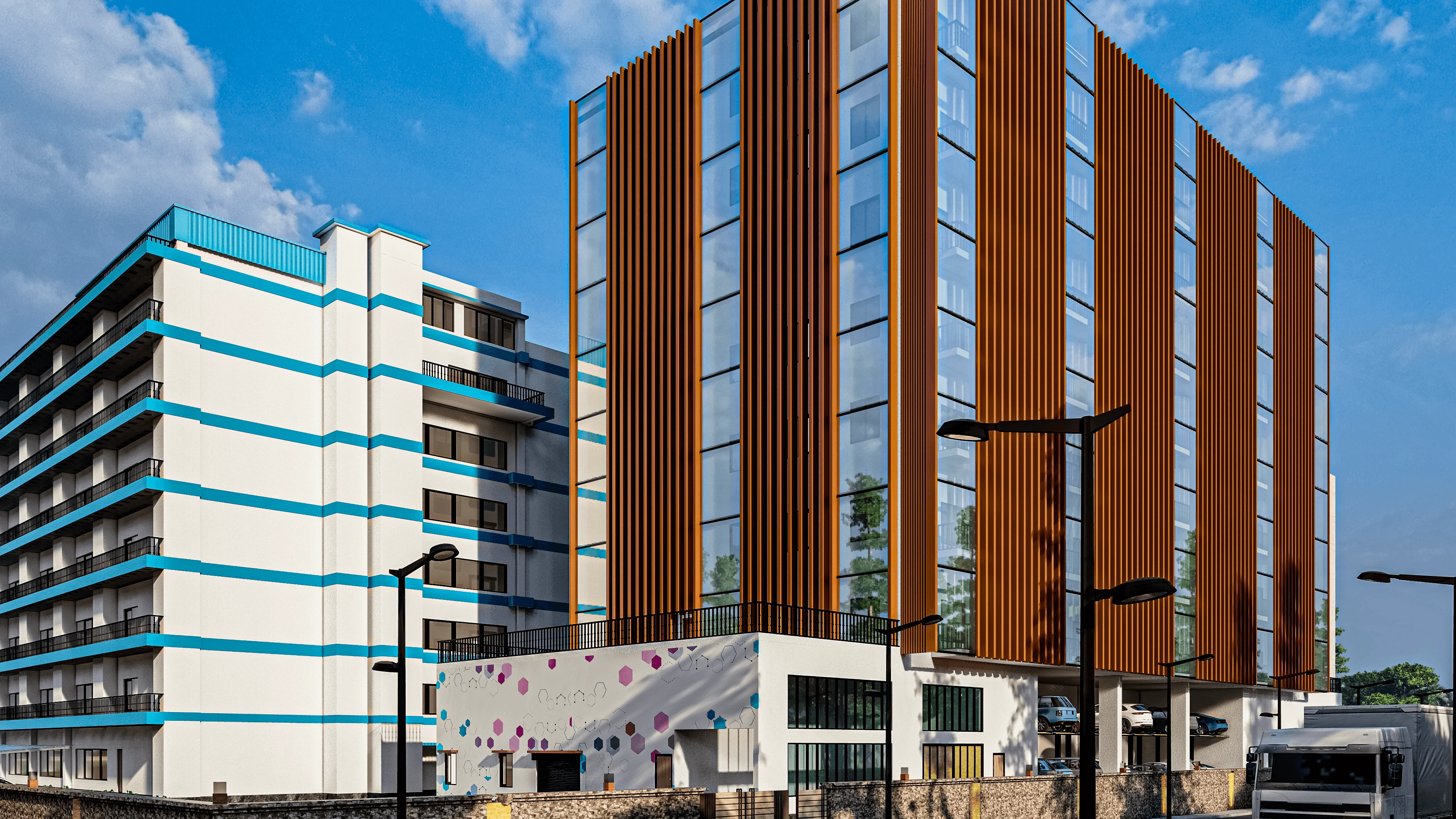
Beyond shading and glass, the room's actual function on the west side matters more than most homeowners initially consider. If your west-facing room is currently a bedroom used mainly in the evening and at night, that is exactly the window during which residual heat from the wall and glass is at its worst, so during a renovation we often recommend swapping a west-facing bedroom with a room used mostly during the day, a study or a formal living area, where the heat is less disruptive to comfort and sleep. Where a full swap is not practical, even relocating a bed away from direct contact with the west wall, leaving a ventilation gap behind the headboard, and using open, breathable furniture rather than a wall-hugging wardrobe against that wall reduces how much radiant heat reaches the occupant directly.
| Feature | Shading and Film Approach | AC-Only Approach |
|---|---|---|
| Upfront cost | ₹4,000 to ₹90,000 depending on scope | Lower upfront, one-time unit purchase |
| Running cost | Reduces AC load 20 to 35% | Full AC tonnage needed year-round |
| Comfort after sunset | Room cools faster once shaded | Heat lingers in walls regardless of AC |
| Reversibility | Film and fins can be adjusted or removed | AC upgrade is a sunk cost either way |
Where AC Sizing Still Matters
None of this means AC capacity is irrelevant, only that it should be the last lever pulled rather than the first. Once shading, film, and any wall treatment are in place, we recalculate tonnage requirements based on the reduced heat load rather than the flat's unshaded worst case, and in several projects this has meant a client who was about to install a 2-ton unit for a 140 sq ft bedroom comfortably managing with 1.5 tons instead, which lowers both the purchase cost and the monthly running cost for the life of the unit.
- Get an SHGC rating before buying any window film, not just a tint percentage
- Check your society's exterior modification rules before ordering external fins or awnings
- Treat the west wall's thermal mass if you are doing a fuller renovation, not just the glass
- Recalculate AC tonnage only after shading and film are installed
West-facing heat is one of a handful of orientation-specific problems we see repeatedly in New Town and Rajarhat towers, and if you are also dealing with a ceiling seepage issue from the flat above, our guide on fixing ceiling seepage from an upstairs bathroom leak covers that separately, while bringing natural light into a dark middle-floor flat and choosing between quartz and granite for a Kolkata kitchen are worth a look if you are tackling more than one room-specific problem at once. If your flat is also due for a broader update, our piece on renovating a decade-old flat in Kolkata covers how heat mitigation fits into a larger renovation scope.
Ready to Stop Dreading Your Afternoons at Home
If the west-facing side of your flat has become the room everyone avoids between 3 and 6 PM, we can walk your specific unit, check the sun angle against your exact floor and orientation, and put together a shading, film, and layout plan that actually addresses the heat rather than just outrunning it with a bigger compressor. Reach out to Studio Contour and tell us which room is the worst offender, we will take it from there.