






Anti-Skid Tile Ratings Explained: What R9 to R11 Actually Means for Your Balcony
Almost every client who walks into a tile showroom in Kolkata comes out with a box that says "anti-skid" printed somewhere on the carton and assumes that settles the matter, and we understand the instinct because the word itself sounds definitive, but anti-skid is a marketing label, not a specification, and the actual engineering figure that tells you how a tile behaves underfoot when wet is the R-rating, a scale that runs from R9 at the low end to R13 at the extreme high end, and in ten years of specifying flooring across New Town, Salt Lake, and Rajarhat flats we have seen more slip-related callbacks from a mismatched R-rating than from almost any other single material decision in the home. The rating comes from a ramp test developed under German industrial standard DIN 51130, where testers walk a shoe-clad platform across a tiled ramp coated in oil while the ramp is gradually inclined, and the angle at which the test subject can no longer maintain footing determines the R class, so R9 tiles lose grip at a ramp angle of roughly 6 to 10 degrees, R10 holds to 10 to 19 degrees, R11 holds to 19 to 27 degrees, and R12 and R13 go higher still and are mostly reserved for industrial kitchens and ramps rather than residential use.
Why One Rating Cannot Cover a Whole Kolkata Flat
The mistake we see most often, and one that costs a homeowner a full tile replacement if caught after installation, is treating anti-skid as a single decision made once for the entire flat rather than a zone-by-zone specification, because a Kolkata apartment realistically has at least three distinct wet-exposure categories under one roof, and each one calls for a different point on the R scale. An open balcony that takes direct monsoon rain, gets splashed by wind-driven drizzle even under a chhajja overhang, and sits exposed to New Town's humid ambient air for eight months of the year is a fundamentally different wet condition than a bathroom's wet zone around the shower, which sees standing water and soap residue but is otherwise indoors and shielded from rain, and both of those are different again from a covered terrace or dry balcony that gets damp from humidity and the occasional gust of rain but rarely sees pooled water. Specifying the same R10 tile across all three, which is the default a lot of contractors reach for because it simplifies procurement, tends to under-protect the open balcony and over-spec (at extra cost, since R11 and above tiles typically run 15 to 25 percent higher per square foot than R9 or R10 equivalents in the mid-range vitrified ranges we source) the covered terrace.
Open Balconies: Where We Hold the Line at R11
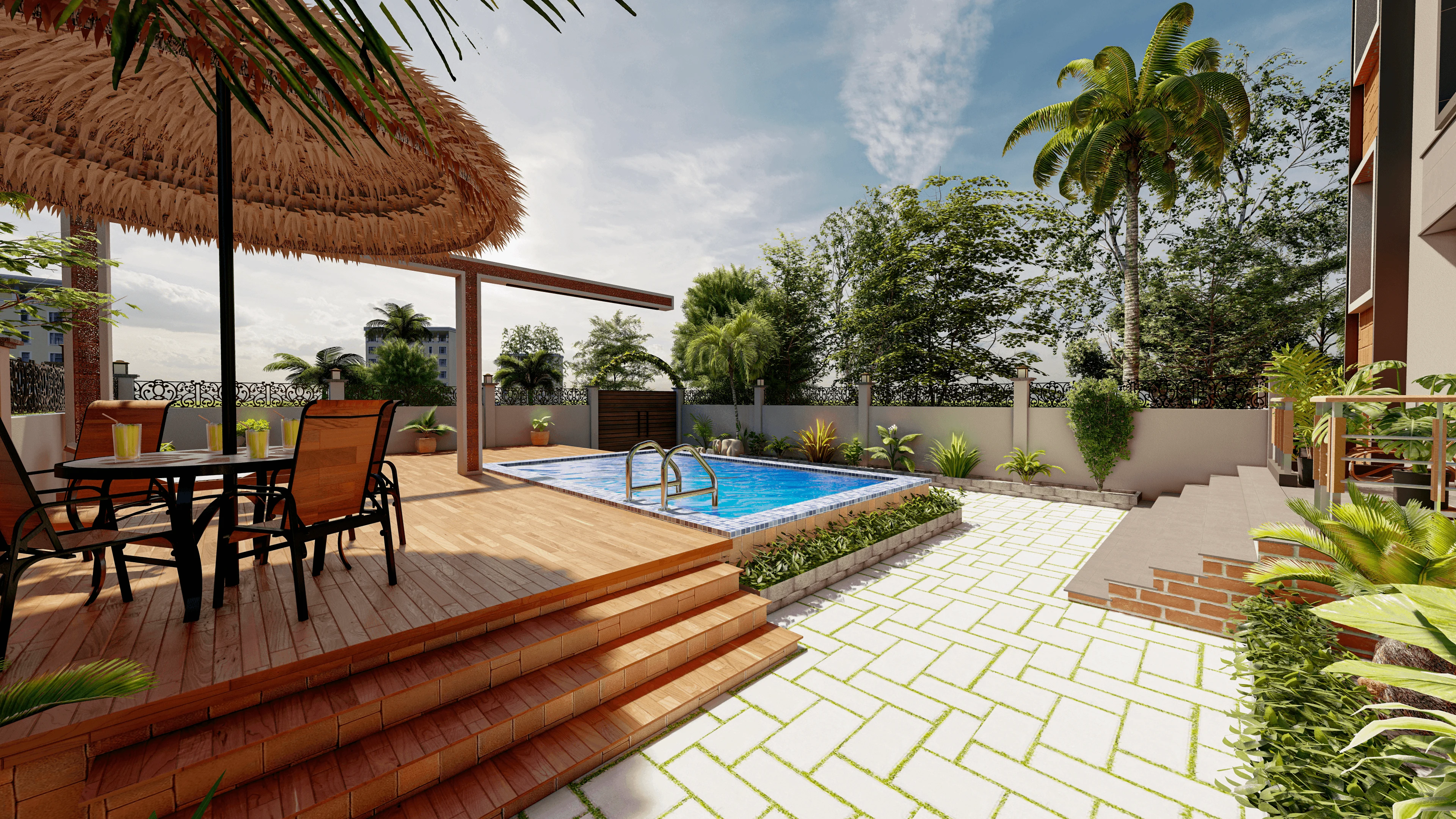
For any balcony in a New Town or Rajarhat flat that is genuinely open to the sky, meaning rain lands on it directly during the monsoon months and the surface can hold a visible film of water for minutes after a downpour, we do not go below R11, and this is non-negotiable in our specifications regardless of what the client's budget pressure is elsewhere in the project, because we have seen the alternative outcome directly. A slip on an open balcony carries real fall risk given that most New Town balcony grille heights and railing placements mean a fall has nowhere soft to land, and children and elderly residents, who make up a meaningful share of who actually uses these balconies for morning tea or plant watering, are exactly the users least able to recover their footing on a marginal surface. An R11 tile in this zone, paired with a slightly textured or matte vitrified finish rather than a polished or semi-polished one (polished vitrified tiles, regardless of their printed R-rating, tend to underperform their rating once a thin film of algae or mineral deposit builds up over a monsoon season, something we have observed repeatedly on balconies that were re-tiled after a fall), is what we specify as standard now across balcony projects, typically in the 300x300 or 300x600 millimetre format so grout lines add a bit of extra grip texture without becoming a cleaning headache.
Bathroom Wet Zones: R10 Is Usually Right, R11 for Bathrooms Used by Elderly Family
Inside the bathroom, the wet zone immediately around the shower area and the space directly in front of the wash basin is where most residential slips actually happen according to what we have observed across our renovation callbacks, and here we typically specify R10, which sits at a meaningfully lower ramp-test failure angle than R11 but still comfortably clears the risk profile of an indoor, non-rain-exposed wet surface with soap and shampoo residue rather than standing rainwater. Where we push up to R11 even indoors is in any bathroom we know will be used regularly by an elderly family member or anyone with mobility concerns, since the marginal cost difference on a bathroom-sized floor area, usually only 35 to 55 square feet of actual wet-zone tiling in a standard Kolkata bathroom layout, is small in absolute rupee terms even though the percentage jump looks large on paper. The dry zone of the bathroom, meaning the area with the vanity counter or any dry storage that stays outside the shower's direct splash radius, does not need to carry the same rating at all, and we will often specify a standard R9 or even a non-rated ceramic finish there purely for the tile-matching aesthetic, since forcing a heavy anti-skid texture across a surface that rarely gets wet just makes it harder to clean and mop without functional benefit.
Covered Terraces: The Zone Most Often Under-Specified
Covered terraces and the wide utility-style balconies increasingly common in Rajarhat and greater Kolkata's newer high-rises sit in an awkward middle position, protected from direct rain by an overhang or the floor above but still exposed to ambient humidity, condensation off railings during Kolkata's cooler, damper mornings, and the occasional wind-blown drizzle at the terrace edge, and we generally specify R10 here as the practical middle ground, moving up to R11 only for the outer two or three feet nearest an open edge or railing where wind-driven rain realistically reaches. Treating the entire covered terrace at a flat R9, which some budget-conscious specifications default to on the logic that it is technically covered, misses that condensation and humidity alone, without any direct rain at all, can bring a polished or low-texture surface close to its slip threshold on a humid Kolkata morning, something anyone who has stepped onto a terrace tile barefoot before 7am in July has likely felt firsthand.
Reading a Tile Box Correctly Before You Buy
When we are actually at a showroom with a client, the checklist is short but the box rarely volunteers all of it clearly, so we look for the DIN 51130 R-rating explicitly printed or available on the technical data sheet rather than trusting a shelf tag that only says "anti-skid," we cross-check the surface finish description since a matte or structured finish generally outperforms its printed rating compared to a polished finish at the same nominal R class, and we ask specifically whether the rating was tested dry, oiled, or with a specific footwear type, since some manufacturers quote a best-case dry-tested figure that has little bearing on how the tile behaves when actually wet. If none of that information is available for a tile the client has fallen in love with on looks alone, we treat it as a decorative option for a dry zone only, never for a balcony or wet-zone floor, no matter how convincingly the box markets itself as anti-skid.
Flooring choices in wet zones connect directly to the drier rooms around them too, and if you are working through a bedroom renovation alongside a balcony or bathroom update, the very different set of stresses that wood flooring faces from Kolkata's daily AC cycling is worth reading in Engineered Wood vs Laminate Wood Flooring: What Survives an AC-On, AC-Off Kolkata Bedroom. If the balcony itself is being furnished once the tiling is settled, the material choice for the furniture sitting on top of that anti-skid floor matters just as much for weather resistance, something we cover in Solid Teak vs Engineered Outdoor Wood for Kolkata Balconies and Terraces. And for anyone tackling a full flat reconfiguration where new bathrooms or balconies are being added to the plan entirely, our practical walkthrough in Combining Two Adjacent Flats Into One Home: The Practical Renovation Guide covers how those wet zones get replanned from scratch.
Let Us Check Your Tile Specification Before the Order Goes In
If you already have a shortlist of tiles from a showroom visit and want a second opinion on whether the R-rating actually matches where each one is headed in your flat, whether that is an open balcony catching the full monsoon or a bathroom wet zone your parents will be using daily, send us the product codes and floor plan through our contact page and we will tell you plainly if the rating holds up before you place the order, not after the grout has set.