






Shading Devices That Cut Glare on a Balcony Without Blocking the View
The complaint we hear most often about balconies in New Town apartments, particularly the west and southwest facing units that make up a large share of towers along the Action Area corridors, isn't that the balcony is too small or badly finished, it's that between roughly eleven in the morning and five in the evening for a good stretch of the year, the balcony is functionally unusable, not because of heat alone but because of the sheer flatness of the glare bouncing off the parapet, the neighbouring building's facade and, in a lot of cases, an unshaded concrete floor that's baking in direct sun. Clients almost always arrive at this conversation wanting to fix it by adding a solid roof or full glass enclosure, which does solve the heat and glare problem but usually at the cost of the entire reason they wanted a balcony in the first place, the open sky and the view out over the neighbourhood. This piece is specifically about the middle ground, the external shading devices, louvres, retractable awnings and pergolas with climbing planting, that cut the heat and glare load on a balcony while keeping it genuinely open, because that trade-off is achievable and we design for it constantly.
Why Shading the Balcony Matters More Than People Expect
Before getting into specific devices, it's worth being precise about what's actually happening on an unshaded balcony, because it changes how you think about the fix. A west facing concrete balcony floor in Kolkata's summer can reach surface temperatures well above 50 degrees Celsius by mid-afternoon, and that heat doesn't stay on the floor, it radiates back up and into the living or bedroom space behind the sliding door for hours after direct sun has moved off, which is a large part of why the room just inside a west facing balcony often runs noticeably hotter than the rest of the flat even with the AC running. Glare works on a separate but related mechanism, where low-angle sun in the morning and evening, plus reflected light off light-coloured neighbouring facades, creates a brightness that's uncomfortable to sit in and makes screens and even simple reading difficult, independent of the actual temperature. A well-designed shading device addresses both, cutting direct solar radiation before it hits the floor and walls, and controlling the angle of light entering the space, without needing to fully enclose the balcony the way glass panelling or a solid roof extension would.
Fixed and Adjustable Louvres: Our Default Recommendation for Most Balconies
For the majority of New Town balconies we shade, we specify horizontal louvre systems, either fixed aluminium or timber-look composite louvres set at a calculated angle, or adjustable bladed louvres that the homeowner can tilt through the day. The angle calculation matters more than most people assume, because Kolkata sits at a latitude where the sun tracks quite high overhead in summer months but considerably lower in winter, so a louvre pitch that blocks harsh June sun at midday should still let in enough low-angle winter sun that the balcony doesn't feel gloomy in December and January; we typically model this against the specific orientation of the balcony being shaded rather than using a single stock angle for every project. Fixed louvre pergola structures in powder-coated aluminium, spanning a typical 1.5 by 3 metre balcony, run in the range of ₹45,000 to ₹85,000 depending on the louvre profile, spacing and finish, and they need essentially no maintenance beyond an occasional wipe-down, which is why they're our default recommendation for clients who won't be around to operate anything manually. Adjustable bladed louvres, where each blade rotates on a shared linkage so the whole system can be opened flat for maximum view and light or closed to near-solid for full shade, cost more, typically ₹75,000 to ₹1.4 lakh for the same footprint depending on whether it's manually cranked or motorised, but they give genuine day-to-day control, and we've found clients who travel or entertain on the balcony regularly get real use out of that flexibility rather than treating it as an unused upgrade.
Retractable Awnings: The Right Choice When the View Matters Most
Where a client's balcony looks out over genuinely open ground, a park-facing unit in New Town's AA-II or a higher floor with a clear sightline across Rajarhat, we lean toward retractable fabric awnings over fixed louvres, because an awning can be pulled back entirely on an overcast day or in the evening when shading isn't needed and the whole point of the balcony is the unobstructed view. We specify acrylic-coated polyester or solution-dyed acrylic fabric rather than plain PVC for the canopy, since the coated fabrics hold their colour and UV resistance far longer under Kolkata's sun exposure, and we always spec a manually retractable or motorised arm system with a wind sensor cutoff on higher floors, because an awning left extended during Kolkata's pre-monsoon squall winds, which can arrive with very little warning between March and May, is a real risk to the hardware and to anyone standing underneath it. A retractable awning sized for a standard balcony runs ₹35,000 to ₹70,000 installed depending on span and whether it's motorised, and the maintenance conversation is honest, the fabric will need cleaning every few months given Kolkata's dust and pollution load, and a good quality canopy typically needs replacement every six to eight years even with care, details we walk every client through before they commit, since an awning is a genuinely different maintenance proposition than a fixed louvre or pergola.
Pergolas With Climbing Vines: Slower to Establish, Genuinely Worth It
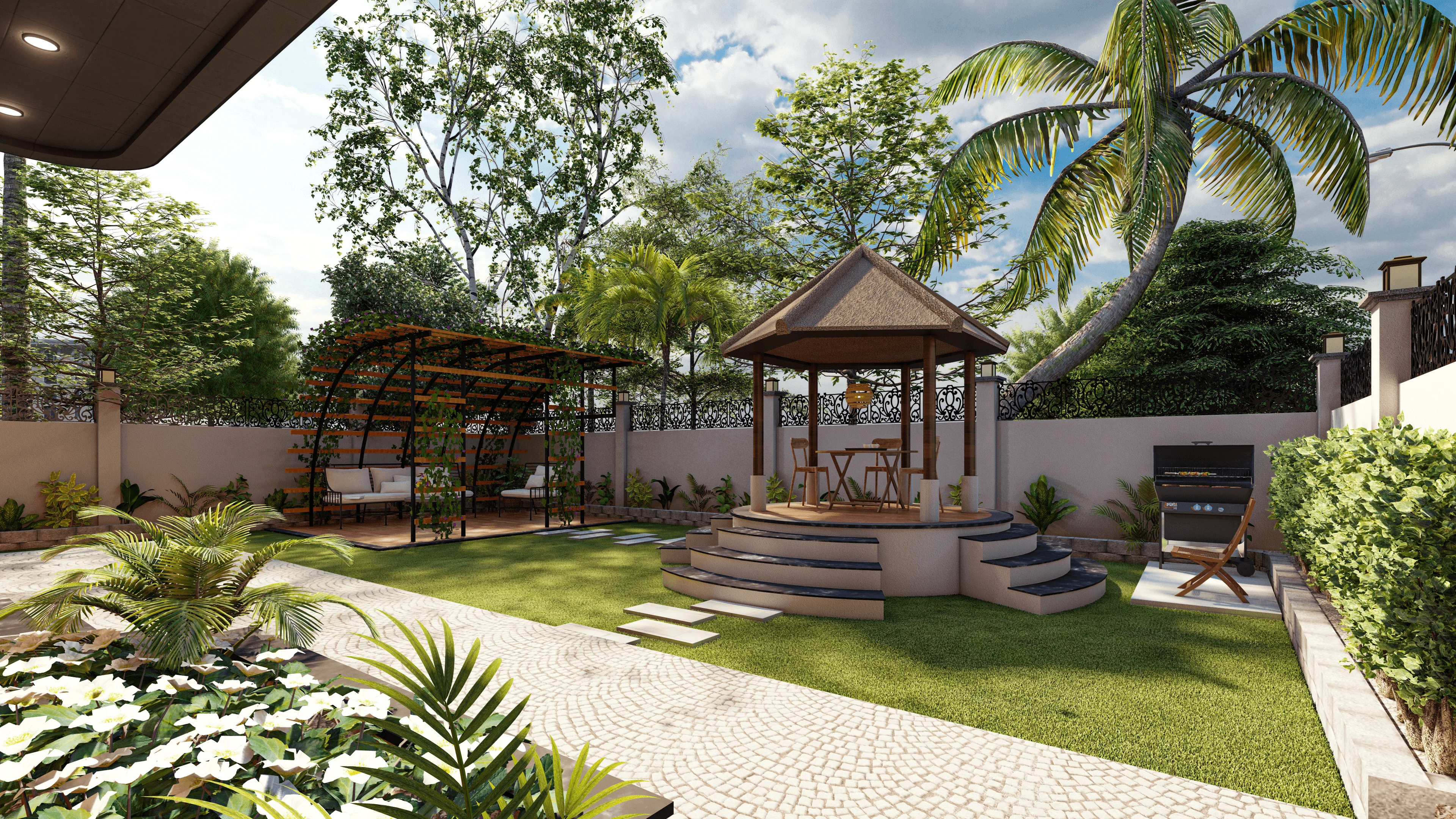
For clients willing to take a longer view, a pergola structure planted with a climbing vine gives the most naturally graded shade of any option we install, because unlike a fixed louvre or a fabric awning, a well-chosen vine canopy is denser in peak summer when the plant is in full leaf and sheds some density in winter, tracking the actual shading need through the year with almost no mechanical intervention. We generally build the structural frame in powder-coated mild steel or aluminium rather than timber, since timber pergolas exposed to Kolkata's humidity and monsoon rainfall need considerably more upkeep than most clients want to commit to, and we plant into either large fixed planters at the balcony's outer edge or, where the building's structural loading allows a modest additional dead load, a narrow integrated planting trough. For vine selection, we favour vigorous but manageable climbers suited to Kolkata's climate, and we always talk clients through the honest timeline, a newly planted vine takes twelve to eighteen months to establish enough coverage to provide real shade, so this is not a solution for a client wanting shade by next summer, but for a client planning a year or more ahead, it delivers a genuinely different quality of light than any manufactured shading device, dappled rather than a hard-edged shadow line, and it does real work cooling the balcony surface through evapotranspiration from the leaf mass that a metal or fabric shade simply can't replicate. Structural frame and planter costs for a balcony-scale pergola typically run ₹40,000 to ₹90,000 before planting, with the plants themselves a comparatively minor addition to that budget.
Getting the Angle and Height Right Is What Actually Preserves the View
The single biggest mistake we see in balcony shading done without proper design input, whether it's a louvre system, an awning or a pergola, is sizing and positioning it purely for maximum shade rather than calculating the specific angle needed to block harsh summer sun while leaving the sightline out and slightly downward, which is where most people's eyes actually rest when relaxing on a balcony, largely uninterrupted. We always mock up the sightline from a seated position, not a standing one, before finalising a shading device's height and depth, because a pergola or awning hung too low or projected too far out solves the heat problem while turning what was an open balcony into something closer to a covered corridor, which defeats the purpose the client came to us with in the first place.
Where Balcony Shading Fits Into a Wider Daylighting and Comfort Strategy
Shading a balcony well is really the mirror image of the daylighting work we do inside a home, since the goal on a balcony is controlling and reducing direct light and heat, while inside a deep apartment plan the goal is usually the opposite, pulling more daylight in; if that inside problem is one you're also dealing with, our piece on daylighting deep-plan New Town apartments covers the strategies we use for the rooms that don't get enough light rather than too much. For the specific case of windowless interior rooms like stairwells and inner bathrooms, which need daylight brought in through the roof rather than blocked at a balcony, we've written separately about skylights and light tubes, and the wall colour choices that determine how far any daylight, shaded or otherwise, actually travels into a room are covered in our piece on wall colour and reflectivity. The same shading logic applies just as directly to outdoor commercial spaces, and when we're designing breakout spaces that employees actually use on an office terrace, unshaded glare is very often the reason a beautifully furnished outdoor breakout area sits empty by mid-morning.
Let's Find the Shading Solution That Suits Your Balcony's Orientation
Every balcony's shading brief comes down to its specific compass orientation, its floor level, and what's actually worth looking at beyond the parapet, so there's no single device we'd recommend without seeing your balcony and understanding what time of day it matters most to you, whether that's a quiet morning coffee or entertaining guests through a Kolkata evening. If your balcony has become a space you avoid rather than use because of heat and glare, get in touch through our contact page and we'll work out which of these approaches actually fits your view.