





The Curve Took Over: How Arches and Rounded Furniture Redefined Kolkata Interiors in 2024
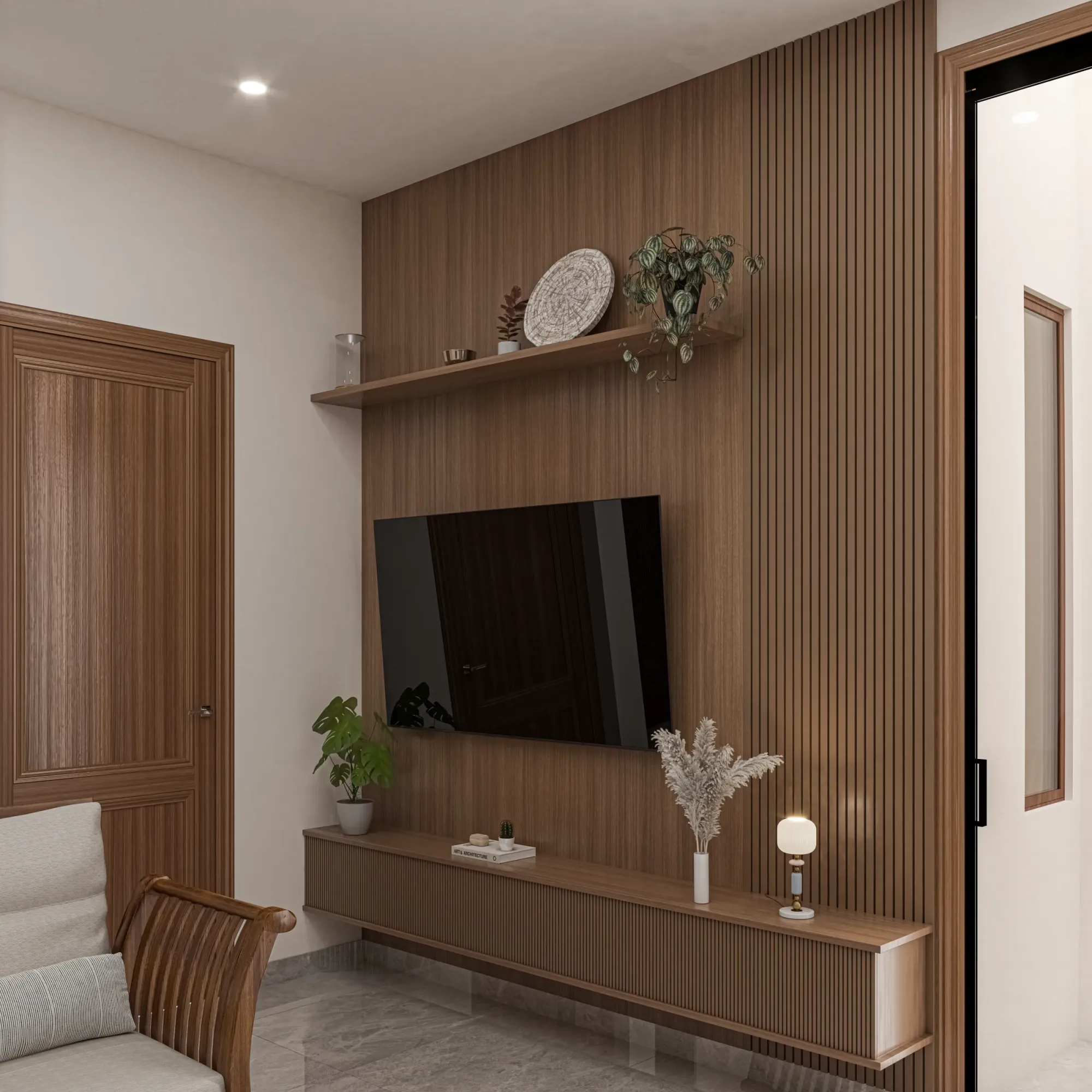
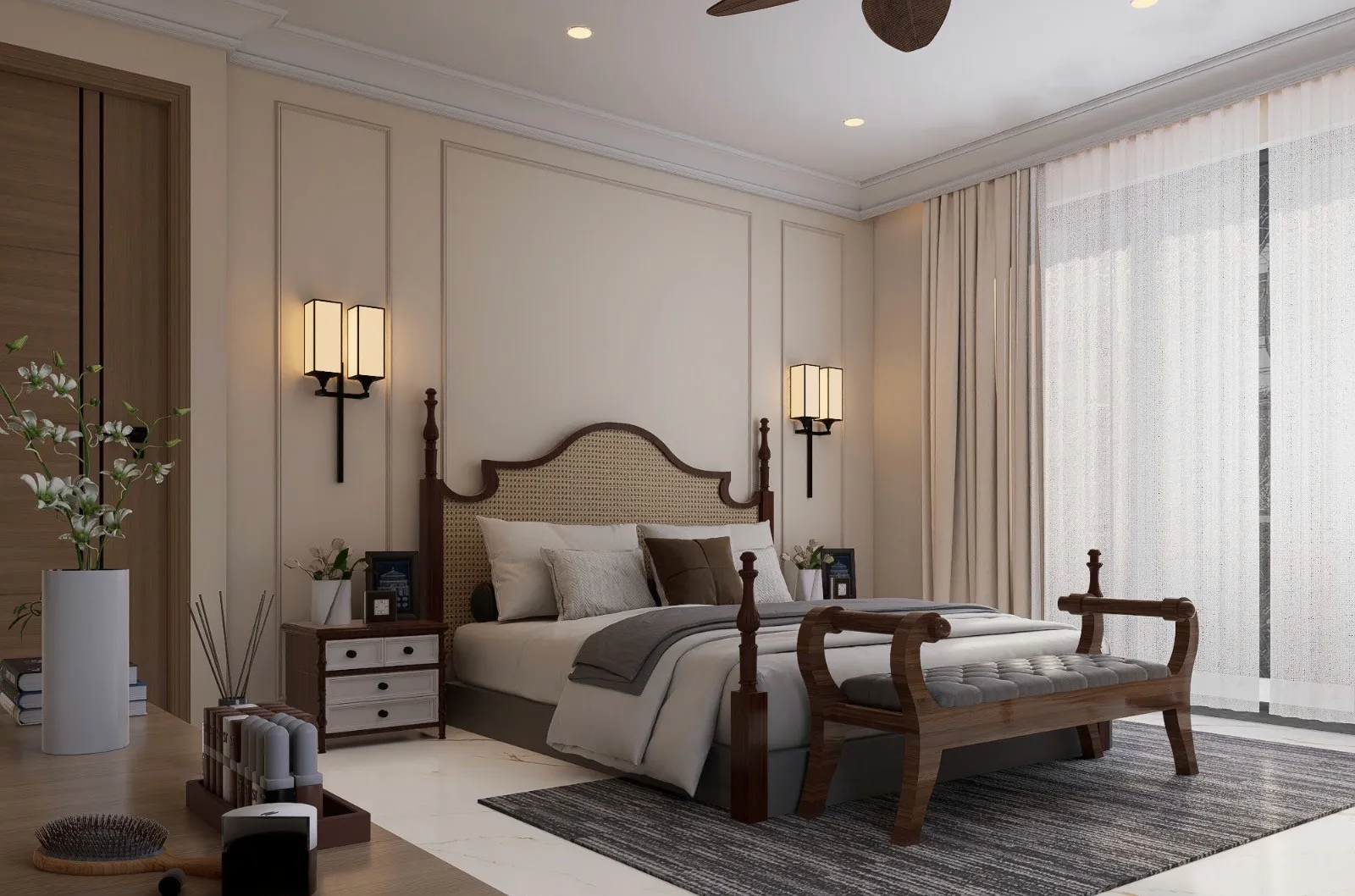
If you had walked into a New Town living room we designed in 2021 or 2022, you would have found a fairly consistent visual language, sharp ninety degree corners on every console and coffee table, rectilinear sofa arms, geometric TV unit shelving with clean box compartments, and doorway openings that were simple rectangular cuts in the wall with no additional shaping at all. That vocabulary made sense for the moment, it photographed cleanly, it was efficient to fabricate, and it matched a broader minimalism that was popular across Indian interior design at the time. By 2024, though, we were fielding a completely different set of requests, and the change was consistent enough across our client base that we started referring to it internally simply as the curve, because that is what nearly every brief that year seemed to be circling back to in one form or another.
Tracking the Shift Away from Sharp Geometry
The clearest early signal came in how clients described sofas. Through 2022 and into early 2023, the standard ask was for an L-shaped sectional with clean lines and a low, boxy silhouette, the kind of piece that reads as understated and works well against a minimal backdrop. Starting around the first half of 2024, we began getting reference images of curved or "boucle" sofas with rounded backs and no defined arms in the traditional sense, pieces that looked more like a soft continuous form than an assembly of straight cushioned panels. We fabricated or sourced curved seating for a noticeable share of our living room projects that year, mostly in apartments across New Town and Rajarhat in the 1,000 to 1,800 square foot range, where a single curved sofa became the anchor piece the rest of the room was built around rather than one component among several straight-edged items.
Coffee tables followed the same logic almost immediately after. Where a rectangular or square coffee table with sharp corners had been the default for years, 2024 briefs increasingly specified round or organically shaped tables, sometimes in a kidney or bean silhouette, often in a lighter wood tone or a poured terrazzo surface that emphasised the soft outline rather than fighting it with a hard material edge. We also saw a real uptick in requests for rounded corners on case goods generally, TV consoles, side tables, even kitchen island edges in the handful of open kitchen projects we took on that year, where clients specifically asked us to soften what would previously have been a crisp ninety degree edge.
Arches Move from Facade Detail to Everyday Interior Element
The second half of this shift, and arguably the more visually dramatic one, was the return of the arch as an interior architectural feature rather than something reserved for a building's street-facing facade. We had used arched motifs occasionally before 2024, mostly in decorative mirror frames or the odd niche detail, but 2024 was the year clients began asking us to actually reshape doorway openings, room dividers, and wall niches into arched forms as a structural and visual choice for the interior itself. In several New Town apartments, we converted what had been a standard rectangular opening between the living and dining zones into a soft arched cutout, typically running seven to seven and a half feet at the peak, which changed the sightline through the apartment in a way that a straight opening simply could not.
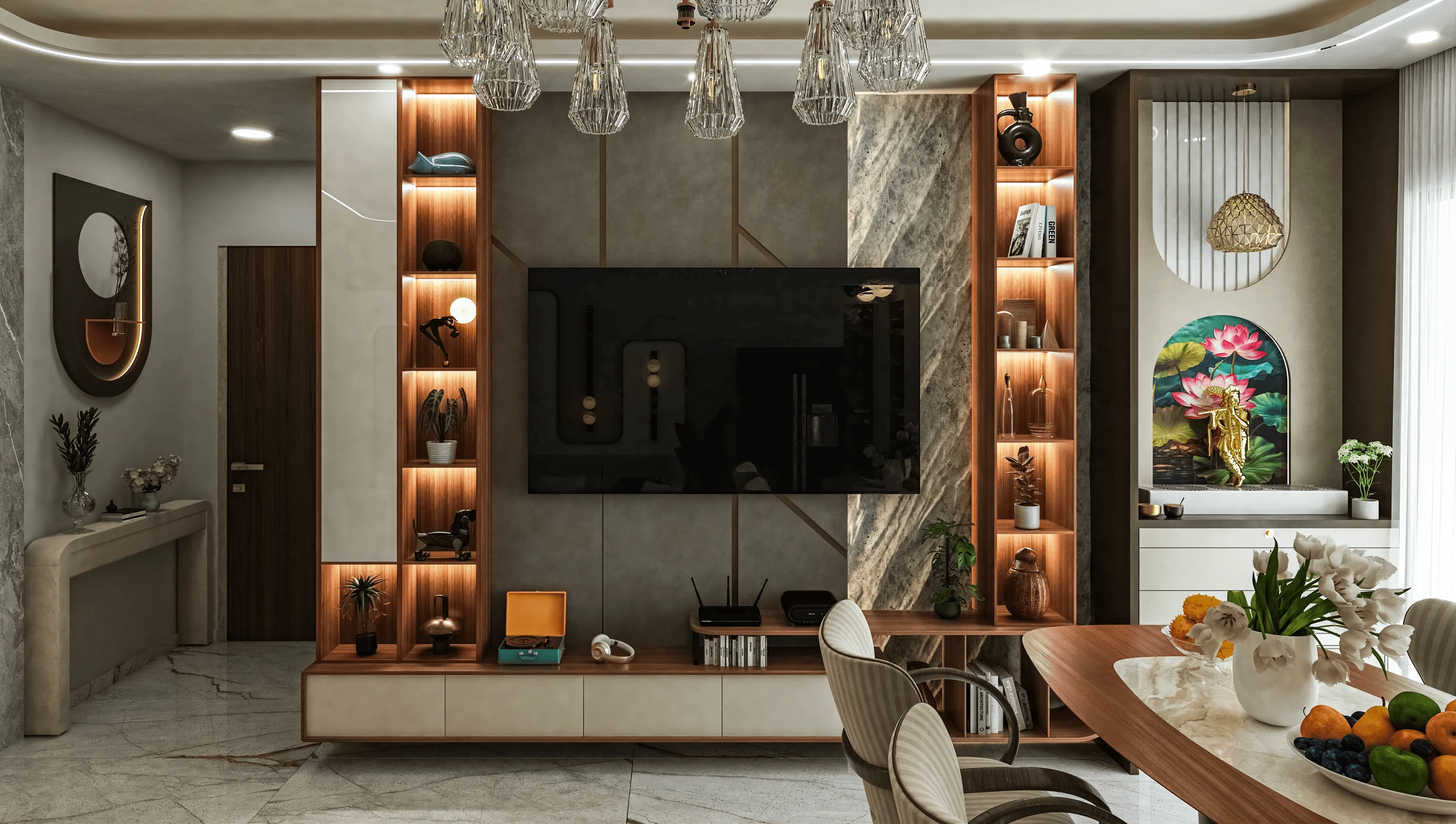
We also built a run of arched wall niches that year, recessed shelving cut into a wall with a rounded top rather than a flat one, used for displaying ceramics or as a backdrop for a study desk, and arched mirror frames scaled up to nearly full height in a few foyers, which became a strong first impression piece for visitors entering the home. The construction cost for converting a standard rectangular opening to an arched one typically ran somewhere in the ₹15,000 to ₹35,000 range over what a straight opening would have cost, depending on the span and whether we were also adding a decorative trim or plaster detail around the curve, and most clients who saw the mockup felt the visual payoff justified the difference.
Why the Aesthetic Turned This Direction
Part of what drove this, in our reading of it, was simple fatigue with the extremely rigid minimalism that had dominated the years right before. Sharp lines photograph well and are efficient to build, but lived with day to day across a full apartment, an interior made entirely of right angles can start to feel clinical, and we heard that word, clinical, from more than one 2023 client describing their existing home before asking us to soften it. Curves and arches introduce a sense of ease and informality that sharp geometry resists by nature, a rounded sofa back invites you to sit at an angle rather than dictating a single correct posture the way a hard-cornered sectional does, and an arched doorway softens the transition between rooms in a way that feels considered rather than merely functional.
There is also a practical dimension specific to how Kolkata apartments are laid out. A great many of the flats we work in across New Town and Rajarhat run modest room widths, often somewhere between eleven and fourteen feet for a living or dining zone, and a hard rectangular opening between two such rooms can feel abrupt in that scale. An arched transition, by contrast, tends to make a tight opening feel more generous because the eye follows a curve rather than stopping at a corner, which is part of why we found ourselves recommending arches specifically in compact layouts rather than only in larger homes where the choice was purely aesthetic.
Where We Held the Line on Curves
Not every surface benefited from rounding, and we said so regularly through 2024 when briefs pushed toward curves everywhere. Kitchen counters, for instance, we kept largely rectilinear even in projects that embraced curves elsewhere in the home, because a curved countertop edge complicates cabinet fabrication and tends to waste usable counter depth in kitchens that in Kolkata apartments rarely exceed eight or nine feet of run. Wardrobe fronts also stayed mostly flat and rectangular for us, since a curved wardrobe shutter adds meaningful cost to what is already one of the larger line items in an interior budget, and the visual benefit rarely justified it inside a closed room like a bedroom closet wall that is not typically a focal point the way a living room is.
A Trend That Followed the Panel Wall Wave and Set Up What Came After
This curved and arched language did not appear in isolation, it followed directly on from the surge in fluted panelling that took over Kolkata accent walls in 2023, and in several projects we actually combined the two, running a fluted panel treatment as a backdrop behind a newly curved sofa, which gave the room both the vertical texture of the earlier trend and the softened silhouette of the newer one. The move toward organic shapes also set the stage for the ceiling work we did through the following year, which we cover in detail in our before and after comparison of Kolkata's shift from heavy false ceilings to cove lighting strips in 2025, since a flatter, calmer ceiling plane tends to suit a room built around soft furniture forms better than an ornate multi-tier ceiling competing for attention. If you are planning a pooja space alongside a more contemporary curved living area, our piece on balancing Vastu rules for a pooja room with a designer false ceiling is a useful companion read as well.
Bringing Softer Lines Into Your Own Home
If your home still carries the sharp-edged furniture language of a few years back and you have been drawn to the rounder, arched interiors you keep seeing in newer Kolkata projects, we would be glad to walk through what a curved sofa, a reshaped doorway, or a single well-placed arched niche could look like in your specific rooms, with honest cost figures for your layout rather than generic ranges. Get in touch through our contact page and we can start sketching out where a curve would genuinely improve your space.