






Cost of False Ceiling with Cove Lighting for a 12x14 Living Room
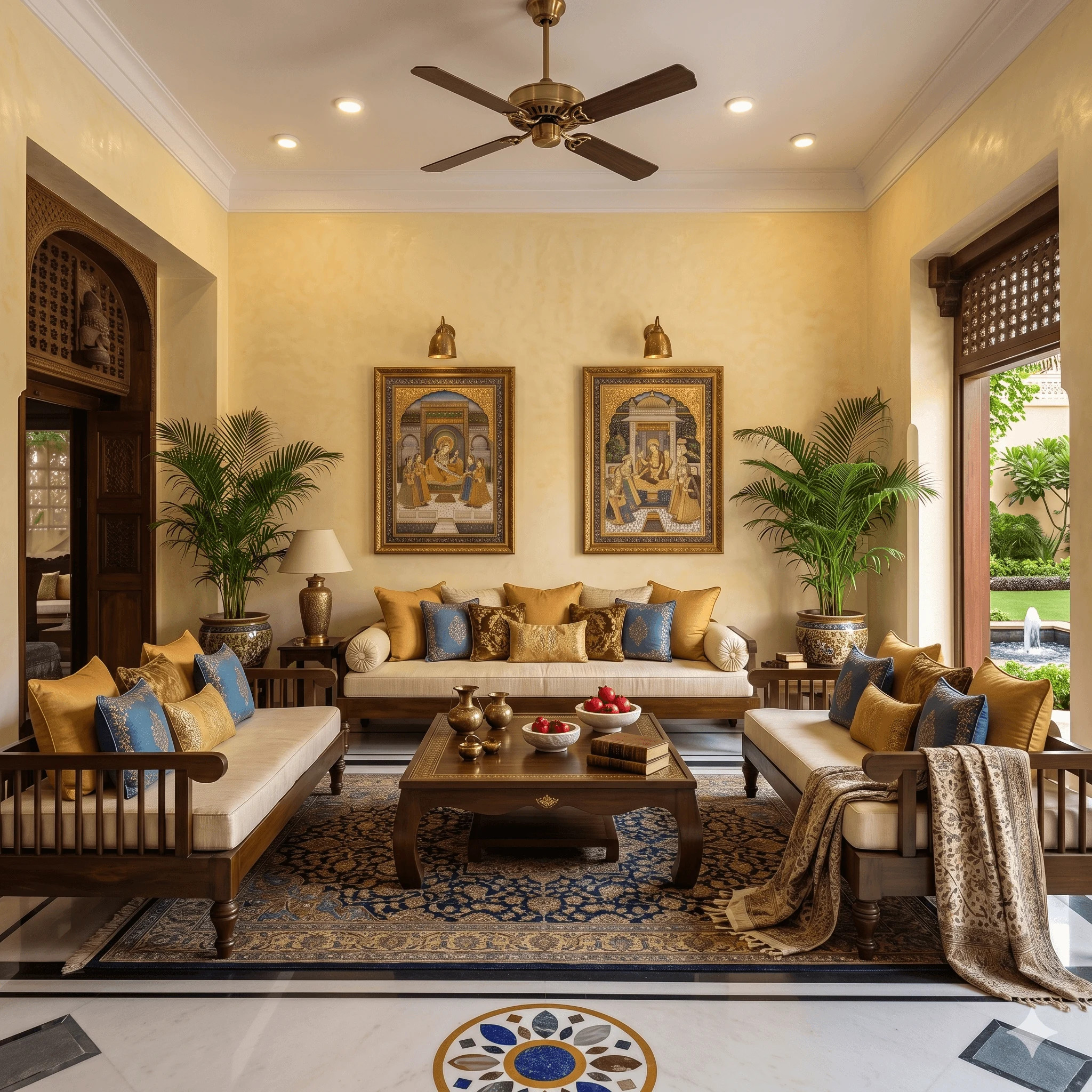
A 12x14 living room works out to 168 square feet of ceiling area, which happens to be one of the most common living room footprints we run into across New Town, Salt Lake, and Rajarhat apartments, and when a client asks us what it costs to add a cove lighting channel to that specific room rather than leaving the ceiling flat, we can give a real number instead of a vague range, because we have priced this exact combination of dimension and detail often enough to know where it actually lands. On a plain flat gypsum ceiling with no steps and no cove, that 168 square foot room runs between ₹14,280 and ₹18,480 at our current ₹85 to ₹110 per square foot rate for basic flat gypsum work, and once you introduce a single perimeter cove channel built to hide a continuous LED strip, the ceiling structure itself moves into the ₹110 to ₹150 per square foot band, pushing the same room to ₹18,480 to ₹25,200 before the lighting is even added in. The honest all-in answer, structure plus LED strip plus driver plus wiring, is a total that typically lands between ₹23,000 and ₹34,000 for this exact room size, and the rest of this piece breaks down where every rupee of that goes so you are not simply trusting a lump-sum number on a quote.
The Baseline: What a Plain Flat Ceiling Costs on 168 Square Feet
Before we can honestly price the cove upgrade, it helps to fix the baseline, because every client conversation about cove lighting eventually turns into a conversation about what they are comparing it against. A basic flat gypsum ceiling on galvanised iron framing, just a clean plane that conceals the slab and any electrical conduit running above it, costs ₹85 to ₹110 per square foot in our current pricing, and on a 12 foot by 14 foot room that comes out to ₹14,280 at the low end and ₹18,480 at the high end, with the spread driven mostly by whether the room has AC ducting or a beam that needs boxing in along the way. This flat ceiling still earns its keep, since it hides the raw slab, gives you one clean surface for paint, and lets recessed downlights sit flush rather than surface mounted, and for a fair number of our budget conscious New Town clients this is exactly where the ceiling scope stops, particularly when the living room is doubling as a fairly compact space and every extra thousand rupees is being weighed against furniture or flooring instead.
What the Cove Channel Structure Itself Adds
The moment a client asks for a cove, meaning a shallow recessed channel built into the ceiling's edge that is deep and wide enough to fully hide a continuous LED strip from eye level while still letting the light wash up the wall and across the ceiling plane, the framing complexity goes up before a single LED has even been purchased, because the GI channel now needs an extra fold, the gypsum board needs a mitred and boxed edge instead of a flat run, and the electrician needs a concealed conduit routed to the strip location rather than a single point drop for a pendant. That incremental framing and boarding work is what takes the rate from ₹85 to ₹110 per square foot up to ₹110 to ₹150 per square foot, and on our 168 square foot living room that is a move from the ₹14,280 to ₹18,480 range up to an ₹18,480 to ₹25,200 range, meaning the cove structure alone, before a single meter of LED strip is bought, adds roughly ₹4,200 to ₹6,700 over the flat ceiling number.
The LED Strip, Driver, and Wiring Line Item Buried Inside "Cove Lighting"
Every quote we prepare for a cove lit ceiling keeps the ceiling framing cost separate from the lighting cost, because clients are frequently surprised that the ₹110 to ₹150 per square foot cove rate we just walked through does not include the LED strip itself, its driver, or the wiring back to a switch or dimmer, in the same way a flat ceiling rate does not include the pendant you eventually hang from it. For the strip, driver, and concealed wiring run, we price by the running foot of cove channel rather than by ceiling square footage, and on a 12 foot by 14 foot room the full perimeter comes to 52 running feet, though in practice a door opening and one or two windows typically remove 6 to 12 feet of that run, leaving somewhere between 40 and 46 running feet of cove that actually carries a strip. At our current rate of ₹130 to ₹190 per running foot, which covers a warm white or tunable white LED strip, a driver sized to the run, and the concealed wiring back to a dimmer, that works out to ₹5,200 to ₹8,740 on top of the framing cost, which is why our all-in total for the room lands between ₹23,000 and ₹34,000 rather than stopping at the ₹18,480 to ₹25,200 framing figure alone.
| Item | Plain Flat Ceiling | With Cove Lighting |
|---|---|---|
| Ceiling framing and gypsum board, 168 sq ft | ₹14,280 to ₹18,480 | ₹18,480 to ₹25,200 |
| LED strip, driver, and concealed wiring | Not applicable | ₹5,200 to ₹8,740 |
| Total for the 12x14 room | ₹14,280 to ₹18,480 | ₹23,680 to ₹33,940 |
Why the 12x14 Dimension Specifically Changes the Perimeter Math
This is also a good place to explain why we insist on pricing by the actual dimension rather than quoting a flat per room number, because a 12x14 room and a 14x14 room have noticeably different perimeters relative to their floor area, and cove lighting is priced by that perimeter run, not by the square footage the flat ceiling rate uses. A 12x14 room has a 52 foot perimeter against 168 square feet of floor, whereas a 14x14 room has a 56 foot perimeter against 196 square feet, so the cove run grows more slowly than the floor area does as a room gets more square in its proportions, which is one reason a long, narrow 12x14 living room can sometimes come out costing more per square foot of floor for its lighting than a room with a squarer footprint of similar total size. We walk every client through their actual room dimensions on the drawing before quoting, rather than assuming a standard rectangle, because a bay window, a jog in the wall, or an open kitchen pass-through that interrupts the perimeter all change the running footage of cove that actually needs wiring.
Single Step-Down Cove vs a Multi-Tier Ceiling on This Footprint
A 168 square foot living room is exactly the size where clients most often ask us whether they should go a step further than a single cove and add a second inner tier, sometimes with a ring of downlights or a raised center panel, and our honest answer for a 12x14 room specifically depends on your slab height more than on budget. We wrote in more detail about how our own default shifted from multi-tier ceilings toward a single flat plane with one shallow cove in our before and after look at how false ceiling design in living rooms changed through 2025, and the core reason still holds on a room this size, a multi-tier drop commonly eats six to eight inches of slab height at its lowest point, which reads as genuinely more confined in a 12x14 room than it would in a larger living space with more visual room to absorb the drop.
| Single Step-Down Cove | Multi-Tier Ceiling |
|---|---|
| Adds 1 to 2 inches of drop at the perimeter only | Adds 6 to 8 inches of drop at the lowest tier |
| Keeps the room feeling taller and more open | Reads as more layered and formal |
| ₹110 to ₹150 per sq ft structure cost | ₹150 to ₹220 per sq ft structure cost |
| Best fit for most 12x14 living rooms | Better suited to larger or double-height rooms |
If your slab height in a standard New Town apartment sits around nine to nine and a half feet to begin with, which is the norm we see in most towers, we generally steer 12x14 living rooms toward the single cove option for exactly this reason, and we always build a 3D render of both options through our 3D visualization and rendering process before a client commits, so the height difference is something you can actually see rather than something we are asking you to imagine from a drawing.
Setting This Against the Rest of a New Town Living Room Budget
A ₹23,000 to ₹34,000 ceiling is rarely the only line item a client is weighing when a 12x14 living room is being finished from scratch, and we find it genuinely useful to look at it alongside the other big-ticket decisions in the same room. If flooring is also on the table for this room or the wider flat, our cost breakdown for vitrified tile flooring on a 1,200 square foot apartment covers that per square foot math in the same level of detail, and if the same project includes carving out storage in the master bedroom, our piece on the cost of a walk-in wardrobe for a 200 square foot master bedroom runs the equivalent numbers for that room. Utility areas tend to get forgotten in this kind of overall budgeting exercise even though they carry their own specific cost pressures from monsoon damp and washing machine splash, which we cover separately in flooring for a Kolkata utility area that takes washing machine splash and monsoon damp.
Questions Worth Asking Before You Approve the Ceiling Quote
- Ask whether the quoted rate is for flat ceiling or cove lit ceiling specifically
- Confirm the LED strip, driver, and wiring are itemized separately from the framing
- Get the actual running footage of cove being wired, not just a lump sum
- Ask which brand of LED strip and driver is being used and its warranty
- Confirm whether the quote includes a dimmer switch or only an on and off point
- Check the ceiling height loss in inches for your specific room before signing off
Get Your Own 12x14 Living Room Ceiling Priced Out Properly
If you have a living room close to this exact 12x14 footprint and want a number you can actually rely on rather than a rounded-off estimate from a contractor who has not measured your perimeter, send us your room dimensions through our contact page and we will walk you through the flat ceiling and cove lit versions side by side, with the running footage and the height trade-off spelled out before you decide which one is right for your room.