






Roof Insulation That Actually Works Against Kolkata's Rooftop Heat Gain
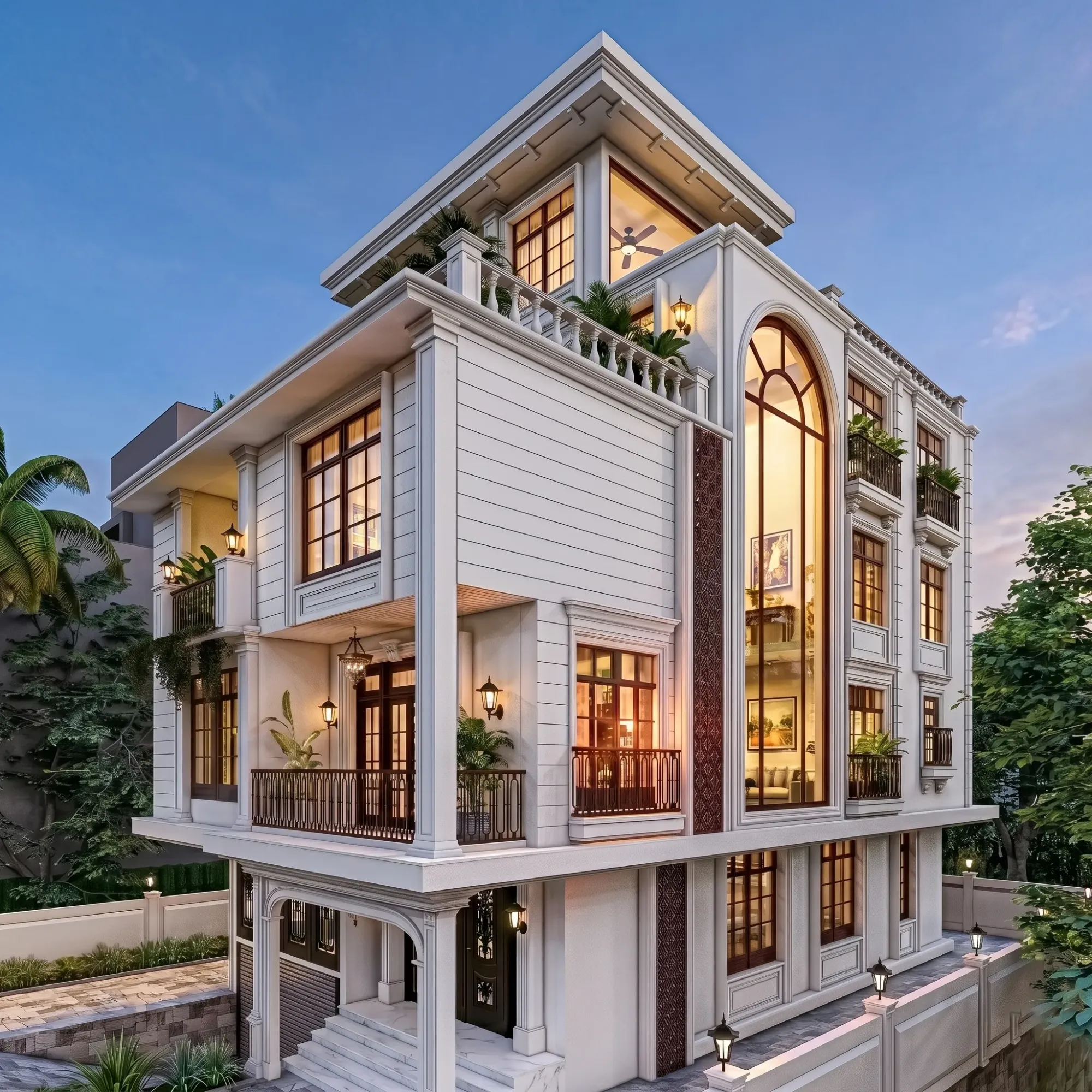
Nearly every top floor renovation brief we receive in New Town starts with some version of the same sentence, that the master bedroom directly under the terrace is unbearable by 4pm through April and May no matter how large the split AC is, and the honest answer we give clients almost every time is that the AC is fighting a losing battle against a bare RCC slab that has spent eight hours absorbing direct solar radiation and is now re-radiating that heat downward into the room below well into the evening. A flat, uninsulated RCC roof in Kolkata's climate can reach surface temperatures of 65 to 70 degrees Celsius on a clear May afternoon, and that stored heat does not disappear when the sun goes down, it continues conducting through the slab for several hours, which is why so many top floor rooms here feel hotter at 8pm than they did at 5pm. Insulating that roof properly is one of the highest value interventions we specify on any renovation, and because clients almost always ask us to weigh the options against each other, we want to lay out the five treatments we actually specify, china mosaic, lime concrete, XPS insulation boards, reflective coatings, and vegetated roofs, purely on how well each performs thermally and what it costs, rather than as a generic checklist.
China Mosaic (Mudi Work): The Traditional Baseline
China mosaic, known locally as mudi work, is broken ceramic tile fragments set into a mortar bed over the roof slab, and it has been the default terrace finish across Kolkata for generations for a reason that has nothing to do with insulation and everything to do with waterproofing, since the technique creates a durable, low-maintenance, slightly textured surface that sheds monsoon water well and resists cracking better than a plain screed. Thermally, though, china mosaic is a modest performer at best, because the ceramic and mortar layer typically adds only 25 to 40 millimetres of material with no dedicated insulating air gap or low-conductivity layer built in, so while the light coloured tile fragments do reflect a meaningful portion of incoming solar radiation compared to a bare dark grey concrete slab, the reduction in peak interior ceiling temperature we typically measure on china mosaic roofs versus untreated RCC is only in the range of 2 to 3 degrees Celsius. For a budget of roughly 55 to 75 rupees per square foot installed, china mosaic remains a sensible waterproofing choice, and we still specify it often, but we no longer present it to clients as a heat solution on its own, only as the finish layer sitting above a proper insulating system underneath.
Lime Concrete: Better Than Its Reputation, Still Not Enough Alone
Lime concrete terracing, a mix of lime, surkhi (crushed brick) and aggregate laid in a sloped bed over the structural slab, is the older cousin of china mosaic and still shows up in heritage and retrofit projects across central and North Kolkata, and it deserves more credit than it usually gets because lime concrete has genuinely better thermal mass behaviour than ordinary cement concrete, absorbing heat more slowly and releasing it more gradually, which softens peak afternoon heat gain somewhat. In practice we see interior ceiling temperature reductions of roughly 3 to 4 degrees Celsius from a well laid lime concrete terrace compared to bare RCC, marginally better than china mosaic alone, but the labour intensity of lime concrete work, which needs skilled masons doing manual consolidation over several days per coat, has pushed costs up to somewhere between 90 and 130 rupees per square foot in the current New Town market, making it a harder sell purely on a cost to thermal benefit basis unless a client specifically wants the traditional finish and breathability lime offers for heritage reasons.
XPS Insulation Boards: The Single Biggest Jump in Performance
Extruded polystyrene, XPS, board insulation is where the real thermal performance jump happens, and it is what we now specify as the base layer on almost every new build and most serious renovations where the roof is being opened up anyway. A 40 to 50 millimetre XPS board, laid over the structural slab with a screed and waterproofing membrane above it, has a thermal conductivity roughly 15 to 20 times lower than concrete of the same thickness, which means it is doing actual insulating work rather than just reflecting or slowly absorbing heat the way the traditional finishes do. On projects where we have installed XPS board systems under a standard tile or waterproof coating finish, we consistently measure interior ceiling temperature reductions of 6 to 9 degrees Celsius compared to bare RCC during peak May afternoons, roughly double to triple what china mosaic or lime concrete achieve on their own, and the difference is immediately noticeable to occupants, not just on a thermometer. The tradeoff is upfront cost, typically 140 to 190 rupees per square foot installed including the waterproofing membrane and protective screed above the board, and the fact that it works best specified during construction or a full terrace strip-and-relay, since retrofitting XPS onto an occupied top floor means taking the roof down to bare slab for a period.
Reflective Coatings: Cheap, Fast, and Genuinely Useful as a Second Layer
Reflective or "cool roof" coatings, typically an acrylic elastomeric coating with high solar reflectance index formulated to bounce back a large share of incoming infrared radiation rather than absorbing it, have become one of our most recommended quick wins specifically because they can be applied over an existing china mosaic or painted terrace without any structural work, usually in a day or two, at a cost of around 25 to 45 rupees per square foot depending on the coating brand and number of coats. On their own, reflective coatings typically deliver a 4 to 6 degree Celsius reduction in peak roof surface temperature, which is respectable for the cost, but because they work by reflecting radiation rather than resisting conduction, they do less for the slow evening re-radiation problem than XPS board insulation does, so we generally position coatings as the right answer for clients who cannot or do not want to touch the structural roof buildup, whether for budget reasons or because monsoon timing does not allow a full strip-down, and as a useful top-up layer even on roofs that already have china mosaic or lime concrete, since a coating applied over an existing finish stacks its reflectance benefit on top of whatever thermal mass benefit the base layer already provides.
Vegetated Roofs: Best Performance, Highest Commitment
A properly built vegetated or green roof, meaning a drainage layer, filter fabric, growing medium and low maintenance planting such as sedum mats or hardy groundcover set over a waterproofed slab, gives the best thermal result of everything we specify, because the plant layer provides shading, the growing medium adds thermal mass and insulation, and evapotranspiration from the plants actively cools the roof surface rather than just reflecting or resisting heat passively. We have measured reductions of 8 to 12 degrees Celsius in peak interior ceiling temperature under a well established green roof compared to bare RCC, the best figure of any option here, but the commitment is real, structurally the roof needs to be checked for the additional live load of saturated growing medium which can add 80 to 150 kilograms per square metre depending on depth, waterproofing needs to be root-barrier grade rather than standard membrane, and ongoing maintenance for irrigation and planting health is a genuine recurring cost, with installed costs typically running 180 to 280 rupees per square foot for a lightweight extensive system. For clients who want both the thermal benefit and a usable green terrace space, this is worth the investment, but we are always upfront that it is a commitment closer to maintaining a garden than applying a coating.
How the Roof Fits Into the Rest of the House
A well insulated roof does the most good when it is not the only passive measure working on the home, and top floor rooms that pair a good roof buildup with an internal courtyard pulling cooler air up from lower floors see the strongest combined result of any layout we have measured, something we detail room by room in The Courtyard Comeback: How an Internal Open-to-Sky Space Cools a New Town Home. Roof heat gain is only half the solar load a top floor room deals with, since window orientation and glazing decide how much direct sun hits the walls and floor through the day, a topic we cover specifically for this city's sun path in Getting Window Placement Right for Kolkata's Sun Path. And if the top floor in question is a home office or a small commercial space rather than a bedroom, it is worth knowing that heat and acoustic comfort tend to be solved together or not at all, which we discuss in Solving the Noise Problem in Open-Plan Offices: An Acoustic Design Guide for Kolkata Businesses.
Tell Us Which Floor Is the Hot One and We'll Work Out the Fix
Every roof we treat gets measured before we recommend anything, because the right combination of china mosaic, lime concrete, XPS board, reflective coating or planting depends on your slab's current condition, your budget, and whether you can take the terrace out of use for a few weeks or need a same-week fix, and that is not a decision we make from a brochure. If the top floor of your New Town or Rajarhat home turns into an oven every April, get in touch with our team and we will walk your terrace with a surface thermometer before we recommend a single rupee of work.