






Vastu for Tenants: What You Can Fix in a Rented Kolkata Flat Without Renovating
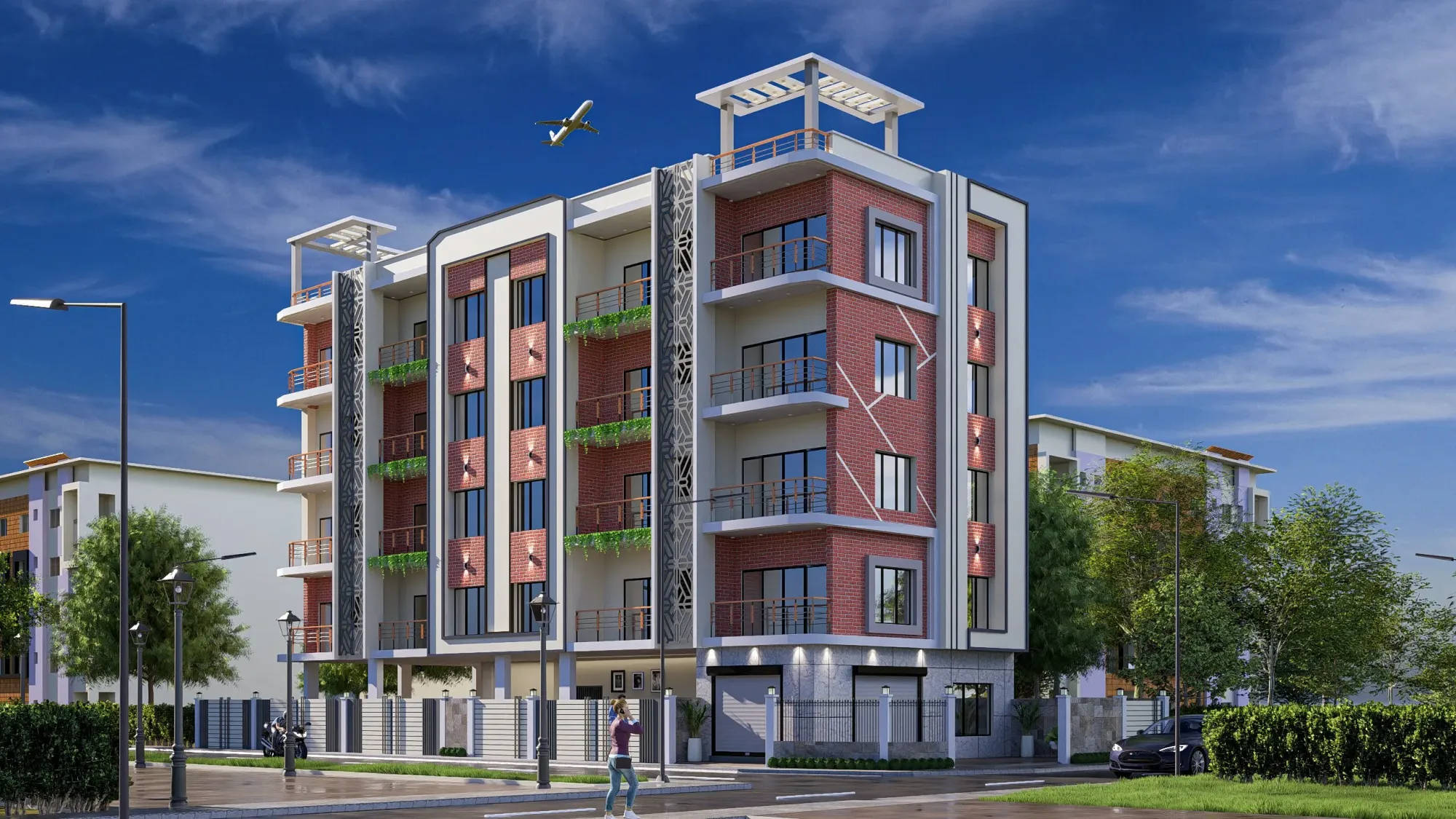
We get a particular kind of phone call at least once a week that never used to happen a decade ago, and it usually comes from someone who has just moved into a two or three bedroom flat in Salt Lake Sector 5 or one of the newer towers along the Action Area roads in New Town, and who has discovered, a few weeks into the lease, that the kitchen is in the northeast corner or the main door opens into a direction their family astrologer has flagged as troublesome. The caller almost always starts the same way, apologetically, saying they know we are an architecture and interior design studio and not a Vastu consultancy, and that they cannot knock down a wall or move a doorway because the flat belongs to someone else and the lease has eighteen months left on it. That last part is really the entire problem, and it is also, in our experience, a solvable one, because the overwhelming majority of Vastu concerns that people carry into a rental can be addressed through furniture placement, portable partitions, mirrors, lighting, and the deliberate use of colour and objects, none of which require touching a single brick.
This matters more in Kolkata's rental market than it does almost anywhere else in the country, because such a large share of the professional population living in Salt Lake, New Town, and the IT corridor around Sector V is renting rather than owning, often on one or two year leases with strict no-alteration clauses written directly into the rent agreement. Landlords in these areas, having invested significant money into fitting out a flat before listing it, are understandably resistant to tenants drilling new points, shifting plumbing lines, or repositioning a kitchen platform, and most rental agreements we have seen explicitly forbid structural change of any kind, sometimes even extending to painting a wall a colour other than white. So when a tenant comes to us anxious about directional compliance, our first job is honestly a bit of reassurance, because classical Vastu Shastra, going back to its origins as a guide for site and building orientation, actually offers a surprisingly rich toolkit of remedies that operate entirely within the object and furniture layer, and were, if you read the older texts carefully, always meant to supplement structural design rather than replace it entirely.
Start With the Entrance, Even If You Cannot Move the Door
The single most common worry we hear is about the main door direction, and while you genuinely cannot relocate a doorway in a rented flat, you have complete control over what happens in the two or three feet immediately inside and outside it. If your entrance faces a direction your family considers unfavourable, place a small brass or wooden threshold plate, keep the area immaculately lit with a warm bulb rather than a cold white tube light, and position a mirror on the inside wall adjacent to the door (never directly facing it, since that is believed to reflect incoming energy straight back out) angled instead toward a wall to visually double the depth of the entry space. We have furnished dozens of rented flats along Action Area I and Action Area II where the tenant simply added a low wooden console table with a tray for keys and a small potted money plant to the entry zone, which does double duty as both a practical drop zone and a compliant object placement. None of this needs a drill beyond a couple of screws for the mirror bracket, which any landlord will permit if you ask, and if even that feels like too much, museum putty or a freestanding mirror on a stand solves it without a single hole in the wall.
The Kitchen Problem: Object Placement Over Structural Change
Kitchens are where we see the most anxiety, because in a large number of Salt Lake and New Town rental flats built over the last fifteen years, the kitchen platform was fixed by the original developer in whatever corner made plumbing sense, and southeast is genuinely the classical ideal for the fire element but far from universal in how these buildings were actually built. If your kitchen sits in the northeast, which is traditionally associated with water rather than fire, the remedy we recommend most often is deceptively simple, involving repositioning the cooking activity itself rather than the platform. If your stove is portable, an induction cooktop or a two burner gas range placed on a small trolley, you have far more freedom than you think to position the actual cooking zone in the southeast portion of the kitchen even if the fixed platform sits elsewhere, using that platform instead for prep and storage. We have specified exactly this kind of mobile cooking trolley for a client renting a flat near Baguiati, using a stainless steel and laminate trolley roughly 24 inches by 18 inches that tucks against the southeast wall of the kitchen during cooking hours and slides back for floor clearance otherwise. Beyond the stove itself, keep the northeast corner of any kitchen visually light and uncluttered, store heavy grain containers and gas cylinders toward the southwest of the room instead, and if the sink is fixed in a location you would rather avoid for the cooking zone, that is fine, since water and fire elements are meant to be kept apart from each other rather than from any specific compass point, so simply ensure a visual and physical gap of at least two to three feet between the stove trolley and the sink.
Bedrooms, Bed Placement, and the Furniture You Actually Control
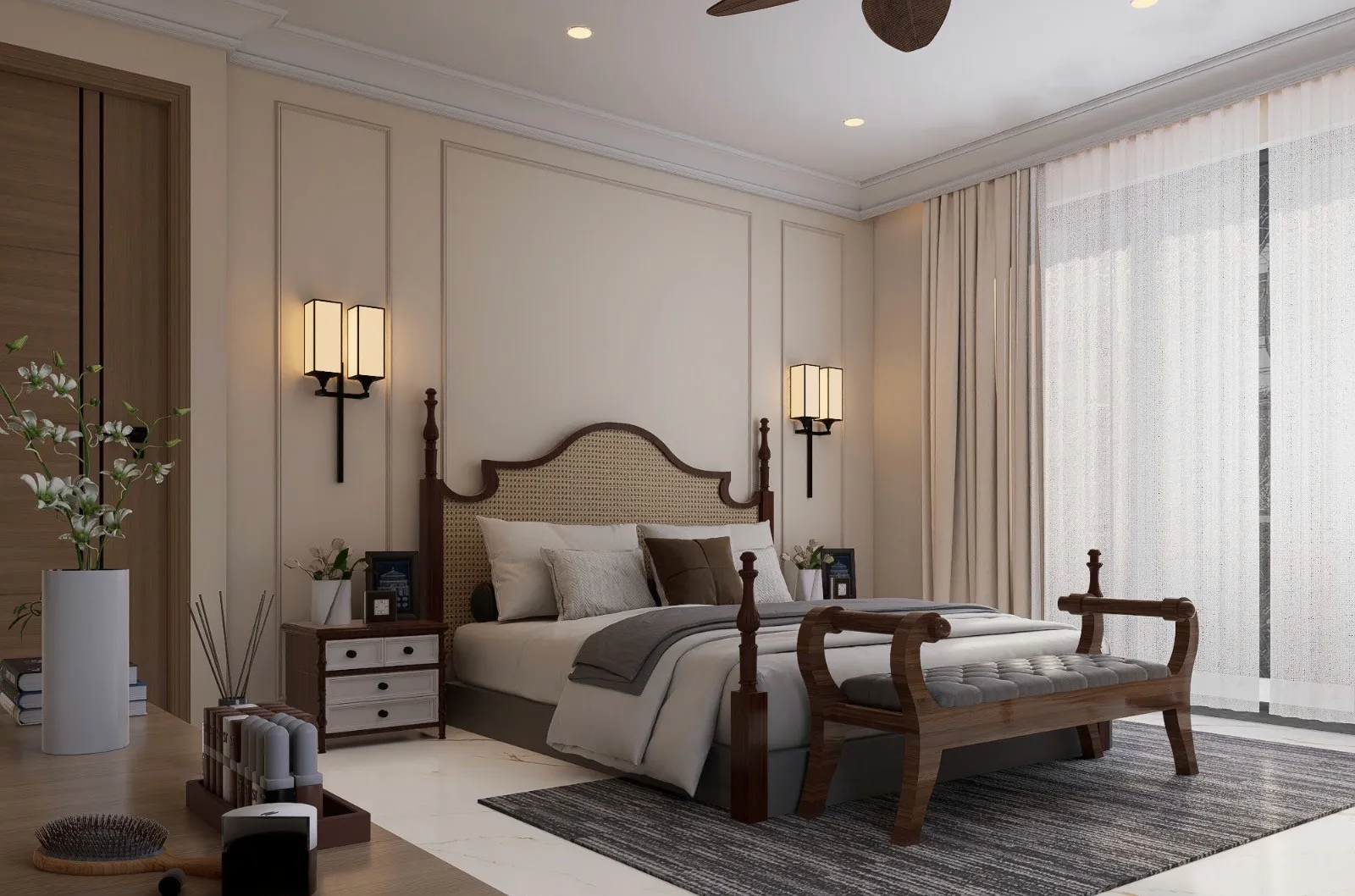
The bedroom is the easiest room in any rented flat to address, because a bed is entirely furniture, and furniture placement is squarely within tenant control regardless of what the lease says about painting or plumbing. The classical preference is for the headboard to sit against the south or west wall, with the sleeper's head pointing south or east rather than north, and in a rectangular bedroom of the kind common in Kolkata's mid-size rental apartments, typically ten by twelve feet or eleven by thirteen feet, this is almost always achievable simply by choosing which wall you push the bed frame against, regardless of where the room's windows or the original developer's suggested layout happen to fall. We often recommend a low profile platform bed rather than a heavy carved four poster specifically because it is light enough for two people to reposition in twenty minutes if a family later decides the orientation needs adjusting, which matters when you are renting and may want to reverse everything before your security deposit inspection. Study tables and work desks, increasingly important given how much of the Sector V workforce is now doing hybrid work from home, should ideally face east or north while working, which again is purely a matter of where you place the table rather than the room's fixed geometry, and a study corner with a compact 3 foot by 2 foot desk can usually be angled into the correct orientation in even a modestly sized second bedroom being used as a home office.
Portable Partitions Do the Work That Walls Cannot
One tool we use constantly for rental clients that people rarely think of on their own is the portable partition, whether that is a folding wooden screen, a fabric room divider on a track, or simply a tall bookshelf used as a room break. When a rented flat's floor plan puts, say, a pooja corner uncomfortably close to a bathroom wall, or a kitchen visually open to the main entrance in a way that feels wrong, a freestanding partition three to four feet wide and six feet tall can visually and functionally close that gap without a single structural change, and it travels with you when the lease ends. We built exactly this kind of solution for a family in a New Town flat near the Eco Park stretch, using a slatted wooden screen to separate their sitting area from a kitchen that the original layout had positioned uncomfortably close to the entrance, and the partition also gave them a much needed sense of enclosure that the open floor plan had been missing anyway, so the fix solved two problems for the price of one purchase. For a full breakdown of how such partitions interact with wall colour and directional choices, our piece on choosing wall colors by Vastu direction without making your home look dated goes deeper into how tenants can use paint, when landlords do allow it, alongside these furniture based fixes.
Sacred Corners and the Portable Pooja Unit
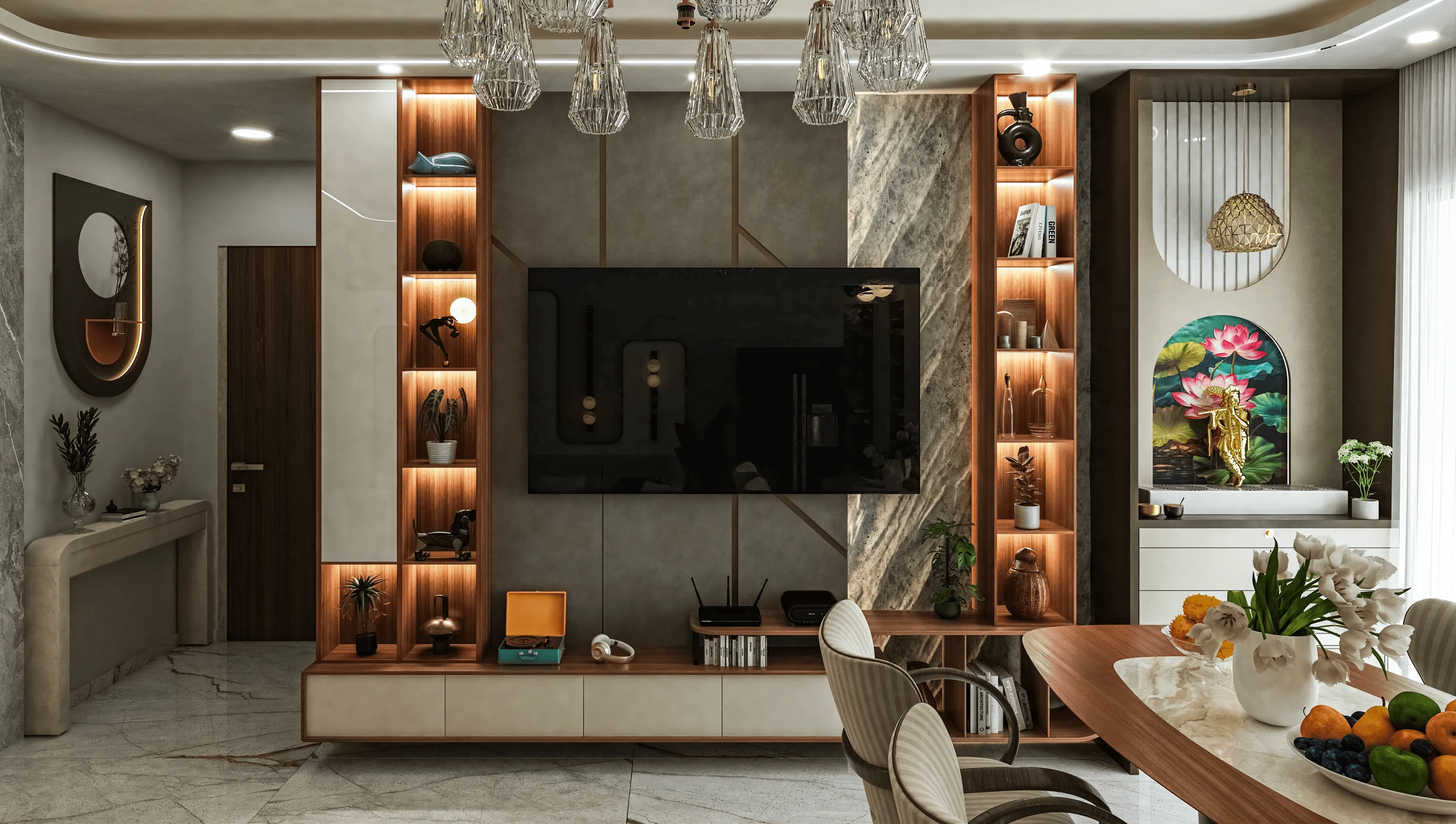
A dedicated pooja room is rarely something a tenant has the luxury of, since most rental flats simply were not designed with one, and building a fixed temple corner is obviously off the table when you cannot alter walls. The remedy here has become almost standard practice for us across the many Salt Lake and Rajarhat rental clients we have furnished over the years, which is a freestanding wooden pooja unit, typically around 2 feet wide and 18 inches deep, positioned in the northeast corner of the living or dining space wherever that corner is least trafficked. These units are entirely self-contained, requiring no wall mounting, and can be angled so the deities face east or west as preferred, which gives a tenant full directional compliance for their most sacred object even inside someone else's fixed floor plan. We have also seen clients successfully use a simple corner shelf on a stand rather than a full cabinet when floor space in a smaller one bedroom rental near Salt Lake's Sector 1 was too tight for a full unit, proving the principle scales down as easily as it scales up.
When the Remedies Reach Their Limit
We want to be honest with every tenant who calls us rather than oversell what furniture alone can achieve, because there is a real difference between adjusting for a direction you would prefer and correcting a layout that genuinely works against daylight, ventilation, or safe movement through the home, and no amount of object placement changes a structurally awkward floor plan into a well-functioning one. If you are weighing how far directional preference should go against the practical realities of how a building was actually constructed, our piece on when Vastu and good architecture disagree walks through exactly the kind of judgment calls our studio makes on that trade-off, and it applies just as much to a tenant deciding where to draw the line as it does to a homeowner planning new construction. And if your rented flat's real complaint is less about direction and more about a false ceiling installed by a previous tenant that now looks dated or damaged, something landlords will often let you replace if you cover the cost, our comparison of gypsum, POP, and PVC false ceiling materials is worth reading before you commit to a fix.
Let Us Help You Make a Rented Flat Feel Like Home, On Your Terms
If you are renting in Salt Lake, New Town, Rajarhat, or anywhere else across greater Kolkata and want a proper walkthrough of what your specific floor plan allows, down to exact furniture dimensions and where a portable partition or pooja unit should sit, our team would genuinely enjoy the challenge of working within your lease rather than around it. We have spent over a decade solving exactly this kind of constrained brief for clients across the city, and we would rather spend an hour with you figuring out what is achievable than let you sit anxious in a flat you cannot yet call fully your own. Reach out through our contact page and tell us your floor plan and your lease restrictions, and we will tell you honestly what can be fixed with furniture alone.