







Marine Ply or MDF for Kitchen Cabinet Carcasses in Humid Kolkata Homes
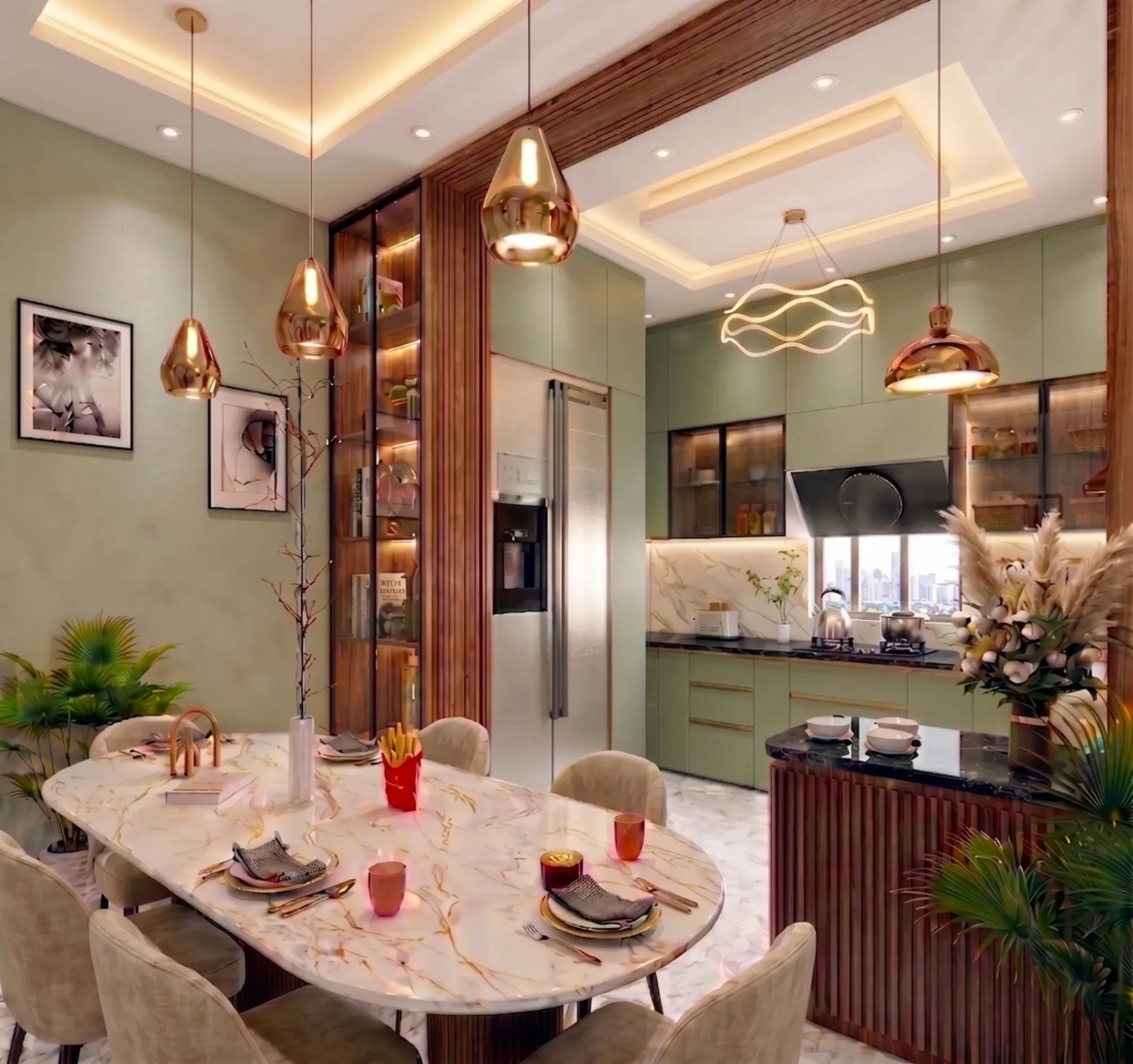
When a client building a modular kitchen in Kolkata asks us whether to spec marine ply or MDF for the cabinet carcass, the question that actually decides the answer is not brand loyalty or what a showroom in Salt Lake happens to stock that week, it's how close that particular cabinet run sits to the sink wall and the hob, because the daily dose of steam, splashback and standing humidity a carcass absorbs over ten years in a Kolkata kitchen is a completely different load than what the same board would see in a drier city, and after specifying cabinet material across well over a hundred residential projects in New Town, Salt Lake and Rajarhat since 2014, we've settled on a fairly narrow, cost-conscious rule rather than a blanket recommendation.
Why humidity treats a kitchen carcass differently near the sink wall
Kolkata sits at a relative humidity that rarely drops below 60 percent even in the drier winter months and regularly holds above 80 percent through the monsoon, and inside a working kitchen that ambient load gets multiplied by steam from daily cooking, splashback from the sink and, in many of the compact kitchens we design across New Town's high rise stock, limited cross ventilation because the kitchen window opens onto a service shaft rather than open air. A cabinet carcass on the far wall of that kitchen, away from the sink and hob, might go its entire service life seeing only ambient humidity, while the base unit directly under the sink, and the wall unit above the hob, take direct moisture exposure on a near daily basis, and this is exactly why we treat carcass material as a zone by zone decision within a single kitchen rather than a single material choice for the whole run.
Where MDF genuinely works, and where it swells
MDF, or medium density fibreboard, is manufactured by breaking wood down into fine fibres and bonding them under heat and pressure into a dense, uniformly flat panel, and that uniform density is precisely why it takes paint, laminate and edge banding so cleanly, giving MDF cabinet doors and shutters a smoother, more furniture-grade finish than plywood typically achieves, which is why we still specify MDF constantly for cabinet shutters, especially on high gloss or matte lacquered fronts where any surface texture would show. The problem is what happens when that same fine fibre structure takes on water, because unlike a layered board, MDF absorbs moisture through its edges and swells along its thickness in a way that doesn't reverse when it dries, so a carcass panel with an exposed or poorly sealed edge sitting under a sink, catching drips from a tap or a dishwasher connection, will show visible swelling and a spongy edge within two to three years, and once that swelling starts it's essentially permanent damage rather than something that shrinks back on a dry day.
Where marine ply, specifically BWR grade, earns its higher price
Plywood is built from thin layers of wood veneer glued together with the grain direction alternating at roughly ninety degrees between layers, a cross lamination that is precisely what gives plywood its resistance to warping and splitting along the grain that troubles solid timber (Wikipedia), and marine grade plywood pushes that construction further by using a boiling water resistant, or BWR, phenolic bonding resin between the veneers along with fewer internal voids, so the board can tolerate direct and repeated water contact without the layers separating. BWR marine ply carcasses under a sink or beside a hob in the kitchens we've fitted across Rajarhat and New Town routinely go a full decade with no visible swelling even where a minor plumbing leak has gone unnoticed for weeks, because water travels along the board's face rather than wicking into an exposed fibre edge the way it does with MDF. The tradeoff is cost, since a full 19mm BWR marine ply sheet typically runs thirty five to fifty percent more than an equivalent commercial or MR grade board, and machining marine ply for a clean paint finish takes more filler and sanding time than MDF does, which is part of why so many modular kitchen vendors default to MDF across the whole carcass to protect their margin rather than because it's the right call near a sink.
| Marine Ply (BWR) Carcass | MDF Carcass |
|---|---|
| Resists swelling on wet edges for 8-10+ years | Swells permanently within 2-3 years if edges exposed to moisture |
| Costs 35-50% more per sheet | Lower material cost per sheet |
| Layered structure holds screws and hinges more securely over time | Uniform density gives a smoother paint and laminate finish |
| Better suited to sink, hob and utility wall carcasses | Better suited to dry-zone carcasses and cabinet shutters |
The rule we actually apply on site
Rather than specifying one board for an entire kitchen, our standard approach within a residential interior design brief for a New Town or Salt Lake modular kitchen is to use 19mm BWR marine ply for every carcass within about two feet of the sink, the dishwasher connection and the hob, since that's the zone where a slow leak or daily splashback does the real damage over years, and to use MDF or a commercial ply for the dry-zone carcasses along the far wall or the tall pantry unit, where the cost saving is real and the moisture risk genuinely isn't there. On a typical 10 by 8 foot Kolkata kitchen with a straight or L-shaped layout, that split usually keeps the marine ply premium to roughly a fifth of the total carcass area, which holds the overall material cost increase to a manageable single digit percentage of the kitchen budget while covering the two or three cabinet runs that would actually cause a problem if we cut the wrong corner.
Signs an existing cabinet carcass has already started to swell
If your kitchen is a few years old and you're trying to work out whether the carcass under the sink needs attention before it gets worse, the earliest sign is almost always a shutter or drawer front that no longer closes flush the way it did when new, because the swelling carcass pushes the hinge plate out of alignment before any visible bulging shows on the board face itself, and by the time you can actually see the board edge lifting or feel a soft, spongy give under light pressure, the damage has usually been progressing for a year or more. We'd also point out that this is a narrower version of a problem that shows up across a Kolkata home in several places at once, and if the same humidity is showing up as swollen cabinet doors and also as musty curtains or dust buildup in the living room, our piece on curtain fabrics that hold up to Kolkata's humidity and dust in a living room is worth reading alongside this one, since both problems trace back to the same ambient moisture load the city carries for most of the year.
- Check shutters and drawers under the sink for misalignment first, before looking for visible swelling
- Run a finger along exposed carcass edges near the hob and sink for a soft or spongy feel
- Ask your fabricator to specify BWR marine ply by name for sink-zone carcasses, not just "waterproof ply"
- Confirm plumbing connections under the sink are leak-free before finishing carcass installation
- Budget the marine ply premium only for the wet-zone runs, not the entire kitchen
If the humidity problem in your home extends beyond the kitchen to white salt-like patches forming on an exterior wall, that's a related but distinct issue caused by moisture moving through masonry rather than through cabinetry, and our guide on how to remove efflorescence from an exterior wall in Kolkata's humidity covers that separately. And if you're planning the kitchen layout itself before you get to material specification, our piece on kitchen island layouts for Kolkata flats is a useful starting point, since carcass material decisions are easier to make once the layout and the wet zones within it are already fixed. Windows facing the same humidity load matter too, and our comparison of UPVC and aluminium windows for a monsoon-facing room in Kolkata covers the other major material call homeowners in this climate end up making.
Planning a kitchen that won't need a carcass replacement in three years
If you're specifying a modular kitchen right now and want the wet-zone and dry-zone material split worked out properly for your actual layout rather than a one-size answer from a showroom quote, talk to our residential design team and we'll walk the kitchen with you before the carcass order goes in.