








Hiring an Architect for a Kolkata Heritage Home Restoration
Hiring an Architect for a Kolkata Heritage Home Restoration
Walk down Alipore Park Road on any given morning and you will still see them, the old houses with lime-plastered facades gone the colour of weak tea, teak staircases that creak in a way no new staircase ever will, and Mangalore-tile roofs that have taken a hundred monsoons and are quietly asking for a hundred more. The honest problem with most of these houses is not that they are falling apart, it is that the average contractor who gets called in to "renovate" one has no idea what he is looking at, and by the time the family realises the lime mortar has been hacked out and replaced with cement that will trap moisture in the brick for the next twenty years, the damage is already structural and irreversible. That is really the whole argument for why you hire a proper architect for a heritage restoration in Kolkata rather than the mistri who did your neighbour's bathroom, and it is the argument we want to walk through honestly, because at Studio Contour we have been doing residential work across Kolkata, New Town and Salt Lake since 2014 and we have seen both the good version of this project and the version that goes very wrong.
Why Heritage Restoration Is Not the Same Job as Renovation
The instinct most families have, understandably, is to treat an old house the same way they would treat a fifteen year old flat that needs new tiles and a paint job, so they get quotes for renovation and pick whoever is cheapest, and this is where things start to go sideways. A genuine heritage restoration involves lime plaster that needs to breathe rather than be sealed under acrylic paint, timber trusses that need to be assessed for termite damage before anyone decides whether to replace or reinforce them, and foundations on old-style brick footings that were never designed for the kind of loads a modern bathroom renovation or an added floor would put on them. We have written before about the difference between structural and cosmetic work in an older Kolkata property, and the short version is that you cannot know which one you are doing until someone with actual training opens up a wall and looks. This is also why our renovation and remodeling work always starts with a condition survey before we quote a single rupee, because guessing at the state of a hundred year old load-bearing wall is how restorations turn into demolitions nobody wanted.
The other piece people underestimate is that restoration is a design discipline in its own right, distinct from building something new. When we did our own deep dive on this for South Kolkata specifically, we found that the projects that went well were the ones where the heritage restoration in South Kolkata was treated as a conservation problem first and an interiors problem second, meaning the architect's job was to understand what made the house worth saving before touching a single fixture. That sequencing matters more than most families expect going in.
The Paperwork Nobody Tells You About Until You're Stuck
Here is the part that genuinely surprises people, right, the technical restoration is actually the easier half of this project, and the harder half is the sanctioning process, because a heritage or heritage-adjacent structure inside Kolkata Municipal Corporation limits does not move through the same approval track as a fresh plot. You are dealing with building rules that were never written with hundred year old brick and lime structures in mind, floor area ratio calculations that get complicated when the existing footprint predates current floor area ratio norms, and in some pockets an actual heritage grading that restricts what facade elements can even be altered. We have laid out how the KMC sanction process actually works in our guide to KMC building sanction in Kolkata, and separately how FAR and ground coverage rules apply across the city in our KMC building rules and FAR guide, and the honest takeaway from both is that a firm that has actually filed these applications before will save you months compared to one that is learning the process on your file.
This is also where we tell clients plainly that a Council of Architecture registered professional signing your drawings is not a formality, it is what actually gets your file taken seriously at the municipal desk, and it is one of the more overlooked reasons families end up with rejected or endlessly delayed applications when they try to shortcut the process through a contractor's in-house draftsman.
Freelancer, Contractor, or a Studio: The Honest Comparison
We get asked constantly whether a freelance architect or a good local contractor could do this job for less, and the honest answer is that both can, on a good day, with a lot of luck. A freelancer is often cheaper upfront and can be genuinely skilled, but on a restoration specifically you are relying on one person's judgement for structural assessment, material sourcing for period-appropriate finishes, and liaison with KMC, and if that person is juggling four other projects your restoration is the one that slips. A contractor-led approach skips the design and conservation thinking almost entirely and treats the house as a construction problem, which is exactly the mindset that leads to lime plaster getting torn out and replaced with cement in the name of speed.
| Freelance Architect | Studio Contour |
|---|---|
| Lower fee, single point of contact, but capacity and specialist backup vary project to project | Full design, structural and conservation team plus in-house 3D visualization and sanction liaison |
| Structural assessment often outsourced or skipped under time pressure | Condition survey and structural review built into the process before design starts |
| Sanction filing experience varies widely by individual | 330+ buildings' worth of NKDA, Bidhannagar and KMC filing experience across the studio |
| No backup if the individual is unavailable mid-project | Studio continuity even if a specific team member rotates off |
A general contractor without architectural oversight can move fast, but a general contractor is optimising for construction sequencing, not for whether the restored facade actually reads as period-correct or whether the structural fix will hold for another fifty years. The catch here is that heritage restoration sits exactly at the intersection of design judgement, structural engineering and regulatory navigation, and very few individuals or contractor outfits genuinely cover all three well. A studio that has built that range in-house, across residential architecture and structural coordination together, is simply better positioned for this specific kind of project than either extreme, and that is not a sales line, it is just where the risk actually sits on a house this old.
What We Actually Do When We Take On a Heritage Project
Our process on a restoration is deliberately slower at the start than it is on a new build, because the cost of rushing the assessment phase is far higher when you are dealing with existing structure rather than a blank plot.
- 01Condition survey and structural assessment of existing walls, roof and foundation
- 02Heritage and NKDA/KMC sanction review to confirm what can legally change
- 03Design development balancing conservation with livability, done in 3D so the family can see it before we touch a wall
- 04Phased execution with material sourcing for lime, timber and period fittings, then handover
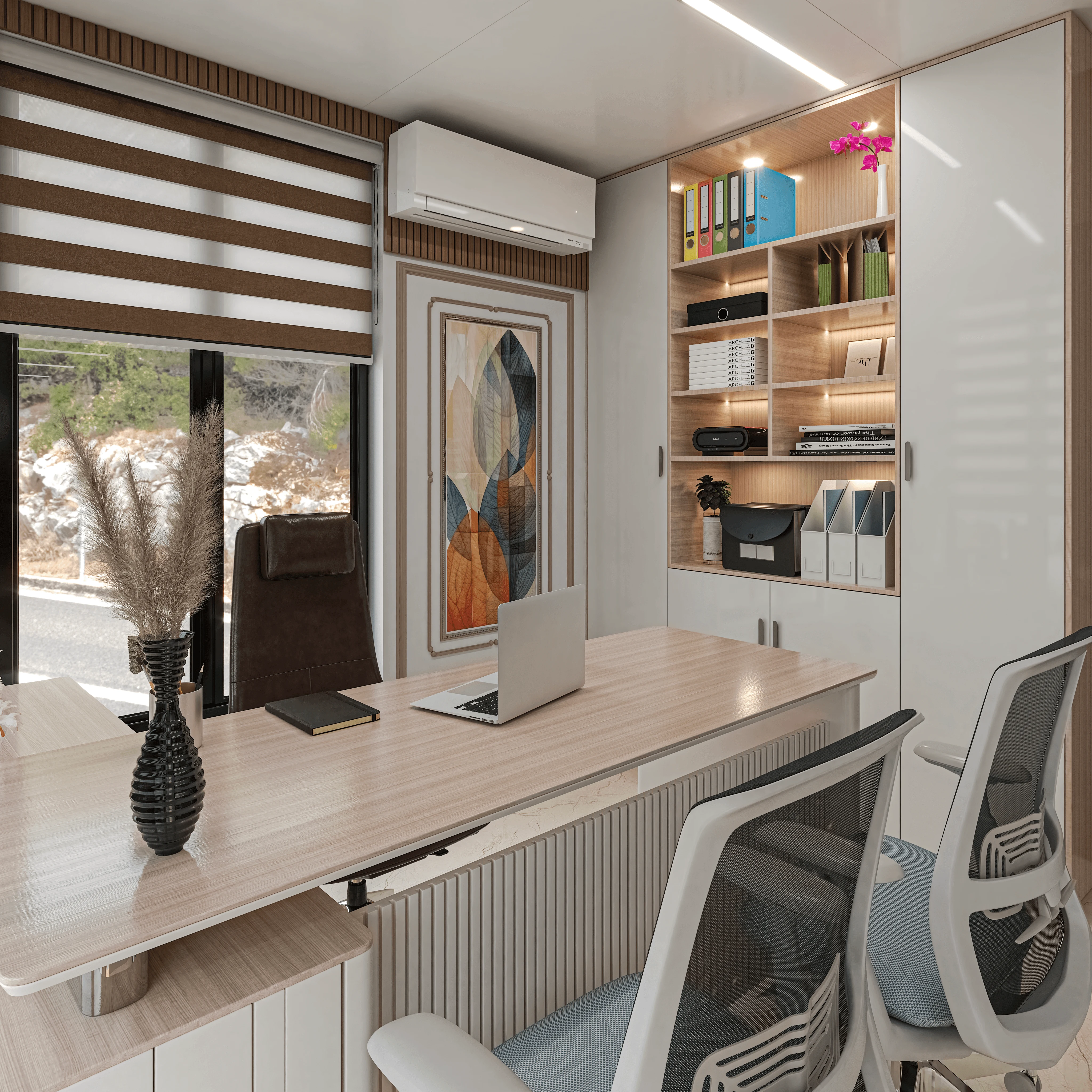
That third stage, the design development, is where our 3D visualization and rendering work earns its keep on a restoration specifically, because families making decisions about a house that has been in the family for generations deserve to see exactly what a proposed change looks like before it happens to something irreplaceable. We have used this on projects like our work on a Chinar Park bungalow in Kolkata, where balancing an older bungalow character against a family's present-day needs meant showing them the trade-offs visually rather than describing them on paper. It is a small thing, showing rather than describing, but on a restoration it changes how confidently a family signs off on the plan.
Our Track Record Across Kolkata, New Town and Salt Lake
We were founded in 2014, and in the years since we have delivered more than 330 buildings across Kolkata, New Town and Salt Lake, which is not a number we bring up to impress anyone, it is the reason we can tell a client with a straight face what a lime plaster repair should cost versus what a full timber roof reconstruction should cost, because we have actually priced and executed both more than once.
Areas like Alipore carry a particular density of these older homes, and if you are researching options in that specific pocket of the city our Alipore area page has more on how we approach projects there specifically. More broadly, our full portfolio is worth a look if you want to see the range of residential work we have actually built rather than just rendered, and our completed projects page has the full spread across bungalows, duplexes and apartment buildings. We would also point you to our own honest breakdown of why families keep choosing Studio Contour over a scattered mix of vendors, because the reasoning there applies directly to a restoration where continuity between design and execution matters more than on almost any other project type.
None of this means every heritage house needs the same treatment. A house with sound structure and dated interiors is a very different brief from one with active roof failure, and we say that plainly during the first site visit rather than upselling a full reconstruction where a targeted repair would do.
What This Actually Costs and How Long It Takes
Restoration budgets are genuinely harder to pin down upfront than new construction, because a chunk of the cost depends on what the walls reveal once opened, and any architect who gives you a fixed number before a condition survey is guessing. What we can say honestly, based on the range of restoration and renovation work we have actually delivered, is that costs run meaningfully higher per square foot than a comparable new build, largely because lime work, timber restoration and period-matched fittings are slower and more specialised than standard construction, and timelines for a full restoration typically stretch beyond our usual 8-12 week turnaround for interior projects once structural work and sanction approvals are factored in.
- Confirm heritage grading status before design begins
- Get a written structural and condition survey, not a verbal estimate
- Verify the architect is registered and can produce their Council of Architecture number
- Ask specifically how lime plaster and timber repair are priced versus cement substitution
- Request a phased execution plan so livable areas aren't all torn open at once
A well-run due diligence process at the start, checking title, heritage status and structural condition before committing to a design direction, is what keeps a restoration budget honest, and it is the same discipline we bring to heritage conservation minded work generally, treating the existing structure as an asset to be understood rather than an obstacle to be cleared.
At the end of the day, restoring a heritage home in Kolkata is a project where the cost of getting it wrong is not a redo, it is losing something that cannot be rebuilt the same way twice, and that is exactly the kind of risk we think is worth putting in front of a studio with an actual track record rather than the lowest quote in your inbox. If you have an old house in Kolkata, New Town or Salt Lake that deserves to be looked at properly, get in touch with us and we will walk the site with you before anyone commits to anything.