








How to Pest-Proof a Kolkata Kitchen Against Cockroaches Coming Through Design Gaps
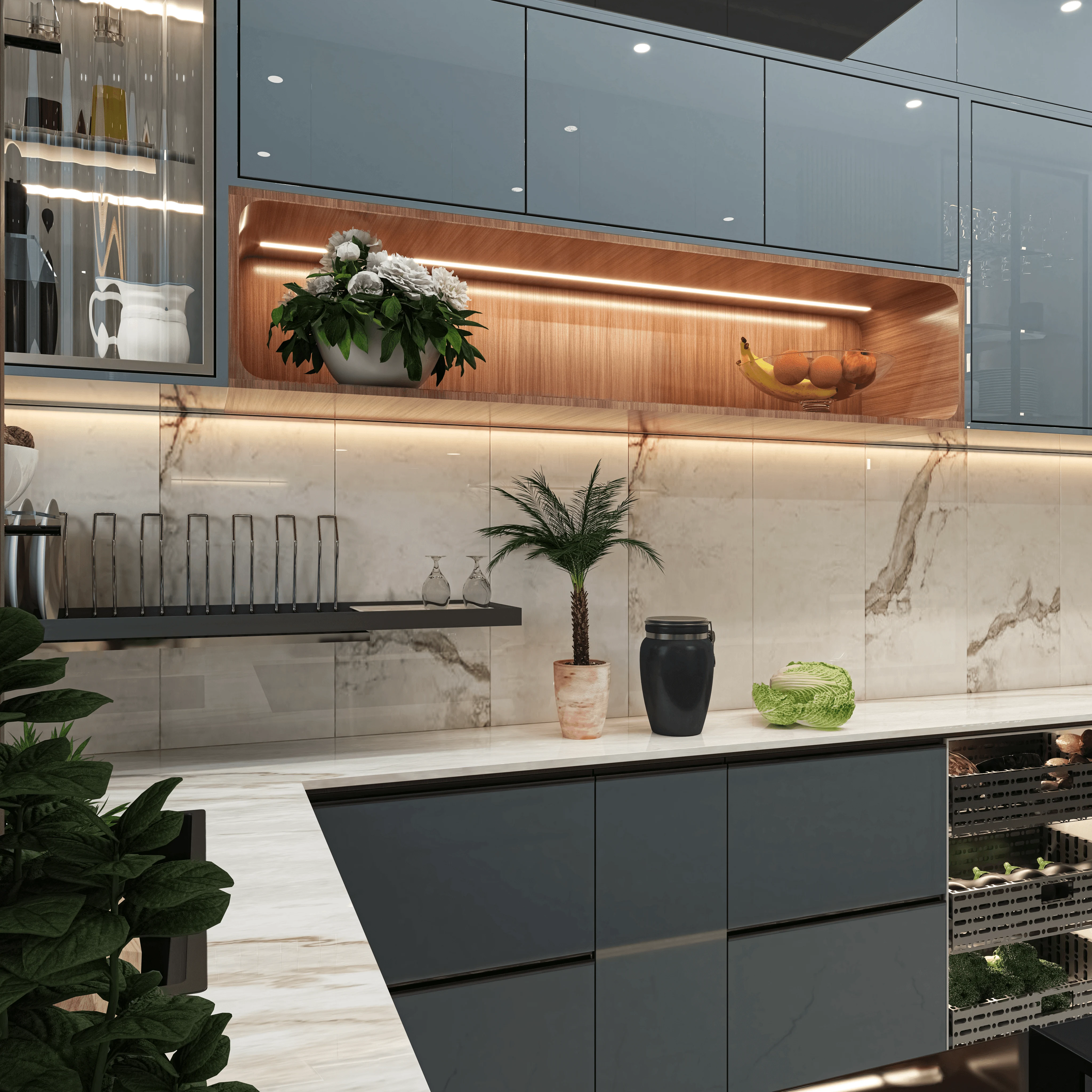
If cockroaches keep appearing in your kitchen within days of a pest control spray, marching back out from behind the same cabinet or from underneath the same counter no matter how many times an exterminator has been through, the actual problem almost certainly is not that the pest control treatment failed, it is that the kitchen itself has physical gaps built into it that keep giving pests a way back in, and no amount of repeat spraying fixes a design flaw. We run into this complaint often enough on renovation briefs across New Town, Salt Lake, and older resale flats in Action Area I that we now treat pest ingress as a design and detailing problem first, something to be solved with sealed cabinet construction, correctly trapped drains, and tight plumbing chases, and only as a last resort as a recurring pest control subscription, and this piece walks through exactly which gaps we look for and how we close them permanently.
Why Pest Control Alone Never Actually Solves This
A pest control spray kills or repels the roaches present in the kitchen at the moment of treatment, but it does nothing about the physical route they used to get in, so if that route, whether it is a gap under a base cabinet toe-kick, an unsealed plumbing chase behind a sink, or a floor drain with no water seal, is still open, a fresh population moves in from the building's shared risers, drain lines, or neighbouring flats within weeks, and the homeowner ends up paying for quarterly pest control indefinitely rather than for a fix that actually holds. We have had clients tell us they have had the same pest control company out six or seven times over two years for the identical complaint, and in nearly every one of those cases, once we opened up the cabinet run, the entry point was obvious and had gone completely uncorrected the whole time.
The Design Gaps That Actually Let Cockroaches In
Cockroaches need remarkably little space to enter a kitchen, and a gap as narrow as 3 to 4 millimetres, roughly the thickness of a coin, is enough for a German cockroach, the species most common in Kolkata kitchens, to squeeze through, which is why the usual visual inspection for an obvious hole misses most of the real entry points.
- Open gap at the base cabinet toe-kick where it meets the floor, especially on unsealed or damaged plinths
- Unsealed plumbing chase behind the sink cabinet where the drain pipe and water supply lines pass through the counter
- Hollow cavity inside laminate shutters and hinge mounting points where edge banding has lifted
- Gap between the countertop and backsplash tile where silicone sealant has shrunk or was never applied
- Floor or nahani trap drains with a shallow or dry water seal that no longer blocks the connection to the building drain line
- Unsealed gap behind and beneath built-in appliances like the fridge housing, dishwasher unit, or chimney duct opening
The plumbing chase behind the sink deserves particular attention because it is the single most common entry point we find in Kolkata kitchens, since the gap cut into the counter and cabinet back for the drain pipe and supply lines is almost always oversized relative to the pipe itself, leaving a ring of open space that connects the cabinet interior directly to the wall cavity and, from there, often to a shared drainage riser that the whole building's pest population treats as a highway.
Sealing and Cabinet Detailing Fixes That Actually Hold
The fix starts at the carcass material and construction method, not with caulk applied after the kitchen is already built. We specify a fully closed-back cabinet construction for every base unit, meaning the rear panel of the cabinet is a solid sheet fixed flush to the wall rather than left open or gapped, because an open-backed cabinet, which some budget modular vendors still use to save a sheet of ply per unit, effectively turns the entire cabinet run into one continuous pest corridor behind the counter.
| Feature | Open-Back Cabinet Construction | Sealed-Back Cabinet Construction |
|---|---|---|
| Rear panel | Absent or partially open behind wall | Solid ply or PVC panel fixed flush to wall |
| Plumbing chase | Loosely cut, gaps left around pipes | Cut to pipe diameter, sealed with silicone collar |
| Pest access | Continuous corridor across full run | Isolated to a single sealed penetration |
| Typical cost premium | None (budget default) | ₹15 to ₹25 per sq ft of cabinet carcass |
Beyond the carcass, we insist on a few details that most Kolkata modular kitchen quotations leave out unless specifically asked for. Every pipe or cable penetration through a cabinet back or counter gets a silicone sealant collar fitted tightly around the actual pipe diameter rather than a generously oversized hole, the toe-kick plinth at the base of every cabinet run is closed off with a PVC or aluminium kick panel rather than left open to the floor, and the junction between the countertop and the backsplash tile is finished with a continuous, properly applied silicone bead rather than the thin grout line some tilers default to, since that grout line shrinks and cracks within a year and becomes its own entry gap.

What It Actually Costs to Fix This at the Design Stage vs Later
Building these details into a kitchen from the start adds a modest premium over a budget modular quotation, typically ₹15 to ₹25 per square foot of cabinet carcass for the sealed-back construction plus roughly ₹3,000 to ₹6,000 for proper silicone sealing and kick panel detailing across a standard L-shaped or parallel kitchen layout, which for a typical 80 to 110 square foot Kolkata kitchen adds somewhere between ₹9,000 and ₹18,000 to the total quotation. Retrofitting the same fixes into an already installed kitchen costs meaningfully more, generally ₹25,000 to ₹45,000, because it usually means partially dismantling cabinet runs to access and reseal the plumbing chase and toe-kick areas properly rather than building them correctly the first time, which is the strongest argument we can make for getting this detailing right during the original design phase rather than after a pest complaint forces the issue.
When to Call Pest Control and When to Call a Designer
Pest control still has a role, particularly for an active infestation that needs to be knocked down before any construction work begins, but we tell clients plainly that spraying should be the first step in a two-step process, not the entire solution. Once the active population is cleared, the cabinet backs, plumbing chase, and floor trap need to be inspected and sealed properly, or the same complaint returns within a season. This same logic, that a recurring physical complaint in a space is usually a design detailing failure rather than something to keep treating symptomatically, comes up in other parts of our practice too, including commercial acoustics, where we have written about why open-plan offices in Kolkata get loud and how the fix is almost always in the ceiling and wall detailing rather than in complaints management. If your kitchen sits along an exterior wall that has also shown white salt patches or dampness, it is worth reading our guide to removing efflorescence from an exterior wall in Kolkata's humidity as well, since a damp exterior wall behind a kitchen run often compounds the pest problem by keeping the cavity behind the cabinets consistently humid. And if your kitchen sits in a narrow-plot layout that already struggles with airflow, our piece on fixing no cross-ventilation in a narrow-plot row house in Rajarhat covers a related structural issue, since poor ventilation keeps kitchen humidity elevated in exactly the way that makes pest problems worse. For homes where the kitchen opens onto a balcony, the same sealing discipline extends outward, and it is worth checking our comparison of toughened glass against laminated glass for a balcony railing if that balcony doubles as a drying or utility area next to the kitchen.
Fixing the Gaps for Good, Not Just for a Season
If you have already paid for pest control more than once for the same kitchen complaint, the fastest way to actually end it is to have someone open up the cabinet run, trace the plumbing chase, and check the floor trap rather than book another spray, and that inspection is something our team can walk through with you directly, so reach out through our contact page and tell us which cabinet or corner the roaches keep coming from and we will help you figure out exactly where the gap is.