






Wooden Headboard Designs: 18 Timeless Ideas
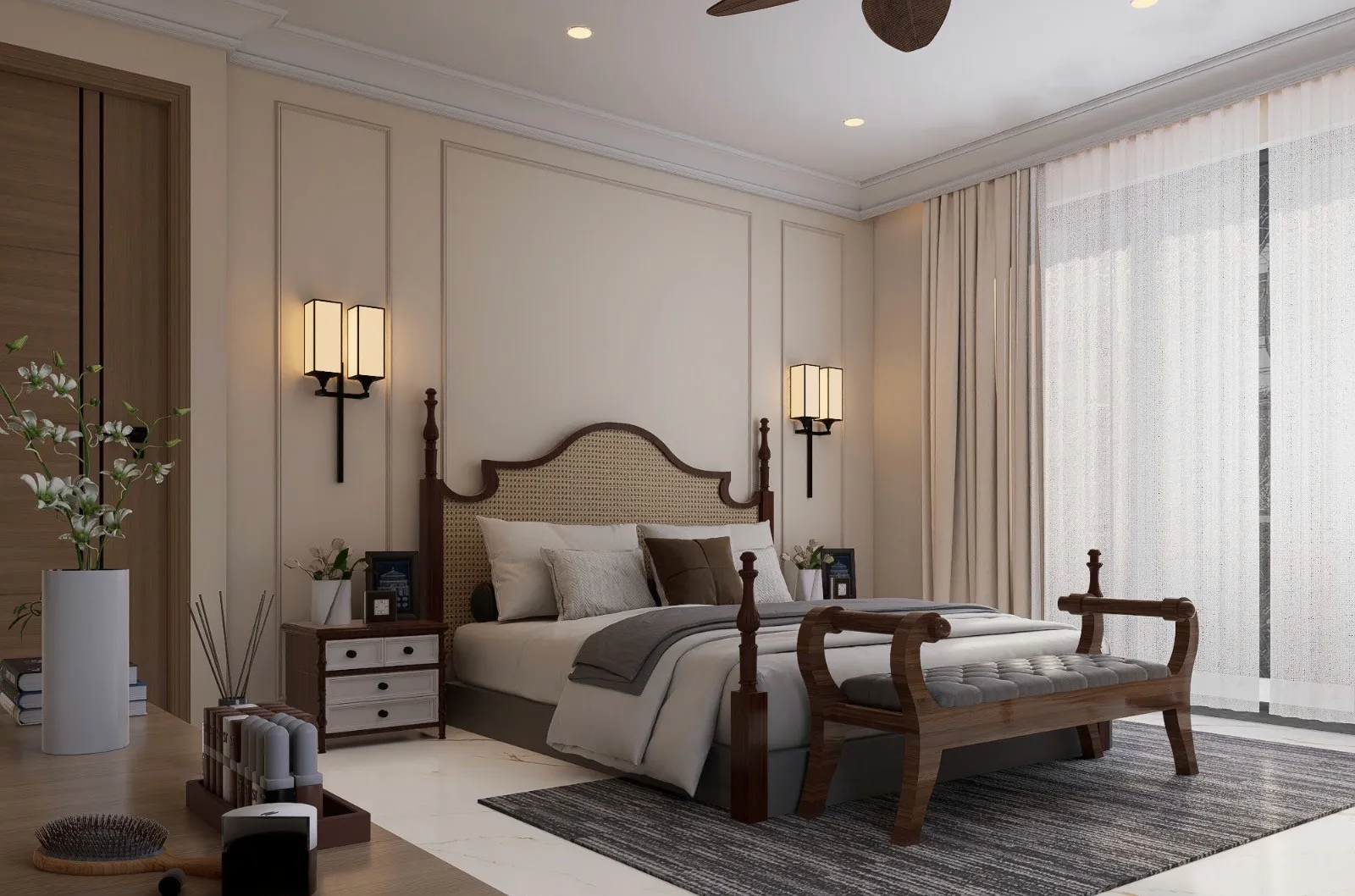
Ask any homeowner who has just finished a bedroom renovation what they would redo, and the headboard comes up more often than you would expect, right after the wardrobe layout and the false ceiling. It is the one surface in the room your eye lands on every single time you walk in, and it is also the piece most people treat as an afterthought, bolted on after the bed, the wardrobe, and the lighting plan are already locked in. We have built enough bedrooms across Kolkata and New Town to know that a wooden headboard done well does three jobs at once, it anchors the whole room's material palette, it solves acoustic and thermal comfort against an exterior wall, and it just makes the bed look considered rather than purchased off a showroom floor in a hurry.
This piece covers 18 wooden headboard ideas that we actually specify for clients, organized by material, style family, and budget, because a search like this hides a genuinely wide range of decisions. Solid teak reads completely differently from a veneered MDF panel, a slatted design behaves differently acoustically than a padded one, and what looks right in a South Kolkata heritage flat rarely works the same way in a New Town high-rise with floor-to-ceiling glazing. So we are going to walk through the real trade-offs, the finish options, the sizing and lighting details, and the price bands that separate a headboard that reads custom from one that reads catalogue.
At Studio Contour, we have been designing and executing interiors out of New Town since 2014, and across 330+ buildings delivered we have detailed a genuinely large number of bedroom headwalls between residential and hospitality work, so this is not theory, it is what we have seen hold up in real Kolkata humidity, real monsoon-adjacent moisture swings, and real client budgets.
Solid Wood, Veneer, or Engineered Base: Getting the Foundation Right
The first decision, before you even get to style, is what the headboard is actually built from, because this single choice drives cost, weight, wall-fixing method, and how the piece ages over the next decade. Solid wood, usually teak, sheesham, or mango wood in the Bengal market, gives you real grain depth and a piece that can be re-polished decades from now, and it is what we specify when a client wants the headboard to function as a genuine heirloom piece in a duplex or bungalow. The catch here is weight and cost, a solid teak panel at king size easily runs into a serious budget line, and it needs proper wall anchoring so it does not pull away from a partition wall over time.
Veneer over a plywood or MDF substrate is what we use for probably seven out of ten projects, because it gives you the exact same visual grain, in teak, walnut, or oak book-match patterns, at roughly a third of the material cost, with far less weight to hang. Engineered options, laminate over particleboard or plywood carcasses, sit at the budget end and work well for rental properties, guest bedrooms, or projects where the headboard will likely be swapped out within five to seven years anyway. None of these are wrong choices, they are just matched to different timelines and different budgets, and that is the conversation we have with every client before a single sketch gets drawn.
| Solid Wood | Veneer/Engineered |
|---|---|
| Genuine grain, re-polishable for decades | Grain-matched look, lighter and easier to hang |
| Heavier, needs stronger wall fixing | Not solid through, chips show substrate if damaged |
| Higher material cost per sq ft | Roughly a third the cost of solid timber |
| Best for heirloom bungalow and duplex projects | Best for apartments, rentals, faster turnarounds |
18 Design Directions, Grouped by Style Family
Rather than list 18 near-identical panels, it helps to think in families, because most of what people search for actually clusters into six or seven real style directions. First, the flat panel family, plain rectangular or arched teak or walnut veneer panels, sometimes with a routed border, which is the safest and most resaleable choice for an apartment in Salt Lake or New Town. Second, the slatted or fluted family, vertical wood battens spaced evenly across the headwall, which does double duty as a subtle acoustic diffuser and reads contemporary without trying too hard.
Third, the upholstered-wood hybrid, a wooden frame with a fabric or leather-wrapped centre panel, which is what most clients actually want once they see it in person because it softens the bedroom without losing the warmth of timber at the edges. Fourth, the floating or wall-hung shelf-headboard, where the wood panel doubles as a narrow ledge for a lamp and a book, genuinely useful in compact apartment bedrooms where a bedside table competes for floor space. Fifth, the storage headboard, with shallow drawers or open niches built into the base, which we push hard for smaller flats because it recovers volume that would otherwise sit dead behind the bed.
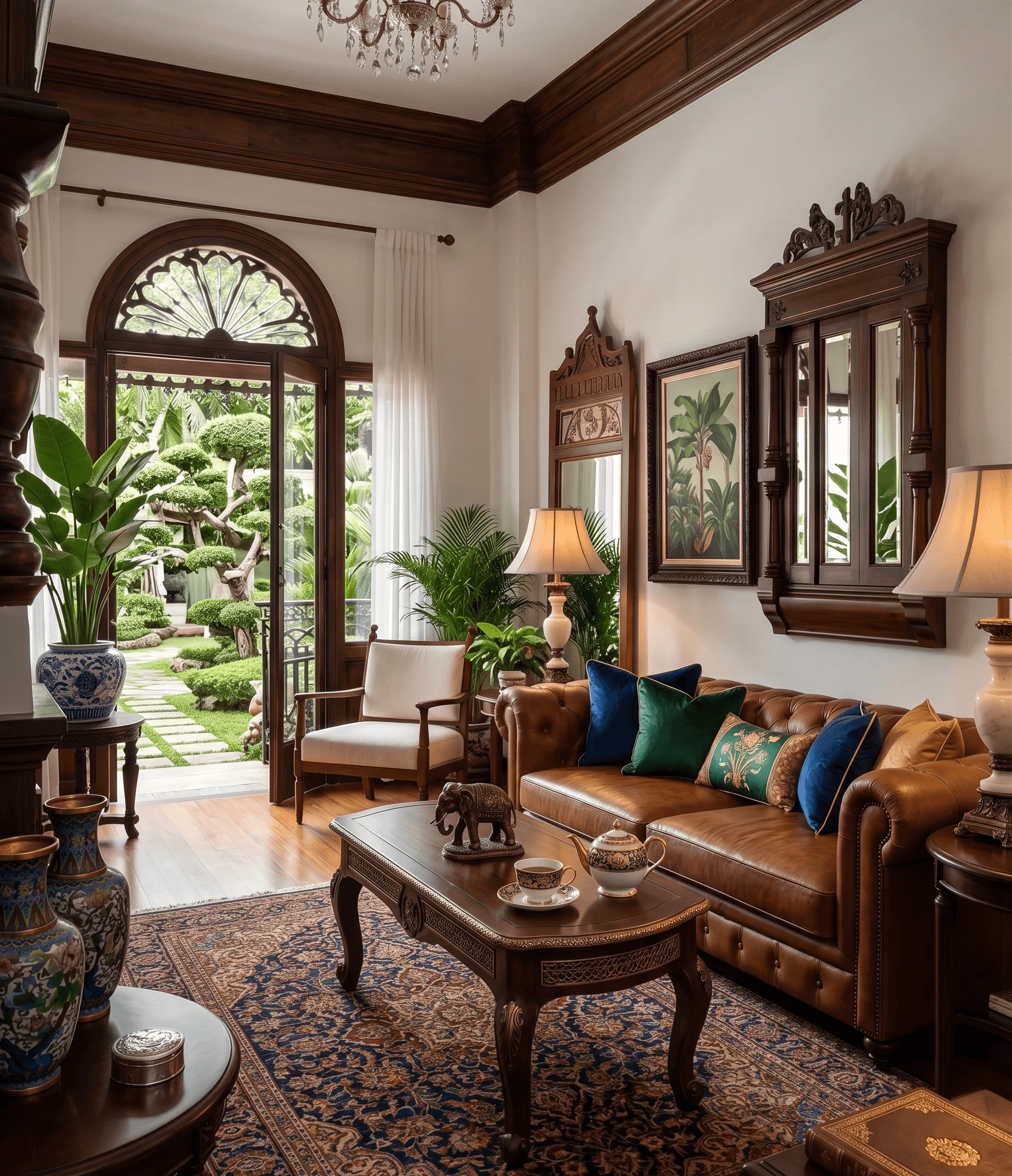
Sixth, carved or heritage-inspired panels drawing on Bengal woodworking traditions, low-relief botanical or geometric motifs in teak, which we still get requested for older-generation clients in South Kolkata and for bungalow projects where the rest of the house leans traditional. And seventh, the backlit panel, a routed or CNC-cut wood screen with warm LED strip lighting behind it, paired thoughtfully with false ceiling coves so the whole headwall glows rather than just the panel edge. Within these seven families sit variations in two-tone finishes, herringbone-laid slats, curved or arched top profiles, book-matched veneer symmetry, channel-detailed frames, live-edge slab tops, minimalist Scandinavian-style light oak, and full-wall wood panelling that wraps the headboard into the entire wall rather than treating it as an isolated object, which together comfortably cover the 18 ideas this kind of search is really asking about.
- Confirm the wall is load-bearing enough for the fixing method chosen
- Decide solid wood, veneer, or laminate before finalising the design drawing
- Set final bed size and mattress thickness before headboard height is fixed
- Plan reading light and switch/USB point locations into the headboard detail
- Match the headwall finish to the room's existing flooring and door tone
Lighting, Sizing, and the Details That Get Skipped
A headboard is rarely just a headboard, and this is where a lot of DIY and vendor-supplied designs fall short. Get the height wrong relative to the mattress and pillows, and even the most beautiful teak grain looks awkward, we generally detail headboards to sit 900mm to 1100mm above the finished floor for a standard king bed, adjusted up or down once the client confirms mattress thickness and pillow style. Backlighting needs a genuine plan too, not an afterthought LED strip stuck on with double-sided tape, we spec warm white in the 2700K to 3000K colour temperature range almost every time for a bedroom headwall, because anything cooler reads clinical against warm timber tones and undermines the whole point of a wood headboard in the first place.
Reading lights built into or flanking the headboard, whether recessed spots, wall-mounted swing arms, or integrated LED channels, are worth coordinating with your false ceiling and lighting design early, because retrofitting a switch point after the false ceiling is closed up is a genuinely avoidable headache. For clients following Vastu Shastra principles, and a meaningful share of our Kolkata and Bengal clients do, bed and headboard placement against the south or west wall is the typical recommendation, something we factor into the layout well before the headboard design itself gets finalised.
Budget Bands: What Different Approaches Actually Cost to Execute
Clients almost always ask for a number before they ask for a design, so it helps to talk bands rather than a single figure, since the same style family can swing wildly depending on material, size, and finish complexity. A simple veneered flat panel at queen or king size, with basic edge detailing and no backlighting, sits at the entry end of the range. Add slatted or fluted detailing, a fabric-wrapped centre insert, or integrated storage, and you move into the mid band, this is where most of our actual project specs land. Solid teak, carved heritage motifs, full backlighting with a dedicated driver and dimmer, or a full-wall panelled headwall push into the premium band, and that is usually where clients doing a full residential interior design package for a duplex or independent house end up if they want the bedroom to feel like a genuine centrepiece rather than one furnished corner among many.
| Style Band | What It Includes | Typical Fit |
|---|---|---|
| Entry | Flat veneer panel basic edge detail no lighting | Rental flats guest rooms |
| Mid | Slatted or upholstered hybrid with reading lights | Most apartment master bedrooms |
| Premium | Solid wood carved or backlit full headwall panelling | Duplex and bungalow centrepiece rooms |
How We Actually Get One Built, Start to Finish
Because a headboard rarely exists in isolation from the rest of the room, our process starts with the bedroom layout as a whole rather than the panel alone. We look at the wardrobe placement, the window and daylighting situation through daylighting considerations for the room, the flooring material, and yes, the Vastu orientation where relevant, before a single headboard sketch gets drawn, because a headboard designed in isolation almost always looks bolted-on rather than built-in. From there it moves through material selection, a 3D visual so the client can actually see the grain and lighting before committing, fabrication, and site installation, which for a full bedroom typically slots into our standard 8 to 12 week interior delivery window.
- 01Layout and Vastu check
- 02Material and finish selection
- 033D visual sign-off
- 04Fabrication and site fixing
- 05Final lighting calibration
If you have seen our serene master bedroom project or browsed our other bedroom work, you will notice we rarely repeat the same headwall twice, because the right design genuinely depends on the room's proportions, the client's existing furniture, and how much of the budget is going toward the headboard versus the rest of the space. Custom furniture design work like this pairs naturally with a broader look at your flat's interior if you are planning the bedroom as part of a larger renovation, and for clients weighing solid teak against engineered options, our thoughts on bamboo's structural and decorative use in Bengal homes and on AI-assisted furniture layout planning are worth a read alongside this one.
At the end of the day, a wooden headboard is a small enough piece that it is easy to underspec, and specific enough in its materials, lighting, and sizing that getting it wrong is genuinely visible every single night. If you are planning a bedroom renovation anywhere in Kolkata or West Bengal and want a headboard, and a room, that actually gets designed as one piece rather than assembled from separate vendor visits, get in touch with Studio Contour and we will walk you through what fits your space, your budget band, and your timeline.