






Finding a Sustainable, Green-Building-Minded Architect in Kolkata
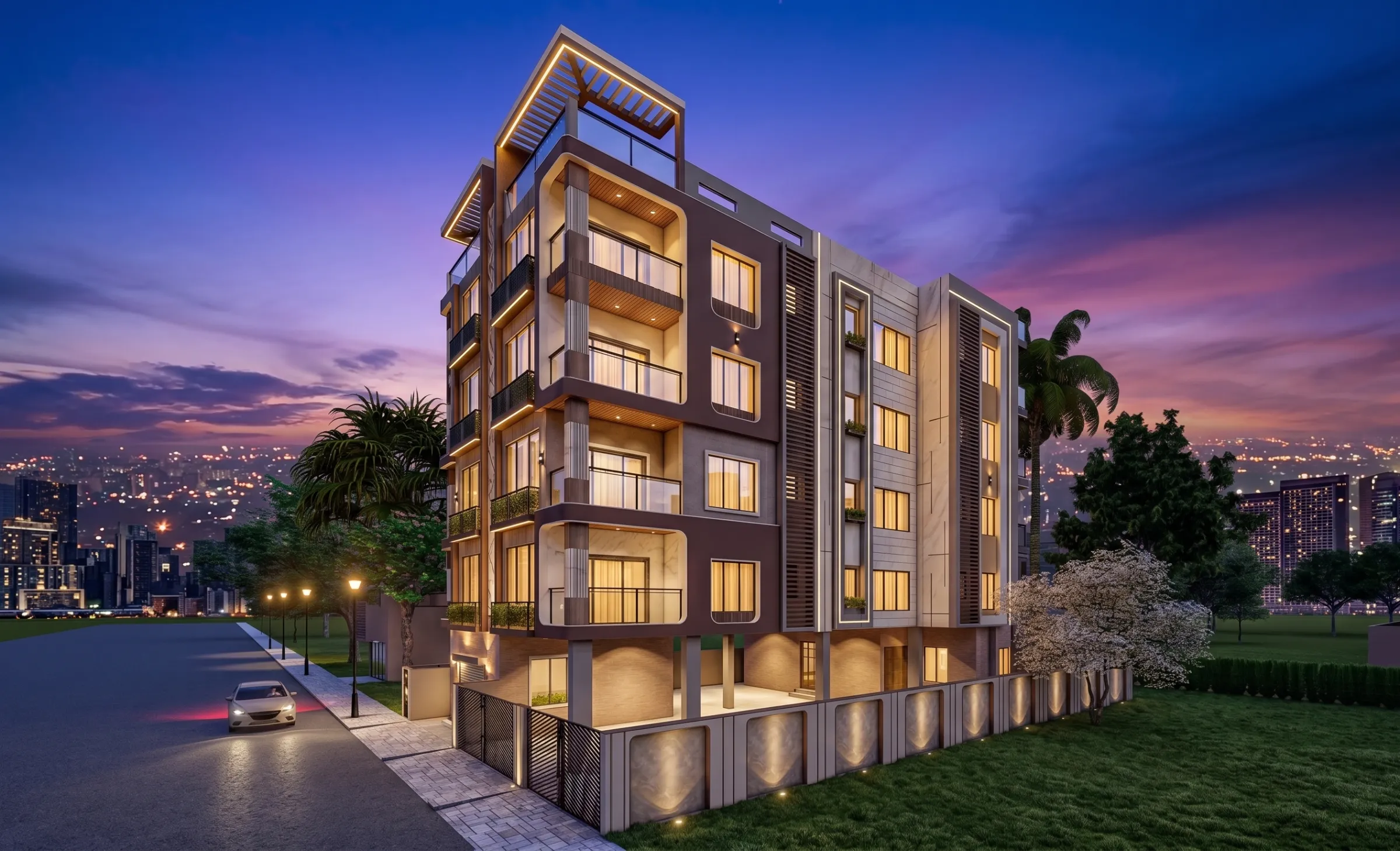
If you have already typed "sustainable green building architect Kolkata" into a search bar, you have probably noticed something frustrating, which is that most of what comes back is either a generic listicle written for no city in particular, or a big-ticket LEED-consultancy pitch that assumes you are building a 40-storey commercial tower and not a family home in New Town or a renovation in Salt Lake. That gap is exactly where we sit. We are Studio Contour, an architecture and interior design studio based in New Town, Kolkata, founded in 2014, and in that time we have delivered more than 330 buildings across Kolkata, New Town and Salt Lake, and a meaningful share of that work has involved decisions that are, plainly, about building smarter for this specific climate rather than chasing a certification plaque. So this piece is our honest case for why we are the right studio to call if sustainability is the actual filter you are running your search through, and not just a keyword you added because it felt responsible.
What "Sustainable" Actually Means Once You're Building in Kolkata's Climate
The word gets used loosely, so it is worth being specific about what it means when the site sits in a Gangetic delta city with six months of high humidity, a monsoon that tests every roof detail, and summer temperatures that make orientation and cross ventilation matter more than almost any single finishing choice. Sustainable architecture at its core is about reducing the long-term energy and resource burden of a building, and in a city like this that mostly comes down to passive strategies working before any active system switches on, things like window placement that catches the prevailing breeze, overhangs that cut direct summer sun without blocking daylight, material choices that do not trap heat in the structure, and rainwater and drainage planning that actually accounts for how hard it rains here between June and September. A green building rating certificate is nice on a brochure, but it is not the same as a house that stays six or seven degrees cooler than the street outside without the air conditioning running all day, and that second outcome is the one our clients actually feel every day they live in the building.
Fourteen Years and 330-Plus Buildings of Learning What Actually Works Here
At the end of the day, sustainable design knowledge in a city like Kolkata is not something you download from a manual, it is something you accumulate by watching how buildings actually perform after monsoon three, after monsoon five, after a decade of use, and we have had the advantage of doing exactly that since 2014. Across 330-plus completed buildings we have a running, unglamorous but valuable record of which roof waterproofing systems actually hold up on flat RCC roofs in this humidity, which local material suppliers deliver consistent quality, and which orientation and shading choices genuinely cut cooling loads on plots facing east toward the eco-corridor versus plots that back onto a busy Action Area road. That track record is also why our residential architecture work tends to start with orientation and massing studies before a single elevation gets drawn, because the building's relationship to sun and wind is decided at that stage or not at all.
Passive Design First, Gadgets Second
There is a real difference between a firm that treats sustainability as a checklist of purchased fixtures, solar panels, a rainwater tank, low-VOC paint, and one that treats it as a design discipline that starts with the site plan, and we deliberately sit in the second category because the numbers simply work out better that way. A solar panel array bolted onto a poorly oriented roof is still solving the wrong problem first, and clients who come to us wanting to "go solar" often end up, after we walk the site with them, prioritizing shading and cross ventilation changes that cost less and do more of the actual work.
| Gadget-first approach | Passive-design-first approach |
|---|---|
| Solar panels added after the roof design is fixed | Roof and window orientation planned around sun path before layout is finalized |
| Mechanical ventilation to compensate for sealed rooms | Cross ventilation designed into the floor plan from day one |
| Certification badge as the main selling point | Measured indoor temperature and utility bills as the proof |
| Higher upfront cost for marginal comfort gain | Lower long-term running cost from day one of occupancy |
None of this means we skip the mechanical and material layer, we do not, our renovation and remodeling work in particular often involves retrofitting older Salt Lake cooperative housing stock with better insulation and glazing where the original 1990s construction never accounted for today's summer temperatures. But the sequence matters, and getting the sequence right is the actual skill, not the individual products.
Reading NKDA, Bidhannagar and KMC Green Norms So You Don't Have To
Kolkata's building regulation landscape is not one uniform rulebook, New Town falls under NKDA, Salt Lake sits under Bidhannagar, and older Kolkata proper answers to the Kolkata Municipal Corporation, and each of these bodies has been steadily tightening requirements around rainwater harvesting, open space ratios, and setback-driven ventilation over the past several years. Knowing which clause applies to which plot, and knowing it before you draw rather than after a sanction gets rejected, is a big part of why hiring a studio with local sanction history saves time. We keep our own internal notes current on this, and we have written up the specifics in our guide to green and sustainability norms in New Town, which covers the floor area ratio and open space requirements that shape how much passive design headroom a given plot actually has, a topic also covered in more general terms by floor area ratio as a planning concept. For anyone starting from zero on how NKDA sanctioning works in general, our broader architect in New Town guide and our breakdown of FAR and ground coverage rules are both worth reading before your first meeting with any architect, us included, because a client who understands the constraints asks better questions and gets a better building.
You can confirm the current statutory position directly on the NKDA (official) site, though in our experience the published rules only tell you the floor, not the practical judgment calls that come up on an actual sanction application, which is where fourteen years of filing experience tends to matter more than the document itself.
A Project That Shows the Approach in Practice
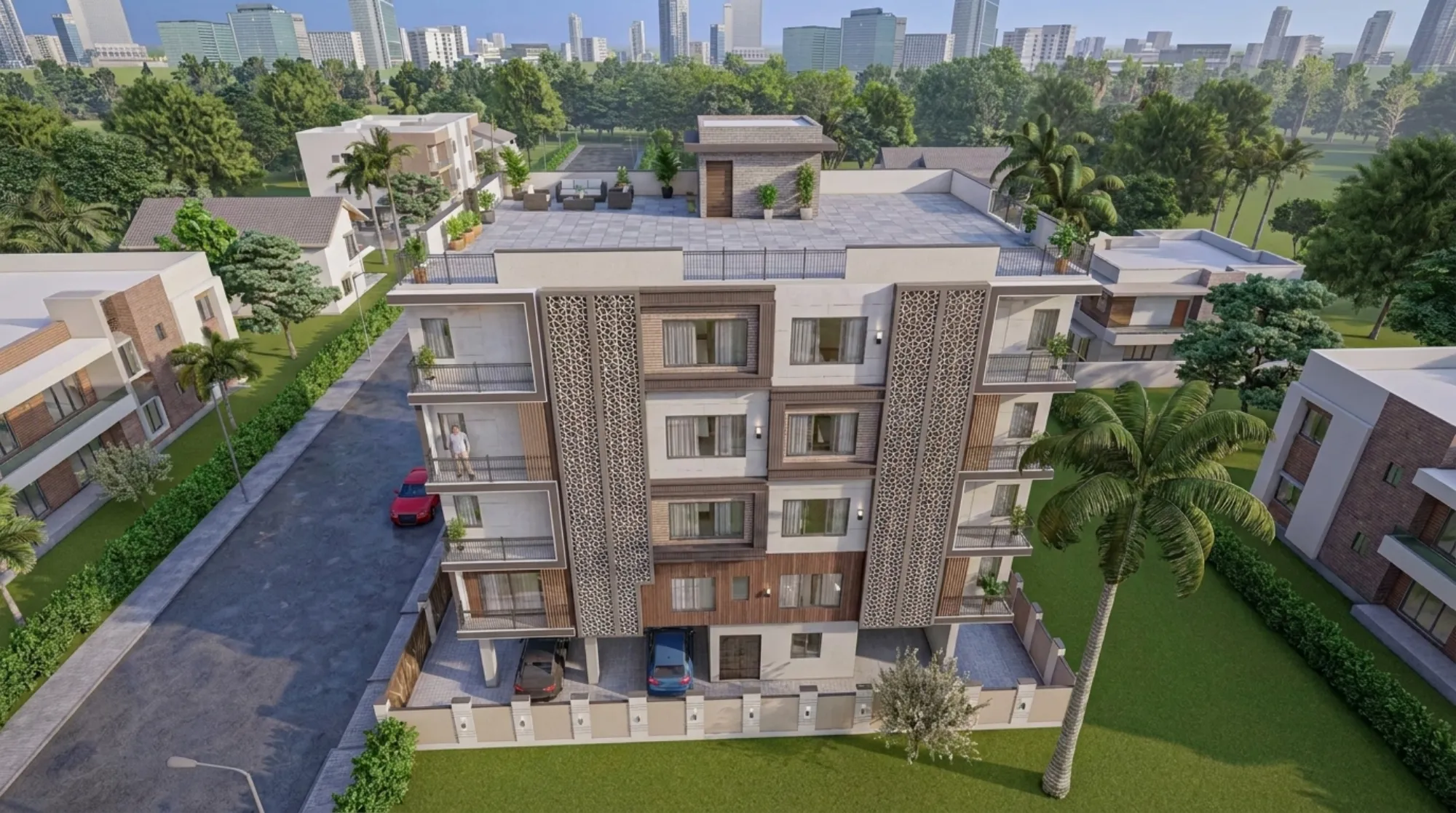
Our residence in Action Area II, New Town is a fair example of what "sustainable" looks like when it is baked into the massing rather than added at the end. The plot orientation pushed us to place the primary living spaces away from direct west sun, the overhangs on the upper floor were sized specifically to cut peak summer glare while still letting in enough daylight that the family rarely needs artificial lighting before evening, and the drainage plan accounts for New Town's monsoon runoff patterns rather than a generic city-wide standard. It is not a flashy green building in the certification-plaque sense, and honestly, that is the point, because the client living there does not think about it as a sustainable house, they just notice that it stays comfortable through most of the year without the air conditioning working overtime. You can see more of our completed work, including other Action Area and Salt Lake projects with similar passive-design thinking, on our full projects page.
What Hiring Us Actually Looks Like
We are not going to pretend the process is mysterious, because it is not, and being upfront about the sequence is part of why clients tend to trust the timeline we give them.
- 01Site visit and orientation study (week 1)
- 02Design development with passive strategies costed alongside finishes (weeks 2-4)
- 03NKDA/Bidhannagar/KMC sanction filing and approval
- 04Construction and site supervision through handover (typically 8-12 weeks for interiors, longer for full builds)
That 8-12 week figure is our typical turnaround for interior fit-outs once design is locked, and full architectural builds naturally run longer because sanction timelines are outside anyone's direct control. What we can control, and do, is making sure the passive design decisions are settled during design development and not renegotiated mid-construction, because that is when sustainable intent quietly gets value-engineered out of a project, and we have seen it happen on other firms' jobs enough times to build our whole process around preventing it on ours.
The Honest Checklist Before You Hire Anyone
Whether you end up hiring us or another studio, it is worth going into the first meeting with a short list of things that actually separate a sustainability-serious architect from one using the word as a marketing layer.
- Ask to see a completed project's actual orientation and shading strategy, not just renders
- Ask how they handle NKDA, Bidhannagar or KMC green and rainwater harvesting clauses for your specific zone
- Ask for a rough sense of passive design cost versus mechanical system cost in their typical projects
- Ask how many completed, occupied buildings they can point to, not just projects in design
- Ask what happens to the sustainability plan if the budget gets tight midway through construction
We have written more broadly about how to evaluate any studio in Kolkata against these kinds of questions, including in our piece on why Studio Contour is often the stronger choice and our closer look at what 330-plus completed buildings across New Town and Salt Lake actually taught us. And this is not only a New Town story, we take the same orientation-first, code-literate approach into older neighbourhoods too, our work around Bhowanipore in south Kolkata has meant adapting the same passive strategies to narrower plots and denser streets, which is its own useful test of whether a design principle actually holds up outside a planned township.
The Straightforward Case for Calling Us
The catch here is that sustainable design in Kolkata is not a single dramatic decision, it is a series of small, correctly sequenced ones about orientation, shading, ventilation, drainage and material choice, made by someone who has watched enough buildings age through enough monsoons to know which choices hold up, and made by a team that also knows the sanctioning path through NKDA or Bidhannagar or KMC well enough that the design does not get diluted somewhere in the approval process. We have done that 330-plus times since 2014, we do it inside an 8-12 week interior turnaround where feasible, and we would rather show you a real orientation study on a real completed building than a certification badge on a slide, right, because that is basically the difference between marketing and a house that actually stays cool in May. If that is the kind of studio you were hoping to find when you searched for a sustainable green building architect in Kolkata, get in touch with us and let's walk your site together before anything gets drawn.