

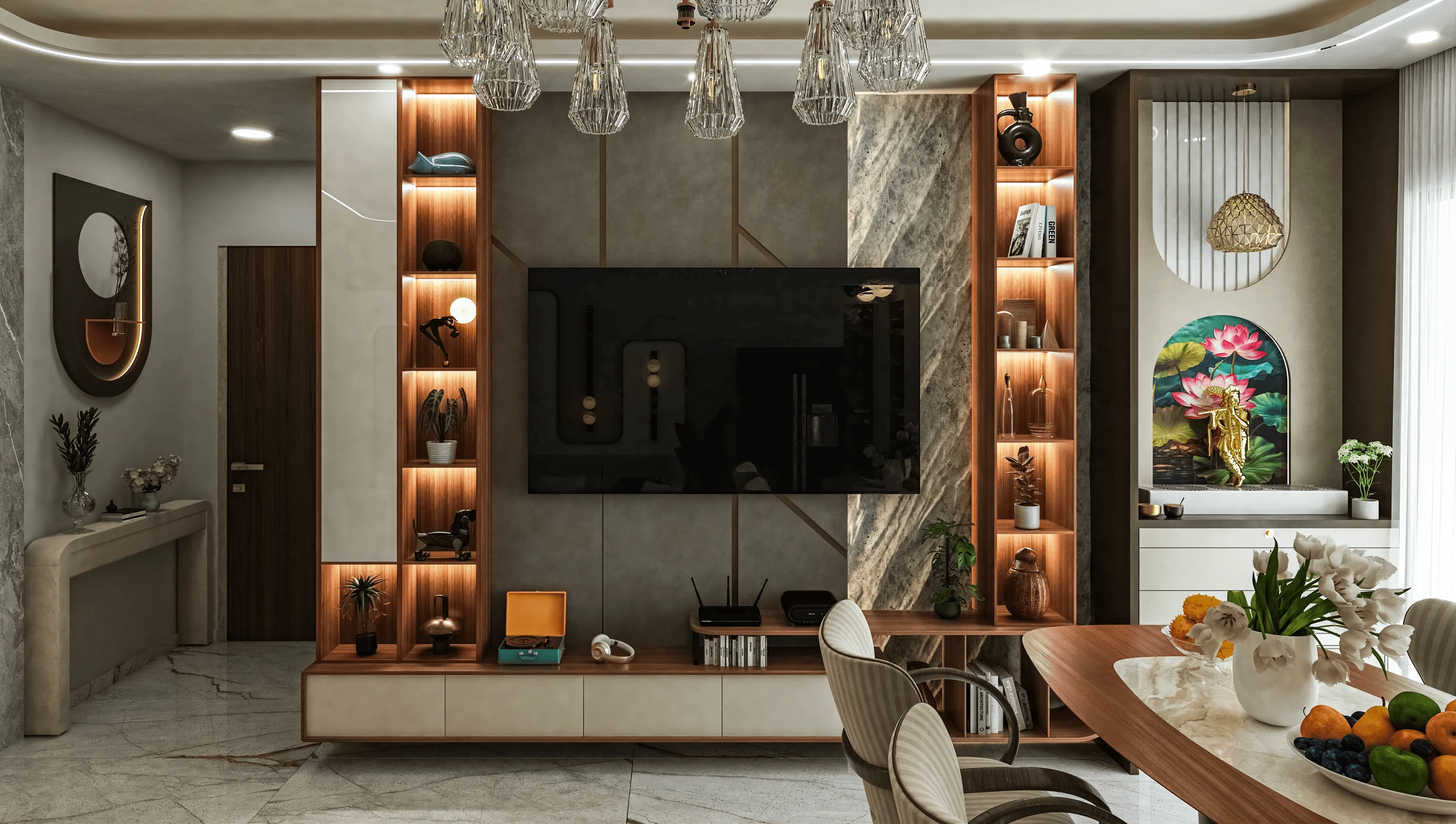






Restoring Old Mosaic Floors in Salt Lake Homes

Walk into any block in Salt Lake built in the 1970s or 80s and there's a decent chance the original floor under three layers of vitrified tile is mosaic, that hand-laid terrazzo-and-cement finish with marble chips broken up in a cement matrix, ground and polished on site by a mistri who probably isn't around anymore to redo it. We get calls about these floors constantly, usually from someone who's just inherited a DL Block or CA Block flat from their parents, or bought an old plot in BD or FD Block and is trying to decide whether to rip everything out or actually save what's underneath.
Here's what we actually see and why this keeps coming up: mosaic flooring from that era was genuinely well made, using thick chip aggregate and a curing process that, honestly, most contractors today don't have the patience for, so a floor that's 40-45 years old can still be structurally sound even when it looks dull, stained, and cracked at the seams. The catch here is that restoring it isn't the same job as restoring modern tile, and a lot of the damage we're called in to fix is damage caused by well-meaning renovation attempts that used the wrong process on it.
This piece is about what actually works for old mosaic floors in Salt Lake homes specifically, the humidity and monsoon factors that are different here than in a dry-climate restoration guide, when restoration genuinely makes sense over replacement, and where our studio fits if you'd rather have someone who's done this before handle it than learn on your own floor.
Why Salt Lake mosaic floors age the way they do
Salt Lake's housing stock is old enough now, sixty-plus years since the earliest blocks were developed, that a huge share of ground-floor and first-floor units still carry their original in-situ mosaic, poured directly on the sub-base rather than laid as tile. That's actually good news structurally, since in-situ mosaic bonds to the slab in a way that prefab tile never does, so it rarely lifts or hollows out the way you'd expect an old floor to. What it does suffer from is Kolkata's monsoon cycle, four months of sustained humidity every year that works its way into hairline cracks in the cement matrix, carries salts up through capillary action, and leaves that chalky white efflorescence bloom you see near skirtings and under almirahs that haven't moved in twenty years.
The other big factor is what's been done to the floor since, and this is where we see the most damage that's avoidable. Homeowners often try to "brighten up" an old mosaic floor with an acid wash bought off a hardware store shelf, which does lift surface grime fast but also eats into the cement binder around the marble chips, so the floor looks great for six months and then starts pitting and chipping at a rate the original finish never would have. We've also walked into flats where someone laid vitrified tile directly over sound mosaic to save time, only for the owner to want the original back a decade later once regrouting and tile maintenance turned out to be its own headache.
What restoration actually involves, step by step
Genuine mosaic restoration is a grinding and re-polishing process, not a chemical strip, and it's worth understanding the stages before you hire anyone so you know what a fair quote actually covers. We start with a diagnostic pass, checking for hollow spots by tapping the floor in a grid, because any area that's actually detached from the slab needs to be cut out and re-poured before grinding, not ground over. From there it's coarse diamond grinding to remove the top damaged layer and expose fresh chip, then progressively finer grits to bring back the polish, then a crack and pit filling pass using colour-matched cement slurry so patches don't read as obviously different from the original chip pattern, and finally a penetrating sealer that keeps moisture and stains out without trapping vapour underneath the way a film-forming coating would.
- 01Diagnostic tap-test for hollow spots
- 02Coarse grind to strip damage layer
- 03Fine grind and polish pass
- 04Crack and chip fill with matched slurry
- 05Breathable penetrating seal
For a typical Salt Lake living-and-dining area, say 300-400 square feet of original mosaic, this whole process runs a few days of on-site work once the furniture's cleared, which is a fraction of what a full flooring replacement takes once you account for demolition, disposal, and new material lead times. It's also considerably less disruptive if you're living in the flat while work happens, since there's no wet trade beyond the final seal and no long cement curing window the way a fresh floor pour needs.
| Restoring the original mosaic | Replacing with new flooring |
|---|---|
| Preserves original chip pattern and thickness that's genuinely hard to replicate today | New material means picking a pattern from scratch with no continuity to the rest of an older home |
| Typically a few days of work per room, minimal disruption | Full demolition, disposal, and installation cycle, often two to three weeks per area |
| Lower material cost since you're not buying new stone or tile | Higher upfront cost once you add demolition and haulage on top of new flooring |
| Can't fully fix floors with structural cracking through the slab | A clean slate if the sub-base itself needs work |
When restoration isn't the right call
We won't sugarcoat this part, since not every old mosaic floor is worth saving, and telling a client to restore a floor that's going to fail again in two years isn't a service, it's a way to lose their trust. If the cracking runs through to the slab rather than sitting in the surface layer, if there's been a plumbing leak underneath that's caused genuine subsidence, or if more than roughly a third of a room's floor has hollow pockets, grinding and patching just delays a bigger problem. In those cases we'd rather tell you honestly that a new floor, laid properly with attention to the same waterproofing prep the original mosaic never had the benefit of, is the better long-term decision, and we'll fold that into a broader renovation and remodeling scope if the rest of the flat needs attention anyway.
There's also a practical Salt Lake-specific wrinkle worth flagging if you're in a cooperative housing block rather than a standalone plot, since floor work in shared buildings sometimes needs a heads-up to the housing society, particularly if grinding equipment or water disposal affects common areas or the flat below. We've written more on the broader process of renovating a Salt Lake cooperative home if that's the kind of building you're in, and it's worth a read before you schedule anyone.
- Tap-test the full floor area, not just the visibly damaged patches
- Ask any contractor whether they're using diamond grinding or an acid-based shortcut
- Confirm the sealer is breathable, not a hard epoxy film
- Check with your housing society if you're in a shared block
- Budget contingency for slab-level repair if hollow spots turn out deeper than expected
What replaces it well, if replacement is the call
When we do end up recommending new flooring over restoration, matching the room's actual use matters more than picking whatever's trending. Bedrooms and living areas generally do well with large-format vitrified tile or, where the budget allows, natural stone that echoes the marble-chip look of the original mosaic without the maintenance burden. Bathrooms and balconies are a different conversation entirely, since anti-skid performance and drainage matter more than finish there, and we'd point you to our piece on anti-skid vitrified vs matt ceramic balcony flooring if that's the room you're tackling next. For flats getting a fuller interior overhaul alongside the flooring, we usually bring in residential interior design planning from the start so the flooring choice, the false ceiling and lighting layout, and any custom furniture pieces are decided together rather than the floor getting picked in isolation and everything else working around it later.
Cost is the question everyone actually wants answered, and while we won't quote a number here since it genuinely depends on the floor's condition, the room count, and whether slab repair enters the picture, we've broken down the moving parts of a comparable job on architect fees in Salt Lake explained, which covers how professional fees scale with project scope. If you're also weathering the humidity side of an older Salt Lake bathroom, our note on bathroom tile and grout resealing frequency in Kolkata's humidity is worth a look too, since the same moisture logic that governs mosaic sealing applies there.
Why hire a studio for this instead of a floor contractor alone
The honest answer is that most floor contractors are good at the grinding and polishing mechanics but don't think about the room as a whole, so you can end up with a beautifully restored floor that then clashes with everything else in the space, or a contractor who doesn't flag a hollow spot because it's not really their job to look past the surface. We've handled this exact restoration-versus-replace decision across 330+ buildings delivered since our studio started in New Town back in 2014, including several projects right here in Salt Lake, like the residence work you can see in our Salt Lake AC Block project, where an older floor plan needed careful decisions about what to keep and what to redo. We think through the flooring alongside 3D visualization so you can actually see how a restored mosaic or a new stone floor reads against your walls and furniture before anything gets touched, and where it's relevant, we factor in Vastu-compliant considerations too, since a fair number of older Salt Lake homes were originally laid out with those principles in mind and clients want that preserved.
If you've got an old mosaic floor in a Salt Lake home and you're not sure whether it's a restoration job or a replacement job, that's genuinely a five-minute conversation with photos before it needs to become a decision, and we'd rather tell you honestly which way it goes than have you guess. Reach out through our contact page and we'll take a look.