








Running a New Town Interior Project From Dubai or Singapore: A Weekly Rhythm That Works
If you are sitting in Dubai or Singapore right now, six and a half hours or two and a half hours ahead of Kolkata depending on where you've landed, and you're trying to build or renovate a home in New Town, you already know the real problem isn't the distance, it's the drift. A site visit that should happen on a Tuesday slips to Thursday because nobody flagged it, a tile decision that needed a yes/no answer sits in someone's WhatsApp for four days, and by the time you're back in India for a week over the holidays, you're trying to compress two months of decisions into six jet-lagged days at the site. We've built enough homes for NRI clients out of our New Town studio to know this isn't a communication problem so much as a rhythm problem, and rhythm is fixable even when you can't be.
We're Studio Contour, an architecture and interior design studio based in New Town, Kolkata, and we've delivered 330+ buildings since we started in 2014, a good number of them for owners who were watching the whole thing unfold from a laptop in the Gulf or Southeast Asia. This piece is basically the operating rhythm we've settled into for exactly that situation, what a working week actually looks like when the site is in New Town and the decision-maker is eight time zones removed, so let's get into it.
Why the weekly cadence matters more than the daily one
The instinct when you're managing something remote is to want daily updates, and we understand the anxiety behind that, but daily check-ins on a construction or fit-out project almost always produce noise rather than signal, because most days genuinely don't have a decision in them, they have progress. What you actually need is a fixed weekly cadence with a hard structure, so that the one or two decisions that do need your input each week arrive packaged clearly instead of buried in a stream of site photos. We run this as a Friday evening India-time call for most of our overseas clients, which lands as Friday afternoon in Dubai and late evening in Singapore, and it works because it's predictable, everyone on both ends knows it's coming, and nobody is scrambling to catch someone awake.
| Kolkata Time | What That Means For You |
|---|---|
| 8 PM IST Friday=1 PM UAE=A calm midday slot, easy to plan around | 5:30 AM IST site walk=Previous evening Dubai=Site team sends photos before your day starts |
| 8 PM IST Friday=10:30 PM Singapore=Late but workable weekly slot | 5:30 AM IST site walk=Same evening Singapore=You review overnight, respond by morning |
The other reason a weekly rhythm beats a daily one is that construction and interior fit-out genuinely move in weekly increments, not daily ones. Formwork gets stripped, a batch of plywood carcasses gets assembled, a coat of waterproofing cures, and the meaningful unit of progress is closer to seven days than one. So we structure our own site supervision and our client updates around that same unit, and it tends to match how construction actually behaves rather than fighting it.
What the weekly package actually contains
For this rhythm to work without you having to ask, the update has to be complete on its own, not a conversation starter that requires three follow-up questions. Every Friday, our clients running projects from abroad get a short video walkthrough of the site shot the same day, a one-page progress note against the schedule we agreed at kickoff, and a flagged list of any decision that's coming up in the next two weeks, not the ones already overdue. That last part is the one most studios get wrong, because if you only tell a client about a decision when it's blocking work, you've already lost the week. We try to surface fixture choices, tile finalizations, or cabinetry hardware decisions with enough runway that a Dubai-based client can think it over during their week and reply before the next Friday call, rather than being cornered into a same-day yes.
- 01Friday: video walkthrough + decision list sent
- 02Weekend: client reviews on their own time
- 03Monday: site team gets confirmed decisions
- 04Midweek: procurement or execution proceeds
- 05Next Friday: cycle repeats with new progress
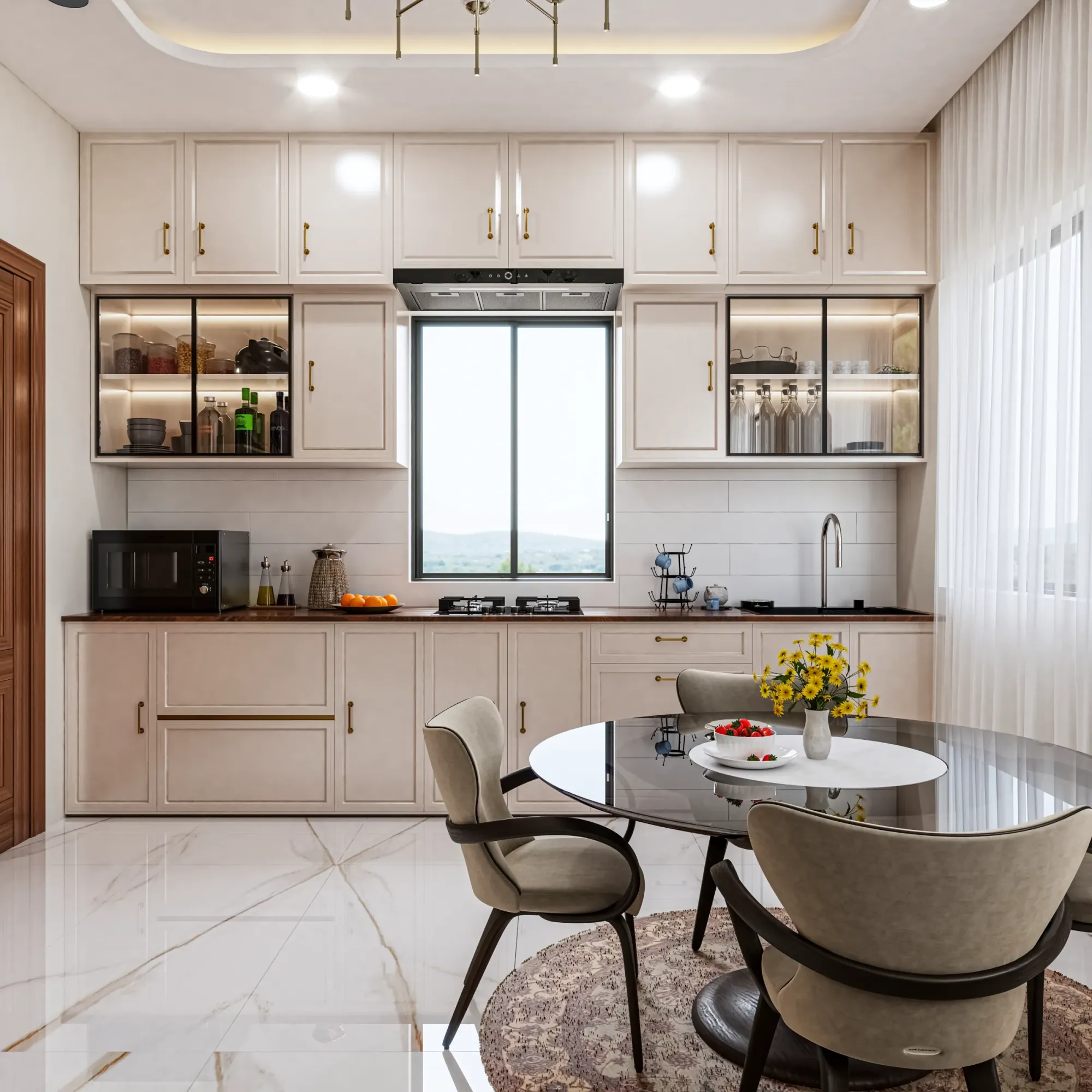
This is also where building information modeling and 3D visualization earn their keep for remote clients specifically, because a floor plan and a materials list mean very little to someone who can't walk the site, but a rendered view of the kitchen with the actual counter material and the actual colour temperature of the proposed lighting lets you approve something with real confidence from four thousand kilometers away. We lean on 3D visualization and rendering heavily for exactly this reason on overseas-client projects, and it's cut down the back-and-forth considerably compared to relying on 2D drawings and phone descriptions alone.
The paperwork you cannot outsource to a video call
Here's the part that catches a lot of NRI owners off guard, right, the plan sanction and approval process with NKDA has stages that genuinely need a physical signature, a notarized power of attorney, or an in-person visit to a bank or registrar, and no amount of good video calling gets around that. What we do instead is sequence the project so those unavoidable in-person requirements get batched into the two or three trips you're already planning to make, rather than dribbling out as surprise "you need to be here" moments. Before we even break ground, we walk clients through the full NKDA building plan sanction process for New Town so there are no surprises about what documentation exists on paper versus what can move digitally, and if you're working with a power of attorney holder locally, we coordinate directly with them rather than routing everything back through you first.
- Notarized power of attorney for anyone signing locally on your behalf
- Property title and mutation documents scanned and shared before kickoff
- A named local point of contact who can sign for deliveries and inspections
- Bank mandate set up in advance for milestone payments
- A rough travel calendar so we can time site visits to your actual trips
The current fee structures, document lists, and timelines for NKDA sanctions do shift from time to time, so we'd rather point you toward confirming exact current figures with the authority directly than quote you numbers here that might be stale by the time you read this, but the shape of the process, what needs a signature versus what can be handled by an empanelled professional on your behalf, is something we walk every client through at the start regardless of where they're based. If you're earlier in the process and still deciding who to bring on first, our piece on whether to hire an architect or interior designer first in New Town is worth a read before you commit to either.
Running the interior fit-out phase on the same rhythm
Once the architectural shell is sorted and you're into the residential interior design phase, the weekly rhythm actually gets easier to run remotely, not harder, because interiors move faster and the decisions are more visual, which suits video review well. A typical New Town interior fit-out for us runs 8 to 12 weeks depending on scope, and we structure that window into the same Friday cadence, with material samples photographed under consistent lighting so a stone or laminate choice doesn't look different on your screen than it will in the flat. For clients furnishing from scratch, we handle custom furniture design and modular layouts the same way, sending dimensioned renders rather than asking you to approve something off a swatch and a verbal description.
One thing we'd flag honestly, at the end of the day some decisions genuinely benefit from being in the room, particularly around lighting layout where a false ceiling design and the actual fall of daylight through a window can look quite different on a render than in person. For those, we try to schedule them around a trip you're already making rather than forcing a call, and we've had good results using extended video walkthroughs with the camera literally standing where a fixture will hang, which gets you close enough to decide with confidence even if it's not a substitute for standing there yourself.
What this costs and how fees actually work when you're not local
A fair question we get early from clients abroad is whether managing a project remotely costs more in fees, and generally it doesn't, professional fees for architecture and interior work in Kolkata are typically structured around project scope and built-up area rather than how many kilometers separate you from the site. What we'd point you to instead is understanding the fee structure itself before you sign anything, since how architect fees typically work in Kolkata explains the common models you'll encounter, staged percentage fees, lump sum for defined scope, or per-square-foot for interiors, so you're evaluating quotes on equal footing whether the studio you're comparing us against is local or one you found online.
Bringing it all back to the site in New Town
None of this rhythm matters if the underlying design isn't sound for the plot, the floor area ratio and setback allowances that apply to your specific block in New Town, Kolkata, the orientation of the plot relative to prevailing wind for natural ventilation, all of that groundwork happens before the weekly cadence even starts, and it's worth getting right the first time rather than discovering a setback violation mid-construction from another continent. We've walked this exact path with clients on a G+3 residence in Action Area II managed almost entirely from abroad, similar in spirit to our Action Area II residence project, where the owner visited twice during the full build and everything else ran on the Friday rhythm described above.
If you're weighing up an architect for a plot in New Town while you're based overseas, our guide on finding and hiring an architect in New Town covers what to actually check before signing, beyond just portfolio photos. And if this rhythm sounds like the kind of structure your own project needs, whether you're at the plot-buying stage or already mid-construction and looking to bring some order to how updates reach you, get in touch with us and we'll walk you through how we'd set up the weekly cadence for your specific site and your specific time zone. We've done this enough times now, from Dubai, from Singapore, and from a few other corners of the world, that we can usually tell you within the first call how the schedule should look.