








Why Summer Is a Smarter Time to Hire an Architect in Salt Lake Than You'd Think
Every April we get the same phone call, usually from a family in AC Block or FD Block, and it goes something like this: we want to start the renovation, but let's wait till the rains pass, no point starting something in this heat. And every year we watch what happens next, because by the time October arrives and the humidity finally breaks, that same family has lost six months, the contractor they were going to use has taken on two other jobs, cement prices have moved, and they're now trying to squeeze a full kitchen-to-bathroom renovation into the narrow window between Durga Puja and the next monsoon. The irony is that summer, the season everyone in Salt Lake tries to renovate around, is actually the smartest window to start, and we want to walk through exactly why, because the reasoning is more practical than seasonal folklore and it's the reason we push clients toward an April or May start almost every year.
The Monsoon Myth Nobody Actually Tested
The logic behind avoiding summer sounds reasonable on the surface, nobody wants dust and demolition debris sitting around in 38-degree heat, and nobody wants site workers pouring concrete when the afternoon sun is strong enough to crack a curing slab if you're careless about it. But that logic conflates two different things, discomfort and risk, and at the end of the day only one of them actually threatens your project. Discomfort is real, we won't pretend otherwise, but risk is what actually delays a build or interior fit-out, and the biggest risk on a Kolkata renovation timeline isn't heat, it's water. Structural work, waterproofing, exterior plastering and any foundation-adjacent work all behave far worse once the monsoon sets in around mid-June and runs through September, because curing times stretch, site access gets unreliable when Salt Lake's internal roads flood after a heavy spell, and material delivery slows because trucks can't move through waterlogged sectors near VIP Road or the EM Bypass approach. So the actual smart sequencing is to do the heat-tolerant, dust-heavy, structurally sensitive phases of a project in April through early June, and let the monsoon catch you mid-way through the interior fit-out phase instead, when you're working indoors on residential interior design elements that don't care whether it's raining outside.
What an 8 to 12 Week Timeline Actually Looks Like When You Start in Summer
We quote most residential renovation projects at 8 to 12 weeks from mobilization to handover, and that number isn't a marketing figure, it's the average across the work we've done since we started the studio in 2014. If a Salt Lake homeowner in a place like CB Block or a Sector 3 cooperative flat starts that clock in the first week of May, the demolition, structural correction and any exterior work land squarely in the driest, hottest stretch of the year, which is genuinely the best time to do them, because a slab poured in dry heat cures more predictably than one poured under intermittent monsoon showers, and dust and debris removal is faster when the roads aren't half underwater. By the time you're six to eight weeks in, you've moved into electrical, plumbing, false ceiling and carpentry work, all of which happens indoors, and that's exactly when the first monsoon showers in mid-June stop mattering to your schedule at all. Compare that to a September start, which is what most of the "wait for the rains to pass" families end up doing, and you're now trying to do dust-heavy structural work right as Kolkata's winter fog and pre-Puja rush hits every supplier and mason in the city, and your 8 to 12 week window quietly becomes 16.
- 01Week 1-2: site survey, demolition, structural scope locked
- 02Week 3-6: structural and exterior work in dry heat
- 03Week 7-10: electrical, plumbing, false ceiling, carpentry indoors
- 04Week 11-12: finishing, snagging, handover before monsoon peaks
Salt Lake's Own Calendar: NKDA, Bidhannagar and Society Approvals
Timing a renovation in Salt Lake isn't only about weather, it's also about paperwork, and this is where a lot of independent contractors and even some smaller design outfits fall short, because Bidhannagar cooperative societies and the surrounding civic bodies have their own approval rhythms that don't always match a generic construction calendar. Structural alterations, especially anything touching a load-bearing wall or the building's external elevation, usually need society consent and sometimes a no-objection route through the municipal authority before work starts, and that process moves faster in summer simply because society office-bearers and clerks aren't dealing with the monsoon backlog of leakage complaints and drainage disputes that pile up between June and September. We've walked enough Salt Lake blocks to know which societies are strict about scaffolding hours, which ones require written notice before any drilling, and which sectors have specific rules around balcony enclosures, and that local knowledge, built over 330+ buildings delivered across Kolkata, New Town and Salt Lake, is honestly half the reason projects we run stay on schedule while others stall waiting on a signature nobody chased in advance. If you want the fuller breakdown of how these approvals actually work here, our guide to Bidhannagar building rules in Salt Lake covers the specifics, and our piece on renovating a Salt Lake cooperative home walks through the society-consent side in more detail than we can fit here.
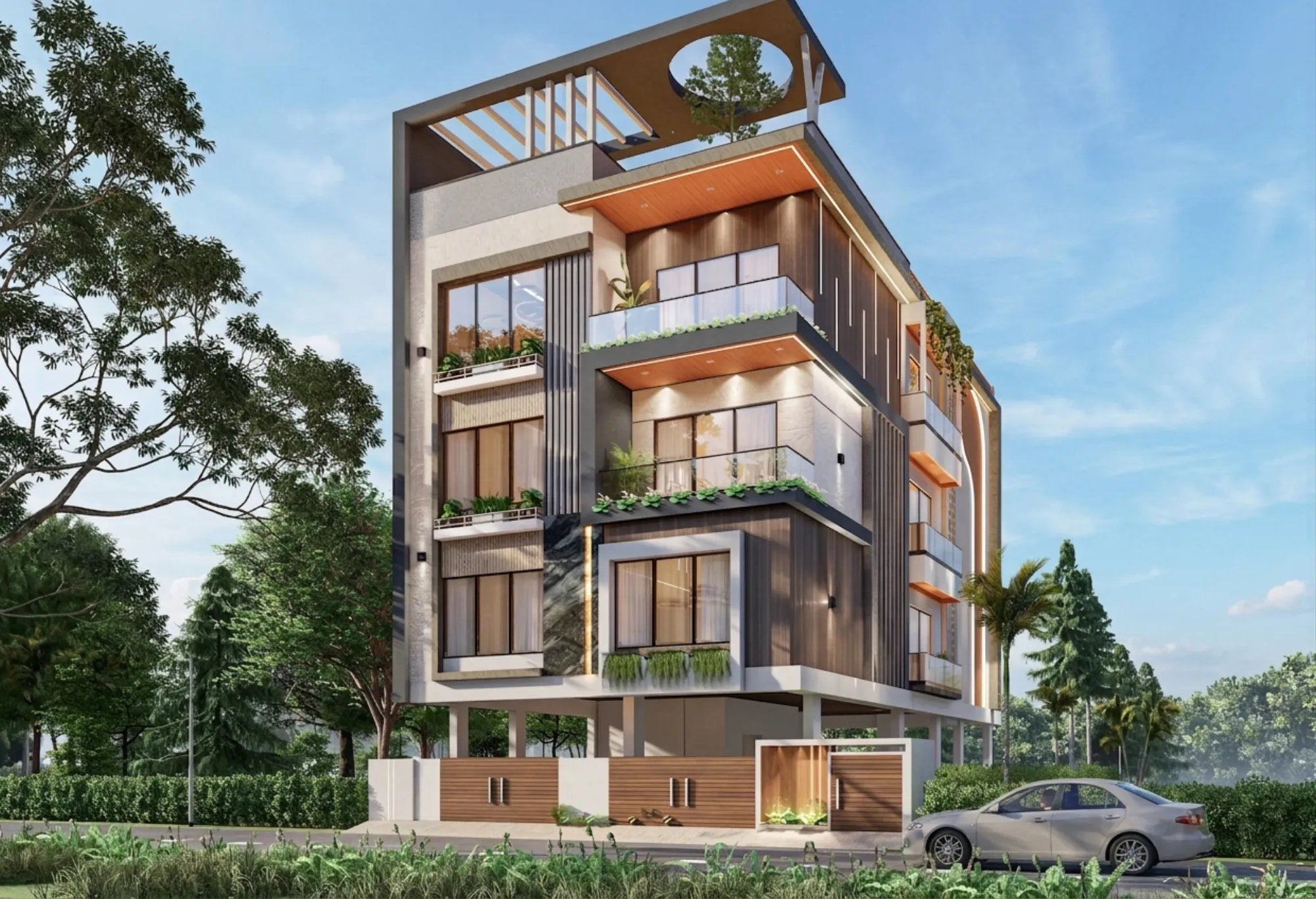
That photo is from a Salt Lake residence we designed with exactly this climate logic built in, deep balcony overhangs that cut direct heat gain in April and May, cross-ventilation that keeps the interior workable even before the structural phase wraps, and an elevation that was sanctioned and built on a summer-start schedule without the delays a monsoon start would have introduced. It's the kind of detailing that only shows up when the architect drawing the elevation actually understands the site's seasonal behaviour rather than applying a generic template to it.
Heat Management on Site: What We Actually Do Differently
We're not going to pretend a Kolkata summer is comfortable to build in, because it isn't, and pretending otherwise would be exactly the kind of guru-speak we try to avoid. What we actually do is shift the workday, masonry and structural crews start early, usually by 7 AM, and we schedule the heaviest physical work, concrete pours, plastering, demolition, before noon, with the afternoon reserved for material staging, layout marking and lighter finishing tasks that don't demand the same physical output. We also sequence material deliveries to avoid cement and adhesive sitting exposed in direct sun for hours, because heat degrades some bonding agents faster than most homeowners realise, and a site supervisor who isn't watching for that is quietly setting up a callback six months later. None of this is exotic, it's basic project management discipline applied to a specific climate, but it's also the difference between a summer build that finishes clean and one that leaves you with hairline cracks and a redo bill.
- Lock structural scope before the first heat wave hits in April
- Confirm society or NKDA approvals early, before monsoon backlogs slow clerks down
- Schedule dust-heavy work for the first six weeks, indoor fit-out for the rest
- Ask your contractor how they protect curing concrete and stored cement in peak heat
- Build a two-week buffer into the back end of the timeline, not the front
Firm Versus Freelancer: Why the Season Matters Even More When You're Not Working With a Full Studio
A lot of Salt Lake homeowners weigh hiring an independent general contractor or a solo freelancer against hiring a full design and build studio, and honestly, for a small job, a good independent contractor can do fine work. The catch here is that seasonal sequencing, the kind of week-by-week planning we described above, requires someone actively managing structural, electrical, plumbing and finishing trades against a shared calendar, and a freelancer juggling three or four sites at once rarely has the bandwidth to hold that sequencing tight, especially once weather or a supplier delay throws the plan off. A studio structure means one person isn't simultaneously the designer, the site supervisor and the vendor coordinator, so when a June shower threatens to push the exterior plastering back a week, the interior team is already prepped to start the false ceiling and carpentry phase early instead of everyone standing around waiting.
| Feature | Independent Freelancer | Studio Contour |
|---|---|---|
| Scheduling often shifts trade by trade, reactive to weather | Structural and interior phases are pre-sequenced around the seasonal calendar | Single person covering design, site supervision and vendor coordination |
| Dedicated design, site and vendor coordination roles working the same 8-12 week plan | Society and NKDA approvals chased as issues come up | Approval routing planned into the timeline from week one, drawing on 330+ prior filings |
| Heat and monsoon handling is ad hoc, contractor to contractor | Heat-sequencing and monsoon buffers built into every summer-start project |
None of this means every freelancer is unreliable, some are excellent, but it does mean the coordination overhead of a seasonal build falls entirely on you as the homeowner if you're managing multiple independent trades yourself, and that's a lot to ask of someone who also has a job and a family to run alongside a renovation.
What 330+ Buildings Taught Us About Getting the Calendar Right
We started Studio Contour in 2014, and in the years since we've delivered more than 330 buildings across Kolkata, New Town and Salt Lake, which means we've run this same summer-start sequencing on cooperative flats in CD Block, independent houses near Sector 5, and larger residences further out toward the New Town corridor. That volume matters here specifically because it's what lets us quote an 8 to 12 week timeline with confidence rather than hope, we've seen where the schedule actually slips and where it doesn't, and we've built the buffer into the plan accordingly rather than discovering it live on your site. It's also why we lean on 3D visualization before work starts, so that structural decisions, the ones you actually want locked before the heat-tolerant summer window opens, are finalised on screen instead of being reworked mid-build once scaffolding is already up.
If you want a sense of what this looks like on an actual Salt Lake site, our FD Block residence project is a fair example of a summer-sequenced build, structural and exterior work finished before the first serious monsoon showers, interior fit-out carrying through the wetter months without losing a day to weather. We keep a broader set of examples in our full project portfolio, and specifically for this neighbourhood, our Salt Lake work has more than one house's worth of evidence before you decide anything.
Getting Your Project Onto the Right Calendar
We're not going to tell you renovating in a Kolkata summer feels pleasant, it doesn't, and anyone who tells you it does is selling something. What we will tell you, because it's the honest read on eleven years of doing this across Salt Lake, New Town and the rest of the city, is that the discomfort of a summer start is a poor trade against the actual delays a monsoon or winter-rush start creates, and once you separate the two, the decision gets a lot easier. We've written more on the cost side of this decision in our breakdown of architect fees in Salt Lake, and if you're still weighing how to even begin the hiring process, our guide on how to hire an architect in Salt Lake and Bidhannagar is a good next read alongside this one. For structural or renovation-heavy scopes specifically, our renovation and remodeling team is the one that will actually walk your site and tell you, block by block and phase by phase, what an April start buys you that a September one won't. If your timeline is already forming in your head, reach out to us and we'll walk through the calendar with you before you commit to a season you might not need to avoid.