







Resale Value Per Rupee Spent: Ranking Interior Upgrades for New Town Flats
If you own a flat in New Town and you're weighing a renovation against just listing it as-is, the question that actually matters isn't 'what will make this place look nicer' but 'what will a buyer or a tenant actually pay more for, and how much of what I spend do I get back.' We get asked this constantly, usually by owners in Action Area I or II who bought five to eight years ago, are now thinking of upgrading before a sale, and have no idea whether a false ceiling job is worth it or whether they should just redo the kitchen and call it a day.
This piece is our attempt to rank interior upgrades for New Town flats by resale value per rupee spent, based on what we've actually seen across 330+ buildings delivered since 2014, not generic advice lifted from a national real estate blog that doesn't know the difference between a Sector V rental market and an Action Area III owner-occupier market. New Town resale behaves differently from South Kolkata resale, and it behaves differently from Salt Lake too, so treating all three as one market is where a lot of renovation budgets get wasted.
We'll walk through what genuinely moves valuation and buyer decision speed here, what doesn't, how to sequence the work if you're doing it before a sale versus doing it to live in the place longer, and where New Town's specific quirks around humidity, buyer demographics, and newer building stock change the calculus compared to older Kolkata markets.
How Resale Value Actually Gets Measured in New Town Flats
The mistake most owners make is assuming resale value tracks how much they spent. It doesn't, it tracks how quickly a buyer can picture living there without doing more work, and how much of the flat's usable life the buyer believes they're getting for the price. A flat with a redone kitchen and bathroom sells faster and closer to asking price than one with a fresh coat of paint and an expensive light fixture, because the kitchen and bathroom are the two rooms a buyer mentally price-checks against a full renovation quote before they even sit down to negotiate, and if those two rooms look done, the buyer's internal 'how much more will I need to spend' number drops sharply.
New Town's buyer pool skews toward IT-sector professionals and young families moving out of rented Sector V or Action Area accommodation, people who are time-poor and risk-averse about undertaking a renovation themselves, so a flat that reads as move-in ready commands a real premium here that it might not in a market where buyers expect to gut and redo everything anyway.
The Upgrades That Actually Pay Back
Based on what closes faster and appraises higher across the projects we've delivered, here's roughly how we'd rank upgrade categories by resale value returned per rupee spent, from strongest to weakest.
A modular kitchen design redo tops this list almost every time, because it's the single room where the gap between a working 20-year-old kitchen and a properly planned one is most visible to a walk-through buyer, and it's also the room where poor layout, no counter next to the hob, a fridge that blocks the door swing, a bad application of the kitchen work triangle, actively costs a sale. Buyers notice a cramped, awkward kitchen even when they can't articulate why it feels wrong, and a well-planned one with decent engineered stone counters and honest plywood cabinetry reads as quality even to someone who knows nothing about carpentry grades.
Bathroom design work is close behind, and for a specific reason tied to New Town's building age profile, a lot of the flats built here in the 2012 to 2018 window are now due for their first bathroom refresh, and buyers actively factor in whether they'll need to redo waterproofing and fittings within a year or two of moving in. Getting ahead of that with proper waterproofing before retiling, and anti-skid flooring that handles Kolkata's monsoon humidity without turning slippery, removes a whole category of buyer hesitation. We've written more on this specifically in our bathroom renovation cost breakdown for Kolkata if you want the line-item detail.
Storage sits third, and it's underrated. A flat with proper loft storage, an organized wardrobe system, and utility space that doesn't look like an afterthought signals to a buyer that the previous owner actually lived thoughtfully in the space, which sounds soft but shows up in negotiation, buyers push back less on price when the flat feels planned rather than adapted.
Where Money Disappears Without Moving the Needle
The upgrades owners over-invest in relative to what they get back are almost always the ones that photograph well but don't change how a buyer experiences the space during an actual walk-through.
| Moves resale value | Rarely moves resale value |
|---|---|
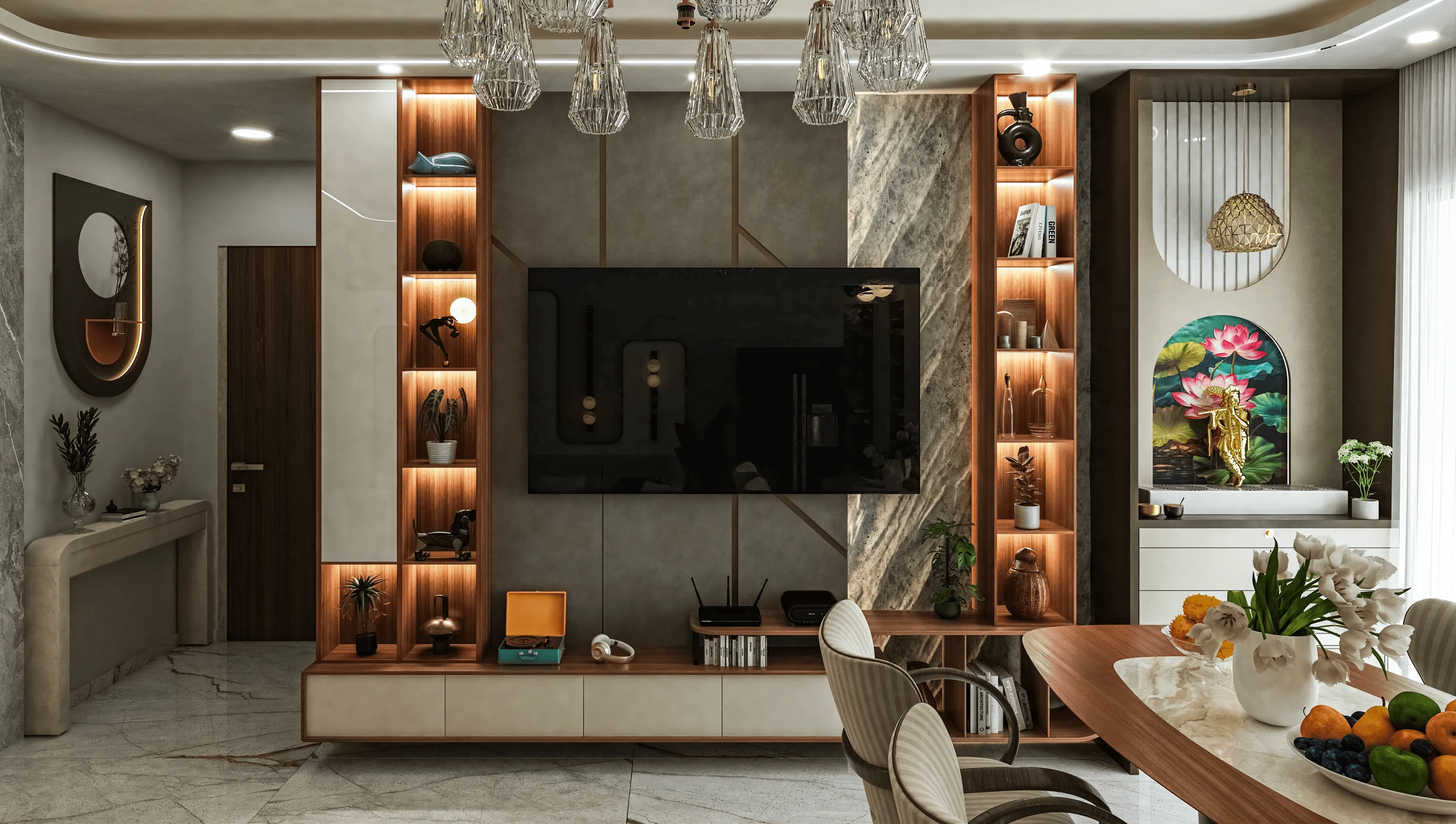
| Working modular kitchen with proper storage | Elaborate false ceiling with cove lighting on every ceiling |
| Waterproofed, re-tiled bathroom | Imported decorative wall panels or feature walls |
| Functional wardrobe and utility storage | High-end custom furniture the buyer will likely replace anyway |
| Fresh paint and basic electrical fixes | Premium chandeliers or statement light fixtures |
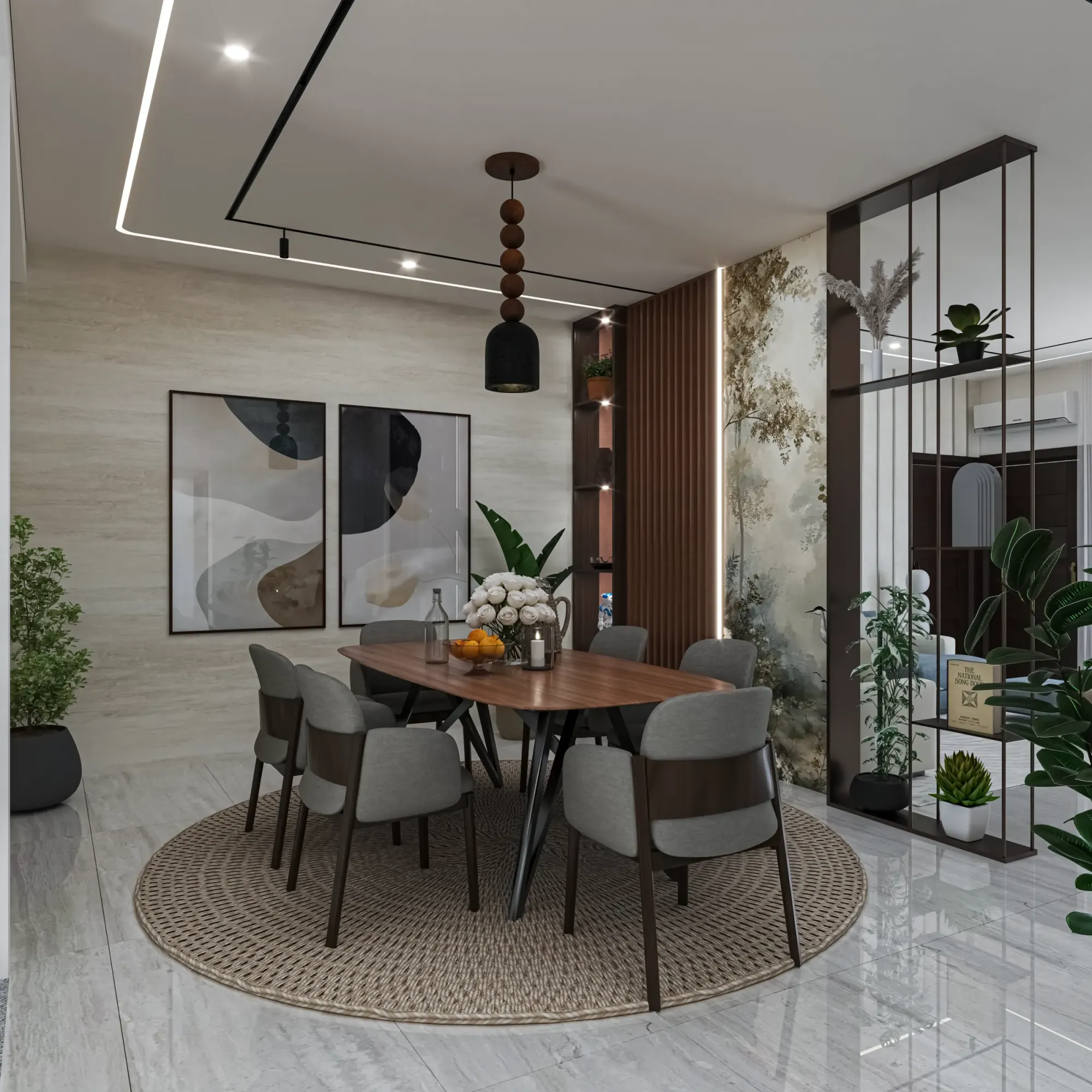
This isn't to say a false ceiling is worthless, a simple perimeter drop with clean cove lighting genuinely improves how a room feels and photographs for a listing, our false ceiling and lighting design work is usually scoped that way rather than as an elaborate multi-tier installation, because the elaborate version costs three or four times as much and a buyer walking through simply doesn't register the difference in the thirty seconds they spend looking up. Custom furniture is the other trap, a beautifully made bespoke unit is wonderful to live with, but most buyers assume they'll bring their own furniture anyway, so unless it's built-in storage that's structurally part of the space, that spend belongs in the 'live in it longer' category, not the 'sell it soon' category.
Sequencing It Right Before a Sale
If you're renovating specifically ahead of a sale rather than to live in the place for years, the order matters almost as much as the categories themselves, because half-finished work reads worse to a buyer than no work at all, it signals problems the buyer can't see.
- Fix waterproofing and any structural or seepage issues first, before anything cosmetic
- Redo the kitchen with proper storage and a working layout
- Retile and refit the primary bathroom with anti-skid flooring
- Add simple false ceiling and updated lighting in the living and dining areas
- Repaint and handle minor electrical fixes last, right before listing
This is roughly the same sequencing logic we use on full residential interior design projects, structural and moisture issues first, then the rooms that anchor a buyer's price ceiling, kitchen and bathroom, then the rooms that affect first impression, living and dining, and cosmetic work last because paint and fixtures age the fastest and you don't want them looking six months old by the time you actually list. If you also want a sense of what the underlying build itself should cost as a benchmark, our cost to build a house in New Town guide covers the broader construction cost logic a lot of interior budgeting decisions end up anchored to.
How Much to Actually Budget, and Why the Building You're In Sets the Ceiling
The question we get right after "what should I upgrade" is "how much should I spend," and most owners answer it backwards, they start from what they can afford or what a contractor quotes them rather than from what the flat can plausibly sell for once the work is done, and that's the order that gets people into trouble. The number that actually matters is the price ceiling set by the complex or sector the flat sits in, because in New Town, unlike a standalone bungalow market, resale prices cluster tightly within a building or a sector, buyers comparing your flat are also touring two or three other listings in the same complex or the one next door, and no amount of renovation quality pushes your asking price meaningfully past what similar units in that cluster have actually sold for in the last six to twelve months. We've seen owners put in a genuinely excellent kitchen and bathroom on a budget that made sense for the flat's value, and we've also seen owners spend nearly the same amount on a flat sitting in a complex with a lower ceiling, and the second owner simply doesn't get that money back, not because the work was bad but because the market around them capped what any buyer was willing to pay, right, regardless of finish quality.
So the practical rule we work off with clients is to treat renovation spend as a percentage of the flat's realistic current resale value rather than as a fixed rupee figure decided in isolation, and to check that percentage against recent transacted prices in the same complex or sector before committing to scope, not against the builder's original brochure price from eight years ago, which by now tells you almost nothing. As a rough band for New Town flats specifically, spending in the range of five to eight percent of current resale value on the kitchen, bathroom, and storage core we ranked earlier tends to pay back close to fully, going meaningfully past ten to twelve percent starts running into that ceiling effect, where the last stretch of spend just isn't recoverable no matter how well it's executed, and beyond fifteen percent you're basically renovating for yourself, not for the sale.
| Resale value band | Sensible renovation budget | What that typically buys |
|---|---|---|
| Under 60 lakh | 3-5 lakh | Kitchen refresh + bathroom retile |
| 60 lakh-1 crore | 5-9 lakh | Full kitchen-bathroom-storage core |
| 1 crore and above | 9-15 lakh | Core work + false ceiling and lighting |
The other piece owners miss is that this ceiling isn't static, it moves with every transaction in the building, so a flat that sold two floors below yours last month for a certain figure has effectively reset what a buyer expects to pay for your line item improvements too, and this is exactly why we ask for recent transaction data in the same tower before we scope a pre-sale renovation, not because we're trying to talk anyone down from a nicer kitchen but because a budget set against stale numbers almost always overshoots. It's also worth knowing that this ceiling logic works in the buyer's favour when a complex has had a run of well-renovated resales, each one nudges the next buyer's expectation and the next seller's achievable price upward together, so a flat you're planning to sell in eighteen months might have more room to spend than one going on the market this quarter, purely because of what's transacted around it in between. At the end of the day, the smartest renovation budget isn't the biggest one, it's the one that's been checked against what the building itself will actually let you recover, and that's a five-minute conversation with a broker or with us before you sign off on scope, not an afterthought once the work is already underway.
What's Specific to New Town and Salt Lake Buyers
A few local factors change this ranking slightly compared to a generic Kolkata answer. First, a meaningful share of New Town's resale buyers, particularly in Action Area I and around the newer sectors, still care about Vastu Shastra placement for the kitchen, main entrance, and master bedroom, and a flat that already respects those orientations without needing structural changes sells with noticeably less back-and-forth. Our vastu-compliant design work exists largely because of how often this comes up in New Town specifically, more than in some other parts of the city.
Second, humidity and monsoon flooring choices matter more here than buyers from drier markets expect, balcony and bathroom flooring that handles standing water without becoming a slip risk is something we cover in more detail in our comparison of anti-skid vitrified versus matt ceramic balcony flooring, and it's a cheap upgrade relative to the doubt it removes from a buyer's mind during a rainy-season viewing. Third, if you're weighing whether to bring in an architect for structural changes versus an interior designer for a straight refresh, that decision itself is worth getting right before you spend anything, and our fee-structure breakdown at architect fees in Kolkata is a reasonable place to start scoping that out.
One example from our own portfolio that illustrates the sequencing well is a residence we delivered in Action Area 2, where the owners prioritised kitchen, bathroom, and storage work ahead of anything decorative, you can see how that played out in our Action Area 2 residence project.
At the end of the day, the flats that sell fastest and closest to asking price in New Town aren't the ones with the most expensive finishes, they're the ones where a buyer can walk through, see a working kitchen, a redone bathroom, sensible storage, and clean daylighting, and mentally check the box that says 'nothing left to do here.' That's a narrower, more disciplined renovation than most owners plan for on their own, and it's the kind of prioritisation call we make for clients constantly, whether the project is a straight interior refresh or a full residential architecture job that touches layout. If you're weighing a renovation ahead of a sale, or just want a second opinion on where your budget is best spent, get in touch with us and we'll walk the flat with you before you commit to anything.