








Studio Contour: How We Handle an NKDA Query Mid-Construction
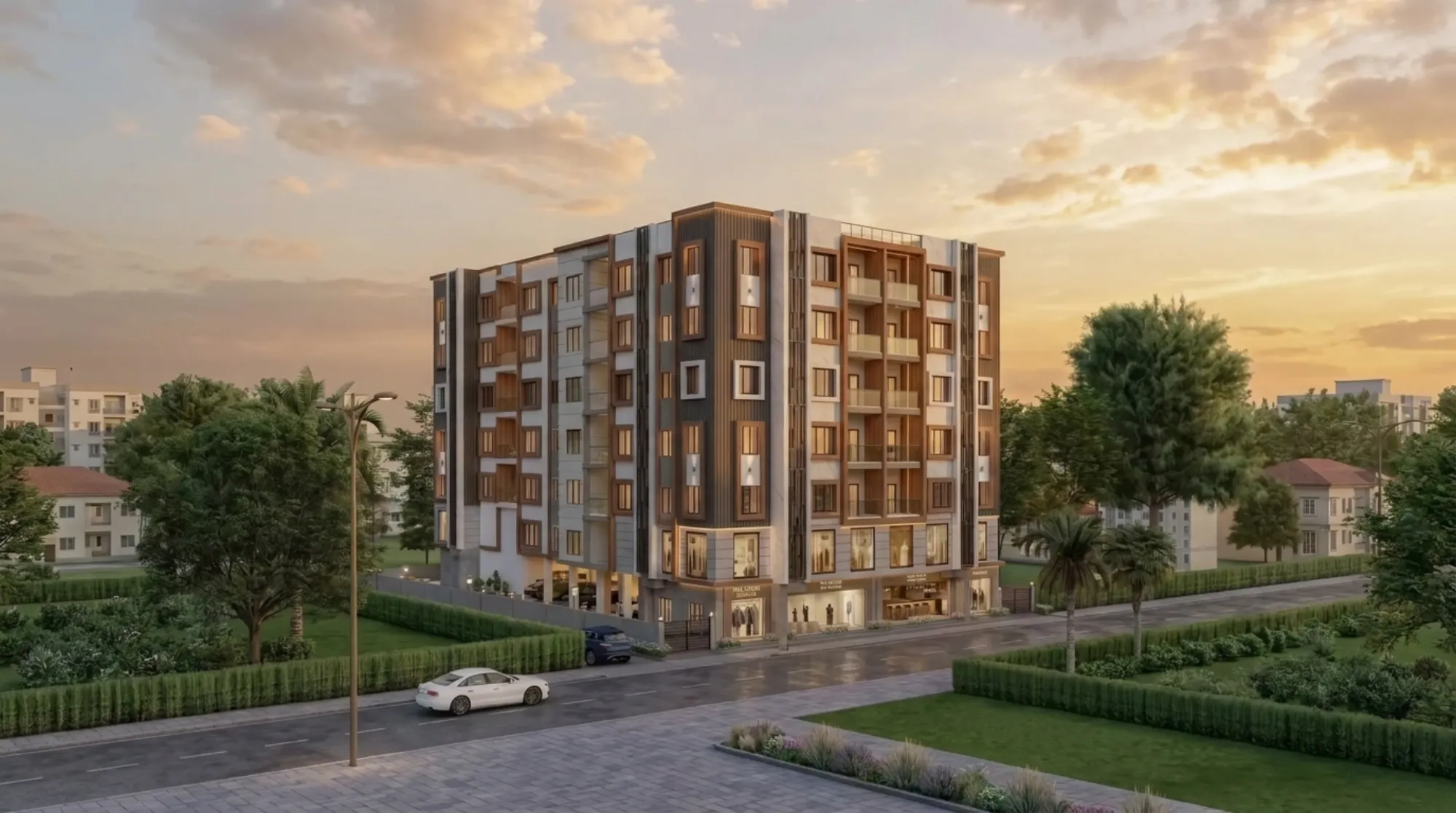
Studio Contour has sat across the table from enough anxious plot owners at the New Town NKDA office to know exactly what that phone call sounds like. Work has stopped at the site. A junior engineer or an inspector has flagged something, a query letter has landed, and the owner is staring at a half-built structure wondering if the whole project is now stuck for months. It almost never has to be that bad, and this piece is about why, and what we actually do the moment a query shows up mid-construction rather than at the sanctioning stage where everyone expects friction.
If you are reading this because your own site has just received a query, or because you are trying to figure out who to call before you break ground on a plot in Action Area I, II or III, this is written for you specifically. It is not a generic explainer on the sanction process, we already have one of those. This is about the messier, less-discussed moment when construction is already underway, money is already spent on foundation and framing, and a query arrives that threatens to freeze the site.
Why NKDA Queries Happen Mid-Construction, Not Just at Sanction
The common assumption is that once a building plan is sanctioned, the project is clear to run to completion without further scrutiny. That is not how it works in practice, and it is not a flaw in the system, it is how the system is designed to catch drift between the sanctioned drawing and the structure actually rising on the plot. NKDA inspectors visit sites at plinth level, at various floor stages, and again before occupancy, and each of those visits is a chance for a discrepancy to surface. A column that has crept six inches off its sanctioned position during casting, a floor slab that reads half a foot taller than the approved elevation, a compound wall built to a height the plan never showed, any of these can trigger a query even on a plan that sailed through sanction without issue.
The other common trigger is paperwork rather than construction itself. A structural stability certificate that was due at a certain stage and has not been filed, a change in the empanelled structural engineer of record without the corresponding intimation, a site supervisor's undertaking that has lapsed, these administrative gaps generate queries just as often as physical deviations do. And then there is the category nobody plans for: a neighbour's complaint. A boundary dispute, a shadow-and-ventilation grievance, or a claim that your setback distance from https://en.wikipedia.org/wiki/Setback_(land_use) is short of what the sanctioned plan shows, any of these can prompt NKDA to issue a site query even when your own drawings are in perfect order.
The First 48 Hours: What We Actually Do
The moment a client calls us with a query letter in hand, the first thing we do is separate the query into one of two buckets, because the response is completely different depending on which bucket it falls into. Bucket one is a documentation gap, something that exists but hasn't been filed or updated with NKDA yet. Bucket two is an actual physical deviation between what's on the sanctioned drawing and what's standing on the plot. Getting this classification right in the first hour saves days later, because chasing a paperwork fix when the real issue is a structural deviation, or vice versa, is how a seven-day query turns into a seven-week one.
For documentation gaps, our approach is boring and that is exactly the point, we pull the original sanctioned set, cross-check every certificate that was supposed to be filed against what's actually on record with the authority, and refile whatever is missing with the site supervisor's and structural engineer's signatures attached. For physical deviations, we go to site first, before we go anywhere near NKDA, and measure the actual as-built condition against the sanctioned drawing ourselves. There is no point walking into a query response with an assumption about what happened on site, we have seen too many cases where the contractor's version of events and the actual measured deviation didn't match at all.
- 01Query received, site visited within 24 hours
- 02Deviation or gap classified and measured
- 03Response drafn and filed with NKDA
- 04Follow-up visit if a revised drawing is required
- 05Query closed, work resumes on record
A Worked Example: The Case of a Six-Inch Setback Shortfall
Take a case that comes up often enough in New Town that it is worth walking through in detail. A plot owner in Action Area II is midway through casting the second floor slab when an NKDA inspector notes during a routine visit that the eastern wall of the structure sits roughly six inches inside the sanctioned setback line, meaning the built structure is actually closer to the boundary than the approved plan allowed. This is a classic mid-construction query, and it usually happens because a mason working off a printed drawing without a laser-level cross-check drifted slightly during layout, not because anyone deliberately tried to steal extra floor area.
Our first move is always the same, we get a surveyor to physically re-measure the plot boundary and the actual wall position, because sometimes the "deviation" turns out to be a measurement error in the original site survey rather than a construction error, and that distinction changes the entire resolution path. If the wall genuinely encroaches into the mandated open space, there are really only two paths forward, and which one applies depends on how much floor area ratio the project has margin on and whether the deviation can be corrected without demolishing cast structure. Sometimes it means submitting a minor plan revision that documents the actual as-built condition along with a compensating adjustment elsewhere on the plot, and sometimes, if the encroachment is small enough and doesn't compromise fire access or the neighbour's own setback, NKDA accepts a regularisation with a technical explanation on record. What it almost never means, despite what panicked owners assume, is that the whole floor gets demolished. That outcome is rare and reserved for cases where the deviation genuinely violates https://en.wikipedia.org/wiki/Floor_area_ratio limits or compromises structural safety.
The Paperwork We Keep Ready Before a Query Ever Lands
The honest truth is that most mid-construction queries resolve fast for the sites where the documentation trail was tight from the start, and drag on for the sites where it wasn't. This is the part of our residential architecture work that clients rarely see and almost never think to ask about at the beginning, but it's the single biggest factor in how quickly a query closes. We maintain a live file for every site under our supervision that tracks the sanctioned drawing set, every subsequent revision, the structural engineer's certificates at each stage, the site supervisor's periodic undertakings, and dated photographs at every major construction milestone.
When we walk into an NKDA query response with that file already assembled, the conversation changes character entirely. Instead of a back-and-forth where the authority is trying to establish basic facts about what exists on site, we are simply presenting a documented record and proposing a resolution. This is also why the documents required for NKDA sanction matter well beyond the initial sanction date, the same document discipline that gets a plan through sanction in the first place is what gets a mid-construction query closed in days instead of months.
- Sanctioned drawing set with every stamped revision
- Structural stability certificate at each floor stage
- Site supervisor undertaking, current and signed
- Dated photo record from foundation through to current stage
- Boundary and setback survey from a licensed surveyor
When the Query Touches Structural Safety or Fire Access
Not every query is a paperwork matter, and we want to be direct about that because pretending otherwise doesn't serve anyone. If an inspector flags something involving the actual structural adequacy of the frame, meaning the reinforced concrete work itself is in question, or the query touches fire tender access and staircase width, that moves into a different and more serious lane. These are cases where we bring in the structural engineer of record directly rather than handling it through drawings alone, because NKDA (and rightly so) wants a stamped technical opinion, not an architect's assurance, on anything load-bearing or life-safety related.
The good news is that these are also the rarest category of query by a wide margin. In our experience across renovation and remodeling work as well as new construction, the overwhelming majority of mid-construction queries are boundary, setback, or documentation matters that resolve within one to two site visits and a formal written response. Structural queries are the exception, and when they do come up, the resolution timeline naturally runs longer because it should, nobody wants a fast answer on a question about whether a slab can safely carry its intended load.
| Documentation gap | Physical deviation |
|---|---|
| Usually resolved with a refiled certificate | Often needs a site re-measure first |
| Rarely needs a site visit | Almost always needs one |
| Typical close: 3-7 days | Typical close: 1-4 weeks depending on scale |
What Happens If You Sit on a Query Instead of Answering It
This is the mistake we see plot owners make more than any other, and it is entirely understandable because a query letter is intimidating and the instinct is to hope it resolves itself or to wait until "a good time" to deal with it. It does not resolve itself. An unanswered query sits on record, and the longer it sits, the more it can compound, because a stop-work directive attached to an unanswered query can delay the eventual completion and occupancy certificate by months, which in turn delays mutation, which delays your ability to get the property properly assessed and taxed as a completed structure. We have taken over sites at this exact stalled point more than once, where a query that should have taken two weeks to close had been sitting unanswered for four months because nobody engaged with it early, and by the time we got involved the interest costs on construction financing had eaten into the client's budget far more than the fix itself ever would have.
The other quiet cost of delay is that memory fades and people move on. The mason who built the deviating wall may have left the site by the time you finally respond, the contractor's records may be incomplete, and reconstructing what actually happened during construction gets harder every month you wait. Answer a query within the window given, even if the answer is "we are commissioning a survey and will respond in ten days," because a query that shows active engagement reads completely differently to an inspector than one with total silence against it.
Why This Is the Moment Owners Search for a Different Kind of Architect
There's a particular kind of search that happens at exactly this moment, an owner mid-construction with a query letter in hand typing something like top NKDA architect or best architect for NKDA sanction into Google at eleven at night, and it's worth being honest about why that search leads people to us. It isn't because we hold any special status with the authority, we don't claim that and we wouldn't. It's because Sumana Kumar, our principal architect, has walked hundreds of plots in New Town, Salt Lake and Rajarhat through the sanction and construction-stage query process over more than a decade, and that repetition builds a working fluency with how NKDA, KMC and Bidhannagar Municipal Corporation actually process these matters on the ground, which is different from reading the building code cover to cover. If you're trying to work out the difference between hiring an architect versus relying solely on a site engineer for this kind of query, our piece on the architect versus empanelled engineer distinction, and the fuller background on who Sumana Kumar is and how Studio Contour works, both go into that in more depth than we have room for here.
The deeper reason familiarity matters this much for query resolution specifically, rather than for the original sanction, is that a query response is a negotiation as much as it is a technical submission, and negotiations go better when the person on your side of the table has done this exact conversation dozens of times before and knows which technical framing actually lands with the reviewing officer.
A Note on Corner Plots, Boundary Disputes and Multi-Frontage Sites
One category of mid-construction query deserves its own mention because it comes up constantly in New Town's action areas specifically, given how many plots there sit on corners with two road frontages, or back onto a drainage easement, or share a boundary wall arrangement that predates the current sanctioned layout. These sites generate a disproportionate share of setback and boundary queries because the setback calculation itself is more complex when two road edges are involved, and small ambiguities in the original survey compound once construction starts. If your plot is one of these, it's worth reading through our setback and open space rules guide before you're even at the query stage, because understanding how the calculation is meant to work makes the eventual query response, if one comes, far faster to put together. And if you're at the planning stage rather than mid-construction and want the full sanction process laid out from the start, our guide to the NKDA building plan sanction process walks through it end to end.
We took one plot through exactly this kind of corner-frontage query resolution recently, documented in our Plot 214 residence project, where the two-frontage setback calculation needed a formal clarification submission before construction could resume past the second floor. It's a useful reference if you want to see what an actual query resolution file looks like rather than just reading about the process in the abstract.
Frequently Asked Questions From Plot Owners Mid-Query
How long does a typical mid-construction query actually take to close? Most documentation-only queries close within a week to ten days once the refiled paperwork is in NKDA's hands, and most minor physical deviations close within two to four weeks including the time needed for a fresh survey and, where required, a plan revision. Structural queries run longer because they need a certified engineer's technical opinion, and that is time worth spending rather than rushing.
Can construction continue while a query is under review? This depends entirely on whether NKDA has issued a formal stop-work directive alongside the query or simply flagged the item for response. Not every query letter halts work, but ignoring one that does carries real risk, so the honest answer is to get a clear read on the specific letter's language rather than assuming either way.
Will a query affect my final occupancy certificate timeline? Only if it's left unresolved. A query that's answered and closed on record during construction has no bearing on the eventual completion and occupancy filing. It's the queries that sit open that cause downstream delays, which is exactly why responding quickly matters as much as responding correctly.
Does hiring an architect after construction has already started even help at this stage? Yes, and this is one of the more common calls we get, an owner who built with a contractor alone and only brought in professional architecture support once a query landed. We can step into a project mid-construction, assess the as-built condition against the sanctioned plan, and take over the query response from that point forward. It isn't the way we'd recommend starting a project, but it's a completely workable way to resolve one that's already underway.
At the end of the day, a mid-construction NKDA query is a solvable administrative and technical event, not a crisis, provided it gets handled with the right documentation and the right read on which of the two buckets it falls into. If your site in New Town, Salt Lake, Rajarhat or anywhere in Bidhannagar's jurisdiction has a query sitting on it right now, or you'd rather have that documentation discipline built in from the very first drawing so a query never turns into a stalled site, get in touch with Studio Contour and we'll walk you through exactly where your project stands.