








Studio Contour's Sumana Kumar on How Long an NKDA File Should Realistically Take
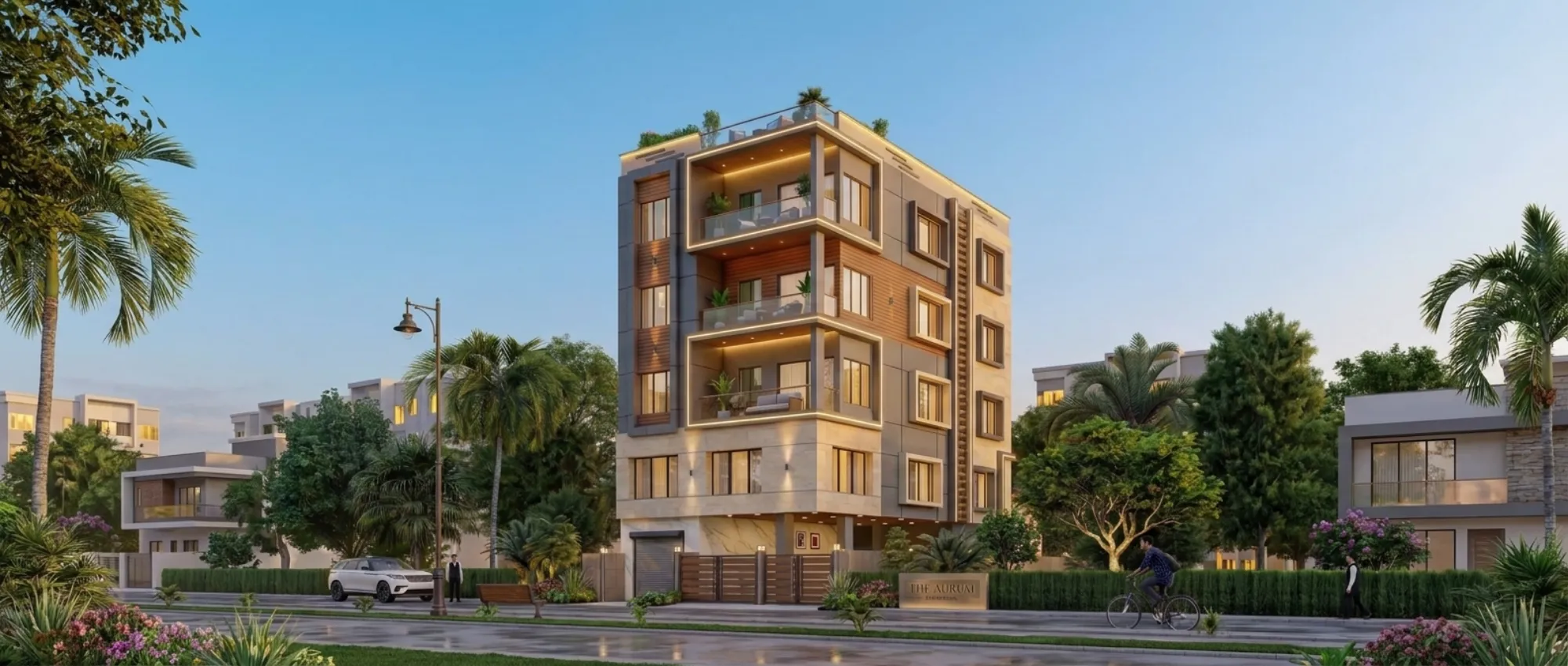
Studio Contour gets some version of this question in nearly every first meeting we have with a New Town plot owner, and it usually comes out sounding like this: "realistically, how long is my file going to sit at NKDA." Not the brochure answer, not the forty-five-days-on-paper answer, the actual answer, the one that accounts for how a real file behaves once it leaves your architect's hands and enters the queue. Sumana Kumar, our principal architect and the person who has personally walked hundreds of these files through the New Town Kolkata sanction machinery since we opened our doors in 2014, has a fairly settled view on this, and it is more useful than either the optimistic version or the horror-story version you have probably already heard from a neighbour.
The honest answer is that there is no single number, and anyone who gives you one without first asking about your plot, your ward, your FAR consumption and your drawing quality is guessing. What there is, instead, is a realistic range built from pattern, from having taken 330+ buildings through this exact process across New Town, Salt Lake and Rajarhat, and from knowing which parts of a file genuinely take time versus which parts just feel slow because nobody explained the sequence to you upfront.
This piece walks through that sequence properly, the stage-by-stage mechanics of an NKDA file, the variables that stretch or compress the timeline, a worked example so you can see the arithmetic rather than just trust it, and the handful of things that cause files to sit for months instead of weeks. If you are early in planning a New Town build and searching for a realistic number rather than a marketing one, this is written for you.
What "an NKDA file" actually is, mechanically
People say "file" like it is one document, and that is the first misunderstanding worth clearing up. An NKDA building-plan file is a bundle, drawings at a defined scale showing the plot layout, floor plans, elevations and sections, a structural note if the building crosses a certain height or footprint, ownership and mutation papers, the site plan tied to the actual survey, and increasingly a set of compliance declarations around setback, floor area ratio and ground coverage that the reviewing engineer checks line by line against the New Town, Kolkata building rules for your specific action area. Our guide on the documents required for NKDA building sanction walks through the full checklist, and it is worth reading before you assume your file is "basically ready" just because you have a rough plan sketched out.
The point of laying this out is that the timeline does not start when NKDA opens your file, it starts when your architect starts assembling it, and a meaningful chunk of what people experience as "NKDA delay" is actually preparation time that got compressed into the submission date because nobody budgeted for it separately. Sumana's team treats these as two distinct clocks, the drawing-and-documentation clock and the authority-review clock, and conflating them is where most of the frustration in this process comes from.
The realistic stage-by-stage timeline
For a standard residential file in an established action area, plot documents in order, no major compliance issues, this is roughly what the sequence looks like in practice, and it is the pattern our studio has seen hold across a large share of the 330+ buildings we have delivered.
- 01Site survey + document collection: 1-2 weeks
- 02Drawing preparation + internal compliance check: 2-3 weeks
- 03Submission + initial scrutiny: 1-2 weeks
- 04Query response cycle (if any): 1-4 weeks
- 05Final sanction issuance: 1-2 weeks
Add that up on the clean end and you are looking at roughly six to seven weeks from a standing start to a sanctioned plan, and on the end with one or two query cycles, which is common rather than exceptional, you are closer to ten to twelve weeks. Anyone quoting you a flat "45 days, guaranteed" is either quoting only the authority-review portion, or has not accounted for the fact that query cycles are a normal part of this process, not a sign something went wrong.
Why the same kind of file takes three weeks for one plot and three months for another
This is the part that actually matters to you as a plot owner, because the stage-by-stage average above assumes a fairly uneventful file, and plenty of files are not uneventful through no fault of the owner. A few variables move the needle more than anything else.
Plot geometry is the first one. A regular rectangular plot with a single road frontage is the easiest shape to design compliant setbacks and floor area ratio around, while a corner plot with two road frontages has to satisfy setback requirements on two sides simultaneously, which our guide on NKDA sanction for a corner plot with two road frontages covers in detail, and which routinely adds a design-iteration round before the file is even ready to submit.
Action area matters too. Action Area I is the most built-out and the review engineers there have seen every variation of the local rules, which in our experience makes review faster precisely because there is less ambiguity to resolve, something we go into further in our guide to building sanction in Action Area 1. Newer pockets and Action Areas II and III can move a little slower simply because more of what comes across the desk is a first-of-its-kind configuration for that specific block.
Then there is documentation completeness on the ownership and mutation side, which has nothing to do with your architect at all and everything to do with how clean your title chain is. A missing mutation certificate or an inconsistency between the deed and the site plan can stall a file for weeks while you chase paperwork that has nothing to do with the building design itself.
| Fast-moving file | Slow-moving file |
|---|---|
| Regular plot, single frontage | Corner plot, two frontages |
| Clean mutation + deed match | Ownership documents need correction |
| Standard FAR/setback compliance | Marginal or borderline compliance |
| Established action area precedent | First-of-its-kind configuration nearby |
What actually slows a file down, and how to avoid it
In our experience, the single biggest cause of a file sitting far longer than it should is not the authority being slow, it is a first submission that goes in with drawing-level errors that trigger a formal query, and a formal query resets a chunk of the clock because the response has to be prepared, resubmitted, and re-queued for review. Our piece on why building plans get rejected under NKDA goes through the actual recurring causes, and the pattern we see most often is setback miscalculation, FAR overreach relative to the plot's actual buildable envelope, and inconsistent dimensions between the site plan and the building drawings, all of which are avoidable with a careful first pass rather than a fast one.
We wrote a longer explainer on the difference between hiring an architect and going through an empanelled engineer for NKDA work because the two roles get confused constantly, and the practical effect of that confusion, when a file is prepared without someone who understands both the design intent and the compliance mechanics end to end, tends to be more query rounds rather than fewer.
- Site survey matches the deed and mutation records exactly
- FAR and ground coverage calculated against the actual buildable envelope, not the plot area on paper
- Setback dimensions cross-checked on every side, especially for corner or irregular plots
- Structural note included if height or footprint crosses the applicable threshold
- Drawing set internally reviewed against NKDA's current rule sheet before submission, not after a query comes back
A worked example, G+2 residential plot in Action Area II
Take a fairly ordinary case, a 3-katha regular plot in Action Area II, owner wants a ground-plus-two residence, documents mostly in order but the mutation certificate needed a small correction that surfaced during the survey. Sumana's team would typically run this as roughly ten days for survey and document reconciliation once the mutation issue is spotted early, another two and a half weeks for drawing preparation including the floor area ratio and setback compliance pass, then submission, and in this particular pattern one query round is common because a G+2 configuration in a newer pocket of Action Area II often needs a clarification on staircase or parking allocation relative to our guide on parking norms for New Town buildings. All in, that lands around ten to eleven weeks, which sits squarely inside the realistic range above rather than either extreme, and it is close to the pattern we followed on comparable homes like our G4 residence project in Action Area II.
The reason we lay out an example like this rather than just quoting the average is that the average hides where the time actually goes. In this case it was not NKDA sitting on the file, it was a document correction upstream and one design clarification downstream, both of which a studio that has been through this process repeatedly can anticipate and shorten, rather than discover for the first time on your file.
What we actually do differently once we take on a file
This is where the working familiarity our studio has built since 2014 shows up in practical terms rather than as a claim. Because Sumana Kumar and the team have personally taken residential and commercial projects through NKDA, KMC and Bidhannagar Municipal Corporation sanction processes across Bidhannagar and Rajarhat repeatedly, the drawing set that goes in on day one is built against the current rule sheet rather than a remembered version of it from a year ago, and that alone accounts for most of why our files tend to move through the faster end of the ranges above rather than the slower end.
Beyond the sanction paperwork itself, the design decisions baked into that first submission matter for how the building actually performs afterward, which is really the point of the whole exercise. Getting natural ventilation and daylighting right within the setback envelope you are allowed, planning for Vastu Shastra alignment where a family wants it factored in through our Vastu-compliant design service, and working through the residential architecture itself rather than treating the sanction file as a separate exercise from the house, all of that happens in the same drawing pass. We also walk owners through a 3D visualization of the massing before submission, partly so the client can see what the compliant envelope actually looks like as a house, and partly because catching a design change at that stage is a lot cheaper than catching it after a query comes back. You can read more about how our principal architect approaches this work on her profile page, and about the studio's broader approach in our piece on who Sumana Kumar is and what Studio Contour does.
Quick answers to what people actually ask us
How long before I should start the NKDA process relative to my construction start date. Budget for the full range above, ten to twelve weeks on the realistic end, and start the file the moment your plot documents and mutation are confirmed, not when your construction team is ready to break ground. Running these two clocks in parallel rather than in sequence is the single biggest time-saver available to a plot owner.
Does a bigger house take proportionally longer to sanction. Not linearly. Height and floor count matter more than square footage on their own, since crossing certain thresholds pulls in additional structural documentation, something our guide on building height and floor limits in New Town explains in more detail. A larger but straightforward G+1 can move faster than a smaller but geometrically awkward G+3.
Can I speed things up by submitting an incomplete file and fixing it later. No, and this is worth being direct about, an incomplete first submission almost always costs more time than it saves, because it converts what should have been a design decision made calmly in the drawing stage into a formal query response made under time pressure later.
What happens after sanction, is that the end of the timeline. Sanction is the design-approval milestone, not the finish line, since you will still need to work through completion and occupancy formalities once construction wraps, which our guide on NKDA completion and occupancy certification covers, so it is worth planning for that stage from the outset rather than treating it as a separate project later.
At the end of the day, the honest number for how long your NKDA file will take is somewhere between six weeks on a clean, well-prepared file and roughly three months on a file with a genuine query cycle or two, and the biggest lever you have over which end you land on is how carefully the file is put together before it ever reaches a reviewing desk. That is the part of this process Studio Contour has spent over a decade getting good at across 330-plus buildings in New Town, Salt Lake and Rajarhat, and if you are at the stage of figuring out your own timeline, get in touch with us and we will walk through your specific plot, your action area and a realistic schedule built around your actual documents rather than a generic average.