








Funding a New Town Flat Interior: Savings, Top-Up Loan or EMI?
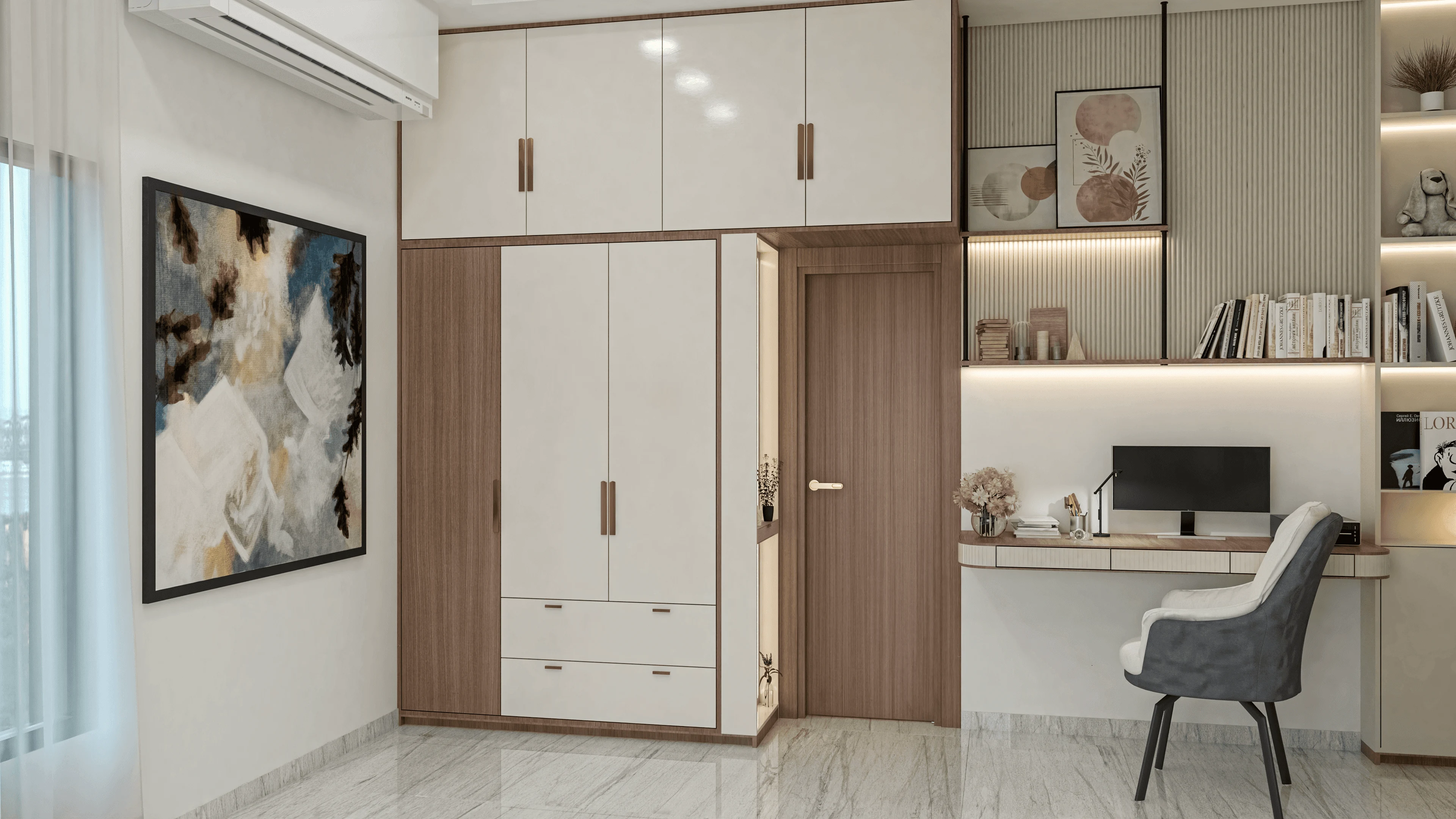
If you own a flat in New Town and you've started collecting quotes for the interior fit-out, you've probably noticed the number moves a lot depending on who's quoting and what they're including, and somewhere in that confusion sits the bigger question that actually decides how the project goes: how are you paying for it. We get asked this constantly at the design stage, before a single drawing is finalised, because the financing route you pick changes what we can responsibly recommend for your kitchen, your flooring, your false ceiling and everything else, and pretending otherwise just leads to a mid-project scramble.
This piece walks through the three ways New Town homeowners typically fund an interior project, savings, a top-up loan against an existing home loan, and card or NBFC EMI, and what each one means for the brief we write with you. We've delivered 330+ buildings since 2014 working across New Town and Salt Lake, and the pattern we see is consistent, so the families who plan the money and the design together end up with a better flat for less stress than the ones who pick a number first and figure out the design later.
What a New Town Interior Fit-Out Actually Costs
Before the financing conversation makes sense, you need a realistic range for what you're financing, and in New Town that range is wider than people expect because unit sizes vary a lot across Action Area I, II and III, and because the finish level swings the number more than almost anything else. A basic fit-out with laminate cabinetry, standard tiling and simple false ceiling work costs meaningfully less than a full turnkey job with engineered stone counters, wardrobes in every room and a layered lighting plan, and most of our clients land somewhere in between once they see both ends side by side. Our turnkey home interiors guide breaks this down room by room if you want the fuller picture, and our cost to build a house in New Town guide is useful too if you're doing structural work alongside the interior, since the two budgets often get mixed up early on and shouldn't be.
Savings, Top-Up Loan or EMI: The Real Trade-Offs
Paying from savings is the cleanest option on paper because there's no interest, no EMI eating into your monthly budget, and no paperwork beyond what you'd need for the project itself, but it also means the money is gone at once, and for a lot of New Town households that's a meaningful chunk of the emergency fund walking out the door for a kitchen. A top-up loan against an existing home loan, which most New Town buyers already have since a large share of units here were bought on finance, tends to carry a lower interest rate than personal loans or EMI because it's secured against the same property, and the tenure can stretch long enough that the monthly outflow stays manageable, though it does mean carrying that debt for years and it usually needs the bank to be comfortable with your existing repayment record. EMI through a card or an NBFC financing tie-up is the fastest to arrange, sometimes same-day, and it's genuinely useful for smaller, well-defined scopes like a kitchen or a bathroom, but the interest rate is almost always the steepest of the three and the tenures are shorter, so the monthly commitment bites harder even though the total borrowed amount is smaller.
| Savings | Financing (Top-Up Loan / EMI) |
|---|---|
| No interest cost, funds available immediately | Interest cost applies, but funds don't have to be liquidated |
| Depletes liquid reserves in one go | Preserves your savings and emergency fund |
| Full budget locked in before work starts | Repayment stretched over months or years |
| No approval process or paperwork beyond the project | Bank/NBFC approval needed, tied to credit history and existing EMIs |
How the Financing Route Should Shape Your Design Brief
Here's the part most people miss, right, the way you're paying should actually inform the sequence of decisions we make with you, not just the ceiling number. If you're paying from savings, we usually recommend locking the full scope early and building to it in one clean pass, because there's no ongoing repayment pressure forcing a mid-project rethink, and that lets us plan things like the false ceiling and lighting design and the modular kitchen as one coordinated package from day one. If you're on a top-up loan with a longer tenure, the monthly EMI is usually small enough relative to household income that we can still design the full flat at once, we just build in more contingency buffer in the budget since the money is borrowed and running over hurts more than it would with cash in hand. If you're financing through EMI on a shorter tenure, the smarter move is almost always to phase the project, get the core living spaces and one bathroom done first through residential interior design work, live in the flat, and come back for the second bedroom or a study nook once that first EMI cycle is closer to done, which keeps the monthly burden from stacking two loans at once.
- Get your bank's exact top-up eligibility and rate before locking a design scope
- Separate the structural budget from the interior budget so they don't blur into one guess
- Ask your designer to phase the brief if you're on a shorter EMI tenure
- Keep a 10-15% contingency outside whichever financing route you choose
- Confirm any NBFC tie-up's processing fee and foreclosure terms before signing
A Phased Approach That Actually Matches Money to Milestones
Whichever route you're on, the sequence of spend matters more than the total, and this is where a lot of DIY-managed projects in New Town go sideways, money gets released to a contractor in big chunks that don't line up with what's actually been delivered, so by the time snags show up there's no leverage left to fix them. We structure payment milestones against physical progress, civil and false ceiling framing, cabinetry and carcass installation, plywood and shutter finishing, then final fit and handover, so whether you're drawing from savings in one go or releasing loan disbursements in tranches, the money only moves when the work is visibly there to match it.
- 01Design & 3D sign-off
- 02Civil, electrical & false ceiling
- 03Kitchen, wardrobes & cabinetry
- 04Flooring, painting & final fit
- 05Snag list & handover
A 3D visualization walkthrough before anything is ordered also does real financial work here, because changing your mind about a wardrobe layout or a counter material on a render costs nothing, and changing your mind after the engineered stone slab is cut costs real money and real time, and on a financed budget that kind of rework is the thing that actually breaks people's plans, not the interest rate. We've seen this play out on projects like our G4 apartment work in New Town, where getting the sequencing and the visualization right upfront kept the delivered flat matching the agreed number almost exactly.
Bathrooms, Renovations and Where Costs Quietly Creep
If your financing plan is tight, the two areas where New Town homeowners most often get surprised are bathrooms and any renovation work layered on top of a fresh handover flat, since waterproofing, plumbing rework and tiling in a bathroom design project involve wet trades that are harder to phase cleanly than dry work like wardrobes, and any renovation touching an already-occupied space adds protection, dust control and access costs that a fresh flat doesn't carry. Our bathroom renovation cost breakdown blog is worth a read if this is where your budget is tightest, and if you're renovating rather than fitting out fresh, factor that premium into whichever financing route you're weighing, because underestimating it is the single most common reason an EMI plan runs short before the project is done.
The Tax Angle and the Paperwork a Top-Up Loan Actually Demands
Here's something we almost never see discussed when people are weighing a top-up loan for an interior fit-out, and it's worth ten minutes of your accountant's time before you decide: interest paid on a top-up loan can qualify for a deduction under Section 24(b) of the Income Tax Act, but only if the money is actually used for construction, repair, renewal or reconstruction of the property, and only if you can prove it. The bank doesn't automatically report your top-up as home-improvement to the tax authorities, right, so the burden sits on you to keep the paper trail clean, which in practice means retaining the loan sanction letter that states the purpose, the disbursement records, and every vendor invoice and payment receipt tied to the interior work so that if the claim is ever questioned you have a chain of documents that matches loan money to actual work done. We've had clients come to us after the fact asking how to reconstruct this trail because their contractor billed everything as one lump sum with no breakdown, and by then it's a genuinely painful exercise, so the fix is simple, ask us for itemised invoices broken down by category, cabinetry, electrical, false ceiling, flooring, from day one, and keep them in one folder as the project runs rather than chasing them down at tax filing time.
The deduction itself is capped, currently at ₹30,000 a year for a self-occupied property when the loan is for repair or renovation as opposed to purchase or construction, which sits inside the overall ₹2 lakh ceiling on home loan interest deduction under Section 24(b), so it's a modest saving rather than something that should drive the financing decision on its own, but it's real money you're leaving on the table if you don't claim it, and pairing it with an EMI or NBFC loan gets you nothing here since that interest isn't eligible in the same way. The catch here is that this only works cleanly if the top-up is genuinely a top-up on your existing home loan rather than a fresh personal loan dressed up as one, so it's worth confirming with your bank exactly how the disbursement will be classified before you sign, because the label on the paperwork is what determines whether this deduction is even available to you later.
| Financing Route | ||
|---|---|---|
| Tax Deduction Available | ||
| What You Need to Keep | ||
| Top-Up Home Loan,Yes, up to | ₹30,000/yr under Sec 24(b) (within ₹2L cap),Sanction letter + itemised vendor invoices | |
| Card/NBFC EMI | No | Not applicable |
| Savings | No | Not applicable |
The second thing that catches people off guard is how a bank actually releases a top-up loan once it's sanctioned, because it rarely comes as one lump sum into your account the way people assume. Most lenders disburse against physical progress, similar in spirit to how a construction loan works, and some send a valuer or a bank representative to inspect the site before releasing the next tranche, which means the money doesn't move as fast as the sanction letter suggests, and if your design brief isn't sequenced to match that inspection rhythm you can end up with cabinetry ordered and a carpenter on-site with no disbursement to pay them yet. This is exactly why we push clients toward locking the design and the material specification early when a top-up loan is in the picture, because a bank inspection wants to see defined, verifiable progress against a plan, not an evolving scope that changes week to week, and a vague brief slows down exactly the disbursement you're relying on to keep paying the site team. We build our payment milestones with this in mind for anyone financing through a top-up loan, lining civil work, cabinetry installation and final fit against the tranches a typical New Town bank branch expects to see, so the loan disbursement and the actual site progress move together instead of one waiting on the other and stalling the whole job.
Where Studio Contour Fits Into This Decision
At the end of the day, the financing decision and the design decision aren't really separate conversations, they're one conversation, and that's exactly why we sit down with the money question before we sit down with the mood board. We've been designing and building in New Town and Salt Lake since 2014, we know what an architect fees conversation actually looks like locally, and we know how to sequence a brief so it survives contact with a real bank disbursement schedule or a real EMI cycle instead of just looking good on paper. If you're weighing savings against a top-up loan against EMI right now, get in touch with us and we'll walk the numbers with you before you commit to a scope, because a design that fits your financing is worth far more than a design that only fits a spreadsheet.