








When to Repaint a Kolkata Home, and Why Humidity Changes the Answer
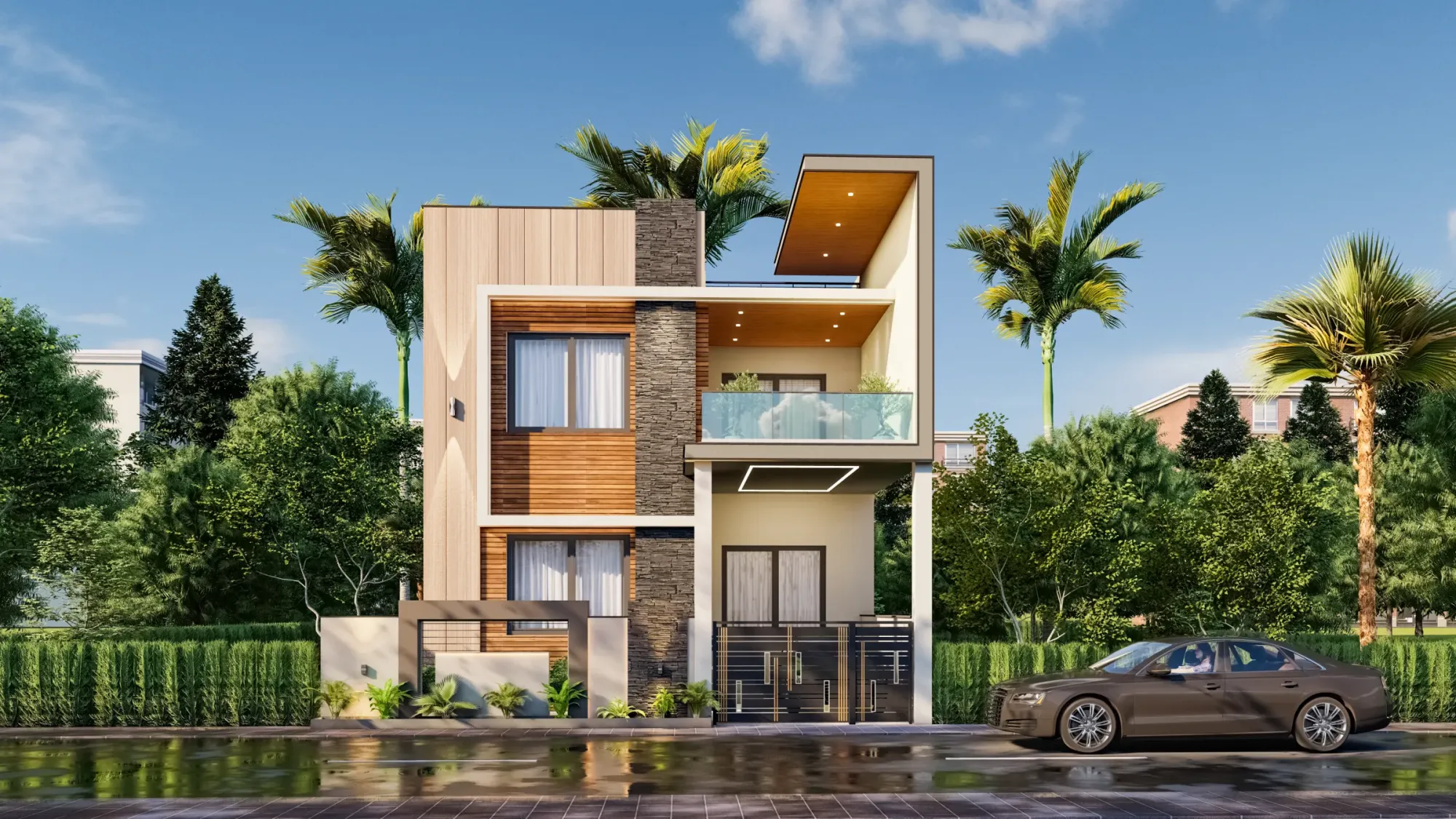
Most people in Kolkata repaint their home because of a festival date, and that is the single biggest reason paint jobs here fail early. Someone decides in late August that the flat should look fresh before Puja, the painter is called, the walls are sanded lightly, two coats go on over a fortnight, and by the following June there are hairline blisters near the bathroom wall and a faint grey shadow creeping down from the terrace slab. The paint did not fail because it was cheap. It failed because it was applied into moisture that was still sitting inside the plaster, and in this city that moisture is almost never gone when you think it is.
We have been designing and building in New Town, Salt Lake, Rajarhat and greater Kolkata since 2014, with 330+ buildings delivered, and repainting is one of the most frequent questions we get from owners who are two, five or ten years past handover. The honest answer is that a repaint cycle in Kolkata is not a number of years, it is a condition of the wall, and the condition of the wall is driven almost entirely by how much water vapour that surface has absorbed and released across successive monsoons. A south-facing exterior wall in Action Area II and an internal bedroom wall in a fourth-floor flat in Salt Lake will not age at the same rate, and treating them on the same schedule wastes money on one and starves the other.
So this piece is about the actual repaint decision as we see it on site, right, which walls go first, what humidity does to the film chemically and physically, when in the year the work should actually happen, what the preparation stages cost relative to the paint itself, and where a repaint stops being a paint problem and becomes a waterproofing or structural problem that no number of coats will hide.
Why humidity, not time, sets the repaint clock in Kolkata
Paint is a film, and a film only survives if it can stay bonded to what is underneath it while both expand, contract and breathe. Kolkata sits in a high humidity belt where relative humidity commonly stays elevated for long stretches of the year, and during the monsoon months the ambient air is close to saturation for weeks at a time. What that means practically is that plaster and masonry in a Kolkata home rarely reach the dryness that paint manufacturers assume in their application instructions, and the drying that does happen is slow and incomplete.
There are three failure mechanisms we see repeatedly and they are worth naming because they look different on the wall. The first is alkali attack, where moisture travelling through cement plaster carries dissolved salts and free lime to the surface, and that alkaline solution chemically breaks down the paint binder from behind, which shows up as chalking, patchy colour loss and a powdery residue on your palm when you rub the wall. The second is efflorescence, where salts crystallise at the surface as the water evaporates and physically push the paint film off, which shows up as white crusty patches and localised flaking. The third is straight biological growth, algae and mildew feeding on a damp surface, which shows up as green and black staining on north-facing exteriors, in bathroom ceilings and behind wardrobes on external walls.
The catch here is that all three of those need the same input, water in the substrate, and all three are accelerated when the wall never gets a proper dry season to recover. So when an owner in Rajarhat tells us the paint on the north face has gone in three years while the south face still looks reasonable, that is not a manufacturing defect, that is two walls living in two different moisture regimes on the same building.
The intervals we actually see, wall by wall
Manufacturer warranties on premium exterior emulsions in India are often quoted in the range of five to ten years, and interior emulsions somewhere around three to seven, but those are laboratory-derived numbers and they assume correct surface preparation, correct film thickness and a substrate that was genuinely dry at application. What we observe on completed Kolkata projects, and this is an operator observation rather than a warranty statement, is that real-world life runs shorter than the label almost everywhere, and the gap widens the more exposed the surface is.
Interior walls in air-conditioned bedrooms and living rooms tend to hold up longest because the AC is quietly dehumidifying the space, so those surfaces often look acceptable for six to eight years and usually fail cosmetically, through scuffing, hand marks near switches and furniture rub, well before the film itself gives up. Kitchen and bathroom walls are a different story because they are hit with steam and cooking grease daily, and those we routinely see needing attention at the three to five year mark even in a well ventilated flat. Exterior faces are the shortest lived, and orientation matters enormously, with the south and west faces taking driving monsoon rain and hard afternoon sun, and the north face staying shaded and damp long enough for algae to establish.
| Surface | Typical Kolkata repaint window (indicative) | What usually fails first | |
|---|---|---|---|
| Interior bedrooms and living areas | 6 to 8 years | Scuffs and hand marks near switches | |
| Kitchen walls and ceiling | 3 to 5 years | Grease staining and yellowing near the hob | |
| Bathroom ceilings | 3 to 4 years | Mildew spotting and blistering | |
| Exterior south and west faces | 4 to 6 years | Chalking and colour fade | |
| Exterior north face and shaded returns | 3 to 5 years | Algae and black streaking | |
| Parapet | terrace upstand and boundary wall | 3 to 5 years | Efflorescence and edge peeling |
Those numbers are illustrative and drawn from what we see on our own delivered projects, not a guarantee for your building, and a genuinely well waterproofed home with good roof drainage and generous eaves can comfortably beat the top of every range. On a project like our DE Block residence in New Town the exterior detailing was worked out at design stage precisely so that water leaves the facade quickly rather than sitting on it, and that single decision does more for repaint intervals than any upgrade in paint grade.
Reading your wall before you spend a rupee
Before anyone quotes you for a repaint, walk the house yourself with a torch and about twenty minutes of patience, because the diagnosis determines whether you are buying a cosmetic refresh or a repair job. Start at the outside and work in, and look specifically at the junctions, because paint almost never fails in the middle of a clean wall first, it fails where two things meet.
Check the terrace parapet where it meets the slab, check under the sill of every window, check the vertical strip below any AC outdoor unit or drain pipe, check the shaded return walls between buildings, and check the boundary wall at its base where ground moisture wicks upward. Inside, check the ceiling corners of bathrooms, the wall behind the kitchen platform, the strip above skirting on any wall shared with the outside, and the surfaces hidden behind heavy wardrobes where air never moves. Press a fingernail into any suspicious area, and if the plaster gives softly or sounds hollow when tapped with a coin, you have a plaster bond failure rather than a paint failure.
- Torch every ceiling corner in bathrooms and the kitchen
- Tap-test hollow plaster below window sills and along parapets
- Look for white salt crusting at the base of boundary walls
- Pull wardrobes off external walls and check for black spotting
- Photograph the north facade at 10am when shadow shows algae clearly
- Check the terrace waterproofing coving where slab meets parapet
- Note every crack wider than a hairline and where it runs
Any hollow plaster, any crack that runs diagonally from a window corner, and any damp patch that reappears after drying belongs in a conversation with an architect rather than a painter, and that is usually the point where a repaint job turns into a scoped renovation and remodelling exercise with a defined sequence.
The only repaint window that reliably works here
If you take one operational instruction from this piece, take this one, the correct time to repaint in Kolkata is the dry stretch from roughly late October through February, and the correct time to do the preparation and any waterproofing repair is the weeks immediately preceding that, once the monsoon has genuinely withdrawn and the walls have had a few weeks of dry air to release the water they absorbed.
The reason is straightforward. Water-based emulsions cure by evaporation and coalescence, so the film needs the moisture to leave, and in high ambient humidity the film skins over on the outside while remaining soft underneath, which produces a coating that looks fine on day three and delaminates in patches by the following year. Applying paint onto a substrate that still holds monsoon moisture is the single most common cause of the blistering we get called to look at, and it is entirely avoidable by moving the schedule.
- 01Sep to Oct: inspect, diagnose damp sources
- 02Oct: repair waterproofing, replaster, let it cure
- 03Nov: surface prep, sanding, primer
- 04Nov to Jan: finish coats, interior and exterior
- 05Feb: touch-ups and snagging before humidity climbs
This does clash with the Puja instinct, and we understand why owners want the house looking new for September, but a job pushed into late August is being applied into the tail of the wet season. If the timing genuinely cannot move, restrict the work to interior air-conditioned rooms where you can control the drying environment, and leave every exterior face and every bathroom for the winter window.
What it costs, and where the money actually goes
As of writing, and strictly as an indicative range rather than a quote, interior repainting in Kolkata with a mid to premium emulsion, including basic putty correction and two finish coats, tends to land in a broad band of roughly ₹25 to ₹60 per square foot of painted area, with premium washable and low-VOC systems sitting above that. Exterior repainting with a good weatherproof emulsion typically runs higher because of access, scaffolding or rope work, and heavier preparation, often in the region of ₹40 to ₹90 per square foot depending on the height of the building and the condition of the surface. Those bands move with brand, product grade, market conditions and the specific state of your walls, so treat them as an order of magnitude for budgeting and get your own measured quotations.
The part owners consistently underestimate is that the paint itself is often a minority of the bill. Labour, scaffolding or swing-stage access for a multi-storey exterior, surface preparation, crack filling, putty, primer and any localised replastering frequently account for the larger share, and cutting the preparation to save money is precisely how a repaint ends up needing to be done again in three years instead of six.
If you are also weighing up whether to fold the repaint into a larger interior upgrade, it is worth reading how professional fees are structured before you commit, and our note on architect fees in Kolkata covers the usual models. For anything that touches layout, lighting or built-in joinery alongside the repaint, the sensible move is to scope it as one residential interior design package rather than three disconnected trades arriving in sequence.
Preparation is the whole job, the paint is just the last day
Here is the uncomfortable truth from site, the difference between a repaint that lasts three years and one that lasts seven is decided before the first finish coat opens, and it is decided in sanding, cleaning, priming and repair. A painter who quotes noticeably cheaper is almost always compressing the preparation, because that is where the days are.
Proper preparation on a Kolkata repaint means scraping back every loose and chalking area to a sound edge rather than painting over it, washing down algae and mildew growth with an appropriate treatment and letting the surface dry fully rather than sealing living growth under fresh film, opening up and filling cracks with a flexible filler that can move with thermal expansion, applying a suitable alkali-resistant primer on cementitious surfaces to buy the finish coat protection against the salts coming from behind, and checking that the substrate is genuinely dry rather than looking dry. On sites where we suspect residual moisture, a simple moisture meter reading across several points tells you far more than a visual check, and it costs nothing compared to redoing the wall.
For exteriors specifically, the sequence has to include the things around the paint, so the rainwater downpipes get cleared and their joints checked, the AC drain lines get redirected away from the facade, the terrace damp proofing and coving at slab to parapet junctions get inspected, and any failed sealant at window frames gets cut out and redone. Skip those and you are painting a wall that will be rewetted from behind within one season, which is the pattern we describe in more detail in our piece on monsoon-proofing a Kolkata home.
Product choice, sheen levels and the rooms that fail first
Once the substrate is sound, the specification choices that matter most in this climate are anti-fungal performance on exteriors, washability on interiors, and sheen level room by room. A high-build elastomeric or weatherproof exterior emulsion with good algae resistance is worth the premium on north and shaded facades because that is where biological growth does the damage, whereas on a well-drained south face you are mostly buying UV colour retention.
Inside, matt finishes look beautiful and photograph well but they hold dirt and cannot be scrubbed hard, so we generally specify matt or low-sheen in bedrooms and formal living areas and step up to a satin or semi-gloss washable finish in kitchens, bathrooms, stairwells and any corridor where children and luggage make contact with the wall. Ceilings in bathrooms deserve their own thought entirely, because that is a surface exposed to rising steam with almost no air movement, and an anti-fungal formulation plus a working exhaust fan solves more problems than a colour upgrade ever will.
Ventilation is the quiet variable in all of this. Homes designed with genuine cross ventilation dry themselves between wet spells, and homes designed as sealed boxes with token windows do not, which is why we push natural ventilation hard at design stage on every residential project. Where a ceiling void is being closed up, the way the false ceiling and lighting design handles air movement and access to services matters for exactly this reason, because a sealed void above a bathroom is a mildew farm waiting to happen.
| Repaint only | Repaint plus repair |
|---|---|
| Paint is chalking evenly with no damp | Paint peeling in sheets or blistering |
| Colour is dated or scuffed | White salt crusting at wall base |
| Surface sounds solid when tapped | Plaster sounds hollow |
| No recurring damp patch | Damp patch returns after drying |
| Straight painting scope | Waterproofing scope first, then paint |
When repainting is the wrong answer entirely
There is a category of call we get where the owner asks for a repaint quote and the correct professional answer is to not paint yet. If a damp patch on an internal wall reappears in the same place after every rain, the water is coming from a failed junction, a cracked downpipe, a neighbour's terrace draining onto your parapet or a failed slab waterproofing layer, and covering it with fresh emulsion buys you one dry season at most. Similarly, if the plaster is debonded across a large area, painting it simply adds weight to a layer that is already letting go.
Boundary walls and compound walls are their own special case because they take moisture from the ground upward as well as from rain, and their base almost always fails first, so a repaint there without addressing the plinth detail is money spent twice. The construction rules and setback context for those walls are worth understanding before you touch them, and our guide on boundary wall and compound rules in New Town sets out where the constraints sit. Similarly, if you are repainting a facade as part of a broader external upgrade, be aware that some external alterations touch sanction territory rather than being pure maintenance, and our overview of green and sustainability norms in New Town covers where those expectations bite for newer buildings.
One more scenario that comes up with newer homes, if your building is recently completed and still within its defect liability period, paint failure caused by workmanship or waterproofing may be a contractor obligation rather than your maintenance cost, and the sequence of documents around handover and the NKDA completion and occupancy certificate stage becomes relevant evidence. We can tell you what the building condition indicates technically and prepare the drawings and condition record, but the contractual and legal position on any claim is a matter for your own lawyer, and any tax or capital expenditure treatment of the spend is a question for your CA, so please take those specifics to them rather than to us.
Building a five-year repaint plan instead of reacting
The owners who spend the least on paint over a decade are the ones who stopped treating repainting as an event and started treating it as a rolling maintenance line. What that looks like in practice is a short annual inspection at the end of the monsoon, a small touch-up budget every year for the three or four spots that always go first, an exterior cycle scheduled every four to six years for the exposed faces, and an interior cycle running longer and staggered room by room so you are never displaced from the whole house at once.
Staggering matters more than people expect, because a full-house repaint means moving furniture, covering everything and living in disruption for two to three weeks, whereas doing the two most-used rooms in one winter and the rest in the next winter is easier to live with and easier to fund. It also lets you course-correct on colour, since a shade that looked right on a swatch under showroom lighting sometimes reads completely differently on a large wall under Kolkata daylight, and seeing it live on one room first is cheaper than discovering it across a whole flat.
Our principal architect Sumana Kumar takes this view on every project we hand over, that the detailing which decides repaint intervals is designed in years earlier, in how water leaves the facade, how air moves through the plan, where the drip courses sit and how the terrace junctions are formed. That is why the homes we have delivered across Salt Lake and New Town tend to need less intervention than their neighbours of the same age, and why a repaint conversation with us usually starts with a walk around the building rather than a materials catalogue.
So if you are looking at a wall right now and wondering whether it is a paint job or something more, the honest first step is a proper look at it before the winter window opens, and we are happy to do that walk with you. Get in touch through our contact page with a few photographs of the affected walls, the age of the building and its location, and we will tell you plainly whether you are buying a repaint, a repair, or a bit of both, and what the sensible sequence is so you only pay for it once.