








Panelled vs Upholstered Headboards: Which One Suits Your Bedroom?
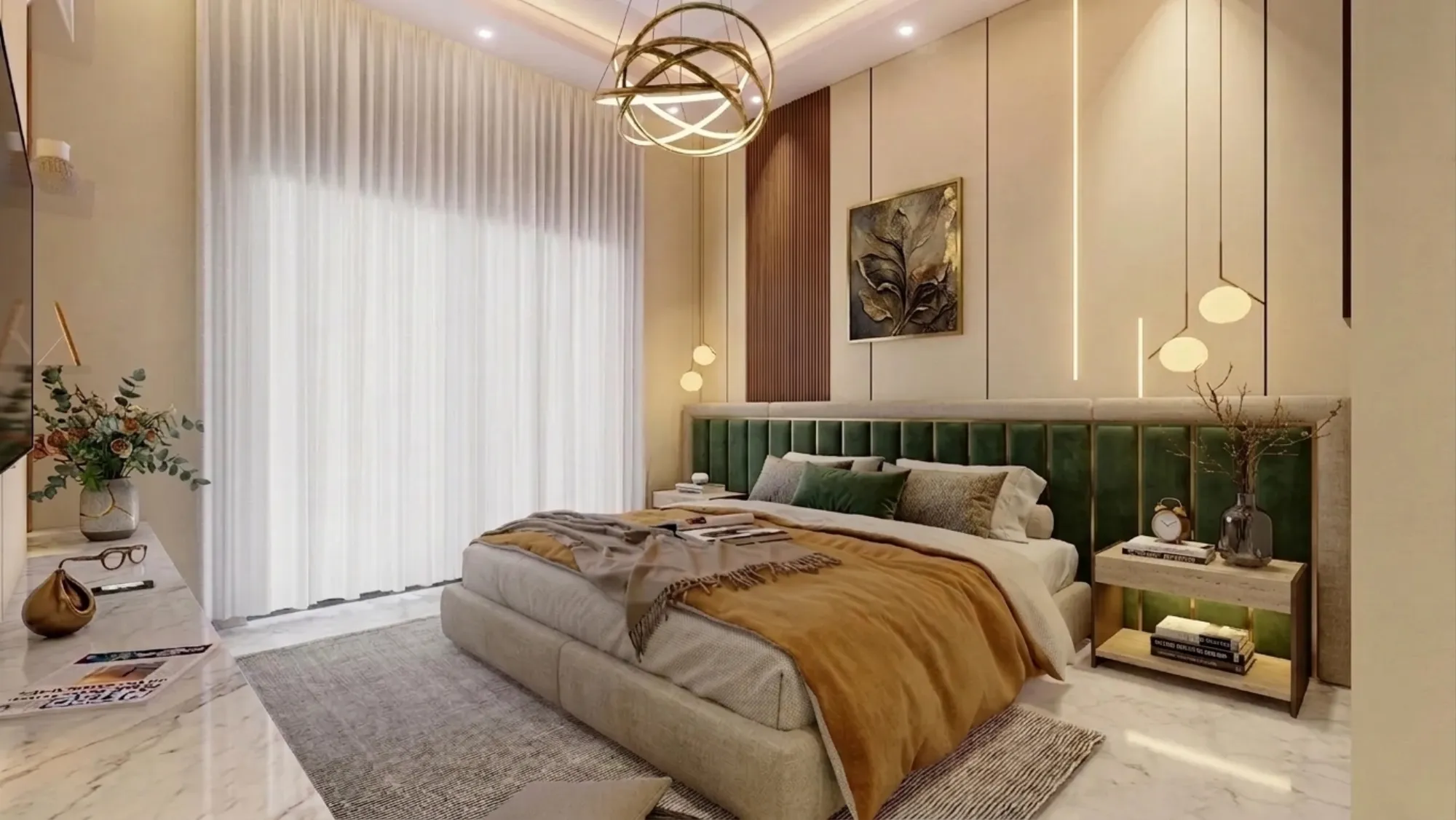
Every client who walks into our New Town studio with a headboard question has usually already fallen down a Pinterest rabbit hole, and by the time they sit across the table from us the question has narrowed down to exactly one thing: panelled or upholstered. It sounds like a small decision in the grand scheme of a bedroom renovation, but it genuinely isn't, because the headboard is the one surface in the room you touch, lean against, photograph your kids in front of, and stare at for roughly a third of your life, so getting it wrong is a mistake you live with every single night.
We have specified, detailed, and installed headboards across more than 330 buildings since we started in 2014, from compact New Town apartments to sprawling bungalows in the southern suburbs, and the honest answer is that there is no universal winner here, right, because panelled and upholstered headboards solve for genuinely different problems. This piece walks through the materials, the sub-styles within each category, what they actually cost in Kolkata's market, how Kolkata's climate treats each one differently, and how we help clients pick based on their actual bedroom rather than whatever looked good in a showroom in Mumbai or a reel shot in a dry California bedroom.
The catch here is that most homeowners are comparing the wrong things when they research this online, because international content assumes a climate and a supply chain that doesn't quite match ours, so before you lock anything in, it's worth understanding what each option really involves once it's built for a Bengal home.
Panelled headboards: the sub-styles nobody explains properly
A panelled headboard, at its simplest, is a rigid backdrop built from wood, plywood, MDF, or laminate, fixed either to the wall or to the bed frame itself. But within that one category there are at least four distinct looks we specify regularly, and they read completely differently in a finished room. Fluted or reeded panelling gives you vertical grooves, usually in a warm walnut or oak veneer, and it's become the single most requested finish in our residential briefs over the last two years because it adds texture without adding visual clutter. Flat panel grid headboards, where the surface is broken into rectangular or square sections with a shadow-gap reveal between them, suit more minimalist and Japandi-leaning bedrooms and photograph beautifully under a warm-toned false ceiling cove light. Then there's the full wall panelling approach, where the headboard isn't a discrete object at all but part of a continuous wall treatment that wraps the bed and often integrates bedside shelving and reading lights into the same plane, which we lean on heavily in our custom furniture design work because it lets us solve storage and headboard in one build instead of two separate purchases. And finally there's the classic solid-wood sleigh or arched panel, still popular in bungalow and duplex briefs where the client wants something that feels heirloom rather than trend-driven.
Material choice inside panelling matters more than most people expect. Marine-grade plywood with a veneer finish is our default recommendation for Kolkata because it handles humidity far better than particle board, and a laminate top coat means it won't discolour under sun exposure the way a raw-stained finish sometimes does near a west-facing window. MDF panelling is cheaper and takes paint finishes beautifully, so if you're going for a matte lacquered look in sage, terracotta, or charcoal, MDF is usually the more economical route, though it is less forgiving of moisture than marine ply and we generally avoid it in ground-floor bedrooms near Kolkata's older, less-ventilated construction.
| Panelled | Upholstered |
|---|---|
| Feel=Crisp, architectural, geometric | Feel=Soft, warm, forgiving |
| Best in=Contemporary, Japandi, minimalist bedrooms | Best in=Classic, glam, transitional bedrooms |
| Cleaning=Wipe-down, low effort | Cleaning=Periodic vacuuming, occasional professional clean |
| Kids/pets=Very durable, scratch-resistant | Kids/pets=Softer edges, gentler on little heads, stains need care |
| Typical life=12-18 years before refinish | Typical life=6-10 years before reupholstery |
Upholstered headboards: fabric, leather, and the tufting question
Upholstered headboards work on a completely different logic, since instead of a hard architectural surface you're building a padded frame wrapped in fabric or leather over foam, and the appeal is obvious the moment you sit up in bed to read or scroll your phone, because your back and shoulders actually thank you for it. Within upholstery, the biggest decision after fabric is the detailing, and we typically walk clients through three routes. Channel tufting, the vertical stitched lines running down the headboard, gives a hotel-lobby glamour that works well in larger master bedrooms and pairs nicely with a marble and gold drawing room-adjacent palette if the rest of the home leans towards that language. Diamond or button tufting is more classic and slightly more labour-intensive to execute cleanly, so it sits at a higher price band. And then there's the plain, single-panel wingback or curved headboard with no tufting at all, just a clean bolster shape in a performance fabric, which is what we recommend most often for smaller bedrooms because it reads calm rather than busy.
Fabric selection is where a lot of Kolkata homeowners under-plan. Velvet looks extraordinary in photographs and in showrooms, but it holds humidity and dust more than a tightly woven linen-cotton blend or a performance polyester weave, and in our climate, where the monsoon pushes indoor humidity up for a solid four months of the year, that matters for allergy-prone households. Leather and PU leather headboards are a genuinely good option here because they wipe clean, don't trap moisture the way fabric can, and age into a nicer patina, though they do run warmer to the touch, which some clients notice under a ceiling fan-only bedroom versus one with proper air conditioning. If you want the upholstery to actually hold its shape for years rather than sagging within eighteen months, the foam density and the internal frame matter far more than the fabric on top, and this is exactly the kind of detail that gets skipped when a headboard is bought off a catalogue rather than built for the room.
What it actually costs, and why the range is so wide
This is the question every single client asks in the first five minutes, and the honest answer is that both categories span a wide band depending on size, material, and whether it's a standalone piece or built into a larger wall treatment. A straightforward MDF panelled headboard for a queen bed, laminate finish, sits at the lower end of the spectrum. A full-wall veneer panelling job with integrated lighting and shelving climbs considerably higher because it's essentially cabinetry work dressed as a headboard. Upholstered pieces follow a similar logic, where a simple bolster-shape headboard in a mid-range fabric is affordable, while a large channel-tufted piece in genuine leather or a heavy performance velvet with a solid hardwood internal frame sits meaningfully higher.
What actually drives cost within either category, more than the headboard alone, is whether it's a one-off furniture piece or part of a coordinated bedroom scheme designed alongside your wardrobe, false ceiling, and lighting layout. We almost always recommend deciding the headboard style at the same stage as the rest of the residential interior design brief rather than as an afterthought once the bed itself has arrived, because the colour temperature of your bedside lighting, the depth of your false ceiling cove, and the headboard finish are all decisions that inform each other.
Kolkata's climate and building stock change the calculus
Here's the part that generic headboard content never covers properly, and it's the part we spend the most time on with clients. Kolkata's monsoon isn't a minor seasonal inconvenience, it's a structural design constraint, and it changes which finishes we recommend depending on which wall the headboard sits against. A headboard on an external wall, especially in an older building without proper waterproofing behind the plaster, is at real risk of dampness transferring into a wall-mounted panel or upholstered fabric over a few monsoon cycles, so in those cases we either float the headboard off the wall on a frame with an air gap, or we push clients towards leather and performance-fabric upholstery over natural fibres. For newer apartment builds in New Town, Rajarhat, and Salt Lake with better sealed envelopes, this is less of a concern, but we still spec moisture-resistant marine ply as the base layer as standard practice, not as an upgrade.
- Confirm which wall the headboard sits against and whether it's external or internal
- Ask for the exact ply grade or foam density in writing, not just the fabric swatch
- Check bedroom orientation and whether direct sun will hit the headboard finish daily
- Decide bedside lighting and false ceiling cove at the same stage as the headboard
- Factor in whether the room needs a Vastu-aligned bed placement before finalising headboard width
There's also a Vastu Shastra dimension that comes up in a good number of our briefs, particularly from clients in Behala, Garia, and Tollygunge who want the bed head oriented in a specific direction. That constraint sometimes limits which wall the headboard can go against, which in turn affects whether a full panelled wall treatment is even feasible or whether a simpler, freestanding upholstered piece makes more sense. We fold this into our Vastu compliant design process at the concept stage precisely so it doesn't become a late surprise after the frame is already ordered.
Matching the headboard to the actual bedroom, not the trend
For a compact secondary bedroom or a kid's room, we lean towards upholstered, simply because the softer edges are safer and the forgiving surface hides the everyday wear that a child's room accumulates, though we always spec a wipeable performance fabric rather than a delicate weave. For a primary or master bedroom with generous wall height, panelled full-wall treatments genuinely transform the room, adding architectural weight the way we did on a recent serene master bedroom project where the panelling wrapped from floor to just under the false ceiling line and made a mid-sized room feel considerably larger than its actual footprint. For older residents or anyone doing an accessibility-minded retrofit, the softer, rounded profile of an upholstered headboard tends to be the safer, more comfortable pick, a consideration we walk through in more depth in our piece on aging-in-place home retrofits.
- 01Concept and material selection (week 1-2)
- 02Detailed drawings and fabric or veneer approval (week 2-3)
- 03Fabrication and site preparation (week 4-7)
- 04Installation and final styling (week 8)
There's a growing middle path too, worth mentioning because it comes up in almost every consultation now: a panelled base with an upholstered insert set into the centre panel, giving you the durability and clean lines of panelling at the edges with a soft, tufted or bolster-shaped cushion right where your head and shoulders actually rest. It costs a bit more to fabricate because it's essentially two joinery processes instead of one, but it solves the panelled-versus-upholstered debate rather than forcing a binary choice, and we're specifying it more often as clients see it in finished projects. If you're also rethinking furniture placement in the room while you're at it, our recent piece on AI-assisted furniture layout optimization is a useful companion read, and if bamboo or natural fibre accents are on your moodboard, we've also written about their structural and decorative use in Bengal homes, which pairs surprisingly well with a fluted wood panel headboard.
How we actually run this decision with clients
At the end of the day, the panelled-versus-upholstered question is never really about which one is objectively better, it's about matching the finish to your room's orientation, your household's daily wear, your climate exposure, and the rest of your bedroom's material palette, and that's exactly the kind of decision that goes smoothly when it's made early with someone who can see the whole room rather than just the headboard catalogue page. We usually mock up both options in a quick 3D visualization so clients can actually see the fluted panel or the tufted fabric against their real wall colour and lighting before a single piece of ply is cut, which saves the back-and-forth that happens when decisions get made off a flat product photo. Whether you're finishing a single bedroom or working through a full apartment interior in New Town or a broader turnkey home interior across Kolkata or West Bengal, this is a decision worth making with someone who has actually built both versions repeatedly in local conditions. If you'd like us to walk your specific bedroom through this, get in touch with our studio and we'll talk through what actually makes sense for your walls, your budget, and the way you actually use the room.